REVIEW · COPENHAGEN
Copenhagen: Amalienborg Palace Museum Entry Ticket
Book on GetYourGuide →Operated by Kongernes Samling / The Royal Danish Collection · Bookable on GetYourGuide
A royal palace museum in the middle of Copenhagen is a rare mix of grandeur and practicality. At Amalienborg Palace Museum, you get preserved rooms from Danish royalty plus an easy-to-follow set of exhibits and audio content that works for adults and kids. I especially liked the Fabergé Chamber and how clearly the museum shows daily life behind the crown. One possible drawback: it is not a huge museum, so if you expect a giant, multi-hour palace journey, you may feel it is short for the price.
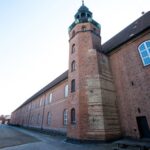
You’ll find the museum part of Christian VIII’s Palace, inside the Amalienborg complex of four palaces where the Danish Royal Family resides. I also really liked the way the rooms feel paused in time, like you’re seeing them right after the last occupants left. The main consideration is timing: you need to enter on schedule, because arriving more than 20 minutes late makes the ticket invalid.
In This Review
- Key things I’d circle before you go
- Amalienborg Square: why this palace museum feels close to the action
- Your ticket in practice: entrance spot, scanning, and the 20-minute deadline
- Christian VIII’s Palace rooms: preserved daily life, not just big-ticket decor
- Fabergé Chamber: a jewelry stop with a political story behind it
- Christian X’s dining room: how a throne family actually ate
- Christian X’s study and Queen Louise’s salon: power in private spaces
- Gala Hall: the 8-meter ceiling makes the monarchy feel physical
- Frederik X: King of Tomorrow exhibition (see it only if your dates match)
- How long to plan: a smart 45–60 minute pace
- Value check: is $19 a good deal?
- Who should book, and who might skip this one?
- FAQ
- FAQ
- Where is the Amalienborg Museum entrance?
- What do I do after I arrive at the museum?
- What happens if I arrive late?
- Is the museum wheelchair accessible?
- Is a guided tour included with the ticket?
- What is included in the ticket price?
- Can I bring food or drinks inside?
- Are large bags or backpacks allowed?
- How long should I plan to visit?
- Is the Frederik X exhibition included?
Key things I’d circle before you go
- Christian VIII’s Palace setting inside Amalienborg Square, right in central Copenhagen
- Rooms preserved like they were left behind, not rebuilt as generic displays
- Fabergé Chamber showcasing Russian jewelry and Danish-Russian royal connections
- Christian X dining room and study that visually anchor long reign-era details
- Gala Hall with an 8-meter ceiling and major sculptural work
- Frederik X: King of Tomorrow exhibition shown only during a set 2024 window
Amalienborg Square: why this palace museum feels close to the action
Amalienborg is not some far-flung royal fantasy. It sits right in the middle of Copenhagen, which means you can fit a visit between other plans without losing a chunk of your day to transit. The museum portion is tied to Christian VIII’s Palace, one of the four palaces that make up Amalienborg. That layout matters because it helps you understand you are not touring one random building, but a whole royal complex.
What makes this experience satisfying is the mix of scale and access. The rooms and exhibits are polished and impressive, but the museum is designed so you can move through it without feeling lost. You get a clear sense of how monarchy lived day to day, not just how it looked from a distance.
You can also read our reviews of more tours and experiences in Copenhagen



Your ticket in practice: entrance spot, scanning, and the 20-minute deadline
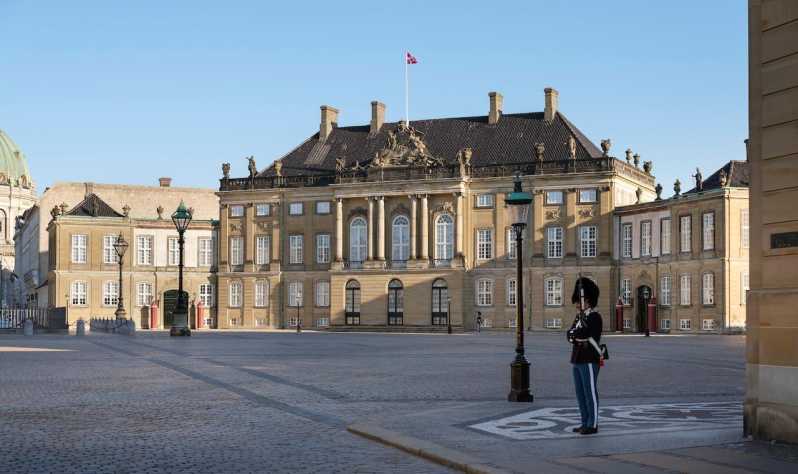
Before you go, know that your entry depends on a quick, step-by-step process. The museum entrance is in the first building to your left if you enter Amalienborg Square from Frederiksgade and the Marble Church side. Once you’re at the right building, plan to go downstairs first to the cashier. That’s where you present and scan your online ticket.
Then comes the key rule: if you arrive more than 20 minutes late, your ticket is no longer valid. That’s the kind of detail that can ruin a plan if you treat it casually, especially in Copenhagen when you might get delayed by crowds or a detour. Build in buffer time so you don’t have to rush.
One more practical note: large bags, large purses, and backpacks are not allowed inside, and oversize luggage is also prohibited. If you’re coming from another stop, travel light or plan to leave bigger items elsewhere.
Christian VIII’s Palace rooms: preserved daily life, not just big-ticket decor
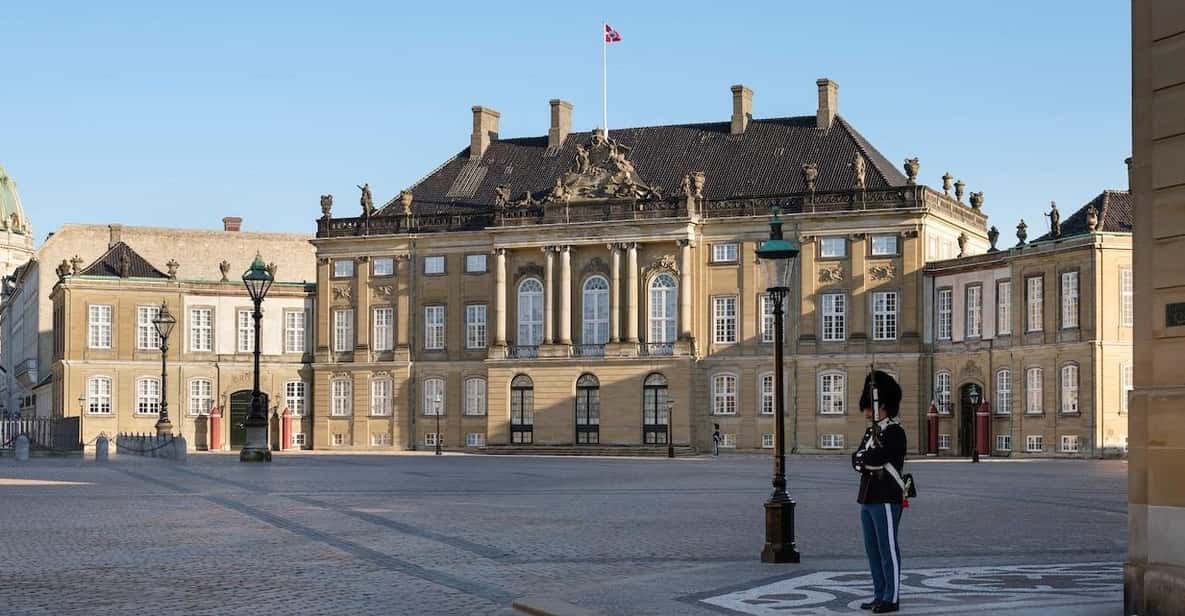
Once you’re inside, the museum’s strongest trick is how it presents rooms like living spaces rather than staged sets. The idea is that many of these rooms are preserved as though their occupants had just left. That detail is what changes the feel of the visit: you’re not just admiring objects, you’re looking at context—furnishings, layout, and a sense of routine.
A good way to approach it is to think in themes. Start by scanning rooms for what you’d do there: dining, studying, receiving visitors, private time. Then let the objects and captions fill in the story. When you do that, the museum reads like a biography of the family, not just a list of reign-era highlights.
You’ll also have access to all exhibitions with your entry ticket, and that includes the special exhibition that’s time-bound (more on that below).
Fabergé Chamber: a jewelry stop with a political story behind it
The Fabergé Chamber is one of the museum highlights, and it’s more than a pretty side-room. You’ll see hand-crafted Russian jewelry made between 1860 and 1917, with a focus on close ties between the Danish and Russian monarchy. That theme is easy to miss if you treat the pieces like stand-alone art.
What helps is knowing one named example mentioned for the collection: the Fabergé coronation brooch created for the coronation of Tsar Nicholas II. That kind of reference gives you a concrete bridge between craftsmanship and royal symbolism. It also helps you understand why Danish and Russian connections show up in the story the museum tells.
If you like objects that connect politics, family ties, and art, this is the room to slow down for. If you’re more into architectural scale and large halls, you might skim it—but I’d still give it time because it adds meaning.
Christian X’s dining room: how a throne family actually ate
The Christian X and Queen Alexandrine dining room is preserved to appear almost exactly as it did during their time in the palace, from 1899 until their deaths in 1947 and 1952. That time window is useful because it anchors the room to a long stretch of history. You can feel how the museum uses a single room to represent decades.
Dining rooms tend to be less glamorous than gala halls, but that’s why this one works. It’s where you notice the human stuff: furnishings and the overall look of a daily space. You don’t have to be a hardcore monarchy nerd to connect with the setting. It’s a simple idea made visual: royal life included ordinary rhythms, even when the building was exceptional.
Plan to stand still for a minute and take in how the room reads at a glance. Then let the details guide you. If you’re visiting with kids, rooms like this can be surprisingly engaging because they look like something you could imagine in a historic home, not only a palace museum.
You can also read our reviews of more museum experiences in Copenhagen




Christian X’s study and Queen Louise’s salon: power in private spaces
Two rooms help round out the monarchy story by showing personal space rather than public rooms.
Christian X’s study is preserved as though he had just left it. The furnishings are dark and heavy, with dark walls that fit a gentleman’s study around 1900, and the museum notes that it gives clear officer-era impressions. This is one of those spaces where the mood matters. You’re reading status through objects—what the room suggests about the man who used it.
Then there’s Queen Louise’s private salon from around 1895. The interior decoration reflects what was modern at the time, with paintings and framed photographs on tables. The museum points out that the items testify to her rich family life and close ties across Europe. That turns the salon into more than decoration: it becomes a network map in physical form.
If you’re the type who enjoys the quieter rooms in museums, don’t rush these. They’re also a strong choice for families, because kids often respond well to a clear setting with recognizable themes like studying and socializing.
Gala Hall: the 8-meter ceiling makes the monarchy feel physical
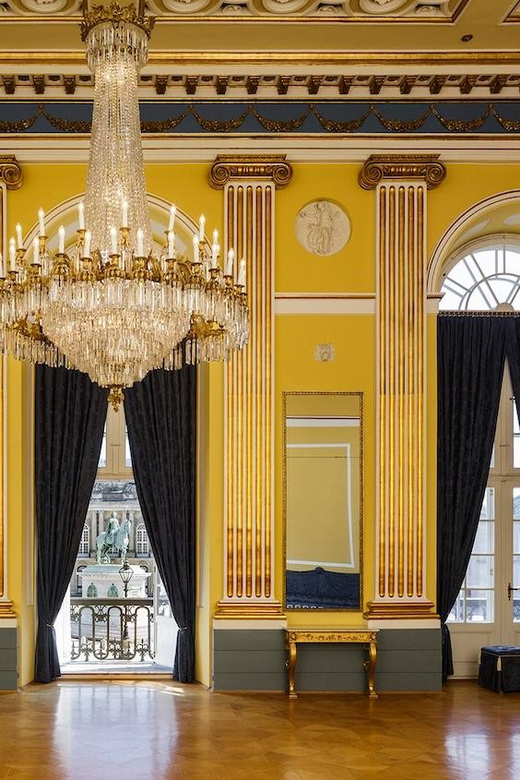
The Gala Hall is where the museum swings toward spectacle. With a ceiling height of 8 meters, lavish gilding, and a view of the palace square, the room ranks among the most impressive interiors in Denmark. It is not subtle. You feel the scale immediately, and that is exactly why it matters.
This hall was commissioned in 1794, and the interior design is credited to artist Nicolai Abildgaard. Sculptures in the space were created by Bertel Thorvaldsen. If you like art-history hooks, these names give you something specific to look for beyond the gold surfaces.
When you stand in the hall, look outward as well as inward. The view of the palace square connects the private interior to the public stage of Amalienborg. That link helps you understand monarchy as both household and symbol—something performed in space, not just in portraits.
Frederik X: King of Tomorrow exhibition (see it only if your dates match)
The special exhibition Frederik X: King of Tomorrow runs from March 22 to September 8, 2024. If your trip falls outside those dates, you might still find other museum exhibits, but this specific show would not apply.
Inside the exhibition, you’ll see photographs, objects, video clips, paintings, and sound elements designed to portray the new King of Denmark and the historical succession on January 14. What I like about exhibits with media is that they help you connect names and dates to something more than a timeline.
If you’re visiting because you’re curious about who is on the throne and what succession means in Denmark, this is your best stop. It gives the museum’s preserved-room approach a contemporary bridge.
How long to plan: a smart 45–60 minute pace
A palace museum can become a trap if you overestimate how long it takes. Here, the practical rhythm is usually shorter than you might expect. Plan roughly 45 minutes to an hour for the main museum visit, and if you use audio content, you’ll likely land in that same range.
In practice, the museum route is set up well, so you can follow it without constantly backtracking. One of the best signs this museum is family-friendly is the presence of audio guide content aimed at children, which can turn a “boring royal building” into a game of listening and discovery. That’s also a nice option if you’re traveling with a stroller-free crowd, since you can keep everyone moving on the same timeline.
If you have less time, you can still get value by focusing on the signature rooms: Fabergé Chamber, dining room, study, private salon, and Gala Hall. If you have more time, linger in each room just long enough to let the story land before moving on.
Value check: is $19 a good deal?
At about $19 per person, the value depends on your expectations. If you want a massive palace maze and a full-day deep museum marathon, you may find it feels a bit short. There’s even a note that the museum isn’t huge for the price, though it can still feel enjoyable.
But if your goal is to understand Danish monarchy through preserved spaces and key objects, the price starts to make sense. You’re paying for access to a major royal residence setting, multiple preserved rooms, and all exhibitions tied to the museum. You’re also getting content that supports different ages, which is a real benefit if you’re traveling with children and want less arguing and more engagement.
In my opinion, this is a strong value for three groups:
- Families who need a museum that keeps kids interested without a guided tour
- History and object fans who like how jewelry and room details connect to real royal relationships
- Copenhagen first-timers who want a central, easy stop with high payoff per hour
Who should book, and who might skip this one?
Book this if you like museums that feel personal. The preserved rooms make monarchy tangible, and the Fabergé Chamber adds an international angle that goes beyond Danish-only storytelling. You’ll also like it if you’re curious about the succession story presented in the Frederik X exhibition window.
You might skip if you want a long, wandering palace experience with lots of hidden corners or if you hate timed entry rules. The 20-minute late-tolerance cutoff is simple but strict, so it’s not ideal for travelers who consistently run late.
It’s also a poor fit if you’re carrying bulky items. Large bags and backpacks are not allowed, so plan to travel light. If that’s a dealbreaker, you’ll have to solve the storage problem before you even start thinking about the museum.
FAQ
FAQ
Where is the Amalienborg Museum entrance?
The entrance is in the first building to your left if you enter Amalienborg Square from Frederiksgade/the Marble Church side.
What do I do after I arrive at the museum?
Before going upstairs for the exhibition, you need to go downstairs to the cashier to present and scan your online ticket.
What happens if I arrive late?
If you arrive more than 20 minutes late, your ticket will no longer be valid.
Is the museum wheelchair accessible?
Yes, the Amalienborg Palace Museum entry ticket is wheelchair accessible.
Is a guided tour included with the ticket?
No. A guided tour is not included.
What is included in the ticket price?
Your ticket includes entry to the Amalienborg Palace Museum and access to all exhibitions.
Can I bring food or drinks inside?
Food and drinks are not allowed.
Are large bags or backpacks allowed?
No. Large bags, large purses, and backpacks are not allowed inside, and oversize luggage is also not allowed.
How long should I plan to visit?
Most visits take around 45 minutes to an hour, and some people spend about an hour exploring the palace areas.
Is the Frederik X exhibition included?
Yes, access to exhibitions is included with your ticket. The Frederik X: King of Tomorrow exhibition is scheduled from March 22 to September 8, 2024.