REVIEW · COPENHAGEN
Copenhagen: Rosenborg Castle Entry Ticket
Book on GetYourGuide →Operated by Den Kongelige Samling / The Royal Danish Collection · Bookable on GetYourGuide
Rosenborg Castle turns royal bling into a real history lesson. You’ll spend your time inside Rosenborg Castle and, most importantly, in the Treasury where the Danish Crown Jewels and Royal Regalia are on display. The biggest draw is the focus: this isn’t a huge palace sweep. It’s a concentrated look at crowns, coronation objects, and the ceremonial stuff Denmark cared about.
What I like most is how close you can get to specific, named treasures—Christian IV’s crown from 1596 and the Order of the Elephant are not just vague “jewels,” they’re standout artifacts with clear historical weight. I also like that you finish with a quiet but memorable ritual object: the baptismal font used to christen Danish princes and princesses, including Frederik and his family. The one drawback to consider is that the on-site information experience can depend on QR-code style panels, and some visitors find parts of it frustrating.
In This Review
- Key highlights you’ll actually care about
- Why Rosenborg’s Crown-Jewel focus is such good value
- Entering Rosenborg Castle: what to expect on arrival
- The Treasury beneath the castle: where the best viewing happens
- Christian IV’s crown from 1596: the heaviest story in the room
- The coronation crown and the 2,000-stone effect
- The Order of the Elephant: Denmark’s top chivalry in metal and enamel
- Rooms preserved from Christian IV’s time: why they matter even without a guide
- The baptismal font for Danish princes and princesses: a calmer ending
- Rules that can ruin your day if you ignore them
- King’s Garden time: add 20 minutes for the right mood
- Price and logistics: is $23 fair for what you see?
- Accessibility and who should plan differently
- Should you book this Rosenborg Castle Crown Jewels entry ticket?
- FAQ
- What’s included with the Rosenborg Castle entry ticket?
- Do I get to see the Treasury and the Crown Jewels?
- How long does the experience last?
- Is a guided tour included?
- How much does it cost?
- Are flash photos allowed?
- Can I bring a backpack or large bag?
- What do I need to bring for entry?
- What if I arrive late?
- Is it wheelchair accessible?
Key highlights you’ll actually care about
- Christian IV’s crown (1596): the oldest crown in Denmark, weighing almost 3 kilos
- The coronation crown: adorned with about 2,000 precious stones
- Treasury Royal Regalia: coronation and monarch-facing artifacts displayed in the castle’s underground space
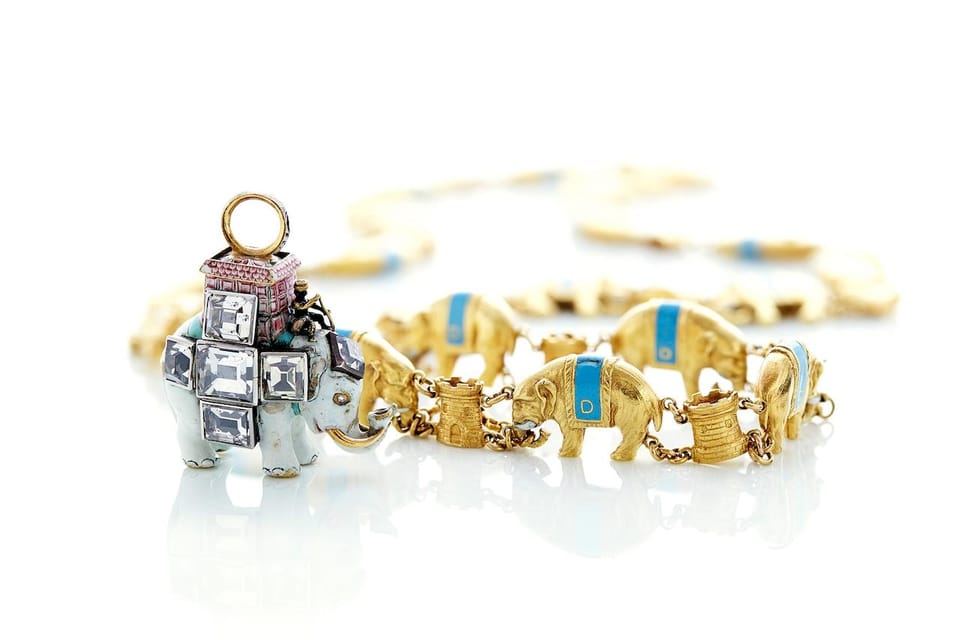
- Order of the Elephant: Denmark’s top chivalric order, with examples made of gold, enamel, and table-cut diamonds
- Baptismal font for Danish royals: used for christenings of princes and princesses, including the current royal family
Why Rosenborg’s Crown-Jewel focus is such good value
Rosenborg Castle is a smaller royal residence than you might expect in Copenhagen. That’s a plus. With this entry ticket, you’re paying for a targeted experience: the Danish Crown Jewels and the objects tied to the monarchs who lived around this garden.
At about $23 per person, it can feel pricey until you remember what you’re buying: direct access to the Treasury display, where Denmark’s crown objects are concentrated in one place. You’re also getting time in preserved rooms linked to Christian IV’s era—so you’re not only seeing objects behind glass; you’re seeing the setting those objects belonged to.
This is ideal if you want a “quality over quantity” stop. If your palace strategy in Copenhagen is already full—Nyhavn wander, canals, maybe Christiansborg—Rosenborg fits without swallowing your whole day.
You can also read our reviews of more tours and experiences in Copenhagen



Entering Rosenborg Castle: what to expect on arrival
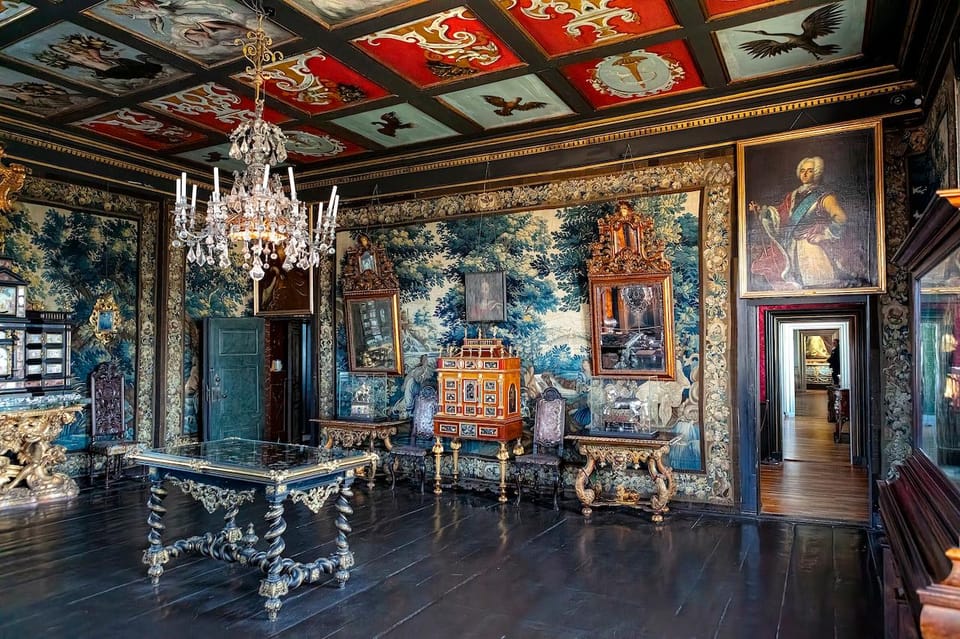
Plan to go with a little patience for the front desk moment. You’ll need to present and scan your online ticket at the ticket desk.
There’s also a strict lateness rule: if you arrive more than 20 minutes late, the ticket becomes invalid. That means you’ll want to time your trip so you’re not sprinting from another stop. If Copenhagen traffic and transit make you nervous, build in a buffer.
Group size is limited (up to 10 participants). That helps with the flow—less crowd pressure than you get with big tour groups. Still, you should expect you’ll move through at a walking pace that works for everyone.
The Treasury beneath the castle: where the best viewing happens
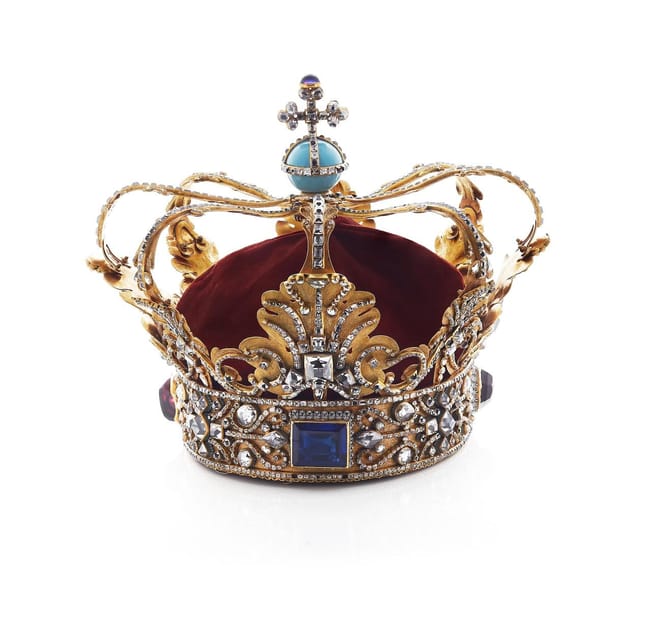
The star of the show is the Treasury under Rosenborg Castle. This is where Denmark puts its monarchy jewelry and regalia on display, behind thick walls, in a setting that feels built for protection rather than spectacle.
Here’s what you’re looking for once you get down there:
- The Danish Crown Jewels, including the coronation crown
- Royal Regalia and ceremonial artifacts that have belonged to Denmark’s monarchs
- The Order of the Elephant examples, which show how Danish honor culture used metalwork and gemstones as a language of power
This is also where you’ll see why these objects matter beyond sparkle. The crowns aren’t just decorative. They’re physical proof of who held authority, who was crowned, and how a royal identity was crafted and maintained.
One practical note: the experience is not designed to be slow. If you’re a fast museum walker, you may feel you see everything sooner than you expect. If you’re a linger-and-look-repeat person, you’ll find plenty of detail worth taking time for—especially in the regalia display.
Christian IV’s crown from 1596: the heaviest story in the room
Christian IV’s crown from 1596 is one of the clearest “go to this part first” objects. It’s described as the oldest crown in Denmark and it weighs nearly 3 kilos. That weight detail is a big deal for how you should view the crown: it’s not just a pretty icon. It’s a heavy, real piece of regalia built for ceremony.
When you stand close enough to truly see the crown behind the glass, you get a better sense of what a coronation would have meant. This wasn’t light, symbolic dressing-up. It was an event where the monarchy made itself visible in an almost physical way.
It’s one of those items where you’ll probably find yourself looking for the craftsmanship—goldwork, stone placement, and the overall structure—because that’s what survives time. The Treasury setting supports that focus.
The coronation crown and the 2,000-stone effect
If Christian IV’s crown gives you weight and age, the coronation crown gives you abundance. It’s described as adorned with around 2,000 precious stones.
What’s helpful here is that the display approach ties the visual impact to the concept of monarchy. A coronation crown packed with stones is a statement: power should look expensive, rare, and difficult to replicate. And at Rosenborg, the Treasury framing makes the effect feel less like a generic “jewelry store” moment and more like a museum of authority.
If you’re the kind of person who likes object-based history—figuring out what the maker was trying to communicate—this section will click fast.






The Order of the Elephant: Denmark’s top chivalry in metal and enamel
Another standout is the Order of the Elephant, instituted in the 1460s. This is described as Denmark’s most prestigious order of chivalry, and you can see examples in the Treasury.
The important practical detail: it’s made of gold, enamel, and table-cut diamonds. That materials list matters because it tells you the order wasn’t just about a badge. It was designed to be seen as a specific kind of luxury and craftsmanship.
Look for how the order’s structure and decoration read as symbols. Even if you don’t know the full story of each piece, you can still understand the goal: Denmark’s highest honor was built to be unmistakable.
Rooms preserved from Christian IV’s time: why they matter even without a guide
Rosenborg Castle was commissioned in the early 17th century outside Copenhagen’s old town, and many rooms are preserved as they were in Christian IV’s era. That means you’re not just wandering through modern museum space.
You’ll see furnishings and art treasures preserved in the rooms—things that surrounded Danish kings and queens until the 19th century. It gives you the sense of what “royal daily life and royal ceremony” looked like in this setting, not just how the crown display looks in a case.
If you want extra context, one tip you’ll be grateful for: there’s often interpretive help available when you arrive. For example, a visitor advised picking up the guide at the front, because it helps connect what you’re seeing to layers of meaning across time.
Even if you don’t take a formal guided tour (guided tours aren’t included), walking the preserved rooms can still feel coherent if you slow down a touch.
The baptismal font for Danish princes and princesses: a calmer ending
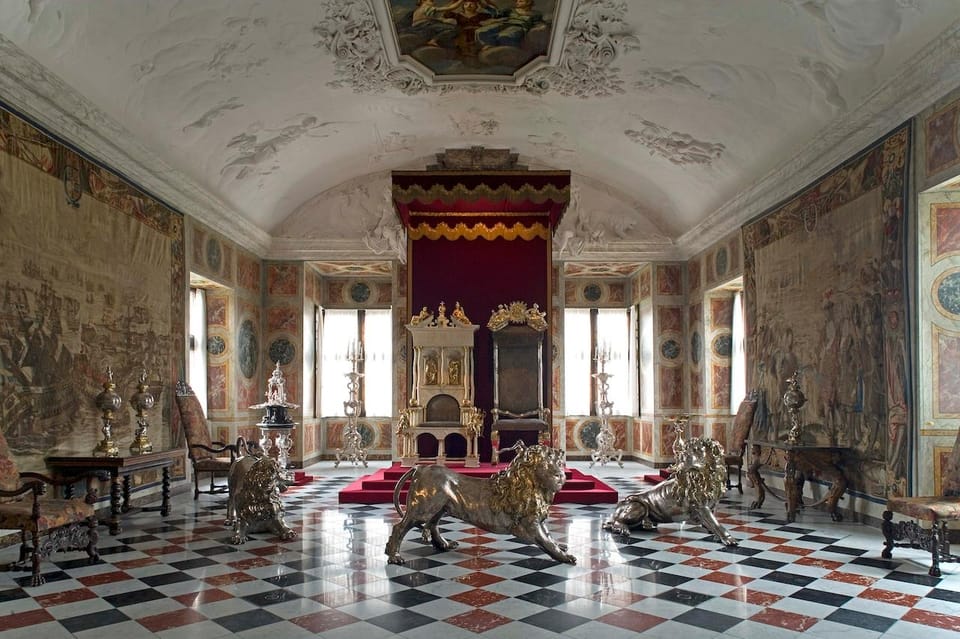
Before you leave, don’t rush past the baptismal font. It’s historically used to christen each Danish prince and princess, including the current king Frederik and his family.
This is one of the most moving shifts in tone in the visit. It moves you from the bright, symbolic power of crowns toward the life-cycle moments that make a monarchy keep going through generations. You’re seeing a ritual object tied to continuity, family, and public identity.
It’s also a good “final chapter” because it’s not competing with the sparkle of gemstones. If you’re museum-tired, this section can feel like a thoughtful exhale.
Rules that can ruin your day if you ignore them
These castle tickets work smoothly when you follow the site rules. I’d treat them like strict theater entry:
- Flash photography is not allowed.
- Don’t touch exhibits.
- Backpacks and large bags are not allowed inside, and large purses are also restricted.
- Photography isn’t allowed in certain areas, so expect some parts to be photo-free.
If you’re coming straight from a day of city walking, consider wearing a small crossbody and keeping your bag light. The no-backpack rule is the one that surprises people most.
Also remember: if your ticket is scanned at the desk, you need to be ready to do that. Keep your digital ticket accessible.
King’s Garden time: add 20 minutes for the right mood
Rosenborg Castle sits in the King’s Garden. The palace setting is part of the point. When you finish inside, take the walk outside instead of immediately sprinting to the next stop.
You’ll get a calmer Copenhagen moment—trees, paths, and that sense of being in the royal space rather than just “viewing a collection.” Even one short stroll can reset your brain after concentrated Treasury viewing.
If your timing is good, you might spot something ceremonial happening nearby, like a changing of the guards (availability depends on dates and schedules). Even without that, the garden makes the castle feel like a place, not a checklist.
Price and logistics: is $23 fair for what you see?
Let’s talk value. This ticket is around $23 per person and lasts 1 day with starting times based on availability. That price is basically buying:
- Rosenborg Castle entry
- Access to the Treasury for the Crown Jewels and Royal Regalia
- Viewing of Christian IV’s crown
- Access to rooms preserved from Christian IV’s era
When you price it against what you get—named crowns, the Order of the Elephant, the baptismal font, and regalia objects in a dedicated underground Treasury—it often feels like a good deal. The key is understanding the pacing.
The visit is not meant to be a long-day marathon. If you love museums that run for hours, you might wish it lasted longer. If you prefer short, high-impact stops, you’ll likely feel satisfied rather than dragged through corridors.
Accessibility and who should plan differently
The details here can be confusing, so check before you go. The experience is marked wheelchair accessible, but it also lists it as not suitable for wheelchair users and people with mobility impairments. It’s worth verifying what that means for your specific needs—especially because the Treasury involves going beneath the castle.
It’s also listed as not suitable for pregnant women. If any of the movement inside could be an issue for you, it’s smart to plan for an alternative activity option.
Should you book this Rosenborg Castle Crown Jewels entry ticket?
Book it if you want a focused Copenhagen palace experience centered on real royal objects: Christian IV’s 1596 crown, the coronation crown with around 2,000 stones, the Treasury regalia, and the Order of the Elephant. It’s also a great fit when your schedule is tight, because it’s not trying to be an all-day palace crawl.
Consider skipping or switching plans if you need long, flexible touring time, or if QR-code based interpretive info would frustrate you. Also double-check suitability if you fall into the listed not-suitable categories, and keep an eye on bag rules so you don’t lose time at the entry point.
FAQ
What’s included with the Rosenborg Castle entry ticket?
Admission to Rosenborg Castle, access to the Treasury to see the Danish Crown Jewels, viewing Christian IV’s crown, and access to the Royal Regalia and preserved rooms from Christian IV’s time.
Do I get to see the Treasury and the Crown Jewels?
Yes. The ticket includes access to the Treasury, where the Danish Crown Jewels and Royal Regalia are displayed.
How long does the experience last?
It’s listed as a 1-day activity. Your time on site depends on the starting time and how long you linger in the castle and Treasury.
Is a guided tour included?
No. A guided tour is not included with this activity.
How much does it cost?
The price is listed as $23 per person.
Are flash photos allowed?
No. Flash photography is not allowed.
Can I bring a backpack or large bag?
No. Large bags, large purses, and backpacks are not allowed inside.
What do I need to bring for entry?
You’ll need to present and scan your online ticket at the ticket desk.
What if I arrive late?
If you arrive more than 20 minutes late, your ticket will no longer be valid.
Is it wheelchair accessible?
It is marked wheelchair accessible, but the activity information also lists it as not suitable for wheelchair users and people with mobility impairments. Check carefully for your situation before going.