REVIEW · COPENHAGEN
Copenhagen & Christiansborg Palace Private Walking Tour
Book on Viator →Operated by OURWAY Tours - Copenhagen · Bookable on Viator
Royal Copenhagen starts with a walk. This private tour strings together the big-name stops you’ll actually want to remember—Nyhavn, Strøget, and a visit inside Christiansborg Palace—with a local guide filling in the why behind the sights.
I especially like how the route feels practical: you’re not just looking up at facades, you’re getting the stories that explain the city’s layout and changes over time. And I also like that you spend about one hour inside Christiansborg, so the palace doesn’t feel like a quick photo stop.
One heads-up: Rosenborg Castle and the Round Tower are stop-offs where entry is not included, and the Palace visit can shift if it’s closed for official royal functions.
In This Review
- Key things that make this tour worth your time
- A 3-hour route that makes Copenhagen feel easy
- Nyhavn: the harbor street that turned into Scandinavia’s longest outdoor bar
- Kongens Nytorv and the King’s Garden: royal power in walking distance
- Rosenborg Castle and the Danish crown jewels: what you’ll see and what you may pay for
- Round Tower, the science angle, and Gråbrødetorv’s Stone of Shame
- Helligåndskirken and Strøget: from medieval church beginnings to shopping street rhythm
- Højbro Plads: a fire-era square and Bishop Absalon’s statue
- Inside Christiansborg Palace: the Parliament seat and the Queen’s Tapestries
- Price and value: what you’re paying for in this private format
- Who should book this tour (and who might want a different plan)
- Should you book this Copenhagen & Christiansborg Palace Private Walking Tour?
- FAQ
- Is the tour private?
- How long is the Copenhagen & Christiansborg Palace walking tour?
- What is included in the ticket price?
- Where does the tour start and end?
- What if Christiansborg Palace is closed?
- Is the tour suitable for people with limited mobility?
- Does the tour run in bad weather?
Key things that make this tour worth your time
- Nyhavn’s harbor-to-cozy makeover gets real context, not just a photo caption
- Christiansborg Palace entry included plus about an hour inside to slow down and look
- Royal gardens, squares, and churches connect the city’s timeline as you walk
- Rosenborg Castle and Round Tower tickets not included, so you can choose what to add
- Guide-led details you’d miss on your own, like the Stone of Shame story
- Moderate walking, in all weather, so wear shoes you trust
A 3-hour route that makes Copenhagen feel easy
This is a private walking tour that runs about 3 hours. The pacing works well if you want a first pass through central Copenhagen without feeling rushed, and it’s long enough to cover the major “north-to-harbor” geography in one go.
The tour starts at Nyhavn 1F (1051 København) and finishes inside Christiansborg Palace. That ending matters. You get your palace time up front, and afterward you’re already in the right part of town for Parliament-area strolls or looping back toward Nyhavn.
You’ll be walking through classic Copenhagen neighborhoods and public spaces, so think “comfortable shoes” more than “museum-day shoes.” The itinerary includes breaks of around 5–10 minutes at many stops, which keeps the history from turning into one long lecture.
You can also read our reviews of more walking tours in Copenhagen


Nyhavn: the harbor street that turned into Scandinavia’s longest outdoor bar
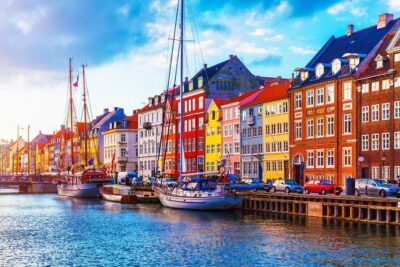
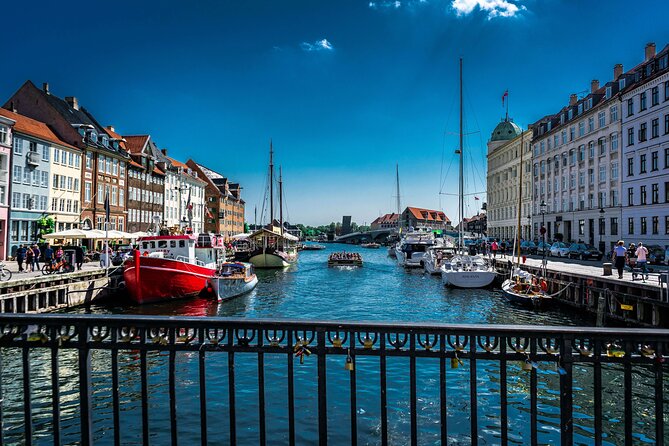
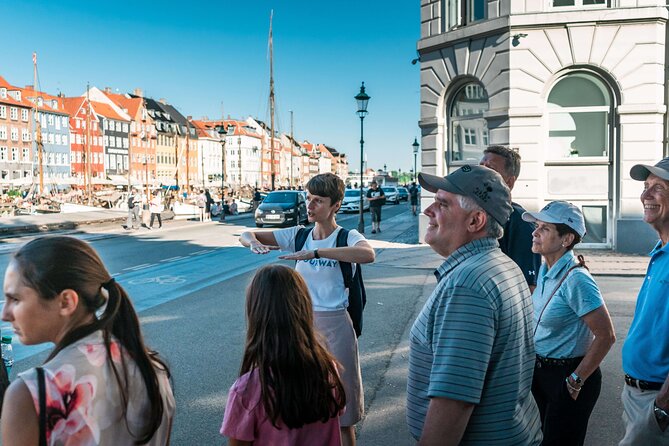
Nyhavn is where Copenhagen’s postcard image becomes real. The canal-side houses around it are nearly 350 years old, and the vibe has changed a lot since the 1970s, when the street became pedestrian-only. Today it’s famous for restaurants, pubs, and cafés that keep going late—hence the nickname about being the longest outdoor bar in Scandinavia.
What I like about having a guide here is that you can separate tourist glitter from real city logic. You learn why the area was reshaped and how the pedestrian move changed daily life. And you also get a literary footnote: Hans Christian Andersen is tied to Nyhavn, which helps the place feel more than just “a pretty street.”
If you arrive hungry, you’ll see plenty of tempting options. If you arrive cold or wet, the shopfronts and indoor places along the harbor help you warm up fast. This is also a stop where you can easily spend extra time later—so treat the guided visit as the foundation.
Kongens Nytorv and the King’s Garden: royal power in walking distance
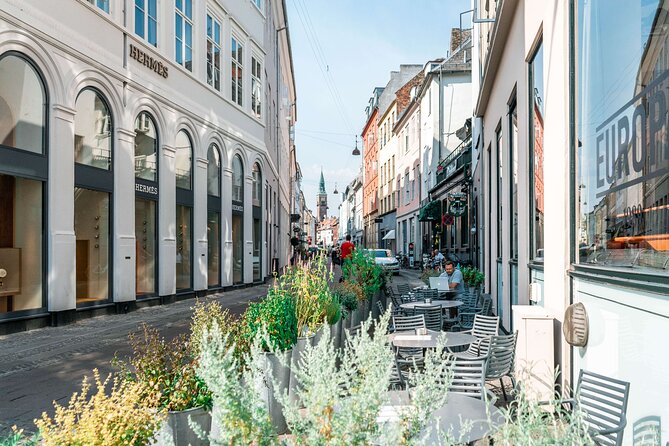
From Nyhavn, you’ll move to Kongens Nytorv (Copenhagen King’s New Square), a square built next to Nyhavn that carries major royal symbolism. The equestrian statue of King Christian V is the anchor, and the surrounding buildings help you read the city like a map of influence.
One practical benefit: the guide points out landmarks you might otherwise lump together as “nice buildings.” You’ll hear what Magasin du Nord means as the flagship store of the department store chain, and you’ll also learn that Hotel d’Angleterre has hosted famous names across different eras. That kind of detail changes how you look at the facades.
Then comes the King’s Garden, described as the oldest park and royal garden in Copenhagen, founded by Christian IV and designed in the Renaissance style. Even in a short stop, it helps you understand how Copenhagen mixes authority (royal planning) with everyday public space (gardens you can actually walk through).
Rosenborg Castle and the Danish crown jewels: what you’ll see and what you may pay for
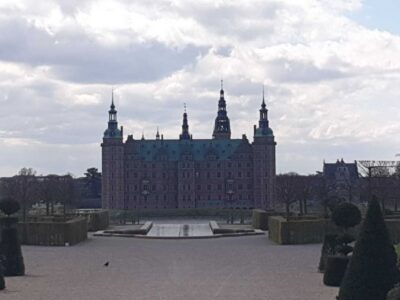
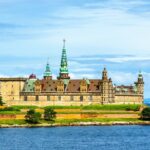
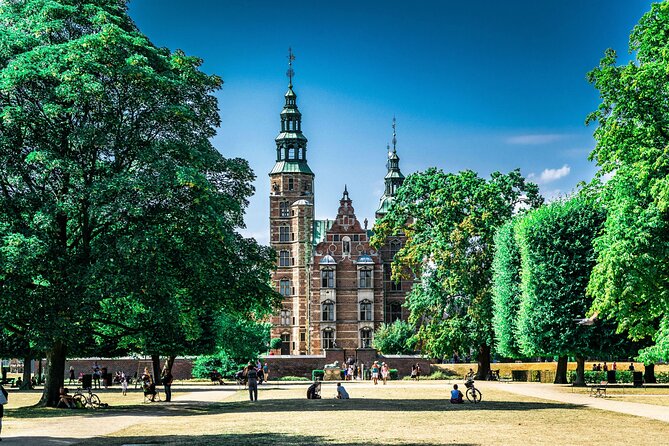
Rosenborg Castle is the kind of stop that makes you pause, even if you don’t go deep inside. It was built as a summer residence for Christian IV, and it’s tied to the Danish crown jewels.
Here’s the key practical point: the stop is included, but the admission is not included. So you can either keep it at “see the area and learn the context,” or you can add the ticket if you want the full museum experience. The crown jewels are a big deal, and the tour context is worth it even if you choose not to pay for every interior.
Why? This is where the Danish crown jewels are kept, and they’re special because they’re the only crown jewels in the world that are both on display as museum exhibits and also worn by royalty. That’s a detail you’ll remember the next time you think about what power looked like hundreds of years ago.
If you’re the kind of traveler who likes interiors and artifacts, you’ll probably decide to add Rosenborg’s entry. If you’re saving your ticket budget, you can still leave with a strong understanding of why Rosenborg matters.
Round Tower, the science angle, and Gråbrødetorv’s Stone of Shame
Next is the Round Tower (Rundetårn), built in the 1600s and known as the oldest observatory in Europe still functioning. It’s a rare Copenhagen sight that gives you the city’s scientific streak, not just its royal image.
Again, ticket entry is not included for this stop. Still, the guide’s context is useful: Danish astronomer Tycho Brahe developed the Tychonian system, an advanced model of the solar system for its time. When someone explains what that meant historically, the tower stops being just a round building and starts looking like a statement about ideas.
Then you’ll land at Gråbrødetorv (The Grey Friars Square). The square is named after the Franciscan monastery that once stood there, and it’s home to something you’ll likely recognize only from the stories: the Stone of Shame. You learn that the original stone is kept at the Natural History Museum, and you also hear the story tied to Leonora Christina, the daughter of Christian IV.
This is one of those stops where a guide earns their fee. Without context, a square can look like any other square. With context, it becomes a chapter.
You can also read our reviews of more private tours in Copenhagen




Helligåndskirken and Strøget: from medieval church beginnings to shopping street rhythm
Copenhagen doesn’t only tell stories through palaces. It does it through its old churches and its street life.
The Church of the Holy Spirit (Helligåndskirken) is among Copenhagen’s oldest churches, built in the 1200s, and you’ll learn that it initially had no tower. That’s the kind of detail that makes you notice architecture differently as you look around.
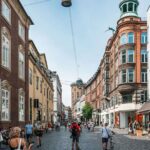
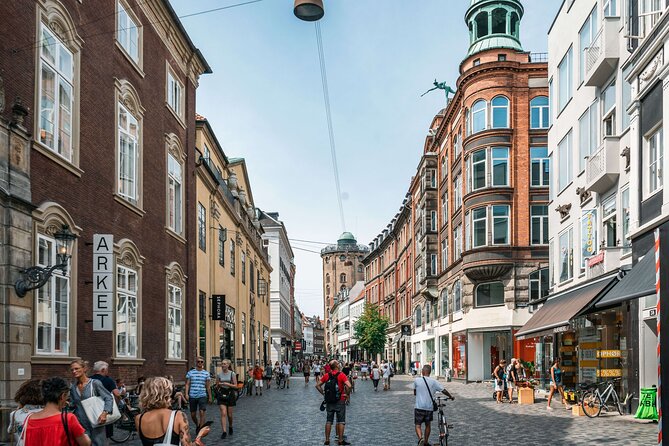
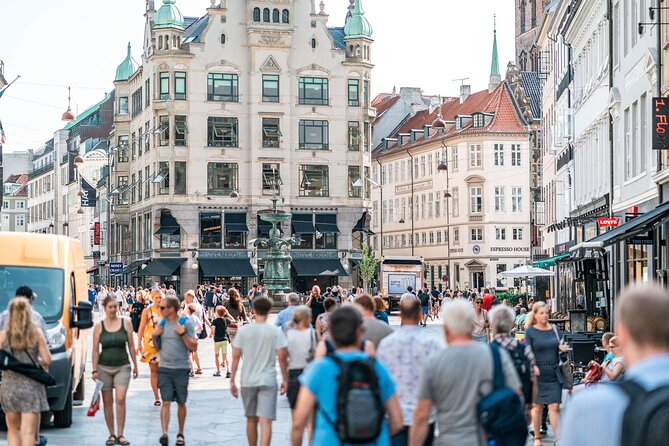
From there you’ll walk into Strøget, one of Europe’s longest pedestrian streets at about 1.11 kilometres, running from the town hall area toward Kongens Nytorv near Nyhavn. If you’re thinking shopping, you’re right—Strøget is known for it. But the more interesting part is how the street feels while you walk it.
You’ll also see street performers along the way—acrobats, magicians, and musicians—so the street isn’t only about shopping bags. It’s part of the city’s day-to-day rhythm.
A practical tip: if you’re sensitive to crowds or noise, Strøget is the part of the walk where you’ll notice it most. On the other hand, it’s also where you can break off later and explore at your own speed, because it’s so easy to navigate.
Højbro Plads: a fire-era square and Bishop Absalon’s statue
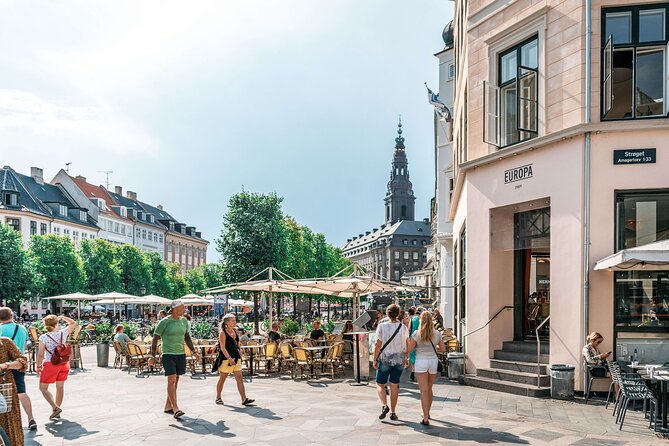
Next up is Højbro Plads, built after the great fire of Copenhagen in the 1700s. That matters because it tells you the city has been rebuilt and reorganized—not just preserved like a museum.
The square includes an equestrian statue of Bishop Absalon, the founder of Copenhagen. Even if you don’t go deep into the founding story, the statue gives you a clear anchor: this is where the city’s origin gets turned into something you can stand in front of.
Depending on the season, you might find Christmas markets happening here in wintertime. Even if you don’t, knowing the square’s calendar connection helps you plan your own day if you’re visiting around the holidays.
Inside Christiansborg Palace: the Parliament seat and the Queen’s Tapestries
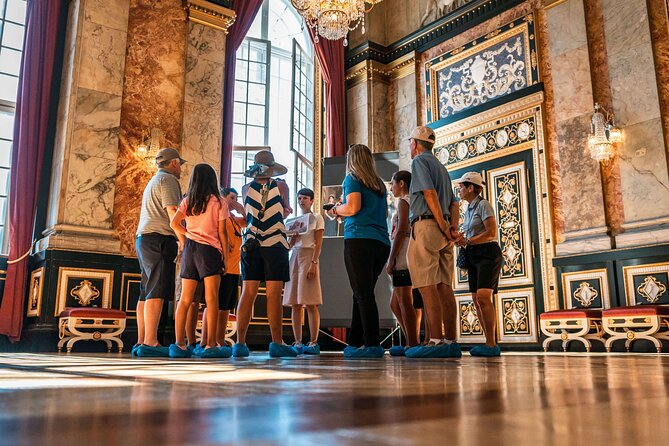
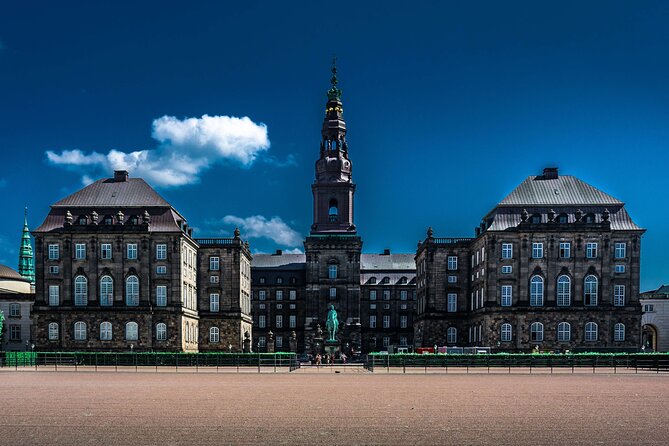
The final stretch brings you to the main event: Christiansborg Palace. Today it’s the seat of Danish Parliament, and it’s also presented as an art-filled palace setting—from antiques to more modern pieces. You’ll likely want your phone charged for the lighting, because palace interiors often reward slow looking.
You’ll spend about one hour at the palace, and entrance is included. The standout highlight named for the tour is The Queen’s Tapestries. Tapestries can sound like a niche detail until you see how they function as both art and power—visual storytelling meant to communicate status.
One more practical consideration: the palace can be partially or fully closed due to His Majesty the King’s official functions. If that happens, the tour provider may swap the visit to Rosenborg Castle. I like having that heads-up because it prevents disappointment. It also means you should expect your route to be flexible, even if the overall idea stays the same.
When the tour ends inside Christiansborg, you can keep going at your own pace nearby. And since it’s about a 10-minute walk back to Nyhavn, you don’t feel trapped in a far corner of the city after the tour.
Price and value: what you’re paying for in this private format
The price listed is $409.41 per person for about 3 hours, and it’s a private experience. That sounds steep until you translate what’s included and what you’re buying: a professional guide, an efficient walking plan with short time blocks, and the Christiansborg Palace entrance fee.
You’re not paying for a bus ride or a long stretch of waiting. You’re paying for someone to:
- point out what matters at each stop,
- help you understand connections between places (royal garden to palace to Parliament, for example),
- and get you through the palace visit with a plan so you don’t wander aimlessly.
Two stops (Rosenborg Castle and the Round Tower) have admission not included. That can actually be a value lever for you: if those interiors are your thing, you can decide to add tickets. If not, you can keep the costs contained while still getting the story context.
Also, the tour is offered in English, uses a mobile ticket, and you can benefit from group discounts if your booking setup qualifies. One detail I appreciate: the tour operates in all weather conditions, so it’s built for real Copenhagen life instead of fair-weather fantasy.
Finally, the fact that it’s commonly booked about 47 days in advance is a good sign. If you’re traveling in a busier season, you’ll want to book early so you can line it up with when you’ll have the most energy for walking.
Who should book this tour (and who might want a different plan)
This works best for:
- First-time Copenhagen visitors who want orientation fast,
- travelers who prefer a guide to point out what’s worth seeing and why,
- couples or small groups who want their own pace within a structured route,
- people who like a mix of royal sites, street scenes, and story-based stops.
It might not be ideal for:
- travelers who want an all-in museum day with included tickets for every interior. Here, palace entry is included, but Rosenborg Castle and the Round Tower are not.
- folks with very limited walking tolerance. The tour is described for moderate physical fitness, and it’s a walking circuit.
If you’re unsure, think about your priorities: if you want a confident “start-to-finish Copenhagen storyline” and you’re happy to add tickets only where you personally care most, this private format is a strong match.
Should you book this Copenhagen & Christiansborg Palace Private Walking Tour?
Yes—if you want a guided, efficient introduction that ends with a meaningful palace interior, not just another exterior photo session. The value lands because Christiansborg Palace entrance is included, the route is built for walking, and the guide brings specific stories that make the city feel connected.
I’d book it especially if you like “why does this place look like this?” history, plus street-level Copenhagen you can actually walk through. If you’re traveling with limited budget for extra admissions, just decide in advance whether you want to pay for Rosenborg Castle and the Round Tower interiors. Either way, you’ll come away with a much clearer sense of how central Copenhagen fits together.
FAQ
Is the tour private?
Yes. It’s a private tour/activity, so only your group participates.
How long is the Copenhagen & Christiansborg Palace walking tour?
It runs about 3 hours.
What is included in the ticket price?
The tour includes a professional guide and the Christiansborg Palace entrance fee. Entrance fees are included on the tour, but Rosenborg Castle and the Round Tower admission are not included.
Where does the tour start and end?
It starts at Nyhavn 1F, 1051 København, Denmark. It ends inside Christiansborg Palace.
What if Christiansborg Palace is closed?
If the palace is partially or fully closed due to His Majesty the King’s official functions, the tour provider may swap the visit to Rosenborg Castle.
Is the tour suitable for people with limited mobility?
It’s described as suitable for travelers with a moderate physical fitness level. The tour involves walking.
Does the tour run in bad weather?
Yes. It operates in all weather conditions, so you’ll want to dress comfortably and appropriately.