REVIEW · COPENHAGEN
Copenhagen City Private Walking Tour
Book on Viator →Operated by OURWAY Tours - Copenhagen · Bookable on Viator
Copenhagen clicks when you have a guide. This private 2-hour walk is built for real attention, not herd-walking, and the commentary can be tuned to what you care about. I also like that the route hits big landmarks fast—Christiansborg, Nyhavn, and the royal sights—without turning the experience into a checklist.
Two standouts for me: the undivided, private-guiding feel, and the way the guide connects places so you understand what you’re looking at. One possible drawback: most of the route is in the busy city center, so street noise is part of the package. If you’re sensitive to traffic sounds, you’ll want to keep that in mind and wear comfortable shoes.
You meet at Højbro Plads and end at Kongens Nytorv, so you can keep exploring right after your walk. It runs in all weather, and you’ll have a mobile ticket plus a guide who keeps the pace workable for a wide range of visitors.
In This Review
- Key highlights at a glance
- Why this private walk works so well in Copenhagen
- Price and value: is $267.07 per person worth it?
- The route in plain English: from Højbro Plads to Kongens Nytorv
- Stop-by-stop: what you’ll see and why each part matters
- Højbro Plads: the view that sets the tone
- Christiansborg Slot: government and royal layers on Slotsholmen
- St. Nicolaj Church: fire history and a view from the tower
- Royal Danish Theatre (Kongelige Teater): old stage, new opera house, and playhouse
- Kunsthal Charlottenborg: art school momentum near the harbor
- Nyhavn: the canal postcard with Andersen fingerprints
- Copenhagen Opera House: modern design, state inauguration
- Amalienborg Palace Museum: where the royal family lives
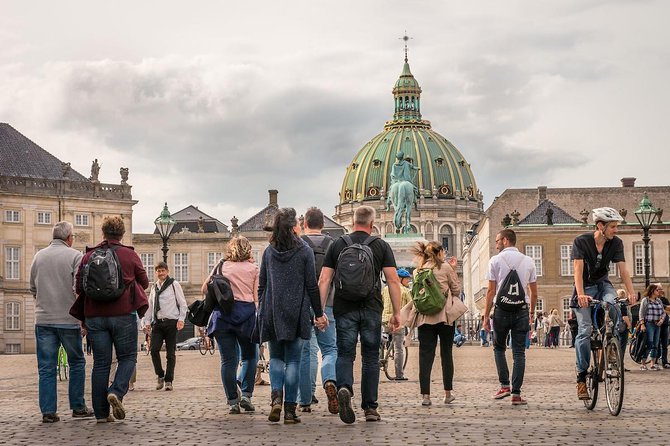
- Frederik’s Church: wedding bells, dome views, and Marble Church
- Sankt Annæ Plads: the border between neighborhoods
- Kongens Nytorv and the skating rink area: institutions and famous hotel history
- What the guide does best: tailored stories, not canned facts
- Walking comfort, timing, and weather reality (2 hours is quick)
- Who should book this private Copenhagen walking tour
- Should you book it?
- FAQ
- How long is the Copenhagen City Private Walking Tour?
- Is this tour private or shared with other groups?
- Where does the tour start and end?
- What’s included in the price?
- Are admission tickets for the sights included?
- Does the tour run in bad weather?
- Is the tour suitable for most people?
- Are service animals allowed?
- Is there free cancellation?
Key highlights at a glance
- Private-only group: you won’t be squeezed into a big crowd
- Tailored commentary based on your interests as you move between sights
- Short stops, big payoff from Christiansborg to Nyhavn to Amalienborg area
- City-center views from Højbro Plads, with landmarks laid out in one glance
- Mix of exteriors and optional interiors since several sites’ tickets aren’t included
- Finishes at Kongens Nytorv so you can branch out toward Nyhavn on your own
Why this private walk works so well in Copenhagen
Copenhagen can feel like a set of postcard scenes—until you learn what’s behind them. This tour is interesting because it keeps you moving through key areas of the city without you having to figure it out yourself. You get a human guide who can point out patterns: how the royal buildings relate to the harbor, how the older city squares connect to modern culture, and why certain streets and canals became famous.
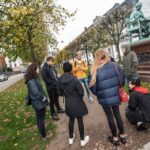
The private format changes the whole mood. You’re not fighting for attention, and you’re not losing key context because you’re standing at the back. If you want to ask about architecture, Danish history, or why a place became famous, you can steer the conversation and keep the walk feeling personal.
It’s also practical. The whole experience is about 2 hours, mostly in the central districts, and designed as a sequence of short viewing moments rather than a long endurance march. You can treat it as a fast orientation layer for the rest of your trip.
You can also read our reviews of more walking tours in Copenhagen


Price and value: is $267.07 per person worth it?
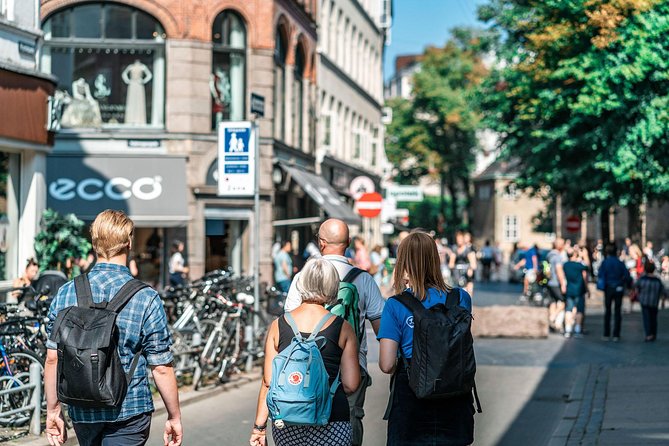
At $267.07 per person, this isn’t a budget “see everything” deal. It’s a paid upgrade for a specific kind of travel: time with a dedicated guide in prime locations, without the friction of group logistics.
Here’s where the value shows up. First, private guiding means your cost isn’t spread across dozens of strangers—you’re buying attention and pacing. Second, the itinerary is concentrated: Højbro Plads to Christiansborg, then over to Nyhavn and onward to the Amalienborg–Frederik’s Church area, finishing at Kongens Nytorv. In two hours, you get a map of the city’s themes: government, royalty, church views, canals, and the performing-arts corridor near the harbor.
The trade-off is that some stops are ticketed separately. Several sites list admission as not included, so you’re paying for guiding and context, not guaranteed indoor access at every location. If you’re the type who wants to go inside multiple places, you might spend extra on entry fees. If you mostly want photos, viewpoints, and stories, the guided walk still works very well.
This tour also tends to get booked early (about 12 days in advance on average), which hints at demand for a compact private intro. If you’re traveling during peak periods, plan ahead so you can match it to your first or second day in town.
The route in plain English: from Højbro Plads to Kongens Nytorv
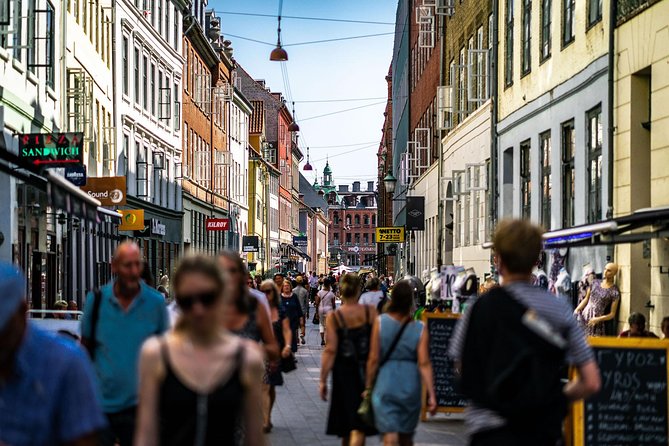
The walking flow is simple. You start near the shopping street area at Højbro Plads, then move across the island of Slotsholmen for the government-palace zone. After that, you head toward landmarks clustered around the harbor and canals—Nyhavn and the opera area—then back toward Frederiksstaden for the royal residences. The last stretch brings you to Kongens Nytorv, a major city square with famous institutions nearby.
Why this matters: you’re not walking long distances for each “chapter.” Each section is short enough to keep energy up, and it’s structured so you can understand how Copenhagen is organized: political center → harbor identity → royal presence → classic squares and major institutions.
You’ll spend only a few minutes at each stop (think 5–15 minutes), which is ideal when you want a first-time orientation. The private guide can also adjust how much time goes toward questions, photos, or viewpoints depending on weather and your interests.
Stop-by-stop: what you’ll see and why each part matters
Højbro Plads: the view that sets the tone
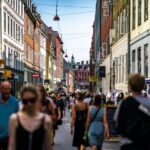
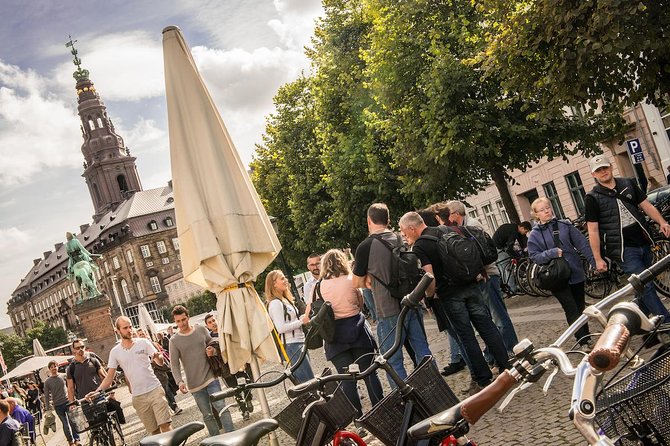
Højbro Plads sits just off Strøget, Copenhagen’s main shopping street. The reason it’s a smart starting point is the view: you can take in Christiansborg Palace and Børsen (the former stock exchange) from here. You also get to spot Bishop Absalon on Horseback, which helps you connect modern city planning to older narratives.
This is where I’d expect you to feel the value of a guide. Instead of wandering, you’re given a visual “frame” for the landmarks you’ll see next. It’s also a low-stress stop with no ticket required, so you begin the tour without worrying about entrances.
You can also read our reviews of more city tours in Copenhagen




Christiansborg Slot: government and royal layers on Slotsholmen
Christiansborg Palace is described as the fifth version of the palace on Slotsholmen, the so-called Palace Island. This is also where Danish Parliament operates, which makes the architecture and setting more than just a scenic background—it’s tied to modern governance and public life.
The only “watch-out” here is that admission isn’t included. If you want to go inside, you’ll need to plan for separate entry time and cost. If you’re fine with exterior context and the guide’s explanation, the stop still delivers because the palace is central to understanding why this island matters.
St. Nicolaj Church: fire history and a view from the tower
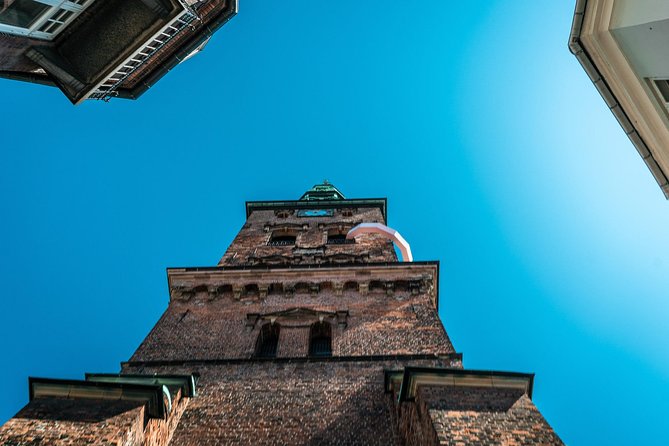
St. Nicolaj Church has a story shaped by disaster and rebuilding. The current building is a modern reconstruction after the Great Fire of 1795, and the tower is one of the city center’s best view points.
Since admission isn’t included, you may need to decide on the spot whether climbing is worth it for you. In two hours, even one ticketed interior can shift the pacing. If the weather is clear, I’d lean toward taking in the tower viewpoint because Copenhagen’s layout is easier to “read” from above.
Royal Danish Theatre (Kongelige Teater): old stage, new opera house, and playhouse
The Royal Danish Theatre today involves the Old Stage on Kongens Nytorv, plus the newer Copenhagen Opera House and the Royal Danish Playhouse down near the harbor front. In other words, this stop points you toward Copenhagen’s performing-arts geography: classics and big institutions in the same neighborhood zone.
Again, admission isn’t included. So treat it as a guided way to connect the dots—where the theater complex begins, where the opera happens, and why the harbor area feels like a cultural spine.
Kunsthal Charlottenborg: art school momentum near the harbor
Charlottenborg is tied to Kunsthal Charlottenborg and the Danish Art Library. One of the most useful details here: each year, graduates of the Art Academy put on an extensive exhibition. You can sometimes see work by up-and-coming artists, and there may be an opportunity to purchase pieces at reasonable prices.
Because admission is not included, you might not be able to go inside during your stop time. But even from the outside, the guided context helps. You’ll understand this isn’t just a scenic building—it’s part of Denmark’s ongoing art pipeline.
Nyhavn: the canal postcard with Andersen fingerprints
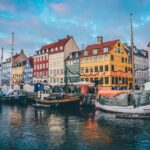
Nyhavn is the big classic: colorful buildings line the canal, and it’s easy to see why it’s a must-see. What makes this stop extra for curious visitors is the Hans Christian Andersen connection. In house No. 20, he wrote The Princess and the Pea. During his lifetime he also lived at No. 67 and No. 18.
This is also where a tailored guide really pays off. If you care about literature, you’ll likely linger on Andersen’s references and how the neighborhood shaped the stories. If you care more about architecture and urban life, you can focus on the canal edge, building rhythm, and why this area became so iconic.
The good news: Nyhavn is listed as free to access in the tour flow, so you can enjoy it even if you skip paid entrances.
Copenhagen Opera House: modern design, state inauguration
The Copenhagen Opera House is described as one of the world’s most modern and best-equipped opera buildings. The A.P. Møller Foundation donated it to the state in August 2000, and it was inaugurated in 2005. You’ll also learn its location logic: it sits on the island of Holmen, opposite Amalienborg Palace.
This stop is about contrast. You just came from the charm of Nyhavn; now you’re facing sleek contemporary performance architecture. If you’re into how cities evolve—old harbor life meeting new public art spaces—this is a key “now vs then” moment. Admission isn’t included, so expect the tour time to focus on exterior context and orientation.
Amalienborg Palace Museum: where the royal family lives
Amalienborg is the official residence of the Royal Family. You’ll be told about the households: Margrethe lives in the palace on the left, closest to the waterfront, while King Frederik lives in the palace opposite her, with his wife Mary and their four children.
This stop is short, but it’s meaningful because it turns a set of buildings into a living arrangement. You’re learning how the royal presence is organized in the space around you.
Admission isn’t included, so if the goal is deep museum-style time, you’d likely add it separately. For this tour, you’ll get the big picture and a clear sense of who lives where.
Frederik’s Church: wedding bells, dome views, and Marble Church
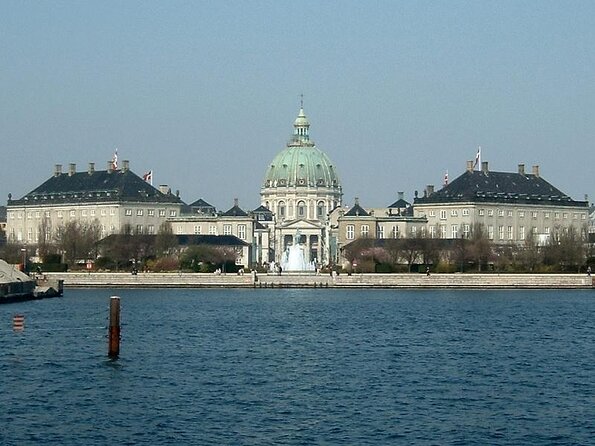
Frederik’s Church—also known as the Marble Church—is dated to the 1700s. It’s popular with couples who want to get married, and wedding bells chime nearly all day on Fridays and Saturdays. You can also enjoy a great view from the top of the dome, which can be visited every day.
This is one of the stops I’d call “most likely to surprise you.” From the outside, it’s already a landmark. With the guide’s context, it becomes a place tied to real-life moments, not just architecture.
As admission isn’t included, you’ll need to decide if you want to spend time going up. If your schedule allows and you want the dome viewpoint, it’s a strong candidate because it directly helps you see Copenhagen’s city center layout.
Sankt Annæ Plads: the border between neighborhoods
St. Ann’s Square (Sankt Annæ Plads) is described as a border between the city center neighborhoods of Nyhavn and Frederiksstaden. The area includes park space, statues, and embassies.
At first, this can sound like a quick “pass-through” stop. But with a guide, it becomes useful. You start understanding how Copenhagen segments into characterful areas and how small squares mark transitions between them. It’s also a good breather after longer-looking stops.
This stop is free in the tour flow, so you can treat it as a pause without ticket stress.
Kongens Nytorv and the skating rink area: institutions and famous hotel history
You finish at Kongens Nytorv, a large central square where you can spot historical buildings around the area. The tour highlights include the Magasin du Nord department store, and Hotel d’Angleterre. The hotel’s name may sound like pure luxury, but it began as a restaurant called The Strong Man’s Garden and later added rooms.
The provided detail that sticks is that the hotel has housed famous names such as Winston Churchill, Bill Clinton, Ozzy Osbourne, and Neil Diamond. You’ll also see the skating rink area (Skojtebane) connected to Kongens Nytorv.
This ending is smart for independent exploration. After the tour, you’re in a place that’s both central and full of nearby options, including a convenient link back toward Nyhavn.
Admission is listed as free for this stop during the tour flow, so your final moments don’t hinge on extra tickets.
What the guide does best: tailored stories, not canned facts
A walking tour can be scripted. This one is positioned as private guiding with commentary tailored to your interests. That difference matters because Copenhagen has layers. If you love architecture, the stories can focus on building styles and what each complex represents. If you’re more into culture, the guide can route the conversation through theaters, opera, and the art space at Charlottenborg.
The practical payoff is that your questions can shape the pacing in real time. If something clicks—like the Great Fire of 1795 in St. Nicolaj Church or Andersen’s specific address connections in Nyhavn—you can spend a bit more time where the story feels alive.
I also like that there’s evidence of friendly, high-energy guidance in the feedback associated with this experience. Names like Silke and Ulf Dahlin show up in the guide profiles, with comments about being pleasant, thoughtful, and full of energy. That matters because in a 2-hour tour, the guide’s tone becomes part of the value.
Walking comfort, timing, and weather reality (2 hours is quick)
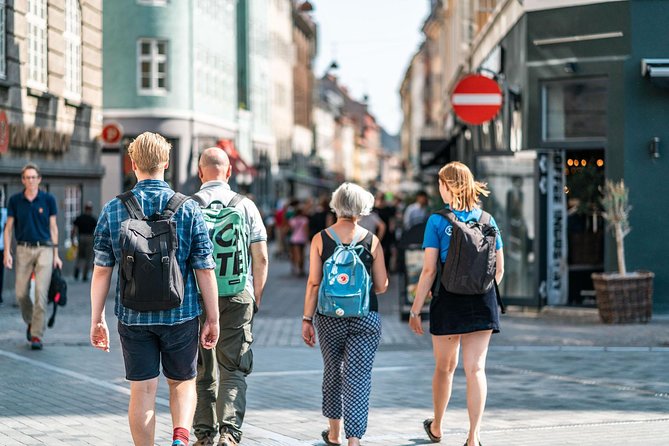
This tour is designed for comfortable walking in the city center. It runs in all weather conditions, so you should dress for rain or wind and keep a flexible mindset. Street noise is unavoidable in the central areas, so if you’re relying on hearing every word, you’ll want to come ready with good walking stamina and patience.
The stop durations are short—often 5–10 minutes—so you get repeated chances for photos and orientation, but not long free time at each site. That format keeps the tour from dragging, yet it also means you won’t have hours to wander every interior space. If you know you want to go inside a specific location, bring that intention and ask the guide how to handle it within the 2-hour window.
Comfortable shoes are a must. Copenhagen’s streets are walkable, but you’ll be on your feet, and you don’t want sore ankles cutting into your questions.
Who should book this private Copenhagen walking tour
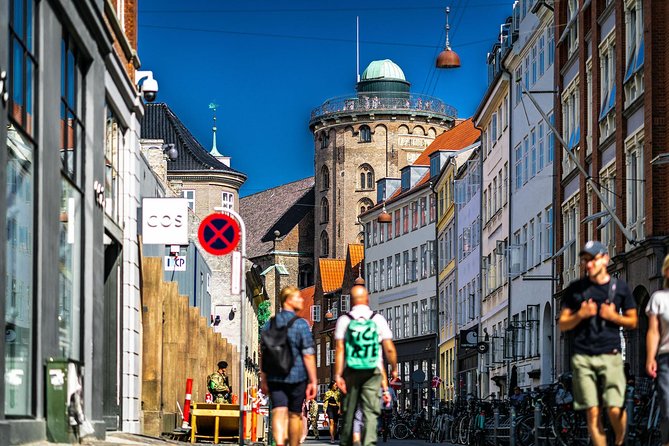
This is a great fit if:
- You want a first-time orientation that still feels personal
- You’re traveling with a small group and prefer private guiding over crowds
- You like your history and culture told with real place names and clear context
- You want a route that balances royalty, canal life, and major city squares
It might be less ideal if you’re hoping to spend long stretches inside museums or churches. Many admissions aren’t included in the tour flow, and the time at each stop is brief. In that case, you could still enjoy the walk, but plan on adding interior visits separately later.
Price-wise, I think it makes the most sense when you can share the experience with someone else in your travel circle. But even as a solo traveler, the value is strongest if you’ll use the guide’s flexibility and ask lots of questions.
Should you book it?
I’d book this if you want your Copenhagen trip to start with clarity. The route is focused on the most “readable” parts of the city center—government at Slotsholmen, the theater/opera cultural corridor, Nyhavn’s Andersen connections, and the royal and church landmarks around Amalienborg and Frederik’s Church. With a private guide, those stops feel like a story you can actually follow in real time.
Skip or consider alternatives if your priority is deep museum time or long interior visits, because several sites have admissions not included and the tour keeps stops relatively short. Also, if noise bothers you, remember the city center traffic hum is part of the environment.
If you can accept those trade-offs, this private walk is one of the most efficient ways to get your bearings fast and build a mental map you’ll use all week.
FAQ
How long is the Copenhagen City Private Walking Tour?
The tour lasts about 2 hours.
Is this tour private or shared with other groups?
It’s private. Only your group participates.
Where does the tour start and end?
It starts at Højbro Plads and ends at Kongens Nytorv.
What’s included in the price?
A professional guide is included.
Are admission tickets for the sights included?
Admission tickets are not included for several stops. Some stops are listed as free within the tour flow, while others require tickets if you want to go inside.
Does the tour run in bad weather?
Yes. It operates in all weather conditions, so wear comfortable clothing for walking in rain or wind.
Is the tour suitable for most people?
Most travelers can participate.
Are service animals allowed?
Yes, service animals are allowed.
Is there free cancellation?
You can cancel for a full refund if you cancel at least 24 hours in advance of the experience start time.