REVIEW · COPENHAGEN
City Sightseeing Copenhagen Hop-On Hop-Off Bus Tour
Book on Viator →Operated by City Sightseeing Ltd - Europe · Bookable on Viator
Copenhagen from a bus beats guessing the route. You get hop-on hop-off freedom on modern open-top double-deckers, with free headphones and stop access to big sights like Tivoli Gardens and Amalienborg Palace. One catch: if you’re unsure which stop to use (or miss the bus), the wait can turn into a cold, frustrating hour.
This is a smart first-day tool because the routes skim the city’s main photo zones and classic neighborhoods, so you can decide what’s worth your feet. I also like that you’re not locked into one line—your ticket covers multiple routes over 24, 48, or 72 hours, with a map and free WiFi onboard.
My only real hesitation is planning around the timetable: one route is frequent, but two others run at set times. On a rainy or busy day (and Copenhagen can get busy), you’ll want to show up a bit early and double-check the right route color and stop name.
In This Review
- Key takeaways
- Getting Oriented Fast in Copenhagen’s Prime Sight Zones
- Buses, Headphones, and the Audio Guide Reality Check
- Route Choices: Classic, Colourful, and the Carlsberg Loop
- Stop-by-Stop: The Classic Route’s Best Photo and Walk Zones
- Ved Stranden / Stroget (Stop 1) — the central anchor
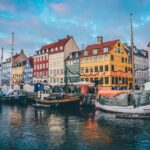
- Nyhavn (Stop 2) — colorful canals, easy strolling
- Amalienborg Palace / Ofelia Plads (Stop 3) — royal Copenhagen vibes
- Gefion Fountain (Stop 4) — quick landmark break
- The Little Mermaid (Stop 5) — postcard target
- Langelinie (Stops 6 and 7, seasonal) — waterfront promenades
- Rosenborg Castle / SMK (Stop 8) — heritage plus museum area
- Gammeltorv (Stop 9) — old-center street life
- Rådhuspladsen / City Hall Square / National Museum of Denmark (Stop 10)
- Tivoli / Radisson Collection Royal Hotel (Stop 11) — amusement-park timing
- Fisketorvet / Shopping Mall / Tivoli Hotel (Stop 12)
- Kalvebod Waves / Marriott Hotel (Stop 13) — modern waterfront feel
- Søren Kierkegaards Pl. 1 (The Black Diamond / DAC / BLOX) (Stop 14)
- Stop-by-Stop: The Colourful Route for Food, Neighborhoods, and Quirky Stops
- Christianshavn (Stop 2) — canals and character nearby
- Freetown Christiania (Stop 3) — alternative city culture
- Det Kongelige Teater – Operaen (Stop 4) — major performance landmark
- Reffen (Street Food / Skøjteøen) (Stop 5) — eat like you mean it
- Casino Copenhagen (Islands Brygge / Casino Copenhagen) (Stop 6) — waterfront entertainment area
- Stop-by-Stop: The Carlsberg Route for Zoo, Gardens, and Brewery-Era Copenhagen
- Planetarium (Stop 2) — science-and-sky option
- Gammel Kongevej (Stop 3) and Copenhagen University Horticultural Gardens (Stop 4)
- Frederiksberg Centret and Frederiksberg City Hall (Stops 5 and 6)
- Royal Copenhagen – Outlet (Stop 7)
- Copenhagen Zoo / Cisternerne (Stop 8)
- De Små Haver (Pile Allé) / Carlsberg / Bakkehuset (Stop 9)
- Frederiksberg Garden / Frederiksberg Alle (Stop 10) — classic garden stroll
- Meatpacking District / Scandic Kodbyen (Stop 11)
- When to Hop Off: Tivoli, Christiania, and the Church with the Helix Spire
- Time the Ride: Frequencies, Fixed Departures, and Bad-Weather Strategy
- Price and Value: What $45.71 Buys You (and What It Doesn’t)
- Where This Tour Fits Best (and Where It Might Frustrate You)
- Should You Book This Copenhagen Hop-On Hop-Off Bus?
- FAQ
- How long is the City Sightseeing Copenhagen hop-on hop-off bus tour?
- How often do the buses run on the Classic Route?
- What are the departure times for the Classic Route?
- Do the other routes run on a schedule or all day?
- What languages is the audio guide available in?
- Can I use a mobile ticket on this tour?
- Is WiFi included?
- What attractions are covered on the routes?
- What is not included in the ticket price?
- Is free cancellation available?
Key takeaways

- Open-top double-decker comfort with free headphones for the audio guide
- Three route options so you can focus on the center, neighborhoods, or the Carlsberg area
- Major landmarks included along the way: Nyhavn, Amalienborg, Little Mermaid, Tivoli, Rosenborg
- Stop names can be confusing if you’re relying on acronyms or signage that isn’t prominent
- Timing matters: one loop runs often, while other routes have fixed departures
Getting Oriented Fast in Copenhagen’s Prime Sight Zones
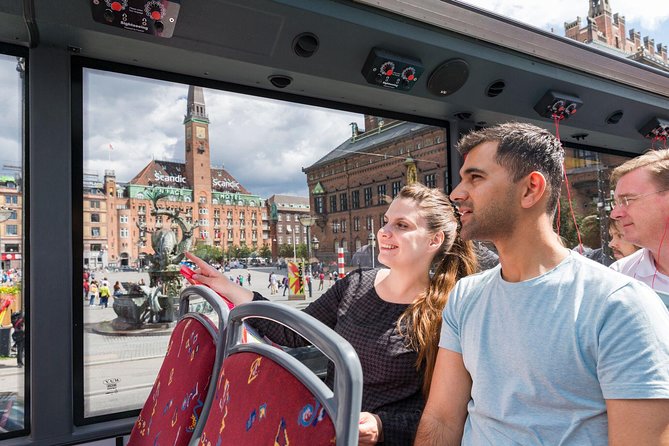
This bus is built for one big job: helping you get your bearings fast in a city that rewards slow walking. Instead of committing to one long day of museums, you can split your time into bite-size visits—ride, get off, explore, then board again when you’re ready.
The route web is what makes it practical. You’ll pass straight by the postcard stuff (Nyhavn, the Little Mermaid area, the royal district) and also hit the places you’d normally have to stitch together with multiple transfers. That means you’re spending less time figuring out logistics and more time actually seeing Copenhagen.
And because your ticket gives flexible access across 24/48/72 hours, it’s not just a one-and-done loop. If you skip Tivoli the first time around, you can come back the next day and hop off again.
You can also read our reviews of more city tours in Copenhagen

Buses, Headphones, and the Audio Guide Reality Check
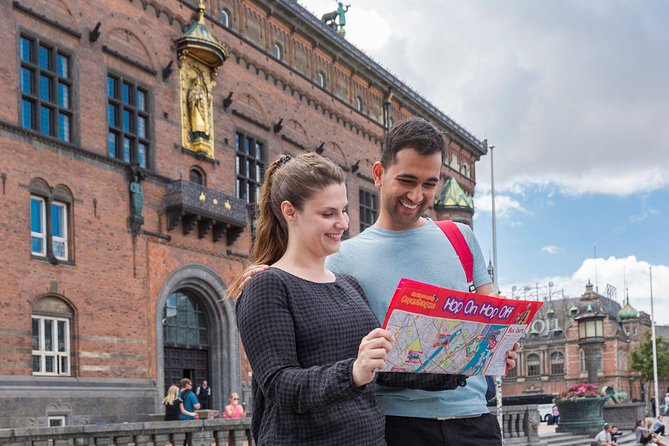
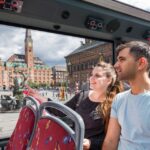
The ride itself is comfortable and very “sit back, look up.” These are modern open-top double-deckers, and you get free headphones—handy in windy spots along the waterfront. The audio is offered in English, and the tour materials also indicate multiple language options (the product info mentions both 12 languages and a 6-language audio guide, so expect variation by setup).
Here’s the practical tip: use the headphones right away. There have been reports of earpieces not working after trying multiple pairs, and if that happens to you, you don’t want to wait until later to realize the audio is silent. Also sit where you can hear clearly—front and upper deck seats tend to work best for both sound and views.
One more thing: the audio is helpful, but it won’t magically prevent missed context. Some stops are very close to what you want to see, but the narration may not cover every detail at every exit point. If you care about a specific building or story, do a quick look-up before you get off so you know what to aim for on foot.
Route Choices: Classic, Colourful, and the Carlsberg Loop
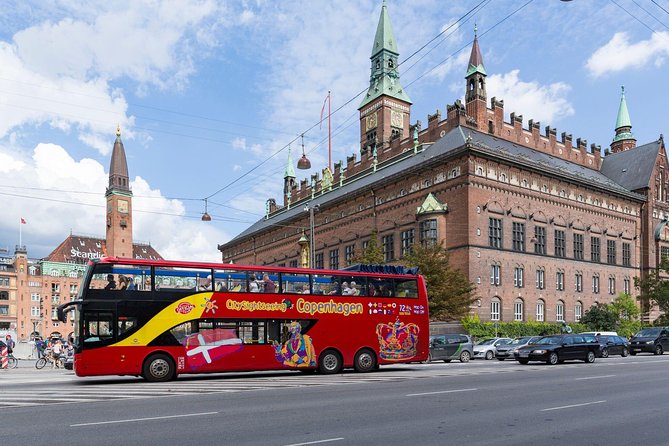
This is not one single route. You’re choosing among three different loops, each with a different length and rhythm.
Classic Route (about 90 minutes, most frequent): it runs roughly every 35 minutes. The first departure is from Ved Stranden at 10:00, and the last departure from Ved Stranden is at 4:30. The last part matters because it sets your window for hopping off and still getting back on board.
Colourful Route (about 55 minutes): this one is shorter and runs at set departures—12:00, 2:00, and 4:00 from Tivoli, with departures also listed from Ved Stranden at 12:15, 2:15, and 4:15.
Home of Carlsberg Route (about 45 minutes): shorter again, and scheduled at 11:15, 1:15, and 3:15 from Tivoli. Additional timing points are listed around Copenhagen Zoo and Home of Carlsberg, so it’s best suited when you already know you want that area.
If you like spontaneity, start with the Classic Route. If you want a themed sweep—streetscapes and food zones for the Colourful loop, or industrial design and brewery surroundings for Carlsberg—pick the schedule that matches your day.
Stop-by-Stop: The Classic Route’s Best Photo and Walk Zones
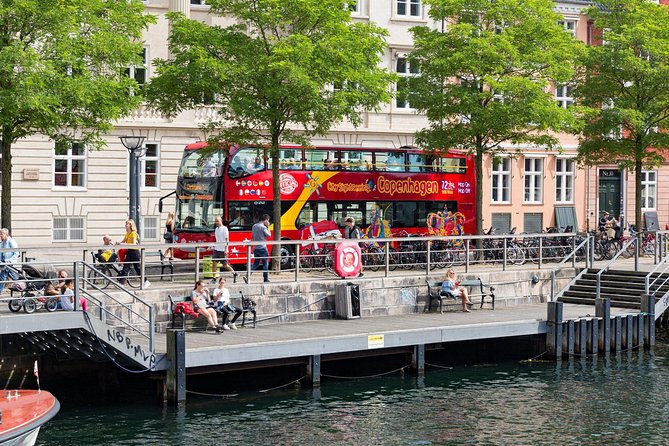
The longest loop threads together Copenhagen’s “walk-off and wander” highlights. You’ll get repeated chances to see the city from different angles, which is exactly what you want when you’re deciding what to revisit later.
Ved Stranden / Stroget (Stop 1) — the central anchor
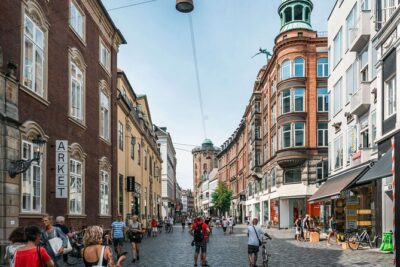
This is a useful starting point because it puts you near the pedestrian shopping core. Even if you don’t plan to shop, it’s a good place to orient yourself and map out where you’ll walk next.
One drawback: if signage at stops isn’t clear, you’ll feel it most at the first boarding point. Aim to arrive before the bus is due, especially if you’re unfamiliar with Copenhagen stop names.




Nyhavn (Stop 2) — colorful canals, easy strolling
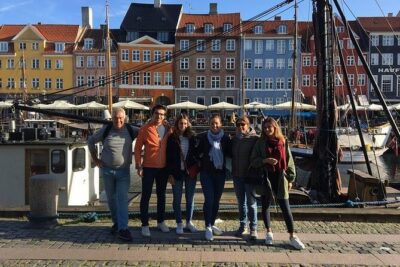
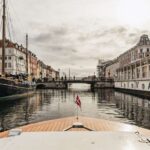
Nyhavn is the kind of place where one ride-by becomes a long hang-out. You can hop off to walk the waterfront and pop into the canal-side atmosphere, then board again when your feet and photos need a break.
If you care about photos, this is a great stop to time with daylight. If it’s gloomy, you can still enjoy the canal scene—just expect the lighting to be less forgiving.
Amalienborg Palace / Ofelia Plads (Stop 3) — royal Copenhagen vibes
This stop is built for people who want “royal” without hours of planning. You’re close enough to walk and look around the palace area when you want, without paying an all-day tour cost.
A note from real-world experience: at least some riders have reported that the bus didn’t stop at a specific stop as expected. So when you see the stop announcement, watch the signage and have your boarding plan ready.
Gefion Fountain (Stop 4) — quick landmark break
Fountains make good micro-stops: you get a visual break, stretch your legs, and keep moving. It’s also the kind of spot that helps the route feel less like one long “passing scenery” experience.
The Little Mermaid (Stop 5) — postcard target
This is the big one. Even if you only do a short look, it’s worth it for the iconic Copenhagen reference point. The real win is that it sits right along a broader waterfront day, not as a lonely detour.
Langelinie (Stops 6 and 7, seasonal) — waterfront promenades
Langelinie is where you can shift from landmarks to atmosphere. The tour lists Langelinie stops in May–September with two different markers, which is a hint that the exact stop setup may change by season.
If you plan to linger on foot, treat this as your “walk and reset” moment.
Rosenborg Castle / SMK (Stop 8) — heritage plus museum area
Rosenborg Castle is a strong “get off and go inside” candidate, but entry tickets aren’t included—so plan your budget if you want to see inside. The proximity to SMK also makes this area convenient if you’re mixing palace views with museum time.
Gammeltorv (Stop 9) — old-center street life
Gammeltorv gives you old-town energy without requiring a major detour. It’s a good pivot point: you can hop off for a short wander and then keep the bus as your moving backbone.
Rådhuspladsen / City Hall Square / National Museum of Denmark (Stop 10)
This is central Copenhagen, with big public-space energy. If you’re the kind of person who likes to understand the city’s layout, it’s also helpful for connecting neighborhoods.
Again, if you want museum entry, you’ll pay separately. The bus is there for proximity and orientation.
Tivoli / Radisson Collection Royal Hotel (Stop 11) — amusement-park timing
Tivoli is one of Copenhagen’s signature experiences, but the bus only gets you close. Some stops are marked as closed until further notice, including Stop 11, so check before you build your day around a specific Tivoli exit point.
If Tivoli is on your list, do it earlier rather than later. It’s the kind of place where hours can disappear fast once you’re inside.
Fisketorvet / Shopping Mall / Tivoli Hotel (Stop 12)
This is a practical middle step, especially if you need a coffee, a snack, or a place to regroup. It also makes it easier to keep moving when weather turns.
In plain terms: it’s a “bridge” stop between major sights.
Kalvebod Waves / Marriott Hotel (Stop 13) — modern waterfront feel
This area can be a nice contrast to the older core. Use it if you want different city texture without a long walk.
Søren Kierkegaards Pl. 1 (The Black Diamond / DAC / BLOX) (Stop 14)
This is for people who like architecture and modern design. The stop names give you enough to aim your visit—check what’s open, then get off if it matches your interests.
Stop-by-Stop: The Colourful Route for Food, Neighborhoods, and Quirky Stops
The Colourful loop is shorter, and that’s its strength. It’s built for a “sample the city” day—less time on the bus, more time picking neighborhoods you actually want to explore.
Christianshavn (Stop 2) — canals and character nearby
This stop gets you into a different Copenhagen rhythm. Hop off when you want to trade landmark ticking for a bit more neighborhood wandering.
Freetown Christiania (Stop 3) — alternative city culture
Christiania is known for being unlike the rest of Copenhagen, and the bus’s closeness makes it accessible without complex routing. You can do a short walk-through for context, then decide how long you want to stay.
Det Kongelige Teater – Operaen (Stop 4) — major performance landmark
Even if you’re not seeing a show, this is a notable architectural and city-center marker. It works well as a photo stop that turns into a walk if you feel like it.
Reffen (Street Food / Skøjteøen) (Stop 5) — eat like you mean it
This is one of the easiest stops to use for a meal plan because the area is known for street food vibes. Since food and drinks aren’t included, you’ll pay on your own, but it can simplify where to eat.
Casino Copenhagen (Islands Brygge / Casino Copenhagen) (Stop 6) — waterfront entertainment area
This stop is useful if you want to end the loop near water and keep your options open for a later walk.
Stop-by-Stop: The Carlsberg Route for Zoo, Gardens, and Brewery-Era Copenhagen
If you want to see the Copenhagen beyond the immediate postcard center, the Carlsberg loop is the one to plan for.
Planetarium (Stop 2) — science-and-sky option
This is a good choice if you want something indoor or timed during less-than-ideal weather.
Gammel Kongevej (Stop 3) and Copenhagen University Horticultural Gardens (Stop 4)
These are the kinds of stops that feel calmer than the waterfront circuit. If your idea of a good day includes peaceful gardens or educational settings, this loop fits.
Frederiksberg Centret and Frederiksberg City Hall (Stops 5 and 6)
These give you a more local, everyday Copenhagen feel. It’s not the tourist “top five” route, but it can be excellent if you like mixing sightseeing with real neighborhoods.
Royal Copenhagen – Outlet (Stop 7)
If design and ceramics are your thing, this stop can make the day feel more personal. It’s a shopping-style stop, so decide early if it’s worth time for you.
Copenhagen Zoo / Cisternerne (Stop 8)
This is another “choose-your-level” stop: you can pass through for area views or plan a longer zoo/garden day if that’s your priority. The tour doesn’t include entry, so budget accordingly if you plan to go in.
De Små Haver (Pile Allé) / Carlsberg / Bakkehuset (Stop 9)
This stop name is packed with cues. It’s a strong fit for a walking break when you want green space and the Carlsberg-area connection.
Frederiksberg Garden / Frederiksberg Alle (Stop 10) — classic garden stroll
This is a “slow down” stop. Even a short visit gives you a reset after you’ve been doing landmark hunting.
Meatpacking District / Scandic Kodbyen (Stop 11)
This provides a more modern, food-and-activity feel. Use it near the end of the day if you want dinner options and city energy.
When to Hop Off: Tivoli, Christiania, and the Church with the Helix Spire
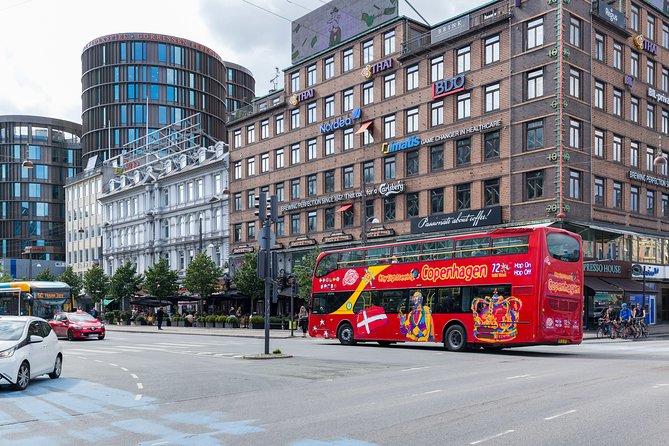
A big advantage of hop-on hop-off is that you don’t have to commit to every attraction. Pick 1–2 “anchor” get-offs per route and treat the rest as scenery you’ll notice more than obsess over.
For example, Tivoli Gardens is worth giving real time. It’s a world-famous amusement park, and if you only step off for five minutes, you’ll feel robbed. Aim to enter with enough daylight and energy to stay.
Christiania is similar: it works best when you approach it with curiosity and enough time to walk slowly rather than just snap a few pictures and rush out.
And then there’s Our Saviour’s Church with its decorative helix spire and winding staircase. It’s the kind of structure people remember even if you’re not sure you’ll go inside. If you want the best chance of a view, don’t wait until you’re exhausted—plan it earlier in the day.
Time the Ride: Frequencies, Fixed Departures, and Bad-Weather Strategy
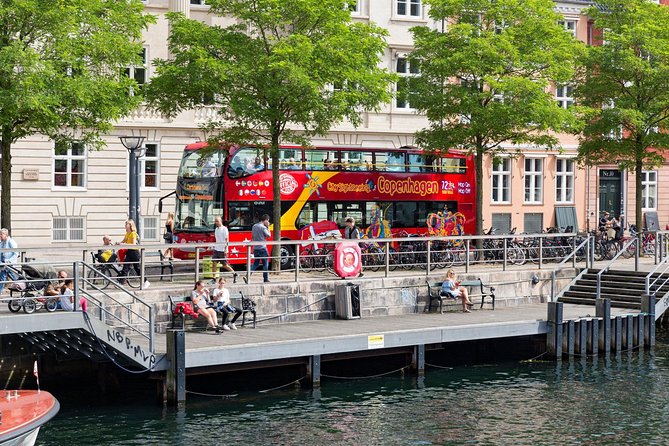
The Classic Route is the most forgiving because it runs about every 35 minutes. If you miss one, the next one is usually not far behind.
But the Colourful and Carlsberg routes run at specific times, so you’ll want to build your day like a schedule person. With limited departures, you can’t always “just catch the next bus” the way you can on the classic loop.
Bad weather matters too. There are real reports of long waits and frustration when the cold and rain show up and buses don’t arrive right when expected. My practical fix is simple: arrive early at the stop, keep an eye on the route markings, and have a walking fallback plan for at least one “must-see” location.
Price and Value: What $45.71 Buys You (and What It Doesn’t)
At about $45.71 per person, this tour isn’t the cheapest way to see Copenhagen. But value comes from how many decisions it helps you make.
You get:
- access for 24/48/72 hours
- multiple city routes that hit the main sights area-by-area
- audio on free headphones, plus a map and WiFi
What you do not get:
- food and drinks
- hotel pickup/drop-off
- entry tickets to attractions
So the deal works best if you use the bus to reduce taxi rides and to avoid spending your whole day trapped in a single itinerary. If your plan is to do only one short walk and one quick photo, it can feel pricey.
If you’re building a two- or three-day sightseeing block and want flexibility, it starts to look like a bargain—especially if you’re using the bus to decide what to revisit on foot later.
Where This Tour Fits Best (and Where It Might Frustrate You)
This bus is ideal for:
- first-timers who want quick city orientation
- people who like a self-guided day with built-in transport
- visitors who want to mix big landmarks with neighborhood wandering
- anyone who likes to photograph from a moving viewpoint without commuting on bikes or buses all day
It may frustrate you if:
- you hate schedules, since two routes have set departure times
- you rely solely on vague stop names and acronyms (the stop signage can be unclear)
- you expect every stop to match your exact hope instantly—some riders report confusion when stops weren’t handled the way they expected
One small mindset shift helps: treat the bus as a tool, not a perfect script. If you plan to hop off for the one or two things you care most about, you’ll get a great day out of it.
Should You Book This Copenhagen Hop-On Hop-Off Bus?
I’d book it if you want an easy, low-effort way to see Copenhagen’s main sights and still keep control of your time. The open-top ride, free headphones, and the fact that routes cover everything from Nyhavn to royal Copenhagen to Tivoli makes it a strong value play—especially over 48 or 72 hours.
I would skip (or at least compare options) if you’re very timing-sensitive, dislike finding stops in a moving city, or you already know you’ll only see one cluster of attractions. In that case, you might spend more time tracking the bus than enjoying the streets.
Best move: if you do book, pick your route first, then plan your top 1–2 get-offs around that timetable. That’s when the tour feels worth every dollar.
FAQ
How long is the City Sightseeing Copenhagen hop-on hop-off bus tour?
The Classic Route is about 90 minutes. The Colourful Route is about 55 minutes. The Carlsberg Route is about 45 minutes.
How often do the buses run on the Classic Route?
The Classic Route runs with a frequency of every 35 minutes.
What are the departure times for the Classic Route?
From Stop 1 (Ved Stranden), the first departure is at 10am and the last departure is at 4:30pm. From Stop 12 (Tivoli), the first departure is at 9:30am and the last departure is at 4:10pm.
Do the other routes run on a schedule or all day?
The Colourful Route has set departures at 12pm, 2pm, and 4pm from Stop 12 (Tivoli) and at 12:15pm, 2:15pm, and 4:15pm from Stop 1 (Ved Stranden). The Carlsberg Route has set departures at 11:15am, 1:15pm, and 3:15pm from Stop 12 (Tivoli).
What languages is the audio guide available in?
The tour info states audio commentary is available in 12 languages, and the included details also specify audio in 6 languages with free headphones.
Can I use a mobile ticket on this tour?
Yes. Mobile tickets are supported, and paper vouchers are also accepted.
Is WiFi included?
Yes, free WiFi and a map are included.
What attractions are covered on the routes?
Stops include major sights such as Tivoli Gardens, Amalienborg Palace, the Little Mermaid area, Rosenborg Castle, and Christiania, among other locations.
What is not included in the ticket price?
Food and drinks are not included. Entry to attractions is not included, and there is no hotel pickup or drop-off.
Is free cancellation available?
Yes. You can cancel up to 24 hours in advance for a full refund. If you cancel less than 24 hours before the experience starts, the amount paid is not refunded.