REVIEW · COPENHAGEN
Walk & Canal Tour: Copenhagen Highlights + Changing of the Guards
Book on Viator →Operated by Go like a local · Bookable on Viator
Three hours can change your Copenhagen view.
This walk-and-canal tour strings together classic sights and local city rhythm, starting at Copenhagen Central Station and finishing at Amalienborg for the daily guard ceremony. I especially like how the route mixes major landmarks with everyday neighborhoods, so you get both the postcard moments and the city feel that makes Copenhagen click.
I love the format: short stops, clear stories, and a practical mix of walking with an electric harbor ferry for the water sections. Tivoli Gardens, the Black Diamond (Royal Danish Library), and Christiansborg Palace are all handled with quick context and good sightlines, so you spend time looking at the right places instead of hunting around. And if your guide is Michael, Maybritt, Signe, Mia, Andreas, Eric, Otto, Andy, or Line, you’ll recognize the same pattern from the praise: friendly, organized pacing and questions answered without turning the day into a script.
One consideration: the canal timing can be affected by ferry space. The ferry is part of the public canal network, so seats can’t be reserved, and on busier days it may fill or cancel—meaning you might walk a bit more and miss the Little Mermaid stop in the allotted time.
In This Review
- Key highlights on this Walk & Canal + Guard Change route
- Central Station start: easy landmark meeting point with a local rhythm
- Tivoli Gardens and Glyptoteket: fast stops that point you to the right stories
- Christiansborg Palace to the Black Diamond: where power meets Denmark’s public culture
- The electric harbor ferry: your water shortcut to the best views
- Opera House, Old Stock Exchange (Børsen), Nyhavn: the postcard line-up, explained
- Little Mermaid to Gefion Fountain: the famous statue plus the myth behind it
- Kastellet, Churchill Park, and the fortress walls: quieter history in green space
- Marble Church (Frederiks Kirke) and Amalienborg: architecture with alignment tricks
- The Changing of the Guards at Amalienborg: how tour start time affects your ceremony
- Walking pace, practical tips, and what 3 hours really means
- Price and value: what you get for $77.39 and where you may spend extra
- Who this tour fits best (and who might want a different plan)
- Should you book this Walk & Canal + Changing of the Guards tour?
- FAQ
- How long is the tour?
- Where do we meet and where does the tour end?
- Is the tour mostly walking?
- Does the price include the canal ferry?
- Are museum tickets included (Tivoli, Glyptoteket, Amalienborg Palace Museum)?
- What about the Little Mermaid stop?
- When do we see the Changing of the Guards at Amalienborg?
- Is there free cancellation?
- What language is the tour in?
Key highlights on this Walk & Canal + Guard Change route
- Central Station meeting plan: inside the main hall by the big round clock and a nearby 7-Eleven (there are two).
- Short outdoor culture stops: Tivoli, Glyptoteket, Christiansborg, and the Black Diamond area without wasting museum time.
- Electric harbor ferry views: Opera House, Amalienborg, Nyhavn, and canal corners most visitors miss.
- Icons plus myth: Little Mermaid story plus Gefion Fountain and its Norse legend.
- Kastellet star fortress walk: grassy ramparts, paths, the windmill, and moat-area swans.
- Changing of the Guards at Amalienborg: full 12:00 ceremony on select departures, smaller shift on others.
Central Station start: easy landmark meeting point with a local rhythm
The day begins in Copenhagen Central Station (København H), right in the main hall. Meet inside beneath the large round analog clock, beside the 7-Eleven—there are two stores, so go for the one by the clock. It’s a great start because this is a real transit hub, not a staged tourism meeting spot.
From there, you’ll get a guide-led orientation that frames what you’re about to see. That matters in a city like Copenhagen, where landmarks are close together but the meaning comes from knowing how the city grew—transport first, power sites next, and then the water routes that shape daily life.
And since this is a small group (maximum 15), you’re not fighting for attention at every intersection. A lot of the best takeaways are the quick, practical bits: what to look for from the street, which facades matter, and how to read the city’s layout while you’re moving.
You can also read our reviews of more walking tours in Copenhagen


Tivoli Gardens and Glyptoteket: fast stops that point you to the right stories
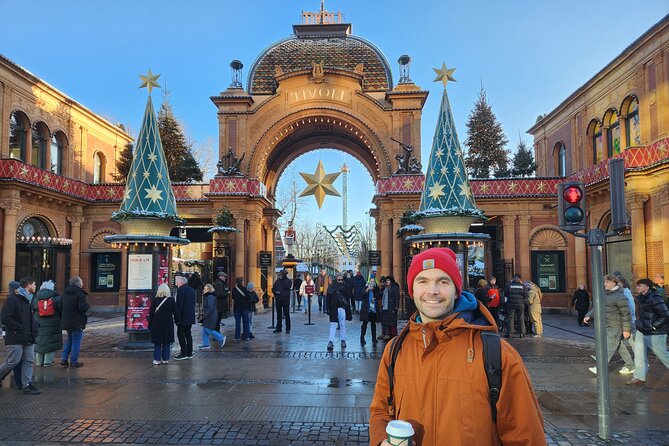
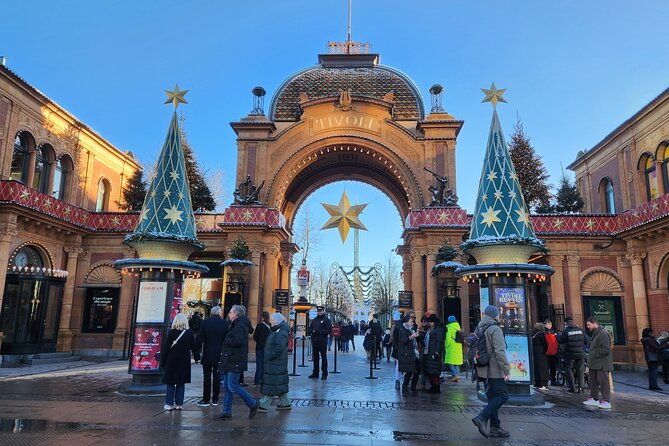
You won’t spend the day inside Tivoli Gardens or museums, but you do get the payoff of an outside perspective. You’ll stop outside Tivoli, one of the world’s oldest beloved amusement parks, founded in 1843. The guide’s emphasis is less about rides and more about what Tivoli represents in Copenhagen: creativity and that Danish sense of comfort and cozy joy, often summed up as hygge.
Then comes Ny Carlsberg Glyptotek (Glyptoteket), with a pause outside the museum that many people miss if they only chase the big waterfront names. You’ll see why it’s famous: Carl Jacobsen’s vision behind the museum, the glass dome, and the winter garden view under it. Even if you don’t go in, the architecture is part of the experience.
The tradeoff here is straightforward: if you want to tour interiors, this day won’t be built for long ticketed museum time at Tivoli or Glyptoteket. You’re using the tour to get oriented and to decide what you want to revisit later.
Christiansborg Palace to the Black Diamond: where power meets Denmark’s public culture
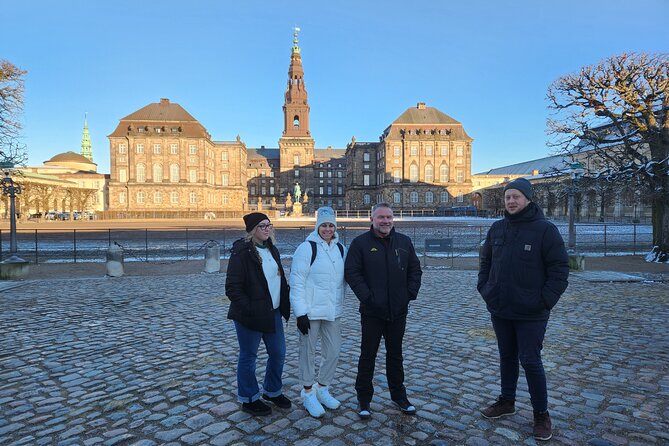
Christiansborg Palace sits at the center of Danish political life, and the stop is designed to make that feel concrete. You’ll learn it has roots in an even older castle and has burned and been rebuilt multiple times. The big takeaway is how one site can hold royal ceremony, modern government, and the physical story of how Denmark’s institutions evolved over centuries.
From there you continue to the waterfront area around the Black Diamond, the sleek black granite building of the Royal Danish Library. This is a smart pivot in the itinerary, because it shifts from royalty and courts to culture that locals use every day. You’ll also get context for how Copenhagen blends old-world prestige with contemporary design.
This stop also sets you up for the harbor portion. You’ll finish this walking phase and move into the water route, which is where the day turns from “city sights” to “Copenhagen from the canals.”
The electric harbor ferry: your water shortcut to the best views
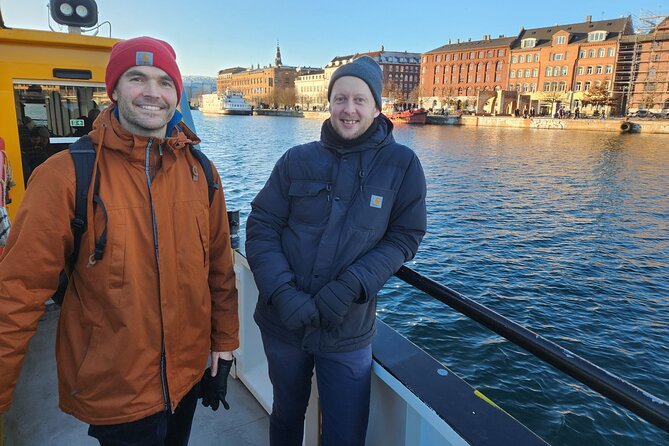
The tour includes a canal and harbor experience on an electric harbor ferry. It’s a relaxing way to cover ground without turning the day into nonstop pavement. From the water, you get views that are hard to replicate from street level: the Opera House, Amalienborg Palace, Nyhavn, and the kind of canal geometry that makes Copenhagen look like a moving map.
This is also where you’ll feel the value of the tour format. Even though the overall duration is about 3 hours, the ferry takes the strain off your feet and lets you spend energy on looking. And because it’s part of the public harbor network, it’s not a private boat.
That leads to the biggest practical consideration: seats can’t be reserved. On weekdays, the ferry is often quieter and you might even have more space. On weekends, it may be full or canceled. If it’s canceled or you can’t board on time, the group walks an alternate scenic route, with a stated increase in total walking distance (about 6–7 km instead of 5).
Opera House, Old Stock Exchange (Børsen), Nyhavn: the postcard line-up, explained
As you cruise, you pass the Old Stock Exchange, Børsen, known for its dragon-spire roof with intertwined dragon tails spiraling upward. There’s also a major real-world detail here: in April 2024, a fire severely damaged the building, and restoration work is underway. It’s the kind of moment where the guide’s context makes the skyline feel current, not frozen in time.
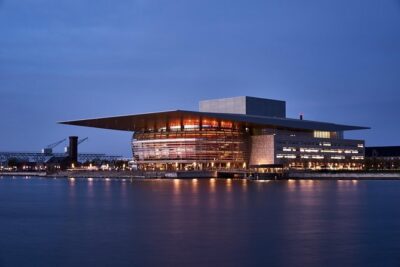
You’ll also see the Royal Danish Opera House from the harbor. Designed by Henning Larsen, it’s a modern architectural statement that looks even more purposeful from the water—clean lines, sweeping roof shape, and a strong tie to the sea.
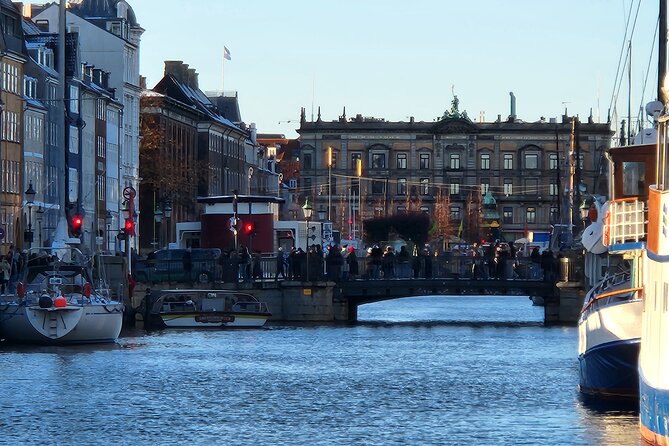
Then you hit Nyhavn, the iconic harbor lined with colorful 17th-century houses and outdoor cafés. From the canal you get reflections in the water, which is why it’s among the most photographed spots in Denmark. It’s brief on purpose, but it’s still enough time to orient yourself and understand why artists keep returning here.
The best part is that the guide doesn’t just point. You’ll get story-driven context about what each waterfront spot used to be and what it is now—trade port past, hangout present.




Little Mermaid to Gefion Fountain: the famous statue plus the myth behind it
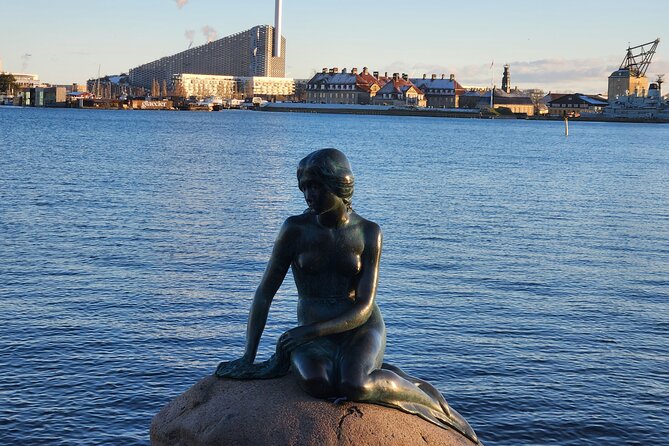
After the cruise, you’ll visit The Little Mermaid and get the story behind Hans Christian Andersen’s fairy tale. You’ll also hear how that modest bronze figure has become a symbol for Copenhagen and Denmark, tied to the sea and the city’s creative identity. It’s a short stop, but it’s meaningful—and the guide’s framing helps you see it as more than a bucket-list photo.
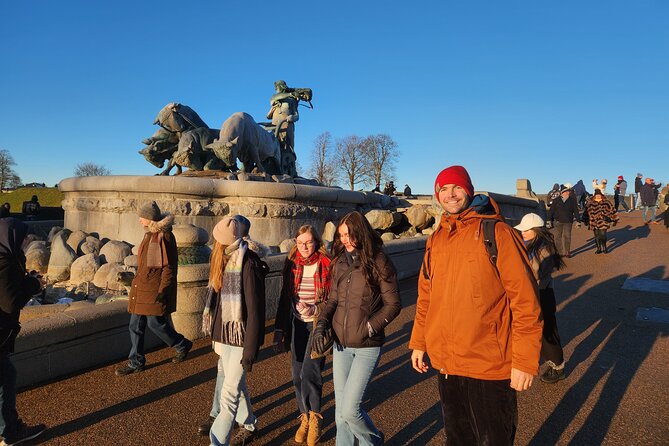
Next up is Gefion Fountain, walking distance from the harbor area. This stop is a great example of why this tour feels like a city lesson. You’ll hear the Norse legend: Gefion, the goddess who plowed the island of Zealand from Sweden with four oxen. Visually, the fountain’s location matters too—it sits between Kastellet Fortress and the promenade leading toward the Little Mermaid, so the viewpoint ties ancient myth to modern harbor geography.
If you’re the type who likes understanding the “why” behind a statue or monument, these two stops deliver. If you only want the photo and you move fast, you’ll still get enough context to make the visit feel complete.
Kastellet, Churchill Park, and the fortress walls: quieter history in green space
The itinerary then shifts into Kastellet, one of Northern Europe’s best-preserved star fortresses. This part is one of my favorite ideas on the day, because it’s history you can actually walk through without being pushed along by crowds at every step.
Inside Kastellet, you’ll see the grassy ramparts and cobbled paths, along with the windmill and red-brick barracks. There’s even mention of resident swans in the moat area, which gives this stop a gentle, almost park-like feel despite the fortress setting.
You’ll also pause at Churchill Park, a remembrance area beside Kastellet Fortress. This is dedicated to Danish resistance fighters of World War II, with memorials, sculptures, and a Winston Churchill statue looking out toward the harbor. It’s a reflective break that changes the pace of the day.
And then you continue along the fortress walls and around Kastelmøllen, the old windmill in the fortress area. The goal isn’t to turn this into a long museum lesson. It’s a walking pause that lets you take in panoramic views, fresh air, and a Copenhagen that feels calmer than the central shopping blocks.
Marble Church (Frederiks Kirke) and Amalienborg: architecture with alignment tricks
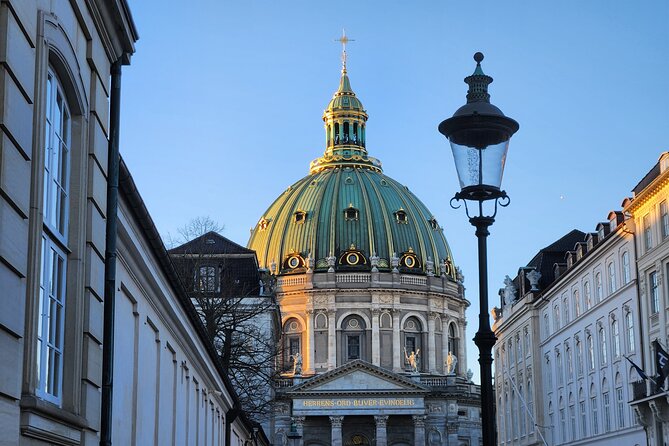
The next big visual moment is Frederiks Kirke, commonly called Marmorkirken. You’ll stop and learn why it’s such a big deal: construction took more than 150 years and was famously expensive, and the final dome was inspired by St. Peter’s Basilica in Rome.
There’s another practical reason to stop here. From the church area, the viewpoint is set up for a striking alignment with Amalienborg Palace, the official royal residence. So you’re not just admiring a building—you’re using the city’s geometry to see how the royal and ceremonial sites “face” each other.
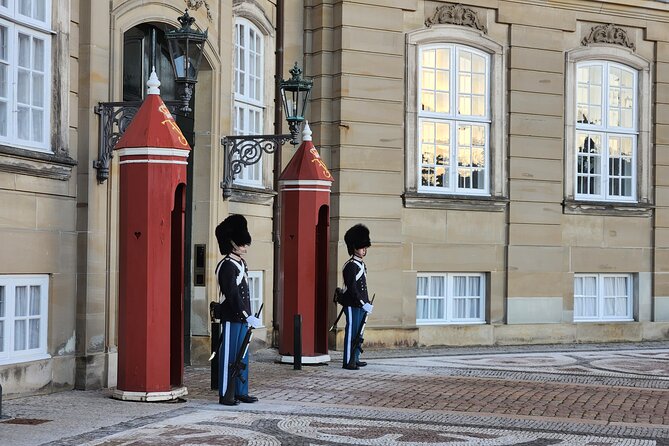
After that, the tour heads to the Amalienborg complex. You’ll see the four identical Rococo-style palaces around an octagonal courtyard, with King Frederik V’s equestrian statue as the centerpiece. The guide also explains the daily routines of the royal family area and gives context for the ceremonial Changing of the Guard.
Note: the Amalienborg Palace Museum is not included, so you’ll typically be focused on outdoor views and the courtyard area rather than a long interior visit.
The Changing of the Guards at Amalienborg: how tour start time affects your ceremony
The finish is the star event: Changing of the Guards at Amalienborg. The key detail is timing.
If you book the 09:00 AM or 09:30 AM tour, you should arrive just in time to see the full ceremony at 12:00 PM. It’s the big daily one, with soldiers marching into the square and often accompanied by the Royal Danish Band. That full setup is what many people picture when they think of the guard change.
If you join the 11:00 AM or 1:00 PM tour, the ending is at the same location, but the guard change you’ll witness is smaller and quieter, with one shift relieving another. It’s less ceremonial, but it can feel more intimate and less like a massive production.
Either way, Amalienborg is the right landing spot. It’s central, it’s elegant, and it gives you a strong sense of what Copenhagen’s identity means to Denmark—royalty tied to public ritual in a city built around movement and shared spaces.
Walking pace, practical tips, and what 3 hours really means
On paper, it’s a 3-hour tour. In real terms, it’s about efficient sightseeing rather than long stays in any one place. The stops are short and timed, which is why you cover a lot of the city in a morning or afternoon window.
You should plan for moderate walking. The itinerary adds up to a solid circuit, and if the ferry route can’t happen, expect the longer walking distance mentioned: around 6–7 km instead of 5 km. That difference matters if you’re watching your energy for the rest of your day.
Weather matters in Copenhagen, and the tour still keeps moving. Multiple guides are praised for staying organized when conditions shift, and for offering help to keep guests safe if someone moves more slowly. If you’re visiting in winter or shoulder season, bring layers you can adjust fast, plus shoes with grip for wet or icy sidewalks.
Group size helps too. With a maximum of 15, it’s easier to stay together and hear the guide without shouting over every traffic light.
Price and value: what you get for $77.39 and where you may spend extra
At $77.39 per person, the value is strong if you want a guided “highlights route” that still includes a real working ferry ride. You’re paying for a few things that would be annoying to coordinate yourself: a timed connection between walking landmarks and the harbor section, plus a close-up ending at Amalienborg where timing really matters.
Most of the key sights in this day are outside or viewed from the water, so you avoid a stack of separate tickets just to see the essentials. Stops like Tivoli and Glyptoteket are noted as not included, and Christiansborg Palace and the Amalienborg Palace Museum are also not included as museum entries. That’s not a failure of the tour. It’s actually a smart trade: you see where the big sites are, then decide later if you want to pay for interiors.
Where you do get included value is the ferry time and the access to the Changing of the Guards viewing from the right place at the right hour. That combination is hard to replicate without a guide, especially on a tight schedule.
Also worth factoring in: the tour has group discounts and a mobile ticket. If you’re traveling as a couple or small group, that can make this price feel even more reasonable.
One more sign of demand: it’s commonly booked about 64 days in advance. If you’re traveling during peak season, reserving early is a good move.
Who this tour fits best (and who might want a different plan)
This tour fits best if you want a first-day or mid-trip overview that covers central landmarks and the harbor in one clean sweep. It’s a good match for people who like stories tied to place, not a checklist of names.
It’s also a strong option if you’re balancing sightseeing with time and mobility. The ferry portion cuts walking load, and the route is designed with frequent short pauses rather than long, exhausting stretches.
You might consider a different plan if you:
- Want full museum time inside Tivoli or Glyptoteket.
- Need a guaranteed ferry experience on weekends, because seats can’t be reserved and service can be full or canceled.
- Can’t handle the possibility of missing Little Mermaid within the scheduled window if the ferry doesn’t work that day.
Should you book this Walk & Canal + Changing of the Guards tour?
Yes, if you want an efficient, guided Copenhagen highlights day that ends with the real ritual at Amalienborg. The mix of quick culture stops, harbor ferry views, and the fortress-and-myth sequence (Kastellet, Churchill Park, Gefion Fountain) gives your day shape, not chaos.
Book it especially if this is your first visit and you’d like to get oriented fast. The small group size and the guides praised for being friendly and organized also make it a good bet for families and mixed-age groups, as long as everyone can manage moderate walking.
If your schedule is strict and you’re relying on the ferry and Little Mermaid timing, bring a little flexibility. Copenhagen’s water services can change, and this itinerary has a walking plan if that happens.
FAQ
How long is the tour?
It’s about 3 hours.
Where do we meet and where does the tour end?
You meet inside Copenhagen Central Station at København H, at København HBernstorffsgade, 1651 København, Denmark. The tour ends at Amalienborg Slotsplads, near the metro and about a 10-minute walk from Kongens Nytorv and Nyhavn.
Is the tour mostly walking?
There is walking throughout, with an added walking distance of about 6–7 km if the ferry can’t be used. If the ferry runs smoothly, the route is described as closer to 5 km.
Does the price include the canal ferry?
Yes. The canal experience on the electric harbor ferry is included.
Are museum tickets included (Tivoli, Glyptoteket, Amalienborg Palace Museum)?
No. Tivoli Gardens, Ny Carlsberg Glyptotek, Christiansborg Palace, and the Amalienborg Palace Museum are listed as not included. Most other key viewpoints are free to see.
What about the Little Mermaid stop?
It’s included in the tour route, but timing can be affected if the ferry is full or canceled. The itinerary includes alternative walking options if needed.
When do we see the Changing of the Guards at Amalienborg?
For the 09:00 and 09:30 tours, you arrive just in time for the full Changing of the Guards at 12:00 PM. For the 11:00 and 1:00 tours, you see a smaller, quieter guard change.
Is there free cancellation?
Yes. You can cancel up to 24 hours in advance for a full refund.
What language is the tour in?
The tour is offered in English.