REVIEW · COPENHAGEN
Explore Copenhagen: Self-Guided Audio Tour
Book on Viator →Operated by Citywalksz Ltd · Bookable on Viator
Copenhagen’s best landmarks are on a tight loop. This self-guided audio tour turns a simple walk into a guided story, with timed stops that cover the City Hall Square, the Round Tower, Rosenborg Castle, Frederiks Kirke, Amalienborg, and more. It’s also built for flexible pacing, so you can stop for photos (or a coffee) without feeling rushed.
Two things I really like: the route focuses on major sights that are easy to string together on foot, and the format is practical. You get audio files and a GPS map in a mobile-ready setup, and each stop is kept short (about 15 minutes) so you get meaning fast, not endless lectures.
One drawback to consider: the audio experience depends on your setup. If the sound on your phone is low or your headphones aren’t great, you might struggle, since some recordings can feel muffled or staticky when played louder.
In This Review
- Key highlights in plain terms
- How this Copenhagen audio tour actually works
- Planning Your 2–3 Hour walk: City Hall Square to Tivoli
- Stop 1: Copenhagen City Hall Square and Bishop Absalon’s clock tower
- Stop 2: The Round Tower’s ramp and the Trinitatis Complex
- Stop 3: Rosenborg Castle and King Christian IV’s building wave
- Stop 4: Frederiks Kirke (Marmorkirken) and Scandinavia’s dome
- Stop 5: Amalienborg Palace and the current royal residence
- Stop 6: The Royal Danish Theatre and how French comedies shaped it
- Stop 7: Christiansborg Palace’s Royal Kitchens and four vanished castles
- Price and value: what $15.29 gets you (and what it doesn’t)
- Audio quality and tech tips that can make or break it
- Who should do this Copenhagen audio tour?
- Should you book this self-guided Copenhagen audio tour?
- FAQ
- FAQ
- What is the duration of the Copenhagen audio tour?
- Where does the self-guided tour start and end?
- Is the audio tour available in English?
- Are admission tickets included for the sights?
- How many main stops are included?
- Do I need to bring an audio device?
- Do I need to download the audio files before starting?
- Is there a suggested start time?
- Is free cancellation available?
Key highlights in plain terms
- 7 major stops in roughly 2–3 hours, each paced at about 15 minutes
- Audio files plus GPS map designed to help you move between sites
- English-only narration, good for visitors who want clear explanations
- No admission included, so you’ll still need tickets for paid interiors
- Smart walking route from Rådhuspladsen to near Tivoli Gardens
How this Copenhagen audio tour actually works
This is a self-paced, English audio tour you run from your smartphone. You start near Rådhuspladsen (1599 Copenhagen) and you can end near Tivoli Gardens (Vesterbrogade 3, 1630 København V). The big idea is simple: download your tour content ahead of time, then follow the audio and map between stops.
The tour comes with audio files and a GPS map, but it’s not purely a GPS hunt. The setup includes a map inside the downloadable material, plus audio that helps you get to the next destination. That matters in Copenhagen, where you don’t want to spend your walking time fighting directions.
Because it’s mobile-ticket based, you should plan to have your phone charged. Also, bring headphones if you want the narration without competing street noise. The tour doesn’t include an audio device, so you’re using your own phone and headphones.
Group size is capped (up to 50 people), but you still experience it at your own tempo. That’s a nice mix of structure plus freedom.
You can also read our reviews of more guided tours in Copenhagen



Planning Your 2–3 Hour walk: City Hall Square to Tivoli
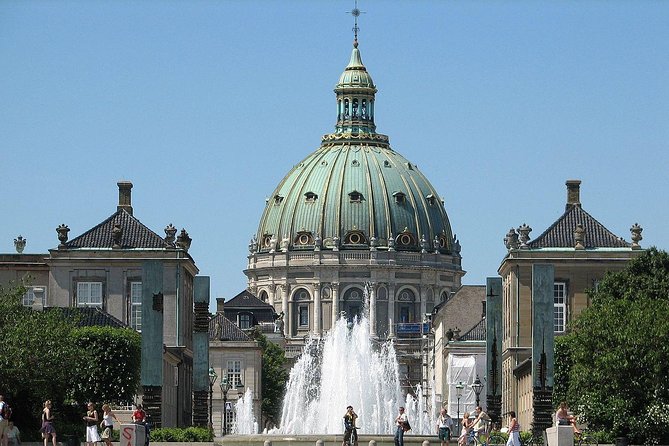
You’re looking at an easy time commitment: about 2 to 3 hours total. Each stop is timed at around 15 minutes, which makes this a great option for days when you want “the highlights” without committing to a full guided tour day.
You’ll get the best experience if you treat it like a walk-with-a-story rather than a rush-through checklist. Copenhagen’s center is walkable, but you’ll still want to keep a moderate pace because you’ll be moving between several iconic buildings.
A practical tip: since admission fees aren’t included, decide in advance which interiors you care about. The audio can still make the exterior scenes click, but paid entries (when applicable) can add time and money.
Finally, you’ll want to download the tour content before you start. The tour instructions say you should get your download ready before you begin, and they’re included in the ticket’s instructions.
Stop 1: Copenhagen City Hall Square and Bishop Absalon’s clock tower
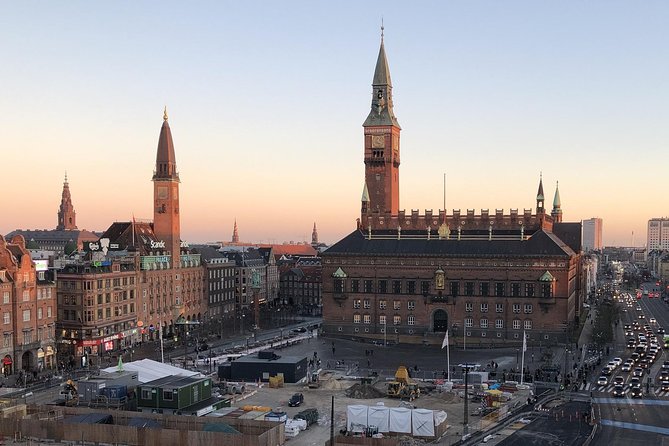
Your loop begins at Copenhagen City Hall on City Hall Square, the city’s largest square. The front is distinctive: ornate brickwork, a prominent clock tower, and a gilded statue of Bishop Absalon above the front balcony.
What I like about this first stop is that it gives you a visual anchor for understanding Copenhagen’s identity. The building is in the National Romantic style, which you’ll hear about in the narration as something popularized by architect Martin Nyrop. There’s also a neat design connection mentioned: the inspiration draws from Copenhagen City Hall in Siena, Italy. It’s the kind of detail that makes the architecture feel less random and more connected to wider European design ideas.
A real practical note: there’s no admission ticket included here. If you want access inside the hall, you’ll need separate planning.
Stop 2: The Round Tower’s ramp and the Trinitatis Complex
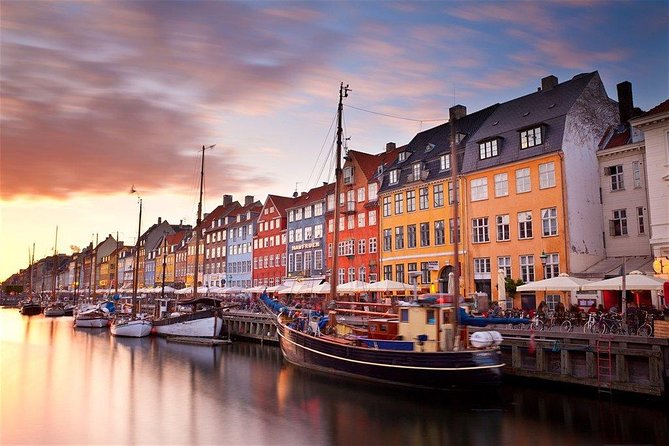
Next up is the Round Tower (Rundetårn), a 17th-century astronomical observatory connected to the Trinitatis Complex. That complex includes Trinitatis Church and a nearby academic library linked with Copenhagen University.
The narration gives you a sense of what the site was built to do: the library opened in 1657 and once held the university’s entire collection—around 10,000 books. That’s a striking number, and it helps you see the tower not just as a landmark, but as part of a working intellectual center.
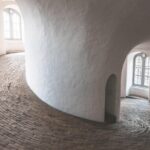
Instead of stairs, the tower has a spiraling ramp that leads to the top. That matters for how you plan your comfort level. You’re still climbing, but the ramp style is often easier than tight staircases.
No admission is included. You can still enjoy the place from outside, but the full experience may depend on whether the interiors are ticketed on your visit day.
Stop 3: Rosenborg Castle and King Christian IV’s building wave
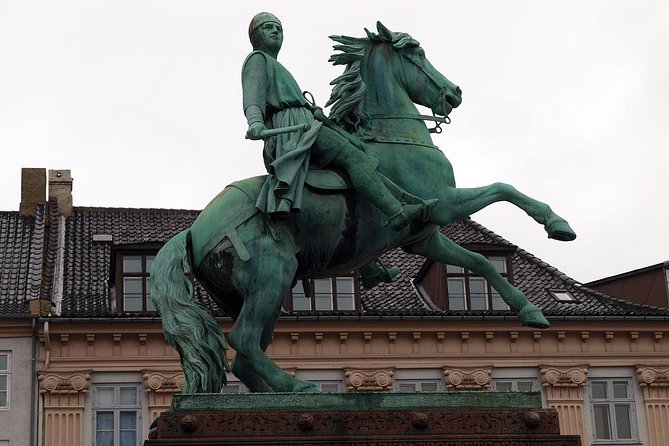
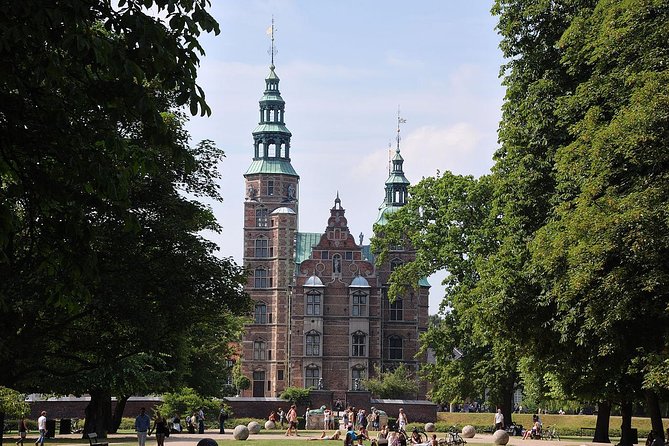
Then you hit Rosenborg Castle, linked to major royal building projects commissioned by King Christian IV. The castle’s look is described as Dutch Renaissance—think high gables and spires. It’s a style that instantly reads as “power and planning,” and the audio helps you spot those details instead of just admiring them.
The timeline is part of the fun. After the initial completion, the castle continued to be expanded and didn’t reach its current state until 1624. That gives you something to notice as you look around: you’re not seeing one moment in time. You’re seeing layers from a longer project.
Again, admission is not included. If you’re the kind of traveler who loves interiors, budget time for it. If you’re mostly after the exterior drama, plan to keep it to the allotted audio time and move on.
You can also read our reviews of more tours and experiences in Copenhagen



Stop 4: Frederiks Kirke (Marmorkirken) and Scandinavia’s dome
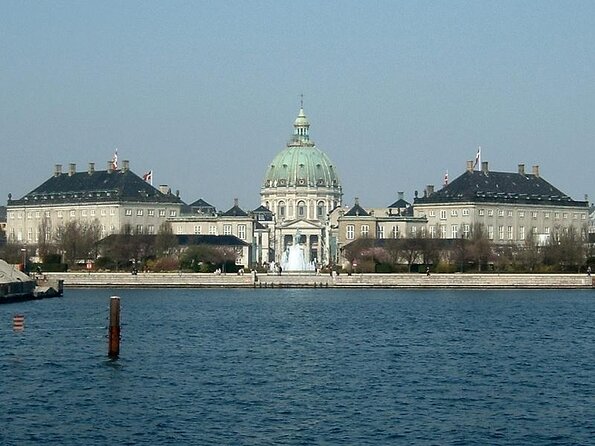
Your next religious highlight is Frederiks Kirke, also known as Marmorkirken—Frederik’s Church. The narration points out that this church has the largest church dome in Scandinavia, which is exactly the sort of fact that changes how you look at a building.
The story behind it is tied to urban planning. In 1748, King Frederik began planning the grand city district called Frederiksstaden. So this is not just a church popping up out of nowhere—it’s connected to how the city was intended to grow.
If you’re doing this in good daylight, you’ll often get the best sense of scale from outside. The audio can help you focus on dome size and façade details so you don’t just pass by as another impressive building.
No admission fees are included, so if you want to go inside, check for ticket needs on your day.
Stop 5: Amalienborg Palace and the current royal residence
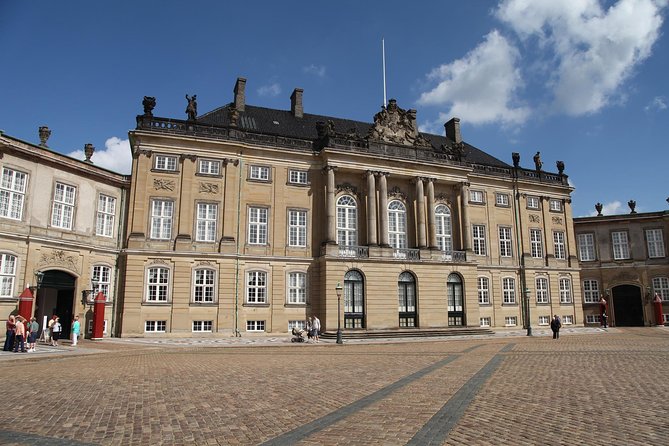
At Amalienborg, you’re looking at the current residence of the Danish royal family. The audio walks you through how the palace district developed.
The first palace in that area was built between 1669 and 1673 by Queen Sophie Amalie, wife of King Frederik III. Later, the current palace complex was designed to be the centerpiece of Frederiksstaden. The narration includes another key detail: Frederik V dismantled the existing palace and built the octagonal complex you see today.
This stop is worth your attention because it gives you a sense of continuity. You’re seeing a royal residence that evolved, not a static monument. It also helps you understand why the site is designed as a showpiece district rather than a random royal address.
No admission is included. You can enjoy the setting on the outside, but keep expectations realistic if you were hoping the tour covers ticketed access.
Stop 6: The Royal Danish Theatre and how French comedies shaped it
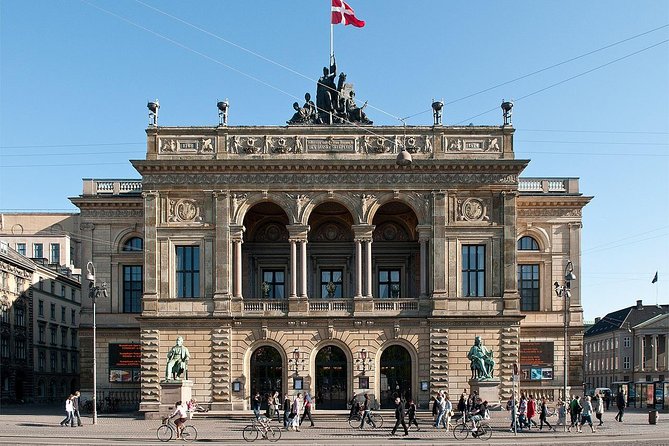
Next is the Royal Danish Theatre Play House, and the narration gives you a quick origin story. The first theatre at this location opened in 1748, seated 800 people, and employed eight actors and four actresses. The performances were mainly French comedies.
That’s an interesting detail because it shows how Copenhagen’s performing arts grew from specific European influences. You can also use it as a lens when you look at the building: it wasn’t always the multi-discipline institution it became.
The audio also notes that the original theatre was too small, so in 1774 it was rebuilt for a larger audience. Then the Royal Danish Theatre became a home for performing arts such as ballet, opera, and the royal orchestra.
No admission fees are included. If you want a show, that’s separate from the audio walk. But for understanding why this theatre matters, the audio does its job well.
Stop 7: Christiansborg Palace’s Royal Kitchens and four vanished castles
The final stop is at the Royal Kitchens of Christiansborg Palace. Christiansborg Palace is built over remnants of four previous castles, and the audio gives you the big timeline hook early.
It starts with 1167, when Absalon constructed the first castle on the island. That early structure lasted over 200 years. Then Absalon’s castle was destroyed by the Hanseatic League, and Copenhagen Castle was built over the ruins afterward. That castle lasted for several centuries and includes the detail people remember most: the Blue Tower, which held Leonora Christina, daughter of Christian IV, captive for almost 22 years.
That’s heavy material, and the audio ties it to the site you’re standing on: the kitchens sit inside a palace complex layered on centuries of Danish power plays. It’s a powerful “place through time” finish to the walk.
No admission is included, so if you want full interior access, plan separately.
Price and value: what $15.29 gets you (and what it doesn’t)
At $15.29 per person, this tour is priced like a budget-friendly way to get structure and stories without paying for a formal guide. What you’re paying for is the downloadable audio content, the GPS map, and the built-in pacing across seven major sights.
What it doesn’t include is just as important: admission fees, transportation, and food/drinks. Also, you supply your own phone and listen through your own setup because an audio device isn’t included.
The value is strongest if you want:
- a guided-feeling route across central Copenhagen
- key architectural and historical context for quick stops
- an easy day plan that fits between other plans (like Tivoli or a museum visit)
The value is weaker if you were hoping every stop would be ticketed and handled for you. Here, you’re doing the thinking: decide which interiors you’ll pay to enter.
Audio quality and tech tips that can make or break it
This is where you should pay attention. One issue shows up clearly: audio can be hard to hear. Background sounds and effects may feel muffled, and the sound can turn staticky when played loudly. If your phone volume is limited, you’ll want to test it before you reach Stop 1.
My advice: bring decent headphones (or earbuds you trust). If possible, download and test the first audio track while you’re still at Rådhuspladsen. That way you can adjust volume, switch headphones, or stop early if the audio level doesn’t work for you.
Also, get your download done ahead of time. The tour instructions say you should download and prep the audio file before you start. And one practical review note: the download includes a zip that contains a map plus audio files—so don’t treat it like a typical streaming-only audio app. Having the files ready keeps the tour more reliable.
Who should do this Copenhagen audio tour?
This tour fits best if you:
- want a short, structured walk across major landmarks
- like learning facts while you look at buildings, not only in museums
- prefer self-paced touring without coordinating with a group schedule
- can handle light walking and time spent outdoors
You’re also told to have moderate physical fitness, which makes sense for moving between seven stops over a couple hours. The Round Tower’s ramp is a plus for comfort, but you still need the stamina for walking and standing.
If you’re traveling with service needs, note that service animals are allowed. The route is also stated to be near public transportation, so you can hop in or out if your day changes.
Should you book this self-guided Copenhagen audio tour?
I think it’s a solid buy if you want Copenhagen’s center highlights with explanations and you’re comfortable doing the logistics yourself. The pacing is tight, the stops are big-name, and the audio-and-map setup can help you move without getting stuck.
But book with your eyes open: the audio quality can be inconsistent depending on your phone and headphones. If clear narration is a must for you, do a quick sound test right at the start.
If you’re the type who wants to spend money on tickets and shows instead of guidance, this tour makes sense. If you need every step to be perfectly guided and ticketed, you’ll likely feel disappointed.
FAQ
FAQ
What is the duration of the Copenhagen audio tour?
The tour runs about 2 to 3 hours.
Where does the self-guided tour start and end?
It starts near Rådhuspladsen, 1599 Copenhagen, Denmark and can end near Tivoli Gardens, Vesterbrogade 3, 1630 København V.
Is the audio tour available in English?
Yes, the tour is offered in English only.
Are admission tickets included for the sights?
No. Admission fees are not included, and the listed stops note that admission tickets are not included.
How many main stops are included?
The route covers seven stops, including Copenhagen City Hall, the Round Tower, Rosenborg Castle, Frederiks Kirke (Marmorkirken), Amalienborg, the Royal Danish Theatre Play House, and the Royal Kitchens of Christiansborg Palace.
Do I need to bring an audio device?
Yes. The tour notes that an audio device isn’t included, so you’ll use your own smartphone and headphones.
Do I need to download the audio files before starting?
Yes. You’re instructed to download the audio file and prepare it before you start. Download instructions are in the ticket’s Before You Go section.
Is there a suggested start time?
The provided start time is 9:00 am, though it’s self-guided so you decide your timing based on your schedule.
Is free cancellation available?
Yes. You can cancel for a full refund up to 24 hours in advance of the experience’s start time.