REVIEW · COPENHAGEN
Copenhagen: Hop-On Hop-Off Bus Tour with Audio Guide
Book on GetYourGuide →Operated by Stromma Danmark · Bookable on GetYourGuide
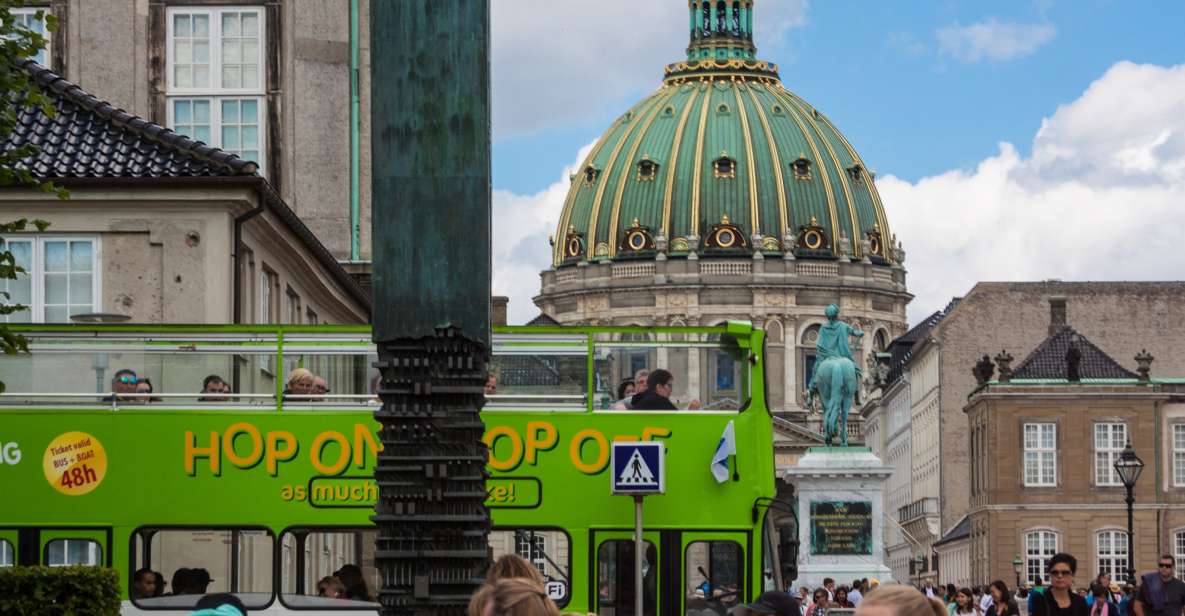
Copenhagen is easy when you can hop on. This Stromma bus turns the city into a choose-your-own-adventure loop, with Nyhavn waterfront views and an onboard audio guide in 6 languages. What I like most is the freedom to build your day around what you care about, plus the narration that keeps you oriented as you roll past the main sights. One thing to consider: it’s an open-top ride, so you’ll want layers if the weather turns.
The ticket I’d consider here is the 48-hour hop-on hop-off option, letting you get on and off across up to 27 stops at your own pace. There’s also an optional add-on that can include admission to Tivoli Gardens, which can save time if you know you want to go.
In This Review
- Key points before you buy
- Price and what you get for your $36
- How the hop-on hop-off setup actually plays out
- Red Line: Classic Copenhagen for castles, canals, and central landmarks
- Green Line: Carlsberg, Copenhagen Zoo, Frederiksberg Garden, and Tivoli access
- Purple Line: Christianshavn and Refshaleøen for Reffen and Christiania
- Best hop-off strategy: where to spend your walking time
- Audio guide in 6 languages: a tool for orientation, not a lecture
- Comfort, open-top riding, and making the most of the weather
- Small issues to avoid: ticket codes and getting on the right bus
- Should you book the Copenhagen hop-on hop-off bus?
- FAQ
- How long is the hop-on hop-off ticket valid?
- What routes are included?
- What languages is the audio guide available in?
- Where can I board the bus?
- Is Tivoli Gardens admission included?
- Can I cancel, and is there a pay-later option?
Key points before you buy
- 3 routes, different vibes: Classic Copenhagen (Red), Carlsberg + gardens (Green), and Christianshavn/Refshaleøen (Purple).
- Hop on your schedule: Up to 27 stops means you can do a slow morning or a fast afternoon and still fit highlights.
- Audio guide in 6 languages: Danish, English, French, German, Italian, Spanish, so you’re not stuck reading every sign.
- Royal stops are on the map: You can hop at Rosenborg Castle and Amalienborg Palace to see where the royal family lives.
- Street-food and alternative culture access: The Purple line covers Reffen and Christiania.
- Optional Tivoli Gardens: You can add entrance if you want the park too, not just the ride.
Price and what you get for your $36
At about $36 per person, this is priced like a solid “time-saver,” not a cheap sightseeing gamble. You’re paying for transport plus an onboard audio guide, and you’re getting a structured way to cover Copenhagen without playing bus-route chess all day.
The big value is the 48-hour format. That’s enough time for one thorough pass on the main sights and a second pass for the neighborhoods you didn’t have energy for the first day. Add that up and the cost starts looking more reasonable, especially if you’re splitting your time between waterfronts, palaces, and beer-and-gardens areas.
You also get a few extras that matter in a city where weather and walking pace can swing your plans:
- Free Wi‑Fi on the open-top buses (handy for messaging home and mapping your next hop-off).
- A multi-language audio guide, so you can understand what you’re seeing while you’re in motion.
- Multiple routes under the same ticket logic (including the All Lines option that bundles the Green and Purple lines with the Classic route).
If you know you want Tivoli, the optional ticket that includes entrance to Tivoli Gardens can be worth it. You’re not forced into it; you’re just not stuck figuring out admission timing on your own.
You can also read our reviews of more guided tours in Copenhagen



How the hop-on hop-off setup actually plays out
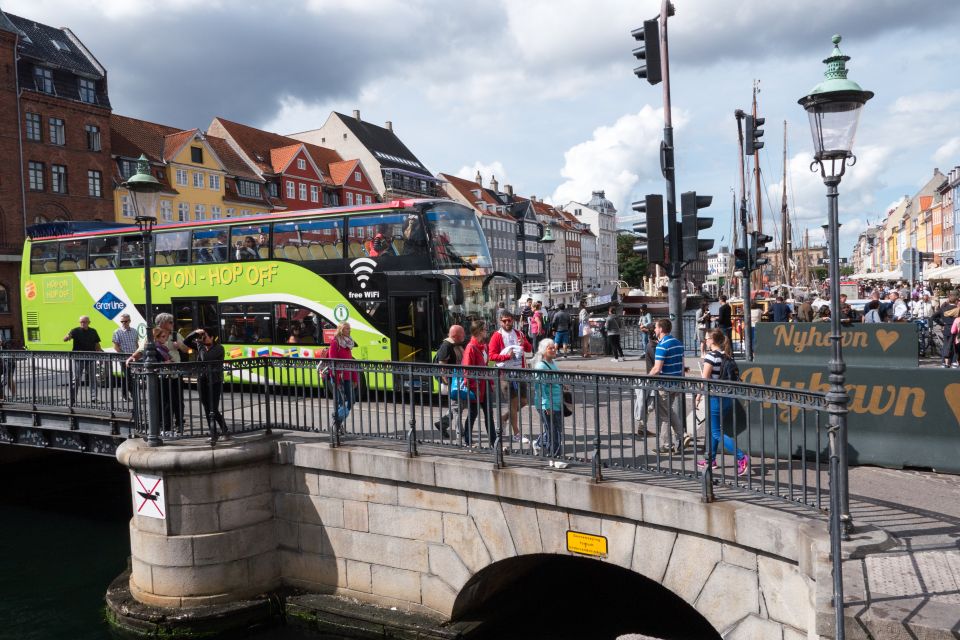
This is a “get on, get off, repeat” system designed for your pace. The ticket works across multiple stops, and you can start from various points—Ved Stranden 26 and Nyhavn are called out as common departure areas. The practical trick is that you can board from any stop along the routes, so you don’t need to shuffle your whole day around one fixed pickup spot.
Here’s the key timing detail to plan around:
- The Classic Copenhagen (Red Line) runs daily, with departures roughly every 30–45 minutes from 10:00 AM–4:30 PM (from stop 1, which can vary by season).
- The Colorful Copenhagen (Purple Line) has fewer departures (listed at 12:00 AM, 2:00 PM, and last at 4:00 PM from stop 1).
- The Home of Carlsberg (Green Line) has set departures too: 11:00 AM and 3:00 PM (last departure) from stop 12. It also runs Friday–Sunday year-round, and daily from April 11 to October 5.
That difference changes how you should use the routes. The Red Line is your daily backbone. The Green and Purple lines feel more like “book a window, then explore.” If you want Christianshavn and Refshaleøen, for example, don’t treat it as a spur-of-the-moment hop unless your schedule matches those departures. Use the Stromma GPS map link during the day to track where the buses are.
And yes, the buses are open-top. Reviews suggest the ride itself is comfortable, but your comfort will still depend on wind and rain. Bring a light layer even in shoulder season.
Red Line: Classic Copenhagen for castles, canals, and central landmarks
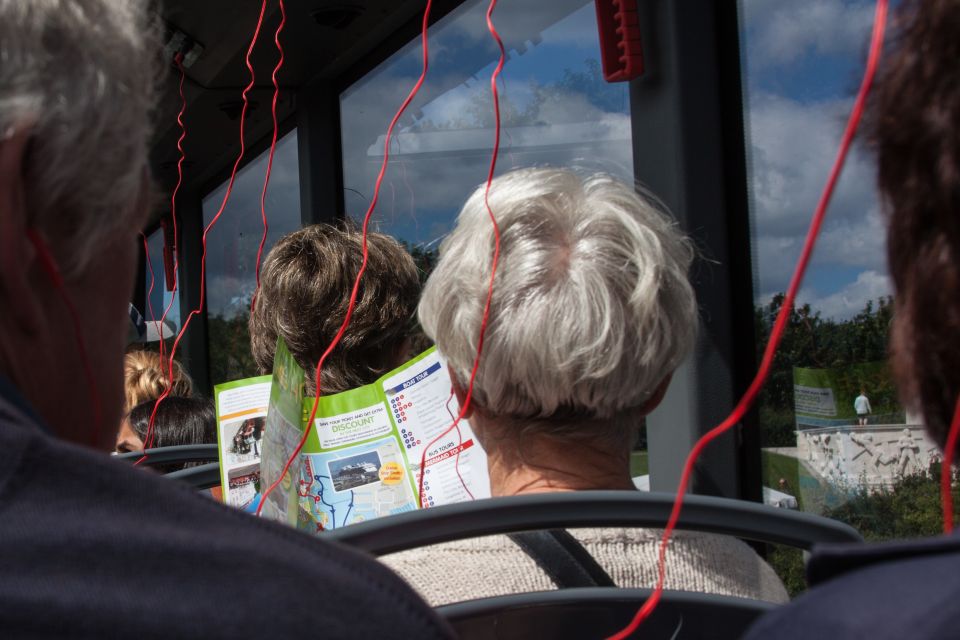
The Classic Copenhagen (Red Line) is the most flexible option, and it’s the one I’d anchor my first day around. It runs daily throughout the year and travels through Copenhagen’s core historic districts and standout architecture. The payoff is simple: you get oriented fast, then you can walk the parts you want to linger over.
Three hop-off targets are specifically called out:
- Rosenborg Castle: Great for the royal-and-formal atmosphere.
- Amalienborg Palace: This is where you go to see where the royal family lives.
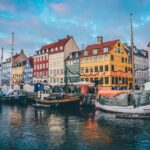
- Nyhavn: The colorful waterfront district people come to Copenhagen for in the first place.
When you use the Red Line well, you stop where walking time is worth it. Rosenborg and Amalienborg are the kind of places where you don’t just want a photo from the window; you want a proper stroll and a sense of scale. Nyhavn is the “stand still for a minute” stop. It’s busy in a way that feels local and touristy at the same time, and the bus makes it easy to reach without grinding through transit timing.
One drawback: because the Red Line is the everyday main route, it can be the easiest to over-plan. If you hop off at every listed stop, you’ll burn your energy before you’ve even done the relaxing part. My advice is to pick two or three hop-offs you truly care about, then use the remaining time to ride and absorb the city.
Green Line: Carlsberg, Copenhagen Zoo, Frederiksberg Garden, and Tivoli access
The Home of Carlsberg (Green Line) is the route for your “Copenhagen beyond the postcard” cravings. It connects a few different interest zones: the Carlsberg area, greener spaces in Frederiksberg, and family-friendly stops like Copenhagen Zoo. You can also use it for Tivoli Gardens access, depending on your timing and the stops.
What’s helpful here is the way it’s scheduled:
- It runs Friday–Sunday year-round.
- It runs daily from April 11 to October 5.
- It’s part of the All Lines ticket.
Departure timing is also spelled out: 11:00 AM and 3:00 PM (last departure) from stop 12. That’s a big clue for your planning. Treat it like a half-day “target route.” If you try to force it into random moments, you’ll risk waiting.
What makes this route practical is variety. Carlsberg ties into Copenhagen’s industrial-and-beer identity. Then you get contrast: gardens and open green space feel like a palate cleanser after architecture-heavy streets. And Copenhagen Zoo and Tivoli Gardens can turn this into a fun day even if not everyone in your group wants museums.
Potential drawback: since it’s not listed as running every day like the Red Line, it’s easier to miss on weekdays outside the April–October season. If your trip is short, check your calendar first—then decide whether the Green Line is a must-do or an add-on.
Purple Line: Christianshavn and Refshaleøen for Reffen and Christiania
The Colorful Copenhagen (Purple Line) is the route you take when you want the city to feel less official. It covers Christianshavn and Refshaleøen, including:
- Reffen, a street food market area
- Christiania, the alternative community
- Old buildings of Christianshavn
This line also follows a pattern you should respect:
- Runs Friday–Sunday year-round
- Runs daily from April 11 to October 5
- Included with the All Lines ticket
But the departure times listed are unusual for flexible touring: 12:00 AM, 2:00 PM, and last departure at 4:00 PM from stop 1. Because it’s explicitly tied to set departures, I’d plan this as a scheduled exploration window, not a wander-and-see situation.
The value of the Purple Line is that it saves you from stitching together multiple destinations on your own. If you’re aiming to eat, browse, and then continue into Christianshavn, the bus acts like your connector. Also, the waterfront and old-building feel here can look different from the central sightseeing streets.
Main consideration: because the departure timing is limited, you need to be decisive once you get off. Pick what you want to do around Reffen or Christiania, set a rough return plan, and avoid losing track of time. When you do that, you’ll feel like you used your sightseeing time, not just spent it moving around.
You can also read our reviews of more tours and experiences in Copenhagen




Best hop-off strategy: where to spend your walking time
The bus gives you a lot of choices, but your feet decide your experience. I like using the hop-off idea like this: hop off at the places that benefit from walking, then use the ride time as recovery.
Here’s how I’d prioritize based on what’s called out:
- Nyhavn: Short walk + people-watching. Best when the light is decent.
- Rosenborg Castle and Amalienborg Palace: Plan extra time. These stops make sense if you’re into royal architecture and formal grounds.
- Carlsberg Brewery area (Green Line): Pair it with the timing of the Green Line departures so you’re not improvising.
- Frederiksberg Garden: If you want a reset, this is it. Think slower pace, fewer crowds.
- Copenhagen Zoo: Best if your group includes kids—or if you just want something not museum-heavy.
- Reffen: Use it like your meal plan. You can browse, grab something, and keep moving.
- Christiania + Christianshavn: Treat this like neighborhood time. Walk, look, and then decide if you want to stay longer.
One practical tip: the bus has up to 27 stops. That’s freedom, but it’s also decision overload. Before you start riding, pick your top 3 “walk and linger” stops. Everything else can be window views.
Audio guide in 6 languages: a tool for orientation, not a lecture
The audio guide is one of the smartest parts of this experience. You get onboard narration in Danish, English, French, German, Italian, and Spanish, so language isn’t a barrier.
How you use it matters. If you listen end-to-end the whole way, you’ll miss the feeling of the streets. Instead, think of it like a moving map:
- Start listening as you leave a major stop.
- Pause when you hop off so your walking is supported by what you just heard.
- Use the guide to decide what’s worth a second look when you’re back on the bus.
This is especially useful on days where you’re moving fast. Copenhagen can feel compact, but the neighborhoods do have distinct personalities. The audio guide helps you catch what’s different between central historic streets and areas like Christianshavn.
Also, since the buses have free Wi‑Fi, you can cross-check where you are and where you want to go next. It’s a small thing, but it reduces the mental load.
Comfort, open-top riding, and making the most of the weather
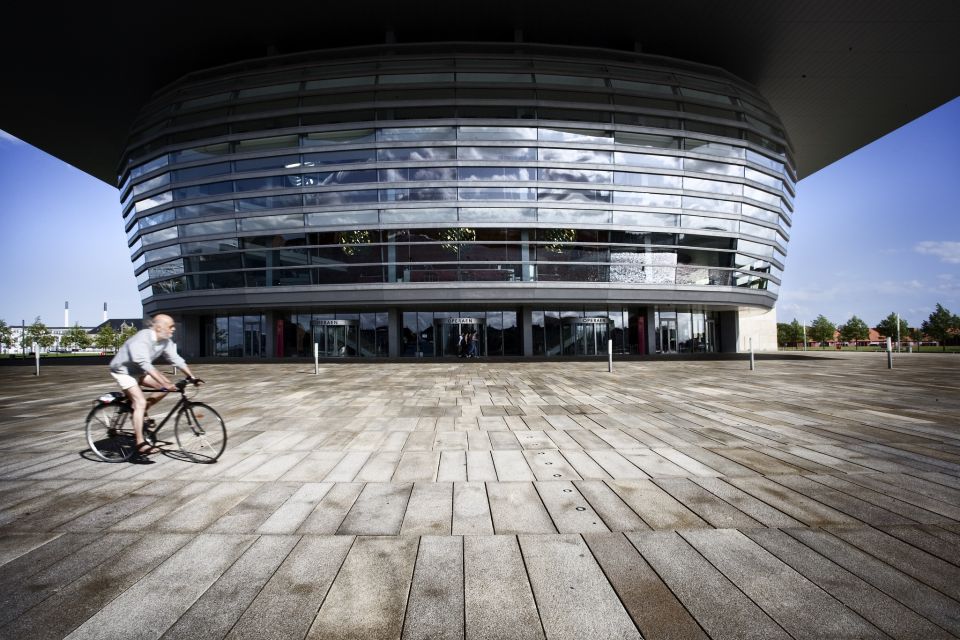
This is a sightseeing bus, so the ride is part of the point. Reviews highlight a comfy ride and helpful guides, which makes sense: if you’re sitting comfortably, you’ll actually enjoy the motion instead of counting minutes.
Open-top buses are great when the weather cooperates. They’re also annoying when the wind snaps or rain starts. Your best move is simple:
- Bring a light layer you can wear quickly.
- Have a small rain layer just in case.
- Don’t plan your day so tightly that a weather change forces you into stress.
When conditions are good, stops like Nyhavn become more than a quick photo moment. You can enjoy the waterfront vibe, then ride on while the rest of the city comes into view.
If you’re traveling with multiple ages, the bus can also be a low-effort way to keep everyone together. Instead of separating for transit or walking routes, you’re using one shared ride plan with clear hop-off points.
Small issues to avoid: ticket codes and getting on the right bus
One snag worth mentioning: if you’re traveling with more than one person, double-check that you have the correct ticket code(s) for each entry. Some people run into confusion when there are separate codes for separate tickets. Before you head out, confirm you received what you need for every person in your booking.
Also, look for Stromma on the bus. The activity instructions make it clear the bus is the Stromma hop-on hop-off setup, and seeing the branding helps you avoid getting on the wrong vehicle at busy stops.
If you want to reduce confusion even more, use the Stromma GPS map link to follow the buses live. That’s a practical fix when you’re deciding whether to wait at a stop or walk to the next one.
Should you book the Copenhagen hop-on hop-off bus?
I’d book this if you want an easy, flexible way to see Copenhagen without building your own route from scratch. It’s especially worth it when:
- You’re visiting for a short time and need quick orientation.
- You care about specific landmarks like Nyhavn, Rosenborg Castle, and Amalienborg Palace.
- You want a low-effort way to add neighborhoods like Christianshavn and Christiania.
- You’d rather rely on an audio guide than constantly read your way through the city.
I’d skip it or treat it as optional if you’re the type who only wants one neighborhood and hates buses. Since this works best with multiple hop-offs over a 48-hour window, it’s not the best match for a single, ultra-focused afternoon.
FAQ
How long is the hop-on hop-off ticket valid?
The tour highlights a 48-hour hop-on hop-off bus ticket, so you can use it across that time window.
What routes are included?
There are 3 routes: Classic Copenhagen (Red Line), Home of Carlsberg (Green Line), and Colorful Copenhagen (Purple Line). The Green and Purple routes are included in the All Lines ticket.
What languages is the audio guide available in?
The audio guide is available in Danish, English, French, German, Italian, and Spanish.
Where can I board the bus?
You can board at any stop along the routes. Common starting points listed include Ved Stranden 26 (1061 København) and Nyhavn.
Is Tivoli Gardens admission included?
Tivoli Gardens admission is optional. There’s an option to purchase a ticket that includes entrance to Tivoli Gardens.
Can I cancel, and is there a pay-later option?
Yes. There’s free cancellation up to 24 hours in advance for a full refund, and you can reserve now & pay later to keep plans flexible.