REVIEW · COPENHAGEN
Walking tour – Copenhagen Old Town & Tivoli Park included
Book on Viator →Operated by Scandinavian Guides · Bookable on Viator
A two-hour walk can still feel like a full Copenhagen day. This route is built for time-tight travelers, stacking the big Old Town landmarks, the royal sights at Amalienborg, and a Tivoli Park visit with skip-the-line entry. I like the clear structure—your guide keeps you moving in the right order—so you spend less time figuring things out and more time looking up.
Two parts I especially like: you get a guided pass through the major squares and canals (hello Nyhavn), and the tour ends with Tivoli so you can keep going on your own. One thing to consider: it’s a walk-and-talk style experience, and some stops (like the cathedral area) depend on on-site access/open hours, so plan for a little walking pace and don’t expect a full, slow museum day.
In This Review
- Key highlights you’ll actually feel on the ground
- How the 2-hour Copenhagen loop saves you from wasted time
- Getting bearings: Strøget to King’s New Square (and why it feels different)
- Nyhavn canals: the classic stop that still works without a long detour
- Amalienborg Palace and the 12:00 Royal Guard changing: the moment that anchors the route
- Rosenborg Castle area: the Renaissance anchor behind the royal story
- Copenhagen Cathedral (Church of Our Lady): Thorvaldsen’s sculptures inside
- Old Market and City Hall Square: neoclassical Copenhagen after the Great Fire
- Tivoli Park: ending with skip-the-line entry (and what to do next)
- Price and value: what $79.30 buys you in real terms
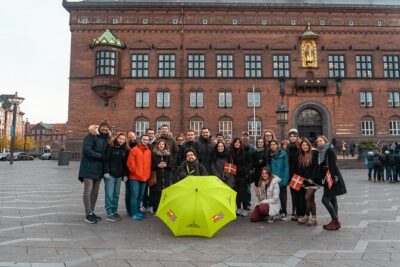
- What to expect from the group and the guide
- Should you book this Copenhagen Old Town and Tivoli walk?
- FAQ
- How long is the tour?
- What time does the tour start?
- Where does the tour start and end?
- Is the tour offered in English?
- What tickets do I get for Tivoli?
- Does the tour include The Little Mermaid?
- How big is the group?
- What’s the cancellation window?
Key highlights you’ll actually feel on the ground
- Skip-the-line Tivoli Park entry included at the end, not an afterthought
- Old Town landmarks in smart order, so you’re not backtracking
- Amalienborg and the daily Royal Guard changing show at 12:00 noon
- Copenhagen Cathedral (Church of Our Lady) plus Thorvaldsen’s well-known sculptures inside
- Strøget area squares where you’ll understand Copenhagen’s city-planning story fast
- Small group size (max 21), which usually makes the pacing easier
How the 2-hour Copenhagen loop saves you from wasted time
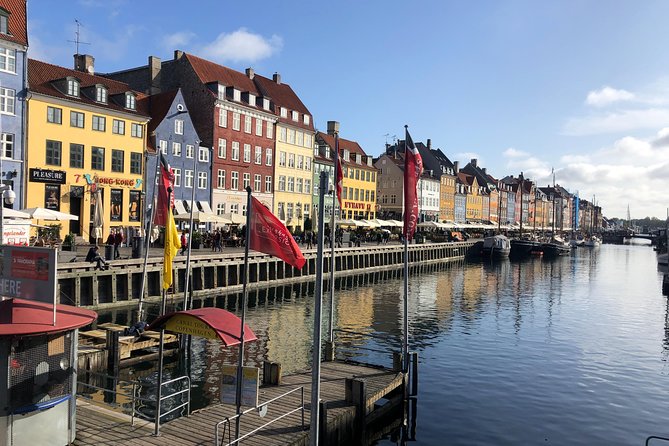
This tour is short enough to fit into almost any itinerary, but it’s not skimpy. In about two hours, you cover the core visual and historical spine of Central Copenhagen: big squares, famous streets, the canal view at Nyhavn, and the royal zone around Amalienborg and Rosenborg. That matters because Copenhagen can be spread out, and without a plan you end up walking in circles.
You also get one clear boundary: this route is designed to hit the highlights excluding The Little Mermaid. That’s not a deal-breaker—The Little Mermaid can be a crowded photo stop—but it does mean your time gets spent on sights that connect better to the Old Town story and the parks you’re ending with.
You can also read our reviews of more walking tours in Copenhagen



Getting bearings: Strøget to King’s New Square (and why it feels different)
You start at Højbro Plads and your first big visual moment comes at King’s New Square (Kongens Nytorv). This is Copenhagen’s “new center” laid out in the late 1600s, tied to Christian V’s effort to extend and reshape the city. Standing here, you can see why guides like this stop early: it frames the rest of the walk.
What I like about this opening is that it’s not just a pretty square. You also get architectural context for what you’re about to see and why the city layout shifted. Facing the square you’ll pass through major landmarks such as the Royal Danish Theater (1874), Charlottenborg Palace (1671), and Thott Palace (1683, now the French Embassy). Even if you don’t memorize dates, the “city planning” explanation helps the streets make sense.
Nyhavn canals: the classic stop that still works without a long detour
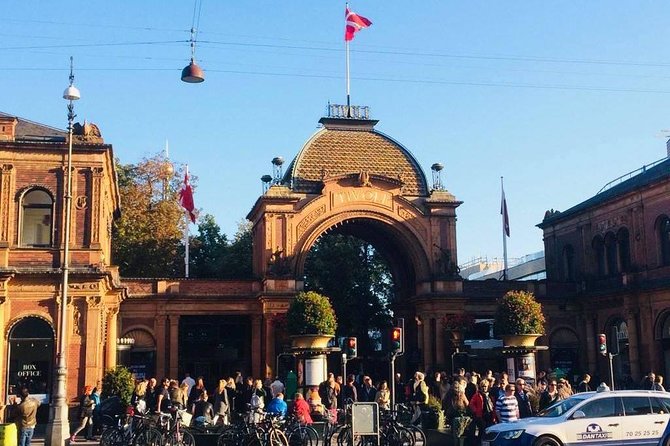
Nyhavn is brief on purpose—about 15 minutes—and that’s exactly right for a short walking tour. You’re not trying to spend an afternoon here. You’re getting oriented to the canal vibe: colorful waterfront facades, the waterline views, and the sense that this neighborhood has always been a turning point for people and goods.
I’d treat Nyhavn like a photo-and-feel stop. Grab a few pictures, listen to what your guide is pointing out, then move on. The best part is what comes next: you’ll shift from harbor-style charm into royal Copenhagen, and that contrast makes the tour feel varied rather than repetitive.
Amalienborg Palace and the 12:00 Royal Guard changing: the moment that anchors the route
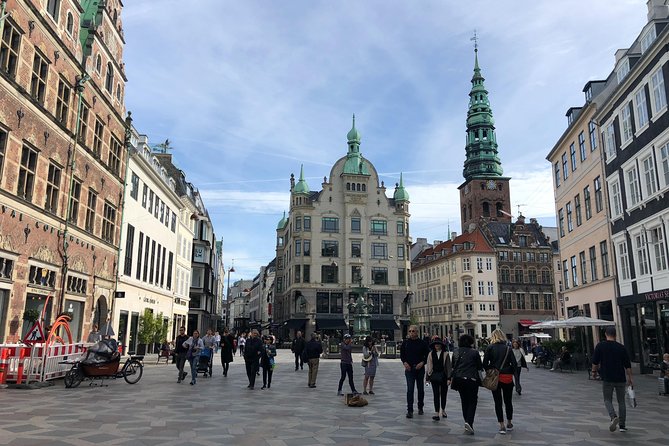
The highlight for many people is the winter royal residence area at Amalienborg. The palace complex is famous for its Rococo-style look and for the fact that it still represents Denmark’s royal life. You’ll also hear how the square is built around a statue of King Frederik V (1771) and how the four identical buildings relate to different royal families and roles.
Here’s what you should know going in: the Royal Guard changing happens daily at 12:00 noon. This tour description directly ties the experience to that schedule, so timing matters. If you’re the kind of traveler who wants the real “watch it with everyone else” moment, plan to be present when your group is near the palace square around midday.
If you’re a museum-walker, there’s another reason Amalienborg is a smart stop. One of the palace buildings is described as having a public-facing open museum. That means the area isn’t just ceremonial; it’s also where you can connect the royal family story to something tangible.
Rosenborg Castle area: the Renaissance anchor behind the royal story
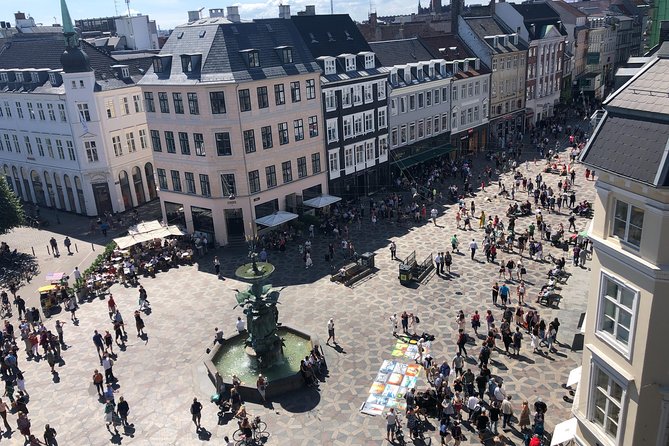
After Amalienborg, you’ll move into the orbit of Rosenborg Castle. This is a Renaissance castle originally built as Christian IV’s country summerhouse in 1606. That detail is useful because it corrects the way many people picture royal residences: Copenhagen’s royal buildings aren’t all just “palace” in the modern sense. A lot of them start as curated spaces for specific rulers and specific seasons.
Even if you don’t go deep into castle interiors during a short walking tour, you still benefit from the placement. Rosenborg works like a bridge between what you saw at Amalienborg (the present-day royal identity) and what you’ll see next at Copenhagen Cathedral (royal history written into the city’s most important religious building).




Copenhagen Cathedral (Church of Our Lady): Thorvaldsen’s sculptures inside

This is where the tour gets more than postcard sightseeing. The Church of Our Lady, Copenhagen Cathedral is described as Neo-Classicist in the current design, with a foundation stone laid by King Frederik VI in 1817 and a consecration on Whitsunday in 1829. But the site itself goes back much earlier, including a smaller chapel associated with Bishop Absalon, and an older church around 1200 at the highest point in town.
What you’ll likely remember most, though, is the inside focus. The tour highlights Thorvaldsen’s sculptures—Christ and the twelve apostles—set above the altar area where Christ extends his arms in a welcoming gesture. The tour notes an interesting twist: Judas is replaced by Paul in the depiction. Even if you’re not an art specialist, that kind of specific detail makes the interior feel meaningful, not generic.
The cathedral’s historical role is also part of why it’s worth stopping. The site is noted for major Danish events, including the 1363 marriage involving Margrethe (later Queen Margrethe I) and a connection to Søren Kierkegaard’s 1855 funeral. More recent events are mentioned too, like the 2004 marriage of Crown Prince Frederik and Mary Donaldson. In other words: this isn’t a church that only matters to medieval visitors. It’s still part of modern national life.
A caution I’ll give you as a practical traveler: if you care deeply about seeing a specific chapel area or sculpture installation, be mentally ready for access timing. On short tours, you’re dependent on what’s open during the window you’re there.
Old Market and City Hall Square: neoclassical Copenhagen after the Great Fire

After the cathedral stop, the route threads into the Old Market area (Gammeltorv and Nytorv together) and then toward Rådhuspladsen, the City Hall Square. This is one of those stretches where a guide’s context helps you see the city as a story instead of a list of buildings.
Old Market is described as Copenhagen’s oldest square (with its foundations dating to the 12th century), but the visible buildings are mostly Neoclassical because of the Great Fire of 1795. That’s a key idea. You’re standing in a place that’s ancient in name and location, but visually shaped by a much later rebuilding era. There’s also a notable feature called the Caritas Well, a Renaissance fountain erected by Christian IV in 1610.
Then comes Rådhuspladsen, where you’ll get a quick view of the entrance area of the city’s historic amusement park. The tour keeps it brief (about 10 minutes here), but the goal is to set you up for the day’s finale at Tivoli.
Tivoli Park: ending with skip-the-line entry (and what to do next)
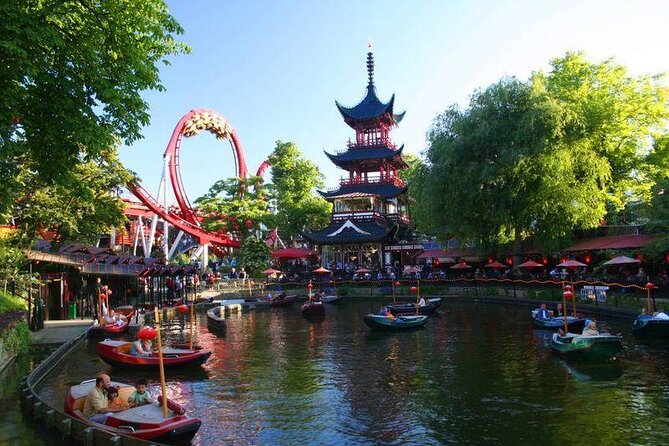
The real payoff is the last stop: Tivoli Park. This tour includes general entry for ages 8+, and your guide handles the skip-the-line style access so you’re not burning time standing in queue-land. Your tour ends at Tivoli’s location on Vesterbrogade, and then you can stay as long as you wish under opening hours.
I like that this design is “do-and-then-freestyle.” You get guided context up front, then you get autonomy. If you’re the type who wants snacks, rides, or just wandering paths with photos, this setup gives you the freedom to choose based on your mood instead of the clock.
Practical tip: keep your phone charged for your mobile ticket. Even with a guide doing the heavy lifting, a little tech readiness goes a long way when you’re checking in at an attraction.
Price and value: what $79.30 buys you in real terms
At $79.30 per person, the cost only feels fair if you look at what you’re actually getting. You’re paying for a guided walk across multiple major Old Town zones, plus Tivoli Park general entrance with skip-the-line handling.
On a pure sight budget, you could technically walk the same neighborhoods yourself. The value here is that your guide ties landmarks together: what you’re looking at, when it was created, and why it matters. That context often saves you the mental load—especially around things like Christian IV’s projects, Copenhagen’s shifting city center, and the cathedral’s specific art focus.
Also, this is a short tour, which changes the math. You’re not spending a half day; you’re spending about two hours plus your Tivoli time. If you’re juggling other Copenhagen plans, that efficiency is part of the value.
One more signal: the tour is typically booked about 52 days in advance on average. If you want a smoother experience (and to avoid last-minute sold-out stress), booking ahead is smart.
What to expect from the group and the guide
This is capped at 21 travelers, which usually means less crowding around the guide. In the reviews, the strongest praise repeatedly points to guides who manage pacing well and make stops feel story-driven without rushing people through photo moments.
You’ll want to do one simple thing: show up a little early and be ready to walk. If you’re traveling with someone who needs a slower pace or special attention, it’s worth considering that the route includes multiple stops and a real amount of movement in a short window.
Some of the lower ratings mention confusion tied to what the guide knew or how a stop was handled. That’s not something you can fully control, but it’s a reminder to choose this tour for its strengths: guided orientation plus Tivoli access. If your top priority is a very specific interior viewing plan, you may want flexibility on the day.
Should you book this Copenhagen Old Town and Tivoli walk?
Book it if:
- you want high-density Copenhagen in about two hours
- Tivoli is on your must-do list and you’ll appreciate the skip-the-line advantage
- you like guided context at major landmarks, especially around royalty and Copenhagen’s city development
- you’re planning to spend extra time at Tivoli after the tour, not just pass by it
Skip it (or rethink) if:
- you’re mainly chasing one single icon and don’t care about the broader Old Town and royal history context (this tour excludes The Little Mermaid)
- you need very slow walking, long museum-style stops, or guaranteed interior access timing for specific works
If you want a practical, efficient way to get your bearings and still end with a playful payoff, this is a solid pick. It’s not trying to do everything. It’s trying to get you to the best parts fast—and then hand you the keys at Tivoli.
FAQ
How long is the tour?
It runs for about 2 hours.
What time does the tour start?
The start time is 10:00 am.
Where does the tour start and end?
It starts at Højbro Plads (Højbro Pl., 1200 København) and ends at Vesterbrogade 3 (1630 København V), at Tivoli Park.
Is the tour offered in English?
Yes. The tour is offered in English.
What tickets do I get for Tivoli?
You get a mobile ticket and Tivoli Park general entrance for ages 8 and above, included in the tour.
Does the tour include The Little Mermaid?
No. The tour highlights major landmarks but excludes The Little Mermaid.
How big is the group?
The maximum group size is 21 travelers.
What’s the cancellation window?
You can cancel for a full refund up to 24 hours before the experience start time.