REVIEW · COPENHAGEN
Copenhagen: Hygge & Highlights Walking Tour with Local Guide
Book on GetYourGuide →Operated by Copenhagen Walking Tours (CWT) · Bookable on GetYourGuide
Copenhagen looks better on foot. This 150-minute small-group walk strings together big icons and smaller corners, with an English guide such as Laura or Hamid who keeps the stories practical and easy to follow. I like the balance of famous stops (like Nyhavn and Strøget) plus side streets you’d miss alone, and I also like the relaxed pace—there’s time for questions without turning it into a race.
One consideration: this is an outdoor walking tour, so it’s not ideal if mobility is limited, and the route still requires comfortable walking shoes.
In This Review
- Key things that make this tour worth your time
- Copenhagen on a clock: why 2.5 hours hits the sweet spot
- Meeting at Sankt Pauls Kirke: set the tone before you walk
- Nyboder’s yellow houses: naval life, planned neighborhoods, and community
- Marmorkirken (Frederik’s Church): the dome, the scale, and the slow build
- Amalienborg and the Changing of the Guard chance
- Nyhavn’s harbor story: Andersen, sailors, and the color of trade
- Kongens Nytorv: a huge square that still feels human
- Strøget: Europe’s longest pedestrian street, with context
- Pistolstræde: the narrow cobblestones escape the main drag
- Rosenborg Castle and King’s Garden: royal scenery without the pressure
- The Round Tower: Europe’s oldest functioning observatory
- Finishing at Gråbrødretorv: a relaxed square that feels local
- Price and value: why $61 can feel fair for what you get
- What to bring (so the day feels easy, not annoying)
- Who should book this walking tour
- A note on the guides: why the personal touch matters
- Should you book Copenhagen’s Hygge & Highlights walking tour?
- FAQ
- How long is the Copenhagen Hygge & Highlights walking tour?
- What’s included in the price?
- Is the tour indoors or outdoors?
- How big is the group?
- What language is the tour in?
- Where do I meet, and where does the tour end?
- Does the tour run in bad weather?
- What should I bring with me?
- Is the tour suitable for people with mobility impairments?
Key things that make this tour worth your time
- Small group (max 10) means you can actually ask questions and get direct answers.
- A smart mix of Copenhagen highlights and calmer, lesser-known streets like Pistolstræde.
- You’ll see the city’s “layers” in order: naval housing, royal Denmark, the harbor, then gardens and towers.
- The guide’s local recommendations help you plan what to do after the walk.
- It runs in all weather, so dressing for the day matters.
- Outdoor-only format means you mainly rely on viewpoints and photo stops, not paid-entry museums.
Copenhagen on a clock: why 2.5 hours hits the sweet spot
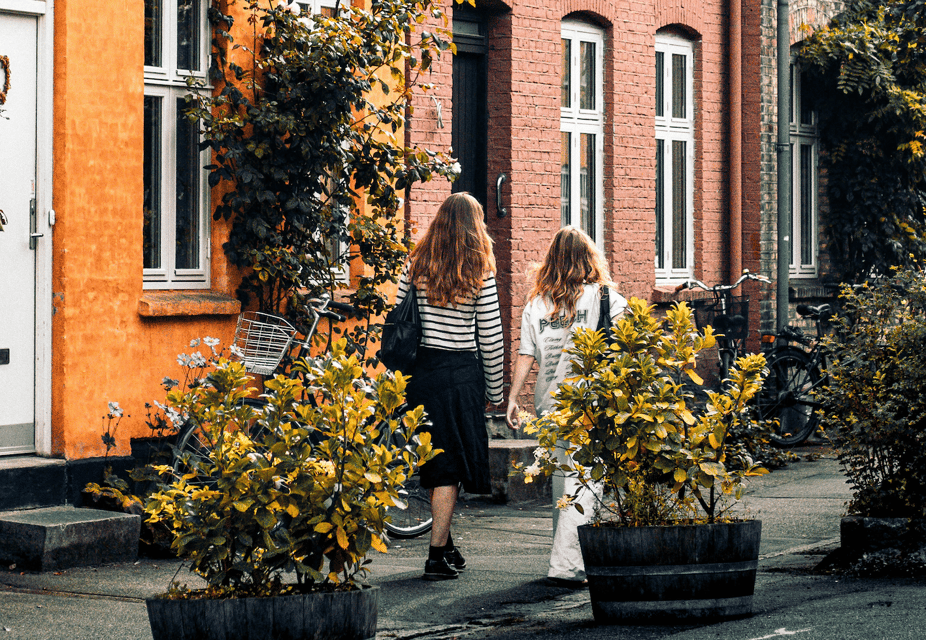
A good first day in Copenhagen needs two things: orientation and momentum. This tour gives you both in about 2.5 hours, without trying to cram in everything in the city. You start with neighborhoods that explain how Copenhagen grew—naval, royal, trading, and scholarly—then you physically connect those themes through short walks.
What makes it work is the order of the sights. You’re not just jumping from one “must-see” photo spot to another. The route slowly builds context. That’s the kind of tour that helps you later when you’re choosing where to eat or where to wander next.
And since the group stays small, you’re not trapped in a loud conga line. You get to hear the details, and your guide can adapt to what people want to know. Several guests specifically praised the way their questions were handled, and that’s exactly what makes a walking tour feel personal instead of scripted.
You can also read our reviews of more walking tours in Copenhagen


Meeting at Sankt Pauls Kirke: set the tone before you walk
The meeting point is in front of Sankt Pauls Kirke at Gernersgade 33. That matters more than it sounds. You start in the city with your bearings already forming, instead of meeting near a random landmark far from everything else.
From the first minutes, you get a sense of how the tour will feel: organized, not rushed, and focused on walking routes you can repeat later. Because the tour is outdoor-only and about moving between areas, your guide’s job is to translate what you’re seeing into something you can remember. That’s what you want early on—so later you’re not just recognizing buildings, you’re understanding why they’re there.
If you’re the type who likes to know what you’re looking at (even while taking photos), you’ll appreciate the way the stops are explained before you reach them.
Nyboder’s yellow houses: naval life, planned neighborhoods, and community
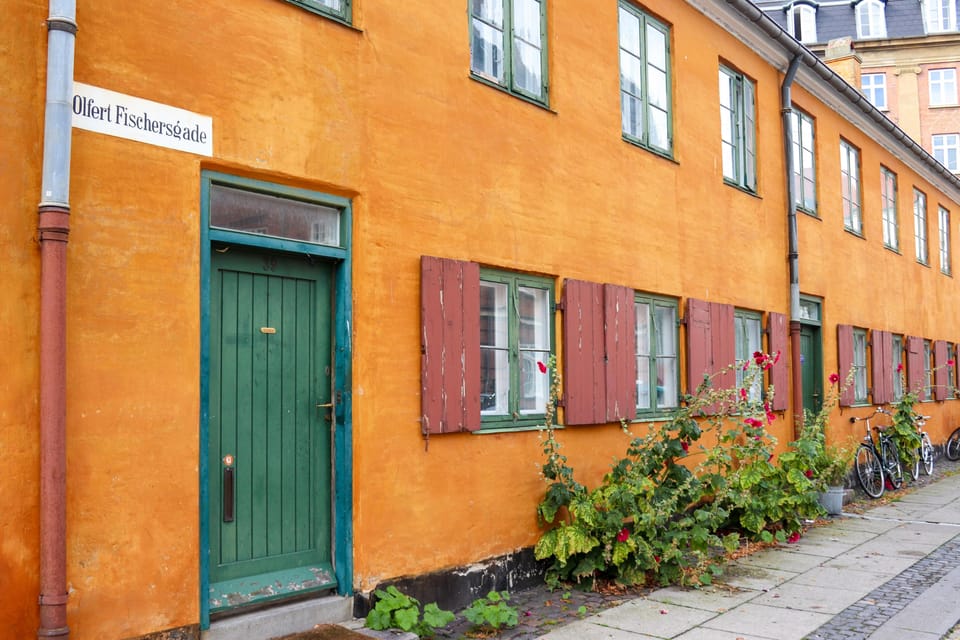
The tour begins in Nyboder, a 17th-century district famous for its striking yellow houses built for Danish naval personnel. This is the kind of place that looks instantly photogenic, but the real value is in what it represents: the idea that housing wasn’t an afterthought. It was part of a planned community.
Your guide helps you connect those houses to the larger story of King Christian IV and his vision for naval housing. That’s an angle that makes the street-level scene feel meaningful. Instead of just admiring color and architecture, you understand that the neighborhood was designed to serve a working population with roots—something many modern cities rarely do.
One practical tip: if weather is cold (Copenhagen can be sharp even when skies are clear), this is a good early stop to grab a quick photo and then keep moving. You won’t want to linger too long in wind with only a thin jacket.
Marmorkirken (Frederik’s Church): the dome, the scale, and the slow build
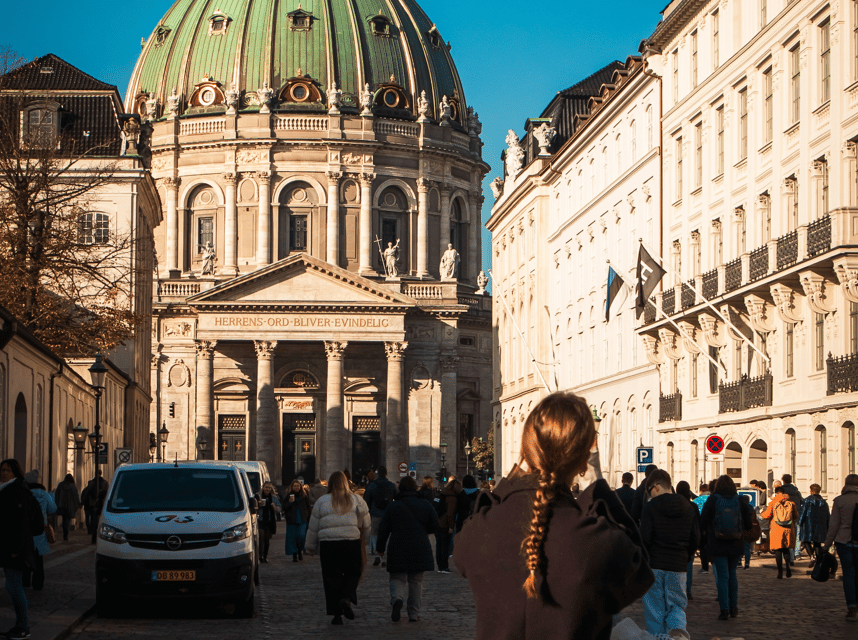
Next up is Frederik’s Church, often called Marmorkirken or the Marble Church. The dome alone is a headline. It was inspired by St. Peter’s Basilica in Rome, and your guide explains why that’s such a big deal: it’s Copenhagen borrowing visual language from the center of European Catholic architecture, then making it its own.
The tour highlights the church’s impressive scale and the fact that the construction took nearly 150 years. That timeline is the kind of detail that keeps the conversation from being only about looks. You start seeing architecture as a record of effort across generations.
Important note for your expectations: the tour is outdoor-only with entrance fees not included. Still, the stop can be valuable even if you stay outside, because you get the framing—what to notice, what the dome is meant to communicate, and why the design choices matter. If you can get access where permitted, great. If not, you still leave with clearer eyes for the exterior.
Amalienborg and the Changing of the Guard chance
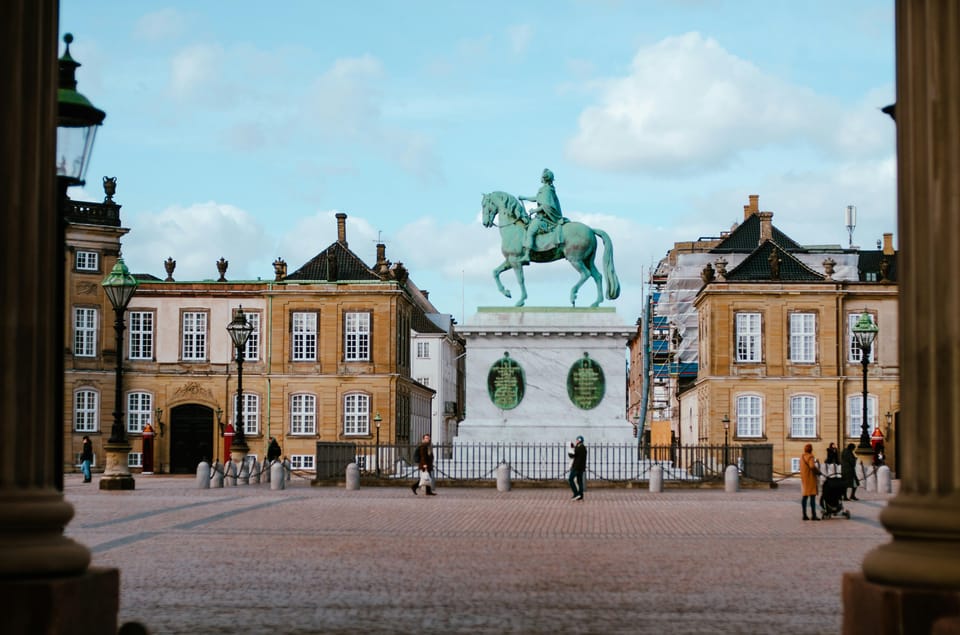
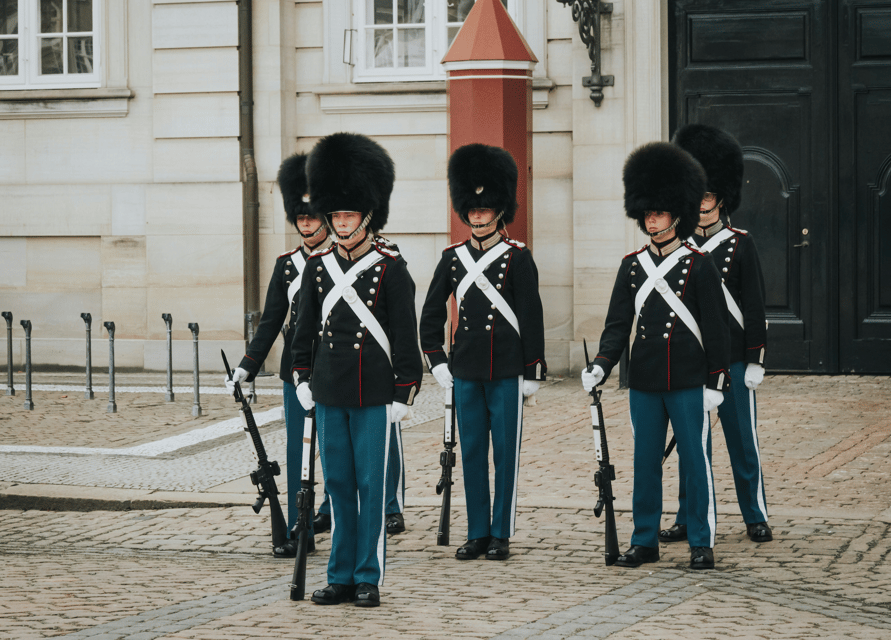
Then you reach Amalienborg, the residence area of Denmark’s royal family. The experience here is part architecture, part ceremonial rhythm. The guide points you to the central square and explains what you’re seeing, including the history of the monarchy and notable royal figures.
A highlight to watch for is the chance to see the Changing of the Guard. It’s not guaranteed in every time slot, but your guide will time things so you have a reasonable shot. That makes this stop more than a photo stop. It can turn into a real moment—quiet, official, and very Danish in its choreography.
If you’re traveling with kids or anyone who likes “something to happen” in addition to sightseeing, this is often the most satisfying segment of the tour. Even if you miss the exact timing, the square still gives you a strong sense of Denmark’s royal presence in the center of the city.
You can also read our reviews of more guided tours in Copenhagen





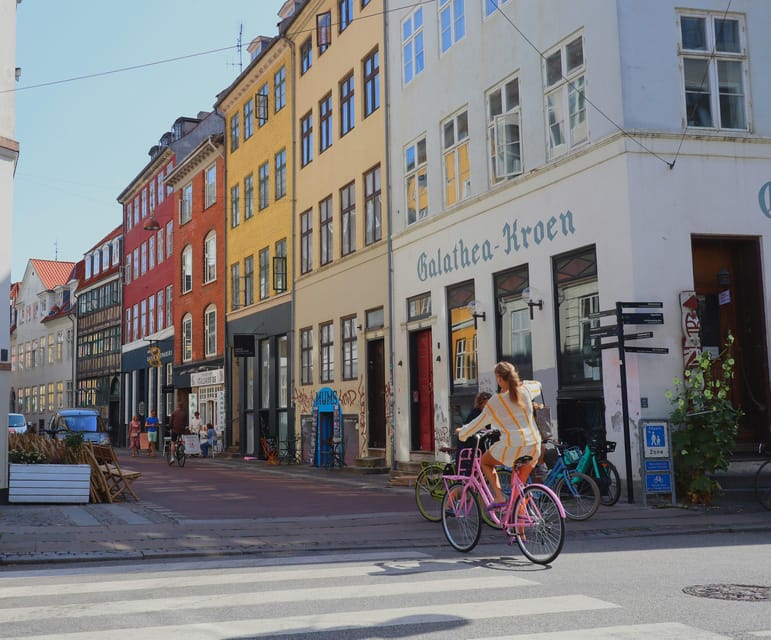
Nyhavn’s harbor story: Andersen, sailors, and the color of trade
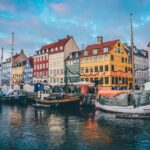
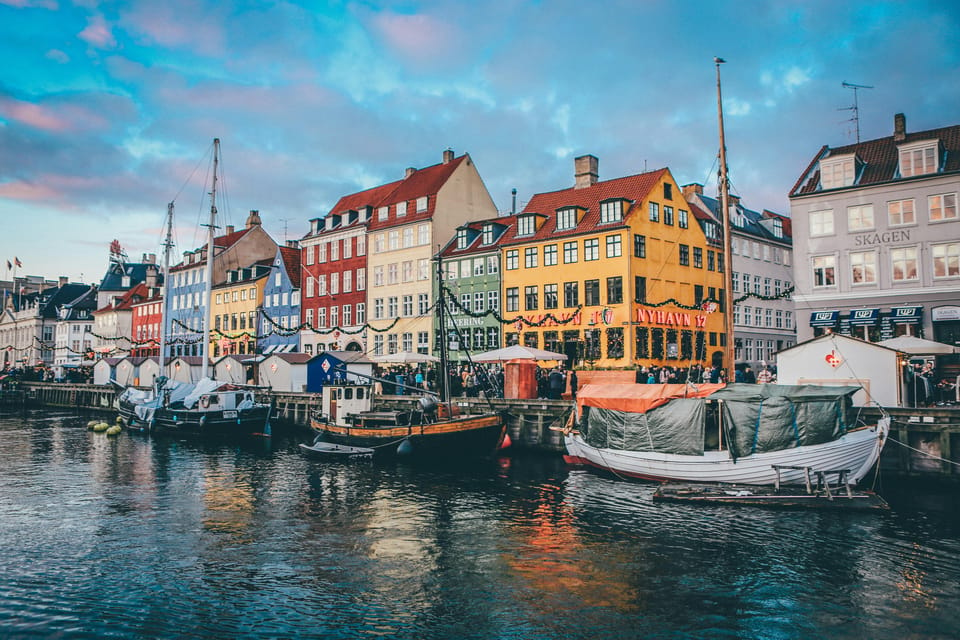
After royals, the tour softens into Nyhavn, Copenhagen’s iconic harbor with colorful buildings along the waterfront and wooden ships in the mix. This is where your guide connects the harbor to everyday life: sailors, merchants, and the writer Hans Christian Andersen, who once lived here.
What I like about Nyhavn on a guided walk is that it doesn’t stay stuck in postcard mode. You’re not only looking at the pastel facades. You’re hearing about the human traffic that made this area matter—people coming and going, work happening, stories forming.
You also get a break time (about 10 minutes). That’s a smart design choice for a walking tour. It lets you step aside for coffee, check your phone for maps, or just breathe in harbor air before moving onward.
Kongens Nytorv: a huge square that still feels human
From Nyhavn, you head to Kongens Nytorv, the largest square in Copenhagen. It’s framed by major buildings, including the Royal Danish Theatre and the Hotel d’Angleterre. This is “big city Denmark” in open space form.
The guide explains why this square works as a meeting point over centuries. Squares are often where power, culture, and daily life intersect. Even if you don’t sit for long, you get an understanding of how public space shapes city movement.
A quick practical note: open squares can be windy. If you’re taking photos, keep your hands warm and protect your lens if you’re using one.
Strøget: Europe’s longest pedestrian street, with context
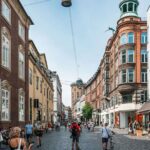
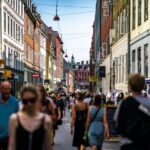
Next comes Strøget, described as Europe’s longest pedestrian street. This part is lively without needing to be a chaos stampede. Your guide helps you see it as more than shops and people-watching.
You’ll walk past the layers that make Strøget feel like a city in miniature: storefronts, cafés, and street performers. The key is how the guide frames it—how pedestrian streets change how people gather, how commerce shapes routes, and why this kind of street becomes a social spine.
If you’re shopping later, you’ll know where to start. If you’re skipping shopping, it still helps to walk Strøget early so the later crowd-navigation doesn’t feel stressful. You’ll understand the flow.
Pistolstræde: the narrow cobblestones escape the main drag
This is the part I’d bookmark if you love small-scale Copenhagen. The tour leads you into Pistolstræde, a narrow, cobblestoned alley known for charming courtyards and a quieter mood compared with the big streets.
It’s called an overlooked landmark for a reason: it doesn’t announce itself like Nyhavn or Strøget. But that’s exactly why it feels rewarding. You get a break from the main pedestrian corridor and a reminder that Copenhagen’s character lives in side spaces.
This stop also helps you “read” the city. Once you’ve seen how a tiny alley connects to courtyards and calmer clusters of buildings, you start spotting similar patterns on your own later.
Rosenborg Castle and King’s Garden: royal scenery without the pressure
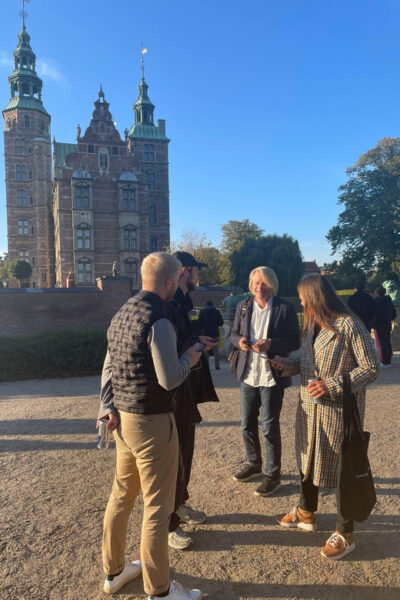
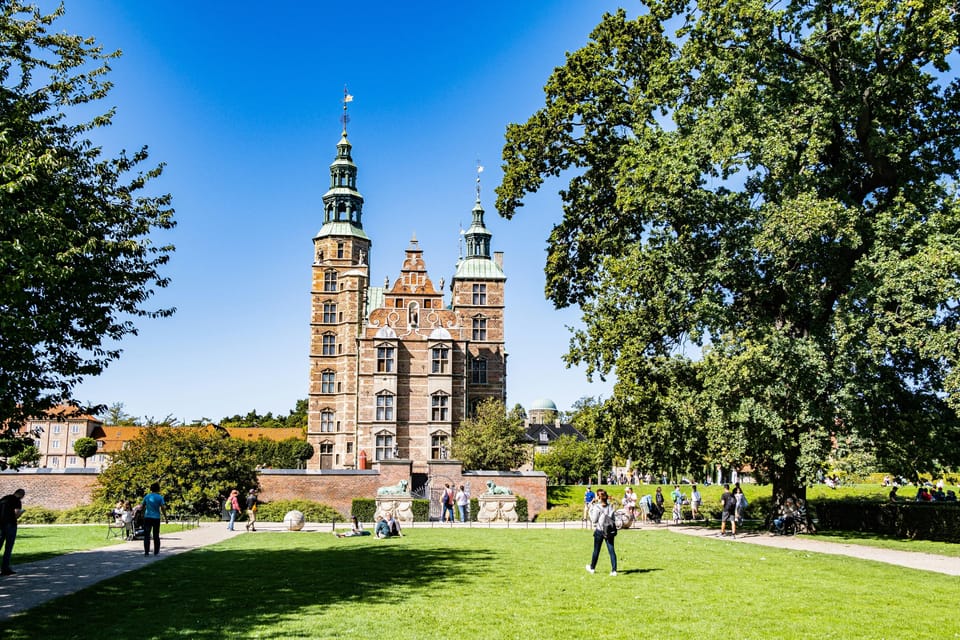
Then the tour turns greener. You walk through King’s Garden (Kongens Have) and arrive at Rosenborg Castle, a stunning 17th-century Renaissance castle.
This segment works because it transitions you from urban intensity to planned calm. Gardens slow you down in a good way. You notice the layout, the sightlines, and how the castle sits within a designed environment instead of standing isolated.
The guide provides just enough detail to make Rosenborg meaningful without turning it into a lecture. You’re learning the why behind the look: the Renaissance influence, the time period, and what the castle represents in Copenhagen’s royal story.
Even if castles aren’t your top priority, this is still a great walk segment because the park space makes the overall tour feel balanced.
The Round Tower: Europe’s oldest functioning observatory
One of the most interesting stops is the Round Tower (Rundetårn), described as Europe’s oldest functioning observatory. Your guide explains its original use as an observatory and a resource for scholars in the 17th century.
That’s a different kind of sightseeing. Instead of just seeing a landmark, you’re learning how it was used. It changes your mental model of the city. Copenhagen isn’t only about royal display and harbor trade. It also has a learning-and-science side, and the tower is a clear physical clue.
When you reach this point in the walk, you’ve already covered royal and commercial themes. Adding the scholar/observatory angle makes the tour feel like a full picture, not just a greatest-hits checklist.
Finishing at Gråbrødretorv: a relaxed square that feels local
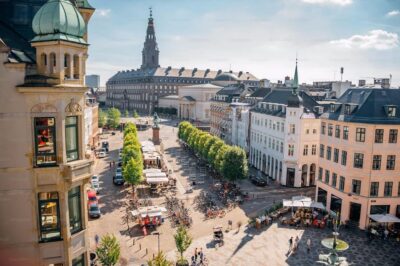
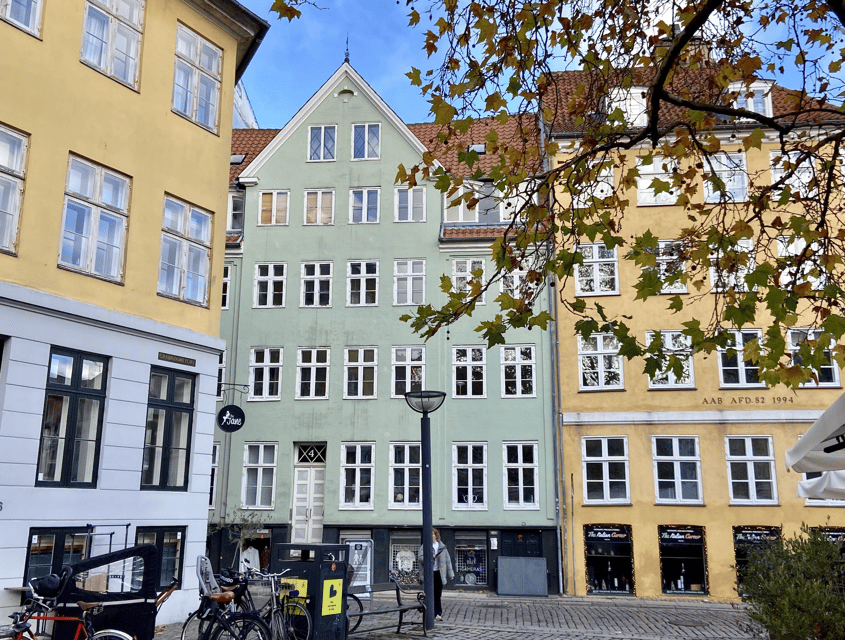
The tour ends at Gråbrødretorv, a picturesque square in the heart of the city. The big promise here is atmosphere: colorful houses and a relaxed vibe that’s popular with locals.
This ending is a smart choice. You’re not sent away right at a transit hub or a busy shopping street. Instead, you finish where you can continue your day at an easy pace. It’s a natural place to grab a drink, snack, or simply take one last look around without feeling like the tour has dumped you off and vanished.
If you’re planning dinner after, finishing here is convenient because it sets you up in a walkable pocket of the center.
Price and value: why $61 can feel fair for what you get
At $61 per person for about 150 minutes, the price isn’t about buying entry tickets or museum time. This tour is value-priced because it’s focused on interpretation: you’re paying for a guide to connect the dots between neighborhoods, architecture, and stories.
Because entrance fees aren’t included and the tour is outdoor-only, you don’t have that extra cost pile-up. That can make it easier to budget on a day when you might otherwise add multiple paid sights.
Is it “cheap”? Not exactly. But for a small group capped at 10, a 2.5-hour guided route, and the added benefit of local recommendations, it can be a cost-effective way to get your bearings fast while still learning real details.
If you’re the kind of traveler who likes to read plaques alone, you might not need a guide. If you’d rather save time and get context without doing homework, this is one of the better ways to spend a first day.
What to bring (so the day feels easy, not annoying)
This tour is weather-dependent in the sense that it’s in all weather conditions, so plan like Copenhagen has mood swings. Bring comfortable shoes first—this is cobblestone and city pavement. Then pack water. And wear weather-appropriate clothing so you’re not spending the walk thinking about being cold.
I’d also recommend a light layer you can remove. You’ll move between open squares, sheltered streets, and indoor-looking architectural fronts. Being able to adjust makes the walking feel smoother.
Who should book this walking tour
This tour is a great fit for:
- First-time visitors who want a coherent route through Copenhagen
- People who enjoy architecture and want the stories behind it
- Travelers who like smaller groups and direct Q&A
- Anyone who wants local guidance for what to do after the walk
It’s not a great fit for:
- Anyone with mobility impairments, since it’s a walking route and not described as accessible
A note on the guides: why the personal touch matters
The reviews highlight something you can feel in the design of the tour: guides that are organized and responsive. Guests have specifically called out Laura for being organized and great with questions, and Hamid for understanding both cultural and social aspects.
That matters because Copenhagen can look like a collection of “pretty buildings” if you don’t have context. A strong guide turns it into a place you understand—why the city looks the way it does, and what those streets were built for.
If you care about learning at a comfortable pace, not in a rushed “say it and move on” way, this is the style of tour to choose.
Should you book Copenhagen’s Hygge & Highlights walking tour?
I’d book it if you want an efficient, friendly introduction to Copenhagen that includes both icons and calmer streets. The route covers the heart of the city—naval housing, a landmark church, royal Denmark, the harbor, a famous pedestrian street, a quiet cobblestone alley, royal garden and castle, and the observatory tower—then ends in a square that’s good for continuing the day.
Skip it if you’re specifically hunting for paid museum interiors or you need an accessibility-friendly experience. And if you hate walking in cold wind, you’ll want to rethink, because the tour is designed to run in all weather.
If you’re flexible enough to plan a 2.5-hour window, this is a strong first-step tour for Copenhagen. The small group size and the guide’s ability to handle questions make it feel less like sightseeing and more like getting local bearings. Add in the fact that entrance fees aren’t included, and it becomes a pretty tidy value for your time.
FAQ
How long is the Copenhagen Hygge & Highlights walking tour?
It lasts about 150 minutes (around 2.5 hours).
What’s included in the price?
The tour includes a walking tour and a live guide. Entrance fees are not included.
Is the tour indoors or outdoors?
It’s outdoor-only, so it’s mainly about walking and viewing the sights rather than ticketed indoor attractions.
How big is the group?
The group is small, limited to 10 participants.
What language is the tour in?
The tour guide speaks English.
Where do I meet, and where does the tour end?
You meet in front of Sankt Pauls Kirke at Gernersgade 33, and the tour finishes at Gråbrødretorv.
Does the tour run in bad weather?
Yes. The tour operates in all weather conditions, so dress appropriately.
What should I bring with me?
Bring comfortable shoes, water, and weather-appropriate clothing.
Is the tour suitable for people with mobility impairments?
No, it’s not suitable for people with mobility impairments.