REVIEW · COPENHAGEN
Copenhagen Alternative Private Tour: Vesterbro & Christianshavn
Book on Viator →Operated by Local CoolTour · Bookable on Viator
Copenhagen has a street-level understory. This private alternative walk stitches together Vesterbro and Christianshavn with stories that run from Christian IV’s old fortifications to WWII resistance broadcasting at Stjerne Radio. I especially love the way the tour explains place-names in plain language, and how you get those quick, memorable history hits without museum fatigue. One thing to factor in: the guide will not go with you inside Freetown Christiania.
You’re looking at 3.5 to 4 hours of local-guided wandering, set up as a true private experience for just your group, in English. You also get mobile tickets plus metro tickets, which helps if the route needs a transit hop instead of just pure walking. And yes, most stops are free to enter—so your money goes into the guidance and the context, not admission lines.
In This Review
- Quick Highlights You’ll Remember
- The Real Point: Why This Route Feels Like Copenhagen, Not a Checklist
- Starting at Viktoriagade: When Fortifications Became Plumbing
- Det Ny Teater and Vesterbrogade Passages: Built for Shows and Movement
- Værnedamsvej: Beer Legends and the Street That Used to Be Slagtergaden
- Saxogade’s Protest Letter: Housing Reform Written in Real Terms
- Skydemuren: The Shooting Wall That Protected Cars With a Castle-Style Face
- Istedgade: WWII Resistance in the Street Name Itself
- Istedgade 31 and Stjerne Radio: The BBC Signal Through Loudspeakers
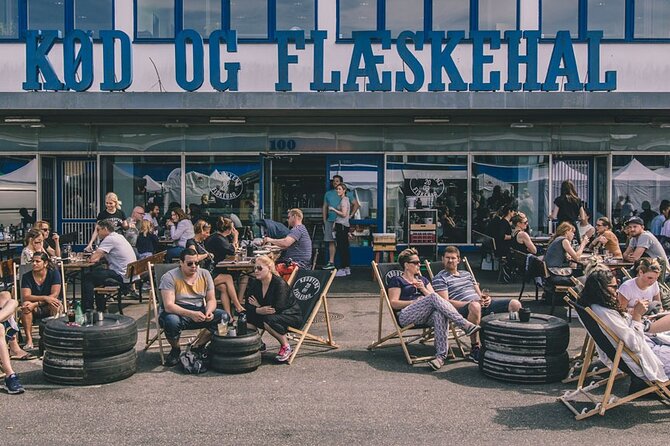
- Meatpacking District: Revitalized Industry, Now Food and Nightlife
- Oksnehallen: A Market Built to Hold 1,600 Heads of Cattle
- Halmtorvet: Copenhagen’s Haymarket Days
- Men’s Home and Maria Church: Social Support in Plain Sight
- Lunch Option: When the Tour Becomes a Food Break (and When It Doesn’t)
- København H and Knippelsbro: Big Transit Landmarks, Then a Canal Crossing
- Christians Kirke and the 1700s German Congregation
- Strandgade 4 and Asiatisk Plads: Denmark’s Industry Roots and Foreign Affairs Power
- Sankt Annae Kirke, Wildersgade, and Old Houses That Still Feel Real
- Wilders Plads and the Naval Hospice: Water Views and a Complex Past
- Church of Our Saviour: The Twisted Spire and the Staircase Outside
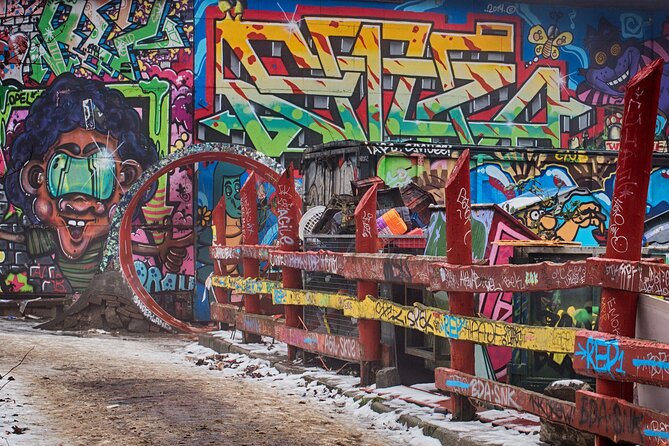
- Freetown Christiania: An Outside-Look That Still Feels Like a Real Place
- Price and Value: Is $147.96 Worth It?
- Who Should Book This Tour (and Who Might Prefer Something Else)
- Should You Book This Alternative Private Tour?
- FAQ
- How long is the tour?
- What does the tour cost?
- Is this a private tour?
- What language is the tour offered in?
- Where does the tour start and end?
- What’s included in the tour?
- Is lunch included?
- Can the guide go into Freetown Christiania with you?
- Does the tour run in rain?
- What is the latest time to cancel for a full refund?
Quick Highlights You’ll Remember
- A street built on a moat explains why Viktoriagade exists in the first place
- WWII resistance listening stations at Istedgade 31 turn a normal street into a story
- Cattle-market architecture at Oksnehallen shows how industrial Copenhagen got repurposed
- Bullet-trap wall history makes Skydemuren feel like a living fortification
- Christianshavn from bridge to churches: Knippelsbro plus baroque-roco churches in one loop
- Christiania, with realistic boundaries: you see it, but the guide can’t enter with you
The Real Point: Why This Route Feels Like Copenhagen, Not a Checklist

Most Copenhagen tours orbit the same handful of postcards. This one takes the long way, through working neighborhoods, old industrial buildings, and the kinds of social institutions that don’t usually make it into glossy photo stops.
The value here is how the guide connects dots for you. Vesterbro and Christianshavn are both close to the center, but they’re different worlds—one shaped by 19th-century industry and 20th-century social change, the other by canals, defense lines, and churches that look like they were designed for drama class.
And the pacing is built for conversation. You’ll be able to ask questions, slow down when something catches your eye, and get explanations that fit the street you’re standing on.
You can also read our reviews of more private tours in Copenhagen

Starting at Viktoriagade: When Fortifications Became Plumbing
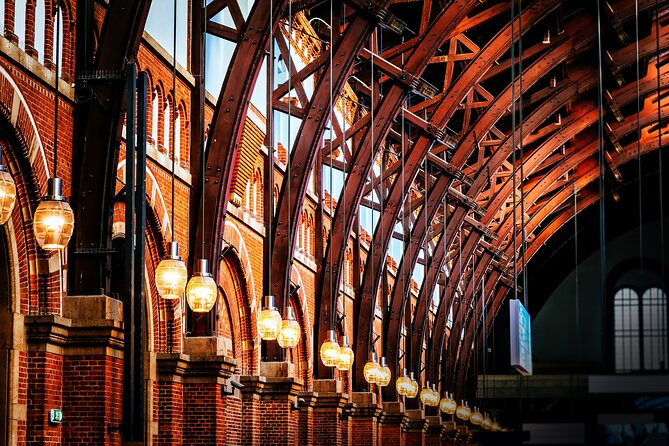
The tour starts at Viktoriagade 8, right where you can feel Copenhagen’s history layered under your feet. Here’s the storyline: Christian IV’s fortifications once stood on this site, and they were protected by a moat. Over time, that moat turned into something far less heroic—described as looking more like an open sewer. Eventually, redevelopment reshaped the area, and they laid down what’s now a well-known street over the old moat.
As you walk along, you’ll also hear how the land was parceled out starting in 1856, with buildings that served charitable needs—like housing for officers’ widows. A few mid-1800s buildings (numbers 8, 10, and 12) are protected in the Danish register of listed buildings and sites.
What I like about this opener is that it gives you a framework for the rest of the tour: Copenhagen reuses space constantly. You’re not just learning dates; you’re learning how decisions about land, water, and housing shaped the city.
Consideration: this stop is short. If you like very detailed architecture lectures, you’ll want to ask the guide one extra question here so you don’t lose momentum.
Det Ny Teater and Vesterbrogade Passages: Built for Shows and Movement
Next up is Det Ny Teater. Opened in September 1908, it’s one of the biggest theaters in Denmark, but the more interesting detail is the planning logic. The theater was meant to be large, and at the same time, it helped open a passage between Gammel Kongevej and the new Vesterbro Passage—now part of Vesterbrogade.
So you get two types of context at once:
- cultural history (a major theater opened in the early 1900s)
- urban design (a corridor through the city)
If you’re the kind of traveler who likes to understand how cities function day-to-day, this is a good stop. You’re learning how movement was designed into the city fabric.
Værnedamsvej: Beer Legends and the Street That Used to Be Slagtergaden
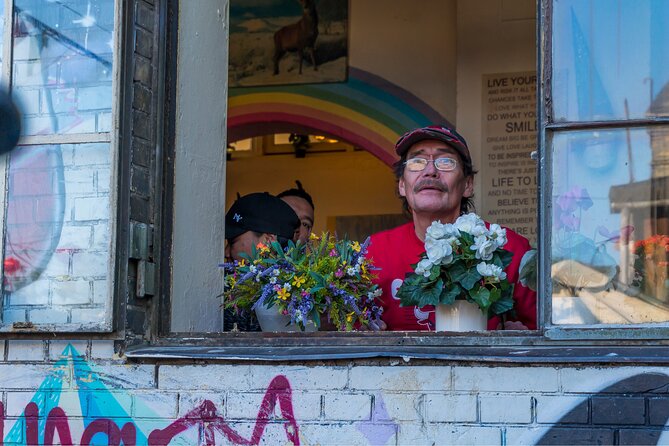
Værnedamsvej is one of those street-name stories that makes Copenhagen feel personal. The name connects to Werner Dam, a beer collector who acquired land in the 1700s and opened a popular beer garden there. But the street also carried an older identity: it was known as Slagtergaden, literally Butchers’ Street, because there were lots of butchers operating in that area.
A small walk here teaches you something big: neighborhoods evolve without deleting their past. You can still feel the earlier economic purpose under the newer street life.
Saxogade’s Protest Letter: Housing Reform Written in Real Terms
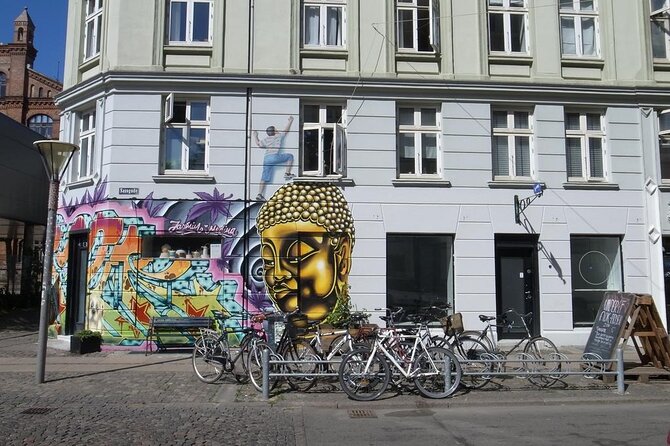
Then comes Saxogade, where you get a reminder that “history” isn’t just monuments. In the early 1950s, residents sent a large protest letter—basically saying they were fed up with miserable housing conditions.
The key detail: these were factory workers who moved into the city from the countryside. Families lived in overcrowded, small one-room apartments where multiple people—sometimes up to 10—shared sleeping space.
For me, the takeaway is how you’ll start noticing social patterns while you walk. You stop seeing Copenhagen as a set of pretty streets and start seeing it as an ongoing negotiation about dignity and space.


Skydemuren: The Shooting Wall That Protected Cars With a Castle-Style Face
Skydemuren is one of those Copenhagen surprises that makes you want to take photos, even if you’re not usually a photo person. It’s a castle-like wall flanked by two residential properties, built as a bullet trap.
Why? It protected traffic along Istedgade from projectiles from the Royal Danish Army shooting range at Skydebane, the area where Skydebanehaven is today. The wall also forms the point de vue for Skydebanegade, and that street has uniform, richly decorated houses.
This is the stop where street-level history becomes fun. It’s not just “old.” It’s practical design from a different century.
Istedgade: WWII Resistance in the Street Name Itself
Istedgade is important in Vesterbro, and it’s known historically for a rougher edge: drug hardship and the largest red light district in Scandinavia. But the tour focuses on the WWII layer, and it’s a powerful one.
The street name references the 1850 Battle of Isted in the First Schleswig War. During WWII, Istedgade became a refuge for the Danish resistance. The slogan associated with it is blunt and memorable: They can take Rome, they can take Paris, but Istedgade will never fall.
Walking here, you start to understand that a city’s reputation can change depending on who’s looking. The guide helps you read the street through multiple lenses—war, politics, and daily life.
Istedgade 31 and Stjerne Radio: The BBC Signal Through Loudspeakers
At Istedgade 31, the story turns from general resistance to a specific operation: Stjerne Radio opened in September 1942, run by Carl Munck and JK Søndergård.
The operation did something remarkably direct—transmitted English BBC radio through loudspeakers. That mattered because this wasn’t just listening. It was communication, morale, and information sharing in a dangerous time.
This stop is short, but it tends to be the kind you remember later when you’re back in your hotel comparing daily city life with what people risked just to stay informed.
Meatpacking District: Revitalized Industry, Now Food and Nightlife
Then you hit the Meatpacking District. This is the revitalized industrial zone known for trendy dining and nightlife, and it’s a contrast to the earlier defensive and resistance stories.
The tour doesn’t ask you to pretend the area is the same as it was. Instead, it helps you see continuity: industrial Copenhagen got repurposed, and now people gather here to eat and socialize.
If you want a quick sense of the neighborhood’s current pulse, this is where you get it—without needing to plan your evenings around it.
Oksnehallen: A Market Built to Hold 1,600 Heads of Cattle
Oksnehallen is next, an exhibition space inside an old market building. It was built in 1891 to house merchant offices and had capacity for 1,600 heads of cattle.
The market stayed active until the White Zone opened in the 1950s. Today it’s repurposed for exhibitions, which makes it a great example of how Copenhagen reuses large industrial structures instead of demolishing them.
Practical note: this stop is free to enter. If the space is open, it’s an easy win for context during your walk.
Halmtorvet: Copenhagen’s Haymarket Days
Halmtorvet used to be Copenhagen’s haymarket. Originally it sat just inside the Western City Gate—where City Hall Square is today. In 1888 it closed and moved outside the Livestock Market area, which had opened in 1879. Market days were Wednesday and Saturday, and up to several hundred loads of hay and straw were traded to distribute to cattle and horse stables around the city.
This is one of those stops that changes how you imagine a city’s logistics. It’s not romantic, but it’s real. And it helps you understand why neighborhoods developed the way they did.
Men’s Home and Maria Church: Social Support in Plain Sight
From industrial history you shift into social institutions in Vesterbro—two stops that feel important because they aren’t about trophies. There’s the Men’s Home for homeless people, established in 1910. It’s a private organization subsidized by the Danish state, aiming to help homeless and vulnerable people recognize and use their own resources to build a better life and contribute to a diverse society.
Then Maria Church: a small church opened in 1909 and today serves as shelter and support for homeless people, families in need, and socially marginalized groups. It provides daily care to people seeking spiritual and economic support, including vulnerable groups such as illegal immigrants, drug addicts, prostitutes, and people whose lives are criminalized.
If you care about how cities actually function, not just how they look, these stops are worth your attention. They show Copenhagen treating social support as part of neighborhood life, not a separate system you never see.
Lunch Option: When the Tour Becomes a Food Break (and When It Doesn’t)
There’s a lunch stop labeled as included only in the Full Option. If you choose the base option, you should not expect a full meal to be part of your budget.
In other words, plan for your own food unless you select the option that includes lunch plus a traditional tasting and drink. This matters because the tour’s strength is guidance and storytelling, not a full-on food itinerary.
København H and Knippelsbro: Big Transit Landmarks, Then a Canal Crossing
After Vesterbro, you’re moving into a different kind of Copenhagen. København H (the central railway station) enters the picture: built in 1911, inspired by town hall architectural style, and described as Denmark’s largest railway station, with 7 platforms and 13 tracks.
Then you cross via Knippelsbro, a drawbridge that’s 115 meters long, built in 1937. It connects Copenhagen to the island of Christianshavn. The name comes from Hans Knip, who managed the bridge and collected tolls in 1641.
This pair of stops works well because it gives you two scales:
- the city’s major transit hub
- the narrow crossing that links islands and neighborhoods
You’ll also get some classic Copenhagen views along the water as you transition.
Christians Kirke and the 1700s German Congregation
Christians Kirke is rococo in style, built between 1754 and 1759. It was originally called Frederik’s German Church, named after Frederick V, and for many years it served the German-speaking congregation in Copenhagen who wanted a church of their own.
Even if you’re not a church-history nerd, this stop gives you a window into Copenhagen’s international connections and how communities shaped the city.
Strandgade 4 and Asiatisk Plads: Denmark’s Industry Roots and Foreign Affairs Power
At Strandgade 4, the focus is B&W—Brødrene Bjørn?—and the industrial story tied to shipbuilding history. The building dates to the 1780s and once housed the DieselHouse Museum (since moved to København SV). The site tells how B&W developed from a one-man smithing workshop in 1843 into one of Denmark’s largest workplaces, with the claim that it held that top role a hundred years ahead. It also points to today’s MAN Energy Solutions.
Next is Asiatisk Plads, described as the former base of the Danish Asia Company (1732 to 1843). Today it’s the Ministry of Foreign Affairs and a convention center.
So you see a neat contrast: industry and global trade on one side, modern diplomacy and official functions on the other.
Sankt Annae Kirke, Wildersgade, and Old Houses That Still Feel Real
Sankt Annae Kirke is a quick stop that rewards slow looking. You’ll see listed buildings from the 1600s and 1700s, including a row of houses numbered 8 to 22 with remains from some of the oldest houses in Copenhagen, built around 1650. House number 14 is noted as the best preserved.
Then you step into Wildersgade, a quiet cobblestone street dating from 1617 to 1622, from the founding era of Christianshavn. It’s lined with mansions, old houses, and warehouses from the 1700s and 1800s.
These streets feel like they’re holding their breath. You’ll likely walk slower here, not because the tour tells you to, but because the buildings do.
Wilders Plads and the Naval Hospice: Water Views and a Complex Past
At the water side around Wilders Plads, it’s now a place to relax with water views. There’s also mention of an expensive marina where you can only use facilities if you’re a member of the yacht club.
You’ll see Wilders Plads 10, a beautiful two-story timber-framed house built in 1736 as a sailmaker’s workshop and housing.
Then there’s a big yellow neoclassical building from 1754 to 1756. It’s listed, used as a naval hospice, and later housed the Danish Naval Museum / Orlogsmuseet until 2016.
This is one of those “Copenhagen does layered uses” moments. The same big space can move from care to commemoration, and the city keeps it instead of erasing it.
Church of Our Saviour: The Twisted Spire and the Staircase Outside
The Church of Our Saviour is baroque and famous for its twisted spire. What makes it special in this tour context is the external spiral staircase you can climb to reach the top.
Even if you don’t climb on your visit, the church gives you a visual anchor for Christianshavn. It also fits the overall theme: Copenhagen likes dramatic structures with practical functions.
Freetown Christiania: An Outside-Look That Still Feels Like a Real Place
Finally, you reach Freetown Christiania. The tour ends here, and the big practical rule is clear: the guide will not go with you into Christiania because they are not allowed.
You’ll see it as a partially self-governed neighborhood of about 1,000 residents, created in 1971 by hippies protesting the lack of housing, on military land abandoned by the Danish army. It covers around 34 hectares. It’s also described as the second most visited sight in Copenhagen after Tivoli, with about half a million tourists per year.
What I like about this setup is that it respects the reality of the place. You get the context, and then you explore within the rules on your own. That usually leads to better judgment on the ground—because it’s not guided like a museum.
Consideration: because the guide can’t enter with you, you won’t get the same level of on-the-street interpretation inside. If that’s a deal-breaker, you might want to budget extra time after the tour to read signage and ask questions where permitted.
Price and Value: Is $147.96 Worth It?
At $147.96 per person for about 3.5 to 4 hours, you’re paying for private guiding plus context. This isn’t a cheap “walk and hope” situation. It’s priced like an interpretation service.
Here’s why it can still feel like good value:
- most stops are free to enter, so you’re not funding a stack of admissions
- you get metro tickets to help you move efficiently
- you’re on a private schedule, so you can ask questions and adjust pacing
- there’s an option that adds lunch and a local tasting with a drink, which can turn the day into something more complete
Where value can dip:
- if you choose the option without lunch, expect to handle your own food
- if you’re very time-crunched (cruise schedules, tight departures), you need to make sure your planned time matches the actual walk
I also like that the tour is booked fairly ahead of time, about 8 days on average. That often correlates with steady guide quality and predictable operations.
Who Should Book This Tour (and Who Might Prefer Something Else)
This tour is a strong match if you want:
- neighborhood stories, not just landmarks
- WWII and social-history context in a walking format
- a guide who can translate place-names, street changes, and political shifts into something you can picture
It might not be for you if:
- you expect a heavy food tour without choosing the Full Option
- you hate walking (it’s built as a walk-first route)
- you want a guided inside experience of Christiania (the guide can’t go in)
Should You Book This Alternative Private Tour?
If your idea of a great Copenhagen day includes real neighborhoods, names with meaning, and history you can see on the sidewalk, I’d book it. The price buys you clarity: why streets exist, what buildings used to do, and how war and housing shaped the city.
Pick the Full Option if you want your day to include lunch plus a traditional tasting and drink. Choose the standard option if you’d rather stay flexible with meals.
And if you’re fascinated by social experiments and community life, plan your timing so you can spend unhurried time at the end point—because the Christiania part depends on what you explore on your own.
FAQ
How long is the tour?
It runs about 3 hours 30 minutes to 4 hours.
What does the tour cost?
The price is $147.96 per person.
Is this a private tour?
Yes. It’s a private tour/activity, and only your group participates.
What language is the tour offered in?
The tour is offered in English.
Where does the tour start and end?
It starts at Viktoriagade 8, 1620 København, Denmark and ends in Freetown Christiania, Copenhagen Municipality, Denmark.
What’s included in the tour?
The tour includes a 3:30 to 4 hour private local guide, metro tickets, and there is also a local tasting and a drink in a traditional restaurant only with the Full Option.
Is lunch included?
Lunch is included only in the Full Option.
Can the guide go into Freetown Christiania with you?
No. The guide will not go with you into Christiania because they are not allowed.
Does the tour run in rain?
The tour will not be cancelled in case of rain.
What is the latest time to cancel for a full refund?
You can cancel up to 24 hours in advance for a full refund. If you cancel less than 24 hours before the start time, the amount paid is not refunded.