REVIEW · COPENHAGEN
e-Scavenger hunt Copenhagen: Explore the city at your own pace
Book on Viator →Operated by Qula · Bookable on Viator
Copenhagen hits different when you chase clues. This self-guided e-Scavenger hunt turns a simple walk into an interactive game that nudges you past big, photogenic sights. It’s built around a phone-friendly flow: you get tasks and questions, you move between stops, and you can start, pause, and resume whenever your day allows.
What I like most is the mix of major highlights and small “hunt energy.” Nyhavn, Tivoli, the spiral staircase of the Church of Our Saviour, the Round Tower, Amalienborg, and more are all on your path—so you’re not spending hours figuring out what’s worth seeing. I also like that the format is friendly for groups and for a quick solo outing, with playful question moments that keep the walk from feeling like a chore.
One thing to consider: the route depends on your phone and navigation working smoothly. If GPS is off or you hit detours from construction, you may need to use common sense with the map and stay flexible.
In This Review
- Quick hits for this Copenhagen smartphone scavenger hunt
- A Copenhagen city walk that feels like a game, not homework
- Price for up to 6: when $36.67 per group actually makes sense
- Where you begin: Landemærket start and what you’re responsible for
- How the 2 to 4 hour timing usually plays out
- The major stops you’ll hunt for (and what to notice)
- Nyhavn: the 17th-century waterfront you’ll keep circling back to
- Tivoli Gardens: amusement-park charm since 1843
- Church of Our Saviour: the baroque spiral staircase outside and in your plans
- Christiansborg Palace: royal power meets government building function
- Urban (covered marketplace): a smart break without losing momentum
- Glyptoteket: art tied to Carlsberg’s founding family
- National Museum of Denmark: cultural history’s big anchor
- Round Tower: built in 1642 and still one of the most visited spots
- Amalienborg Palace: the royal residence that stays active
- Copenhagen City Hall: municipal power at the center
- Strøget shopping street: car-free walking that’s almost a sight itself
- Copenhagen Opera House: modern design with a pricey reputation
- Freetown Christiania: controversial history and why people still visit
- When GPS plays games: how to stay on track during detours
- Who should book this scavenger hunt (and who might want a different style)
- My bottom line: should you book e-Scavenger hunt Copenhagen?
- FAQ
- FAQ
- How long does the Copenhagen e-Scavenger hunt take?
- Where do I start the scavenger hunt?
- Does it end at the same place?
- Is the tour self-guided?
- What language is it offered in?
- Is a smartphone and data included?
- How much does it cost?
- Can I pause or stop the tour?
- Is it private for my group?
- Is cancellation possible for a full refund?
- Is it suitable for people with hearing impairment and service animals?
Quick hits for this Copenhagen smartphone scavenger hunt
- Start, stop, and pause on your own schedule, not on a fixed guide timetable
- Interactive questions and tasks that guide you from sight to sight (not just a list of monuments)
- A tight 2–4 hour window that covers major central Copenhagen highlights
- Works for groups up to 6 under one group price, so it can be good value
- Potential GPS mismatches and detours, so keep a little buffer in your day
A Copenhagen city walk that feels like a game, not homework
This experience is basically sightseeing with rules you control. The app pushes you to look closely, answer questions, and follow a path that connects famous places instead of bouncing you around the map randomly.
I like how it nudges you through neighborhoods you’d likely hit anyway, then gives you a reason to slow down. You end up noticing details you’d normally miss—architecture, street layout, and the way different sites relate to each other across central Copenhagen.
The biggest win is flexibility. If you want a long coffee stop near Urban (the covered marketplace), you can pause. If you’re cold at noon and want to power through, you can keep moving. That freedom is a big deal in Copenhagen, where weather can change fast and days rarely go exactly as planned.
You can also read our reviews of more city tours in Copenhagen


Price for up to 6: when $36.67 per group actually makes sense
The price is $36.67 per group (up to 6), which changes the math depending on how you travel.
- If you’re 2–4 people, the per-person cost can feel very reasonable for a 2–4 hour walking activity.
- If you’re just one person, it can still be enjoyable, but you should know it’s question-and-task driven. If you prefer roaming with no guessing at all, you might feel a little stuck.
Also, you’re not paying extra for museum tickets inside this experience. You’re paying for the game structure and the curated walking flow that brings you to major points of interest. For a city trip where you only have one day, that kind of “time-saving structure” can be worth more than it looks at first glance.
Where you begin: Landemærket start and what you’re responsible for

You start at Landemærket 29, 1119 København and the activity ends back at the same meeting point. That loop matters: you’re not taking on an open-ended walk that leaves you stranded far away from where you began.
Two practical things you need to plan for:
- You’ll use your own smartphone, and data isn’t included.
- You’ll rely on the app’s map/navigation as you go.
The activity is offered in English, includes a mobile ticket, and is labeled as private—your group only. Service animals are allowed, and the experience is listed as user-friendly for people with hearing impairment. It’s also noted as near public transportation, so you can hop in and out of your day easily.
How the 2 to 4 hour timing usually plays out
This is designed to feel doable even on a packed itinerary. Expect it to take about 2 to 4 hours depending on how often you pause, how fast you walk, and how long you linger at each site.
A good way to think about it: the app guides you through a sequence of famous Copenhagen stops, but it’s not trying to turn your day into ten museum visits. You’ll likely spend more time absorbing exteriors, viewpoints, streets, and the story “behind” the scenes that the questions point toward.
If you like to take breaks, this setup is built for it. One review-style takeaway that matches the format: there’s a clear chance to stop for something to eat or drink during the route, and the pace works well for families with kids who can handle an active walk.
The major stops you’ll hunt for (and what to notice)
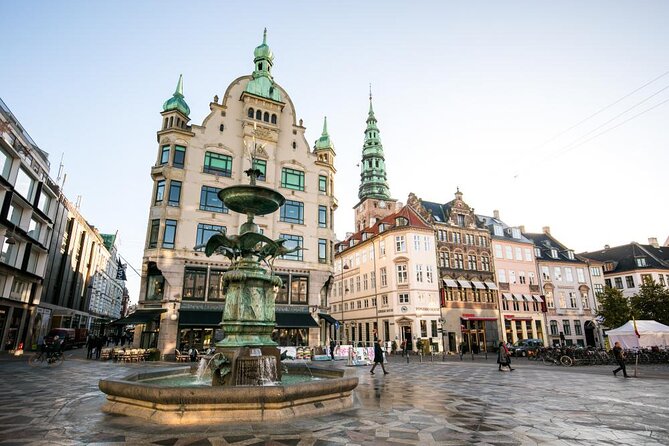






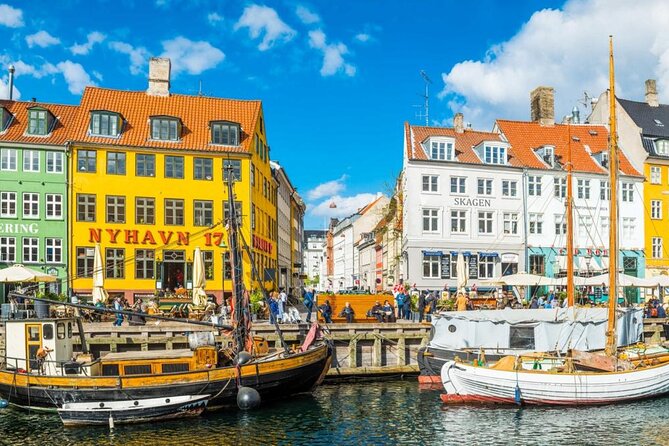
Nyhavn: the 17th-century waterfront you’ll keep circling back to
Nyhavn is a canal-and-waterfront strip tied to Copenhagen’s long history and its entertainment district energy. You’ll be walking a stretch that runs from Kongens Nytorv toward the harbor area just south of the Royal Playhouse.
When the app asks you something here, I’d focus on the big visual themes: water frontage, colorful façades, and the way the canal shapes movement through the area. If it’s cold, this is also one of those spots where you’ll want a quick indoor break nearby if the wind gets mean.
Tivoli Gardens: amusement-park charm since 1843
Tivoli, or Tivoli Gardens, is an amusement park and pleasure garden that opened on 15 August 1843. It’s one of the most iconic “date-night” and family-friendly places in Copenhagen, even when you’re just passing through the outside feel.
For your hunt, this stop can be a turning point. The tasks here tend to make you notice the kind of playful planning that goes into the park’s layout—so don’t treat it like a quick photo stop only.
Practical note: it can be popular, so if you’re aiming for a smooth flow, plan to move on after your questions rather than drifting for an hour.
Church of Our Saviour: the baroque spiral staircase outside and in your plans
The Church of Our Saviour is known for its baroque character and the external spiral winding staircase you can climb to reach the top. Even if you don’t go all the way, it’s the kind of landmark that makes your “I’m really in Copenhagen” moment happen instantly.
If the app points you toward this climb, treat it like a mini workout. The structure is the story—watch how the staircase wraps around the exterior and how it changes what you see as you go up.
Christiansborg Palace: royal power meets government building function
Christiansborg Palace sits on Slotsholmen and functions both as a palace and a government building. It’s a “serious” stop in the middle of a route that otherwise mixes fun, shopping, and culture.
For your hunt questions, aim for the contrast: Copenhagen can be playful, but this is where you’ll feel the institutional weight. The island setting also gives you a sense of the city layout—water, edges, and the way roads connect.
Urban (covered marketplace): a smart break without losing momentum
Urban is a covered marketplace with stalls for local produce, gourmet foods, beverages, and desserts. This is the most natural “pause point” on the walk, because food is the whole reason to stop.
I like having a marketplace inside the route because it solves two problems at once: you can warm up (when weather is rough) and you can keep the game going without wandering off into “find a café” mode.
Glyptoteket: art tied to Carlsberg’s founding family
Glyptoteket is an art museum, and the collection connects to the private art holdings of the founder’s son of Carlsberg Breweries. That detail makes it more than just a stop on a map—there’s a specific personal link behind what you see.
For your hunt, this is a good place to slow down and look. If your question asks for a fact, use that prompt to focus your attention; don’t just skim the façade or the entrance.
National Museum of Denmark: cultural history’s big anchor
The National Museum of Denmark (Nationalmuseet) is Denmark’s largest museum of cultural history. It’s a heavyweight stop in both reputation and scale.
Even if you don’t go inside during your self-guided game, this is still useful. The app’s prompts can help you understand what you’re looking at when you pass a major museum—why it matters in the story of the country, not just in the story of the street.
Round Tower: built in 1642 and still one of the most visited spots
The Round Tower was built by King Christian IV and dates to 1642. It’s one of the city’s best-known and most visited edifices.
This stop works well for the scavenger hunt style. Old buildings like this reward attention—your best move is to look at the tower as an object in the city fabric, not just as a landmark you’ve “seen.” If your questions involve views or purpose, treat them as permission to take the climb or at least look around with intention.
Amalienborg Palace: the royal residence that stays active
Amalienborg Palace is a royal-history stop where the royal family still resides inside the palace. You’re walking into a place with living tradition—less museum-like, more “current day” royalty.
For your hunt questions, think about function and continuity: this isn’t only about the architecture, it’s about how the palace remains part of modern Denmark. If you’re into royal details, this is where your interest will pay off.
Copenhagen City Hall: municipal power at the center
Copenhagen City Hall is the municipal council headquarters and also associated with the Lord mayor of the Copenhagen Municipality. In other words: this is government you can actually walk past and read into.
This is a nice contrast stop between palaces and shopping streets. When the app prompts you here, use it to connect what you’ve learned about Denmark’s institutions to the places that physically represent them.
Strøget shopping street: car-free walking that’s almost a sight itself
Strøget is the pedestrian, car-free shopping area in the center of town and is described as one of the longest pedestrian shopping streets in Europe. It’s one of those streets where the route itself becomes part of the experience.
This is a good section for pacing. If you’ve been moving briskly through the earlier sites, Strøget gives you a chance to slow down and watch street life, storefront rhythm, and how the city manages foot traffic.
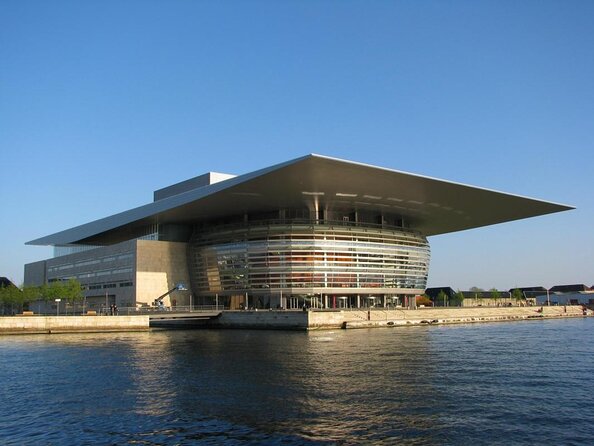
Copenhagen Opera House: modern design with a pricey reputation
The Copenhagen Opera House is among the most modern opera houses in the world and also one of the most expensive opera houses ever built. That’s a lot of “headline energy” for a stop you reach by walking.
For the hunt, the value is in the contrast: you’re going from older structures and civic buildings to a sleek, modern landmark. Let your questions guide what to look for—shape, materials, and the way the building sits within its setting.
Freetown Christiania: controversial history and why people still visit
Freetown Christiania is a controversial area created in 1971 when it was squatted in a former military space. It’s also listed as one of Denmark’s most popular tourist attractions.
Your best approach here is to keep expectations balanced. The controversy is part of the story, and the popularity is also part of the story. Use the app’s prompts as a compass: they’ll steer you toward what you’re meant to notice rather than letting curiosity turn into confusion.
When GPS plays games: how to stay on track during detours
A self-guided route is only as good as your navigation support. In Copenhagen, construction and refurbishment happen, and some routes may need detours.
If GPS seems off, don’t panic. Use the map view in the app, cross-check with a second phone navigation method if you have one, and give yourself a small buffer time. One clear takeaway from real-world use: the “bonus location points” can sometimes feel like they’re one block off if your GPS is jittery, so the fix is simple—walk with awareness, not with blind faith.
My practical tip: if you’re doing this on a one-day schedule, treat the 2–4 hour estimate as a baseline. Add 20–30 minutes of wiggle room if weather is cold, if you’re going with kids, or if you know your day is tight.
Who should book this scavenger hunt (and who might want a different style)
This works best if you:
- enjoy city walking with questions and tasks
- like learning through prompts instead of reading plaques
- want a flexible plan that adapts when you feel like pausing for food
It can also be very family-friendly, especially if your kids can handle an active walk and enjoy playful challenges. There’s a built-in chance for breaks, and the route flow helps kids stay engaged instead of wandering off.
If you’re traveling solo, it can still be fun, but you’ll want to be the type who enjoys figuring things out. In one experience-type note, some solo players found certain questions frustrating when answers weren’t obvious on-site, and GPS misalignment added extra effort. If that sounds like you, consider bringing a second person to bounce ideas off, or be ready to use your phone’s search if a clue feels unclear.
My bottom line: should you book e-Scavenger hunt Copenhagen?

Yes, I’d book it if you want Copenhagen highlights with light structure and a game layer. The path hits classic must-sees—Nyhavn, Tivoli, major royal and civic stops, and modern icons like the Opera House—without forcing you into museum marathons. The start/stop/pause control is especially valuable if your day includes unpredictable weather or a specific meal plan.
I wouldn’t book it if you hate navigation work, or if you want a strictly guided history explanation with everything clearly pointed out at each location. The experience relies on your phone and your willingness to keep moving when GPS isn’t perfect.
If you’re curious and you like learning while walking, this is a strong “city trip in motion” option.
FAQ
FAQ
How long does the Copenhagen e-Scavenger hunt take?
It typically takes about 2 to 4 hours.
Where do I start the scavenger hunt?
You start at Landemærket 29, 1119 København, Denmark.
Does it end at the same place?
Yes, it ends back at the meeting point.
Is the tour self-guided?
Yes. It’s a self-guided game using a smartphone app.
What language is it offered in?
It’s offered in English.
Is a smartphone and data included?
No. Use of a smartphone and data are not included.
How much does it cost?
It costs $36.67 per group, up to 6 people.
Can I pause or stop the tour?
Yes. You can start, stop, and pause the tour to suit your schedule.
Is it private for my group?
Yes. Only your group will participate.
Is cancellation possible for a full refund?
You can cancel for a full refund if you cancel at least 24 hours in advance of the experience’s start time.
Is it suitable for people with hearing impairment and service animals?
The experience is listed as user friendly for the hearing impaired, and service animals are allowed.