REVIEW · COPENHAGEN
Copenhagen: A guided walk for first-timers in the city
Book on GetYourGuide →Operated by Hamlet Tours · Bookable on GetYourGuide
Copenhagen clicks into focus fast when someone explains it while you walk. This first-timers route is built around clear, guided context for the inner city, plus you’ll hear every word thanks to a headset.
I really like the small-group feel (kept tight, usually under 16 and capped at 10), and I love that the guide is there to answer real questions, not just recite facts. In particular, past groups have praised guides like Jens and Thomas for telling stories that make the city feel understandable right away.
One thing to consider: this is a walk with no interior visits, and if you were expecting a nonstop parade of landmark after landmark, you may find the pacing and “what we cover” depends on the guide and the flow of the group.
In This Review
- Why This Walk Works So Well for First-Timers
- Getting Oriented: City Hall to Amalienborg in Two Hours
- The Meeting Spot: Andersen Statue Start, Easy to Find
- Headsets and a Small Group: How You Actually Hear the Stories
- Stop-by-Stop: What You’ll See and Why It Feels Like Copenhagen
- Statue of Andersen → Copenhagen City Hall (short intro feel)
- Christiansborg Palace: a longer explanation stop
- Biskop Absalon and Børsen: quick stops, big context
- Church of Holmen → Christian IV’s Brewhouse → Black Diamond: history through everyday stops
- King’s New Square → Royal Danish Theatre: a quick cultural pulse
- Nyhavn: the longer walk segment and the fun payoff
- Amalienborg Palace: the end point that keeps options open
- What You Learn Along the Way: Bikes, the Middle Ages, and Modern Copenhagen
- The Map You Get After: Your Next-Day Plan Starts Immediately
- Price and Value: Is $46 a Good Deal for a 2-Hour Orientation?
- Who This Tour Suits Best (and Who Might Be Frustrated)
- Should You Book This Walk?
- FAQ
- How long is the Copenhagen walk for first-timers?
- What distance do we walk?
- Where does the tour start?
- Where does the tour finish?
- How big is the group?
- Is the tour in English?
- Do we enter any sights during the tour?
- Is headset audio included?
- Is the tour suitable for wheelchair users?
- Is it cancelable if plans change?
Why This Walk Works So Well for First-Timers
- Headset audio all the way through means you can keep your eyes on the street and still catch the explanations
- Small group sizing keeps it personal enough that questions actually get answered
- Practical bearings in 2 hours: you cover about 3 km (around 1.8 miles) without burning your whole first day
- History plus modern city: the guide connects things like bicycle culture with Denmark’s past, including the Middle Ages
- A map at the end gives you a ready-made plan for what to do after you finish the walk
- No rushing into tickets: you see and learn without buying entrance passes
Getting Oriented: City Hall to Amalienborg in Two Hours
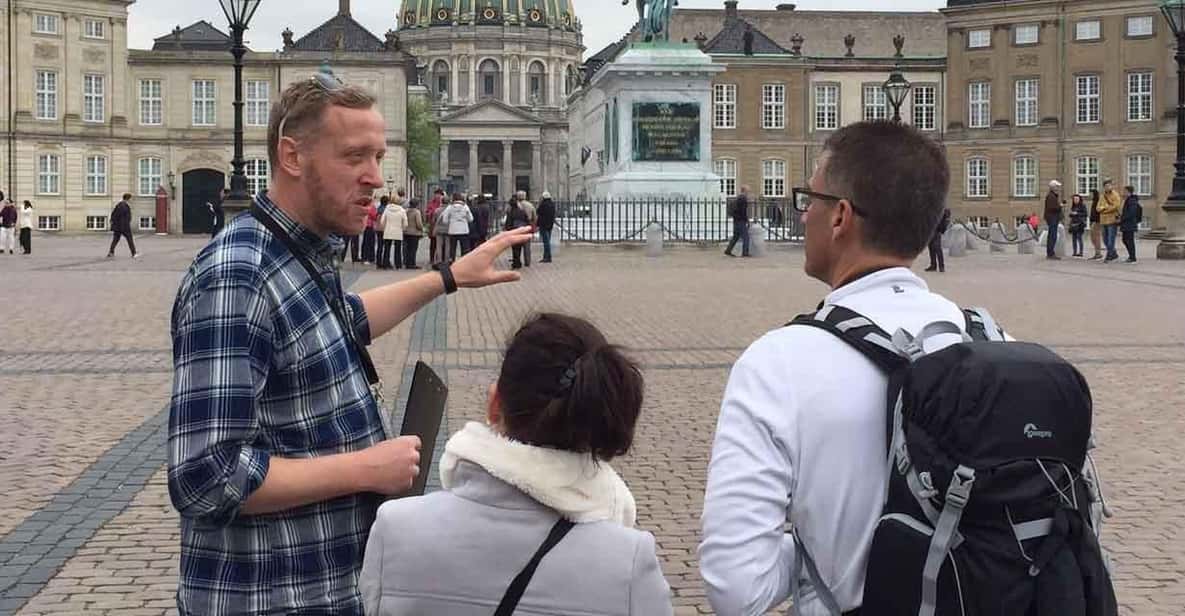
This tour is timed like a great first-day activity: short enough to keep energy high, long enough to give you a sense of how the center hangs together. You’ll walk roughly 3 kilometers total, moving through the main sights on a route that starts near City Hall and ends at Amalienborg.
What that means for you: you don’t have to “figure it out” on day one. Instead, you get a guided mental map. And because the guide is answering questions in real time, the stories stick better than if you’re reading plaques alone while trying to keep up with traffic and crowds.
It’s also a route that’s easy to repeat. Even if you don’t want to do another big tour right away, you’ll leave knowing where you are in relation to the next places you’d probably want to visit.
You can also read our reviews of more walking tours in Copenhagen


The Meeting Spot: Andersen Statue Start, Easy to Find

You meet at the Andersen statue, and that’s helpful because it gives you a clear, fixed reference point. From there, the walk immediately moves into key city-center stops. The vibe is simple: you gather, you get any quick orientation, then you start walking and listening.
The ending matters too. You finish at Amalienborg, which is a very natural place to continue exploring on your own. If you want to linger, pop into a café, or connect to other sightseeing in the area, you’re not stuck far away from where you’d want to be next.
One consideration: the route is meant for people with at least a moderate walking level. If you know you’ll be uncomfortable with steady walking, you might want to choose something with more frequent breaks or more time between stops.
Headsets and a Small Group: How You Actually Hear the Stories
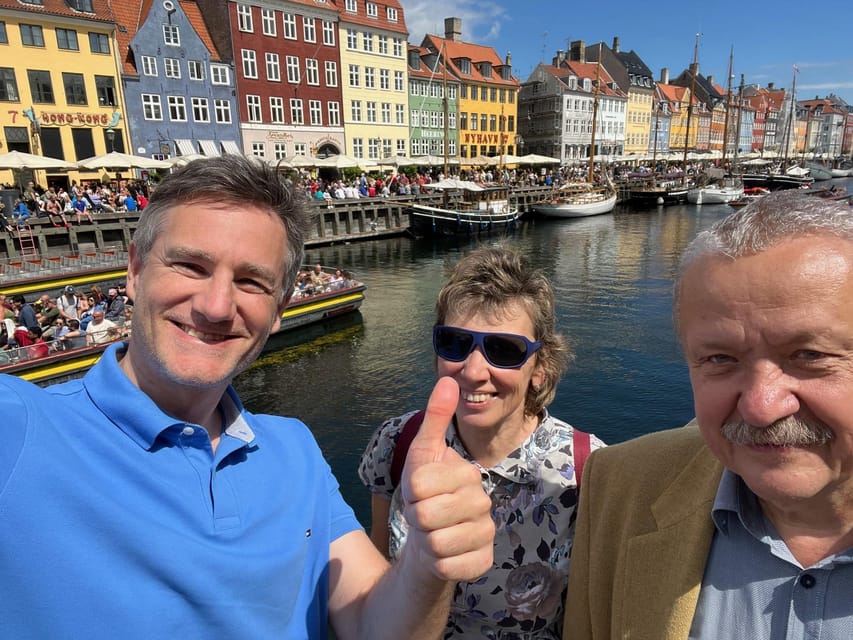
This is one of the rare tours where the tech isn’t a gimmick. You’ll get a headset, so you can hear the guide clearly while walking. That changes everything for a first-timer, because you don’t have to constantly turn your head, squint, or play “guess the speaker” across a street.
The group size also helps. You’ll be in a small group that’s limited to 10 participants, and it’s typically no more than 16. That matters because Copenhagen’s center can be busy, and in a big group you often stop talking-to-the-guide mode. Here, you can ask questions and keep your place in the flow.
From reviews, I also see a consistent theme: guides are praised for being prepared and for sharing stories with a personal touch. One guide name that comes up is Jens, and another is Thomas, both called out for their strong delivery. That’s exactly what you want on a “first bearings” walk—someone who can take your curiosity and turn it into context on the spot.
Stop-by-Stop: What You’ll See and Why It Feels Like Copenhagen
The itinerary is structured so you get quick highlights without long detours. Many stops are short—think a few minutes each—so the walk stays energetic and you don’t lose half your time waiting.
Statue of Andersen → Copenhagen City Hall (short intro feel)
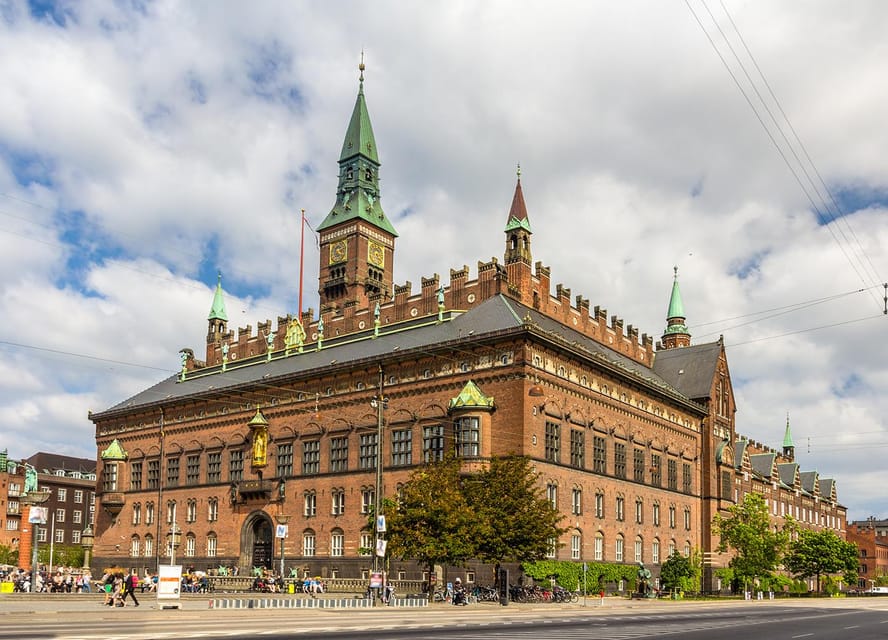
You begin at the Andersen statue, then move to Copenhagen City Hall for a short sightseeing moment. This early segment is basically your warm start. You’ll get the city-story framing right away, which helps later stops make more sense.
If you’re the type who gets bored by long lectures, this is a good format. It’s more “walk + story” than “stand still + history class.”
You can also read our reviews of more guided tours in Copenhagen





Christiansborg Palace: a longer explanation stop
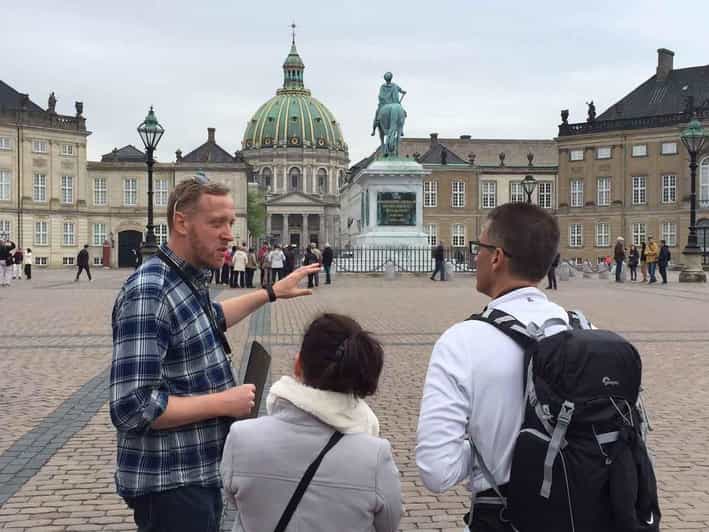
Next comes Christiansborg Palace. The schedule includes both a short walk segment and a longer sightseeing segment here. This is a key moment in the route because the guide uses the area to connect themes—past and present—into something you can picture as you keep walking.
Even if you’re not sure what you’re looking at yet, you’ll get the why. The guide can answer questions as you go, which is especially helpful if you’re trying to make sense of Denmark beyond the postcard version of Copenhagen.
Biskop Absalon and Børsen: quick stops, big context
You’ll then see Biskop Absalon, Copenhagen for a brief pause, followed by Børsen for another short stop. These shorter moments are useful because they don’t interrupt your momentum. Instead, they act like anchors: places where the guide can point and explain patterns you’ll notice elsewhere.
This is also where the guide’s focus on themes comes through. Expect the stories to connect rather than just list facts. Reviews highlight that the guide can handle detailed questions and share a lot of specifics, and the tight timing of these stops gives the tour its “high signal” feel.
Church of Holmen → Christian IV’s Brewhouse → Black Diamond: history through everyday stops
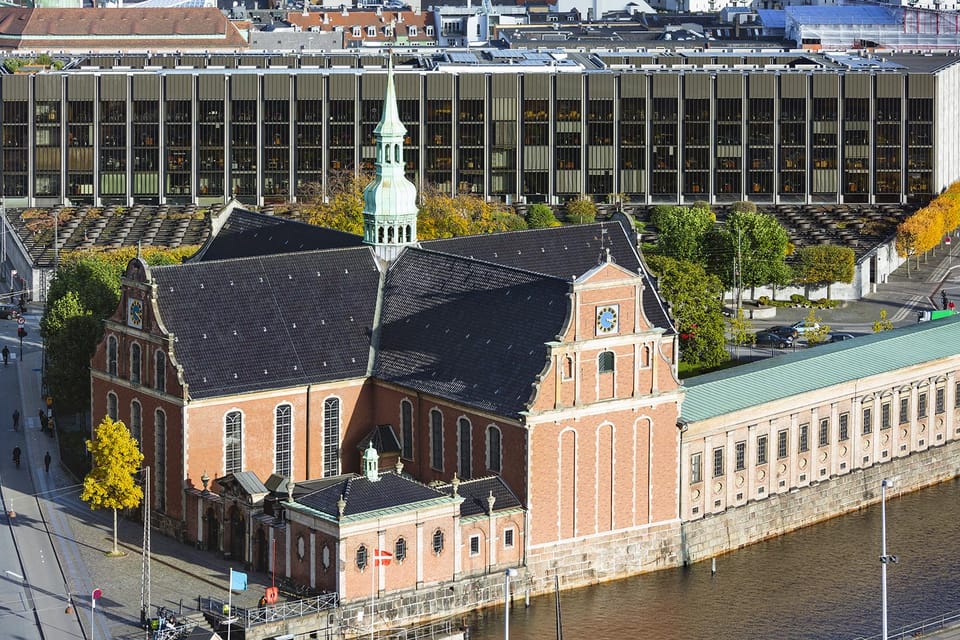
After Børsen, you’ll pass Church of Holmen, then Christian IV’s Brewhouse, and then the Black Diamond. Each is given a short sightseeing window, and the sequence matters: it’s not only grand landmarks. It’s a mix of religious, historic, and modern-feeling city points, all tied together by the guide’s commentary.
Here’s why that’s valuable: first-timers often assume Copenhagen is one style of place. This part of the walk shows you how varied the center is, without forcing you to commit to long museum visits.
King’s New Square → Royal Danish Theatre: a quick cultural pulse
Next up is King’s New Square, followed by Royal Danish Theatre. Both stops are short, but that’s exactly what you need if you’re building bearings quickly. You’re getting “this exists, and here’s how to think about it” before moving on.
If you’re the kind of traveler who likes to return later for a deeper look, these short pauses are perfect. You leave knowing where to go when you’ve got more time.
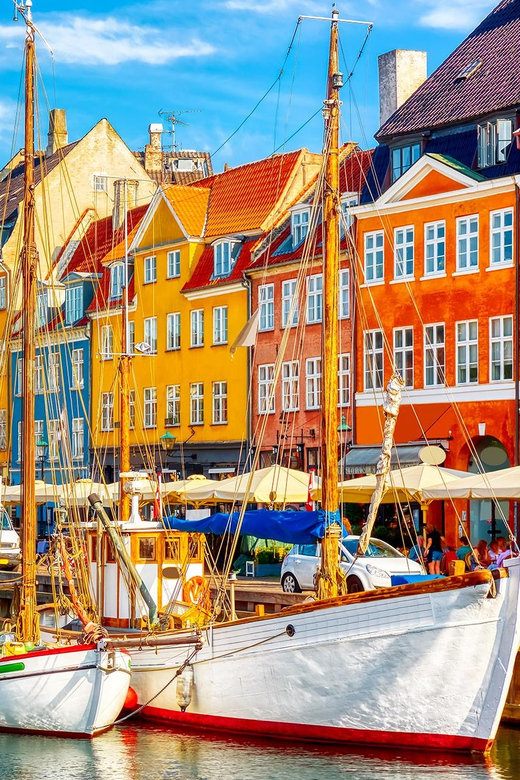
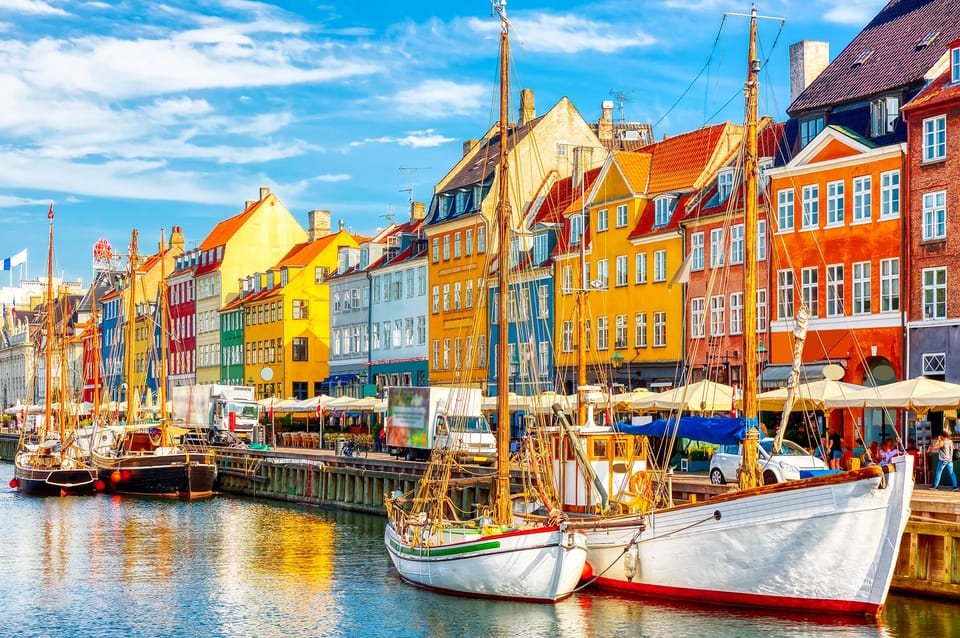
Nyhavn: the longer walk segment and the fun payoff
You’ll spend more time walking through Nyhavn. The tour’s description also points toward what many people do afterward: take a canal tour and enjoy a drink in Nyhavn. That’s a smart suggestion because it turns the walk into a full evening plan.
Nyhavn is also where you’ll feel Copenhagen’s identity in a casual way. Even without going inside anything, the streets and atmosphere help your brain lock onto the city’s “feel,” not just its timeline.
Amalienborg Palace: the end point that keeps options open
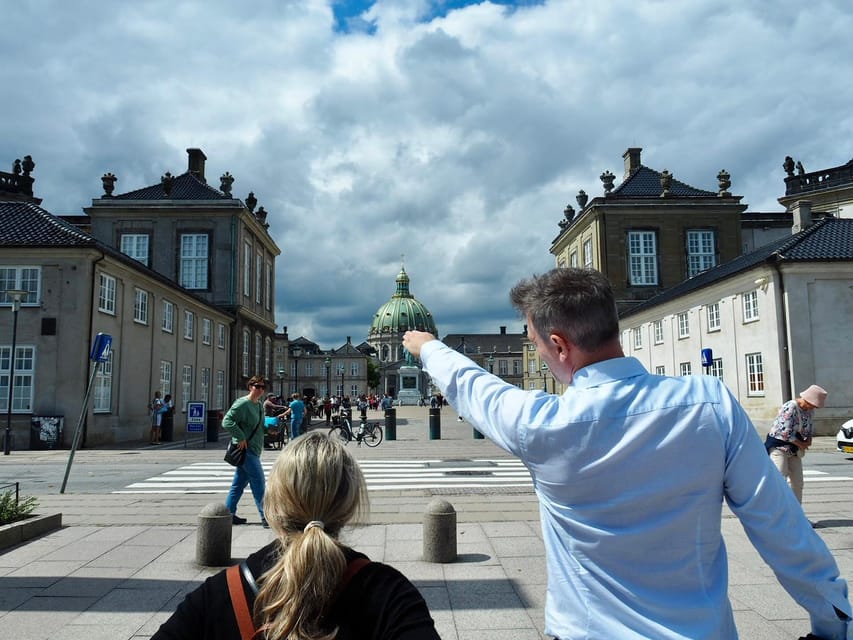
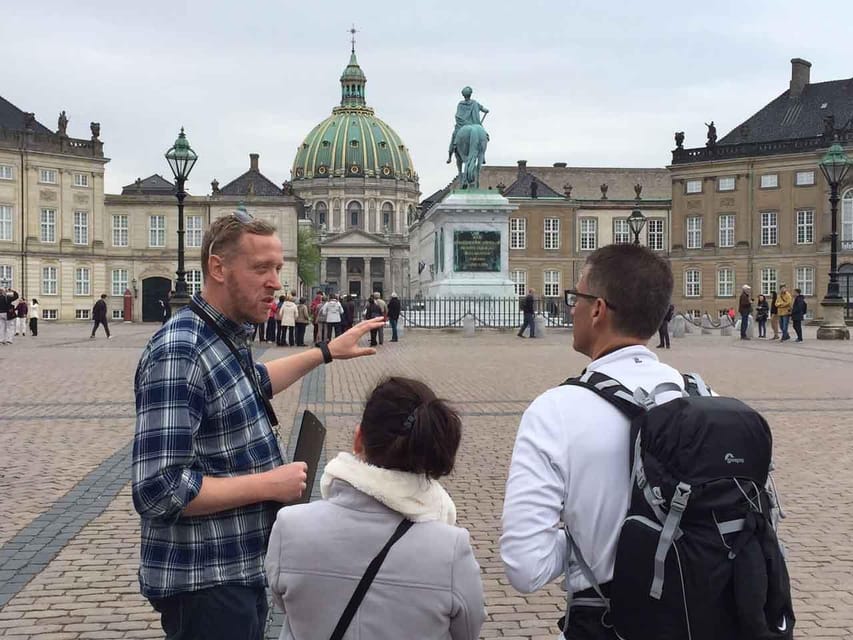
The walk ends with Amalienborg, approached with a final longer walking segment. This is a strong finish because it gives you a clear destination. If you want to keep exploring, you’re not wandering without a target.
Also, ending at a major place like this helps you avoid the common first-day problem: you come back to your hotel feeling like you saw a bunch of dots but couldn’t connect them into a route. This route connects the dots for you.
What You Learn Along the Way: Bikes, the Middle Ages, and Modern Copenhagen
This isn’t just a “name and date” walk. The guide explains big-picture themes and ties them to the city you’re actually standing in.
Two examples you’ll hear about:
- Why bicycles are so common in Copenhagen
- How Copenhagen dominated Scandinavia during the Middle Ages
Even if you’ve read a bit beforehand, hearing it in the flow of the street makes it more memorable. You start noticing what fits and what you can test later with your own eyes—bike lanes, everyday movement patterns, and the way old power and modern life coexist in the same blocks.
From the review snippets, the guides also seem to handle detail well. People praised the amount of information and the passion behind the explanations, plus the ability to keep answers coming. That’s a big deal if you’re the type who asks things like, Why is this here? What does that tell me about how the city developed?
The good part: you don’t have to worry about being an expert on Denmark. The walk is designed as a first-timer on-ramp.
The Map You Get After: Your Next-Day Plan Starts Immediately
After the walk, the guide gives you a map of Copenhagen and suggestions for routes to keep exploring on your own. This is a major quality-of-life detail.
I like it because it turns a guided session into momentum. Instead of staring at a screen later and trying to remember where you walked, you can follow the guide’s suggested paths right away. If you want to do a canal tour and end up back in Nyhavn for a drink, you’ll already know the general direction and how to stitch the pieces together.
This is also where your questions during the walk pay off. The map helps you choose what to see next based on what interested you most, not based on what happened to be closest to your hotel.
Price and Value: Is $46 a Good Deal for a 2-Hour Orientation?
At $46 per person for about 2 hours, this is priced like a guided city highlight walk—small group included. The value comes from what you’re actually getting:
- You get a live English guide
- You get headsets, so the experience doesn’t collapse into shouting
- You get a map afterward for independent follow-up
- You spend time walking real streets and hearing how the pieces connect
You aren’t paying for museum entry fees because the tour doesn’t include entering sights. That’s a plus for most first-timers, because it keeps the itinerary flexible and the time spent more predictable.
The only caution on value: because there are no interior visits, don’t book this expecting full “ticketed attraction” depth. If you want that, you use the walk as your scouting mission, then plan separate visits to what you care about most.
Who This Tour Suits Best (and Who Might Be Frustrated)
This tour makes the most sense if:
- You’re in Copenhagen for the first time and want quick bearings
- You like asking questions while walking
- You want a mix of old and new city stories
- You want an easy, structured starting point at City Hall area
It’s not a fit for:
- Wheelchair users
- People with low level of fitness
Also, keep your expectations tuned. Reviews include at least one concern that the actual mix of landmarks felt different than what was described, and that the group sometimes did more on their own rather than focusing heavily on lots of historical spots. The takeaway for you: approach it as a guide-led orientation walk with strong storytelling, not as a checklist of every major historic stop.
Should You Book This Walk?
Book it if you want Copenhagen to make sense fast. The headset + small group setup makes it easy to stay engaged, and the guide’s ability to answer questions seems to be a core part of the experience. The focus on bicycles and Denmark’s Middle Ages dominance gives you two big themes you can remember as you explore later.
Skip it if you hate walking for two hours, need wheelchair access, or you’re specifically hunting for lots of inside-the-building visits. In that case, you’ll likely prefer a different tour format with fewer street stops and more time in specific attractions.
If you’re deciding between doing nothing on day one or taking a guided orientation, this is the “do something that pays off later” option.
FAQ
How long is the Copenhagen walk for first-timers?
It lasts about 2 hours.
What distance do we walk?
The route covers about 3 kilometers, which is roughly 1.8 US miles.
Where does the tour start?
The meeting point is at the Andersen statue.
Where does the tour finish?
The walk finishes at Amalienborg Palace.
How big is the group?
It’s a small group limited to 10 participants, and it’s typically no more than 16.
Is the tour in English?
Yes, the live guide speaks English.
Do we enter any sights during the tour?
No. The tour does not include entering sights.
Is headset audio included?
Yes, you’ll have a headset so you can hear the guide at all times.
Is the tour suitable for wheelchair users?
No, it’s not suitable for wheelchair users.
Is it cancelable if plans change?
You can cancel up to 24 hours in advance for a full refund, and there is also a reserve now and pay later option.