REVIEW · HILLEROD
Hillerød: Frederiksborg Castle Entry Ticket
Book on GetYourGuide →Operated by Frederiksborg Castle · Bookable on GetYourGuide
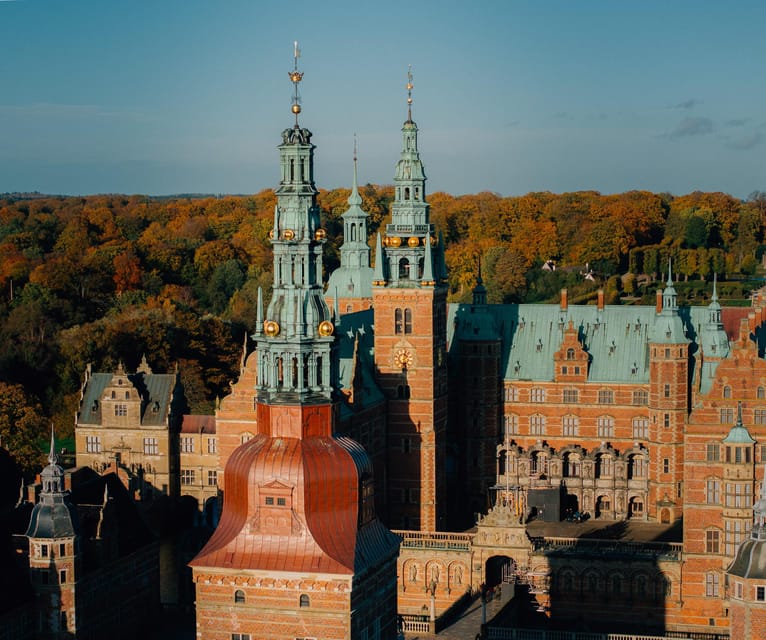
A Renaissance palace with real dramatic scale. The Frederiksborg Castle complex is Denmark’s answer to a royal grand tour, and your ticket lets you roam chapels, halls, and galleries at your own pace.
I really like the mix of indoor art and history with outdoor water-and-garden views. Two things that made the visit click for me: the Chapel and Great Hall give you instant wow, and the museum’s portrait-and-painting collections show how Denmark pictured power, war, and national identity over centuries.
One consideration: this is largely self-guided. You get an excellent app audio guide, but if you want a human guide to explain the deeper political backstories scene by scene, you’ll be wishing for the guided option that isn’t included.
In This Review
- Key highlights you’ll feel the moment you arrive
- Frederiksborg Castle: the Danish Renaissance day trip machine
- What your entry ticket really includes (and what it doesn’t)
- The best way to structure your visit: rooms first, then gardens
- Inside the palace: Chapel, Audience House, and Great Hall
- Museum galleries: Museum of National History and the Danish National Portrait Gallery
- The gardens at Frederiksborg: Baroque symmetry and romantic lakes
- A smarter outdoor strategy: where to slow down
- Rabarbergaarden Slottet: a practical meal in the former stable building
- The Little Ferry: optional, seasonal, and worth considering
- Price and value: is $17 a fair deal?
- Who this entry ticket suits best (and who should rethink it)
- Should you book the Frederiksborg Castle entry ticket?
- FAQ
- How long is the Frederiksborg Castle entry ticket valid?
- What does the ticket include?
- Is there an audio guide?
- Is the museum guided, or is it self-guided?
- Are the gardens included with the ticket?
- Is the Little Ferry included?
- Where can I eat during my visit?
- What does the restaurant focus on?
- Is the attraction wheelchair accessible?
- Can I cancel my booking?
Key highlights you’ll feel the moment you arrive
- Danish Renaissance scale: the largest Renaissance complex in the Nordic region
- Iconic interiors: Chapel, Audience House, and the Great Hall are the big-ticket rooms
- Portraits that matter: Denmark’s largest and most significant portrait collection, with additions over time
- Two garden worlds: formal Baroque geometry plus a more romantic garden with lakes and streams
- A practical break built in: a museum restaurant in the former stable building
Frederiksborg Castle: the Danish Renaissance day trip machine
Frederiksborg Castle sits about 35 minutes north of Copenhagen, in the town of Hillerød. The palace itself dates to the early 1600s, built in the first decades of the 17th century by King Christian IV (1588–1648).
The setting helps. Frederiksborg is surrounded by Castle Lake and framed by the Baroque Garden and other landscaped grounds. That matters because your visit is not only rooms and paintings. It’s also pauses—walks where you reset your eyes after staring at centuries of detail.
If Copenhagen feels like you’ll be rushing, this is the cure. You can do it as a straightforward entry-ticket visit without building a whole tour around it.
What your entry ticket really includes (and what it doesn’t)
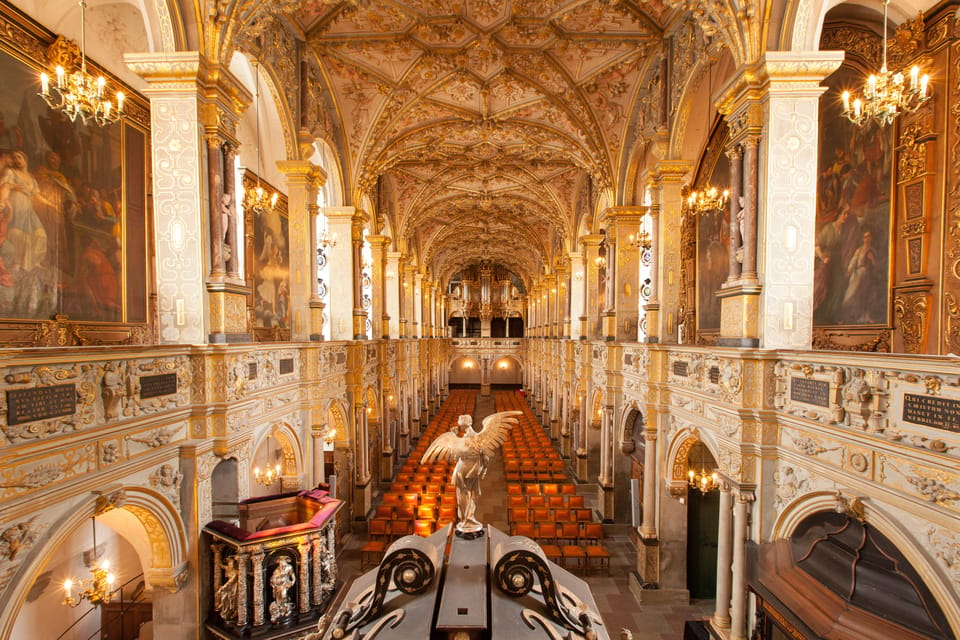
This ticket is clean and simple: it’s for one day, with access to the castle and museum exhibitions, plus the Baroque Garden. It also includes a free digital audio guide in an app.
Here’s what you can count on included:
- Entry to the castle and museum areas and all exhibitions
- Access to the Baroque Garden
- A free app audio guide, with artwork scanning for extra info
Not included (but easy to plan for):
- A guided tour (if you want a live guide, that’s separate)
- The Little Ferry (available for an additional fee)
- Food and drinks (you can purchase at the museum restaurant)
You should also know the ticket works for one day, and availability determines starting times. In plain terms: you’ll want to pick a start slot that matches the pace you want—slow and lingering, or more focused and efficient.
The best way to structure your visit: rooms first, then gardens
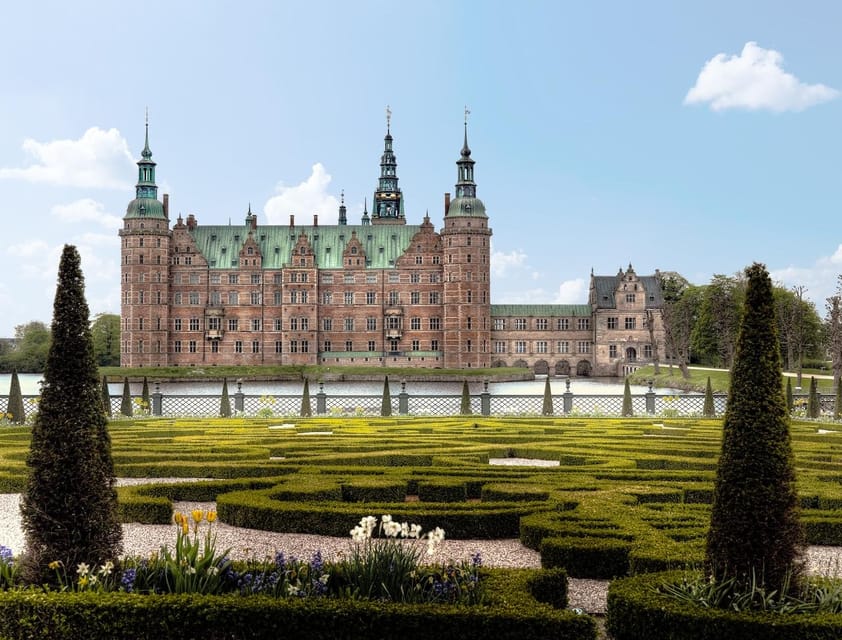
Frederiksborg is the kind of place where your brain enjoys a rhythm. I suggest you do high-impact interiors early, when you still have energy for detailed rooms and portraits. Then shift outdoors for the views and the slower walking.
A practical flow looks like this:
- Arrive and get your bearings with the app audio guide
- Hit the major showpiece rooms (Chapel, Audience House, Great Hall)
- Transition into museum galleries (history rooms and the portrait collection)
- Take a planned break at Rabarbergaarden Slottet (restaurant)
- Finish with the Baroque Garden, then loop through the garden areas around the lake
That order helps you avoid the common mistake of spending too much time outside before you see the interiors that really define the place.
Inside the palace: Chapel, Audience House, and Great Hall
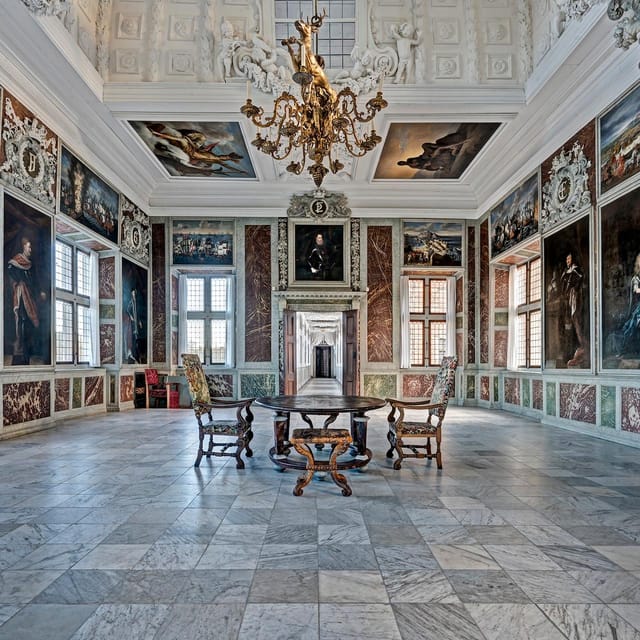
The Chapel, the Audience House, and the Great Hall are the core rooms that people tend to remember. They’re not just pretty spaces; they help you understand how Christian IV’s court wanted to look and feel—ceremonial, controlled, and designed to signal authority.
- Chapel: Expect a room built for ceremony. Even if you’re not an architecture fanatic, you’ll feel how the space guides behavior—where people stood, how the room read as power.
- Audience House: This is where the building’s public-facing function makes sense. The idea of being received, watched, and recorded is part of what these spaces communicate.
- Great Hall: This is the kind of room where scale hits you. Plan time for it rather than rushing for photos. The audio guide helps you connect what you’re seeing to the era and purpose.
A self-guided visit is a plus here because you can slow down exactly where you care. If you love paintings, you’ll pause more. If you love symbolism and design, you’ll spend longer in these central rooms.
Museum galleries: Museum of National History and the Danish National Portrait Gallery
Frederiksborg’s museum isn’t one narrow exhibit. It’s two museum collections under one ticket umbrella:
- Museum of National History
- Danish National Portrait Gallery
The portrait side is a big deal. The collection is Denmark’s largest and most significant portrait collection, and new works are added over time. That means you’re not just looking at a fixed set of famous faces—you’re seeing how portraiture has been treated as a living record of identity.
Here’s what to expect from the museum experience:
- Portraits and history paintings that map important faces and events in Danish history
- Special exhibitions included with your ticket
- Plenty of time spent reading visual storytelling rather than following a single linear plot
The app audio guide matters most in this section. You can scan the artwork to get more information on what you’re looking at, which saves you from guessing and helps you connect the painting to the moment it represents.
The gardens at Frederiksborg: Baroque symmetry and romantic lakes
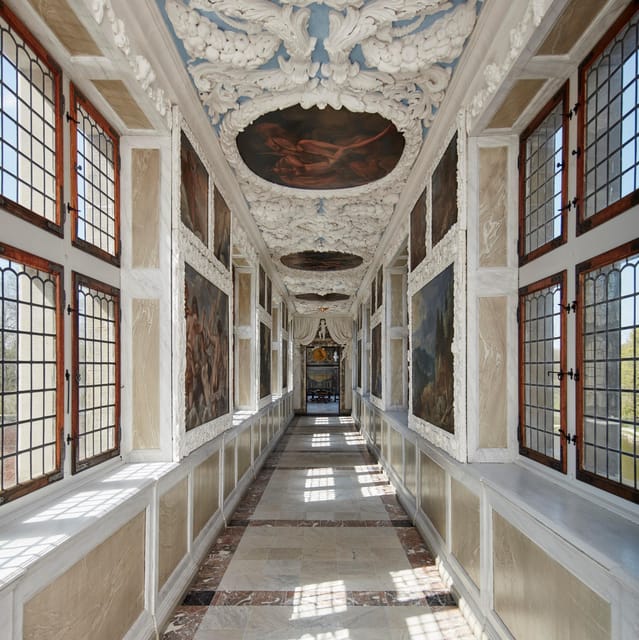
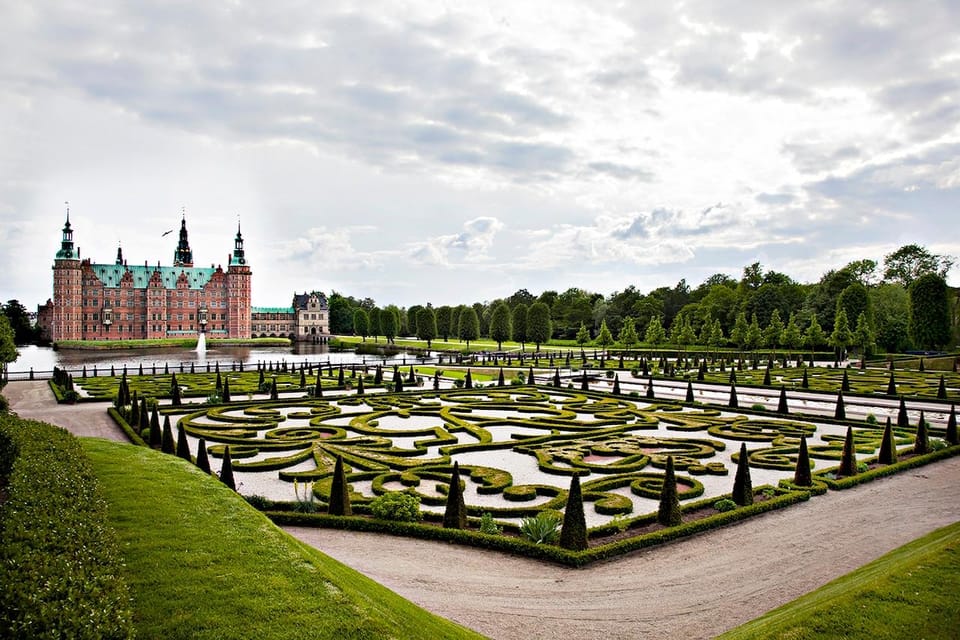
After the museum rooms, the gardens feel like a reset. The Baroque Garden gives you order—symmetry, sculpted trees, and royal monograms from the 1720s. Those royal markers make the garden feel like an extension of the palace’s authority.
Then you can contrast that with the more romantic garden areas: wild forest-like sections, winding streams, and lake views that soften the rigid geometry of the Baroque side.
A few garden elements to look for:
- Castle Lake views that frame the palace and create that postcard effect
- Frederik IV’s Baroque garden details (including royal monograms)
- Frederik II’s Bath House Castle from 1580
- Countess Danner’s Norwegian-inspired cabin on an island in one of the lakes
That last detail is a fun break in tone. It adds a human story element—an exotic touch connected to the Countess—so the gardens don’t feel like one long visual lecture.
A smarter outdoor strategy: where to slow down
If you only walk the fastest loop, you’ll miss the point. The best garden moments come when you pause:
- For a long look at the lake reflections (yes, you’ll feel silly standing still, and then you’ll get why it matters)
- For the shift from structured Baroque layout to the more natural garden sections
- For the Bath House Castle area, since it breaks the pattern and gives you a different kind of landmark
Also, if you’re visiting in colder months, plan for short outdoor stretches rather than a single endurance walk. You’ll still get value from the gardens, but you’ll want breaks after indoor rooms.
Rabarbergaarden Slottet: a practical meal in the former stable building
Your ticket includes museum access, not meals, but I like that the restaurant is built into the experience. Rabarbergaarden Slottet is in the former stable building, which keeps the setting tied to the castle rather than feeling like an afterthought.
The food approach is focused on local, organic ingredients, with a sustainable farm-to-table kitchen style. That’s a useful detail because it helps you choose it without overthinking it: you’re not just buying food, you’re buying a break that fits the place.
A good plan: schedule your meal after you’ve done a major interior section and before you go back outside. That way you don’t end up eating quickly just to rush to the next room or, worse, skipping the meal because you didn’t time the day well.
The Little Ferry: optional, seasonal, and worth considering
One of the fun add-ons here is the Small Ferry. It’s available for an additional fee and runs throughout summer. If you’re there in season, it can add another perspective on the castle and lake setting.
If you’re not traveling in summer, you can treat it as a bonus rather than a requirement. Your entry ticket still gives you plenty to do without it.
Price and value: is $17 a fair deal?
At about $17 per person, this ticket is priced like a serious value for what you get: the castle access, museum collections, Baroque Garden access, and a free app audio guide with artwork scanning.
The best part about this pricing model is flexibility. You’re not paying only for one room or one exhibit. You’re paying for a whole day of wander time across interiors and outdoors, plus built-in context through the app.
If you enjoy:
- museums with artwork you can actually spend time with
- portrait collections and history paintings
- garden walks with strong historical design elements
…then the value tends to hold up easily. If you only want a quick stop for exterior photos and a single room, you might feel you paid for more space and time than you used.
Who this entry ticket suits best (and who should rethink it)
This is a great fit if you want control over your pace. You don’t have to match a group schedule, and you can spend extra time where your interests land—Chapel vs. portraits vs. garden details.
It also works well for:
- Couples and friends who want a shared day with options
- Independent travelers who like self-guided storytelling
- Art and history fans who want Danish history presented through portraiture and official imagery
- People who want a day trip that’s close to Copenhagen without trying to do five things at once
You might rethink it if:
- You strongly prefer guided tours with a live narrative
- You have very limited time and need a one-hour highlights loop
Should you book the Frederiksborg Castle entry ticket?
Yes, if you want a high-impact day with built-in context and no pressure. The combination of big ceremonial interiors, the Danish National Portrait Gallery, and the two-style gardens around Castle Lake makes this one of those places where your day stays interesting even when you’re not rushing.
Book it especially if you’re the type who likes to linger—scanning artwork on your phone and letting the audio guide explain what you’re looking at. If you only want the fastest exterior hit, you’ll get less out of it.
FAQ
How long is the Frederiksborg Castle entry ticket valid?
It’s valid for 1 day. Starting times depend on availability, so check what’s offered when you book.
What does the ticket include?
Your ticket includes access to the castle and museum, all exhibitions, the Baroque Garden, and a free digital audio guide via an app.
Is there an audio guide?
Yes. The ticket includes a free app audio guide, and you can scan artwork to get more information.
Is the museum guided, or is it self-guided?
A guided tour is not included. You’ll visit on your own with the audio guide.
Are the gardens included with the ticket?
Yes. The Baroque Garden is included.
Is the Little Ferry included?
No. The Small Ferry is available for an additional fee.
Where can I eat during my visit?
You can purchase food and drinks at the museum restaurant, Rabarbergaarden Slottet.
What does the restaurant focus on?
The restaurant emphasizes local, organic ingredients and a sustainable farm-to-table kitchen approach.
Is the attraction wheelchair accessible?
Yes, the experience is wheelchair accessible.
Can I cancel my booking?
Yes. Free cancellation is available up to 24 hours in advance for a full refund.