REVIEW · COPENHAGEN
Kayak Tour in Copenhagen Harbor – June, July and August
Book on GetYourGuide →Operated by Kajakhotellet · Bookable on GetYourGuide
Cold water. Warm city views.
Copenhagen Harbor kayaking is a smart way to see the city center without fighting crowds, and I love how the stable double sea kayaks make the experience feel doable for beginners. You also get a real sense of place when you glide into Christianshavn’s cozy canals, where the buildings feel closer and the pace slows down. The main thing to watch for: the sightseeing stops are brief, so this is best for quick impressions, not for lingering like you would on land.
What makes the tour work well is the full setup—your guide handles the check-in, waiver, equipment, and kayak basics—so you’re not guessing once you hit the water. You’ll also paddle past major highlights from the waterline, then return to Kalvebod Bølge after about 2 hours, including instruction and a small refreshment.
In This Review
- Key Points You’ll Actually Care About
- Kalvebod Bølge Check-In and Getting Kitted Out Right
- Stable Double Sea Kayaks: What “Beginner-Friendly” Means Here
- Langebro and Slotsholmen: Starting in the City Center From Under Bridges
- Gammel Strand, Christiansborg Palace, and Børsen: Quick Looks With Good Angles
- C.F. Tietgens Hus and the Turn Toward Christianshavn’s Feel
- Royal Library, Blox, and the Bridge Rhythm Back to Lille Langebro
- Price and Value: Is $70 Fair for 2 Hours?
- What to Bring for Copenhagen Harbor in June, July, and August
- Should You Book This Copenhagen Harbor Kayak Tour?
- FAQ
- How early should I arrive?
- Where is the meeting point?
- What’s included in the price?
- How long is the tour?
- What should I bring?
- Is the tour offered in English?
- Do I need to be a strong swimmer?
- What kind of kayak will I use?
- Is there cancellation available?
- Who shouldn’t book this tour?
Key Points You’ll Actually Care About
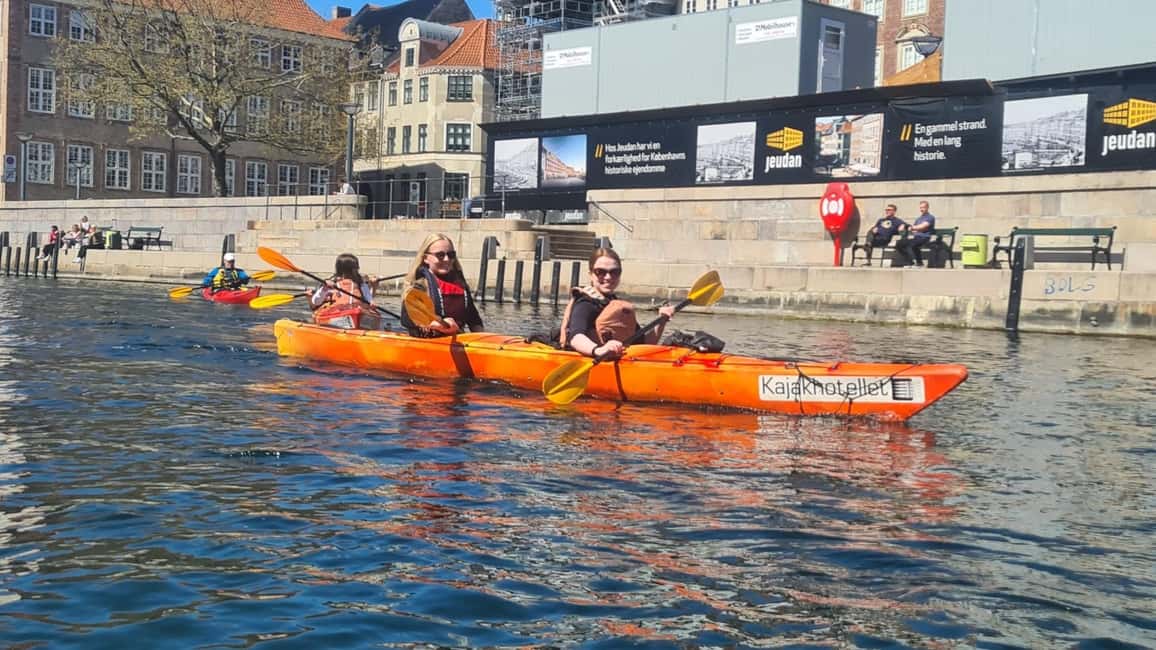
- Stable double sea kayaks are used for easier sailing and confidence-building
- Christianshavns canals deliver that “Copenhagen feels different from the water” moment
- Major sights stay close while you get fresh angles under bridges and along waterfronts
- Instruction + safety gear (life jacket, paddle, swim vest, and weather layers) take the stress out
- Short stops, big views: you’ll get photo-friendly glimpses, not museum-length explanations
Kalvebod Bølge Check-In and Getting Kitted Out Right
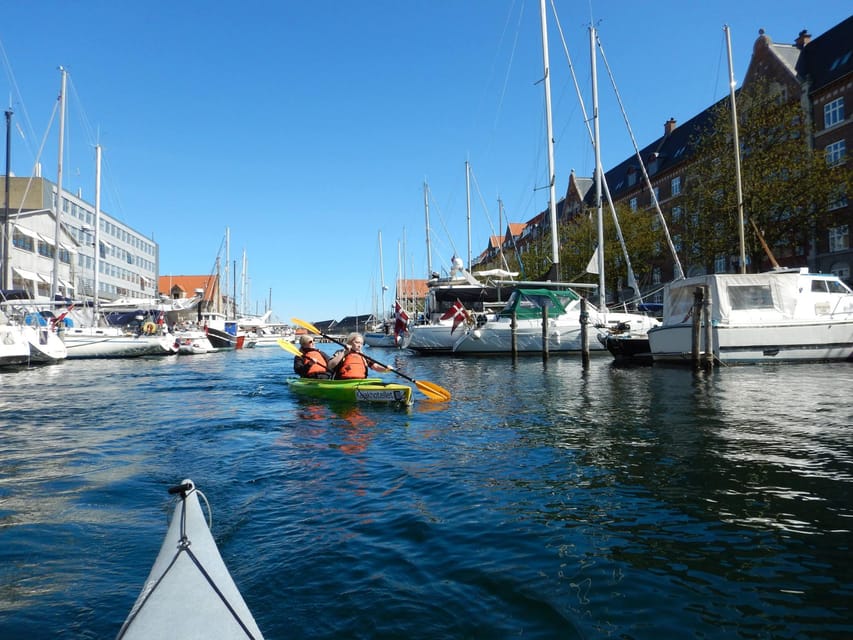
Your tour starts at Kajakhotellet on the waterfront at Kalvebod Bølge. Plan to arrive 10 minutes early for check-in, because you’ll need time to sign the waiver and go through setup with your guide. It’s a straightforward process, and the Danish Maritime Authority requires a name list completed on the day—so build in a little buffer to avoid feeling rushed.
Once you’re checked in, you’ll get help with everything that matters before you head out: how to get into the kayak, how to use the paddle, and what your guide expects from you on the water. The kayaks are designed for stability, and that makes a real difference when you’re standing on a deck trying to figure out balance and rhythm.
Then comes the practical gear part. You’ll wear a life jacket and use a swim vest and paddle, and you can also get rain pants or wetsuits depending on conditions. They also provide a changing room and lockers for small bags—very handy if you don’t want your phone and keys loose in a kayak compartment.
One small detail I appreciate: you’re not just handed a kayak and sent away. This is a guided experience where the “how” comes first, so you can spend your attention on the “what”—Copenhagen’s waterfront.
You can also read our reviews of more tours and experiences in Copenhagen
Stable Double Sea Kayaks: What “Beginner-Friendly” Means Here
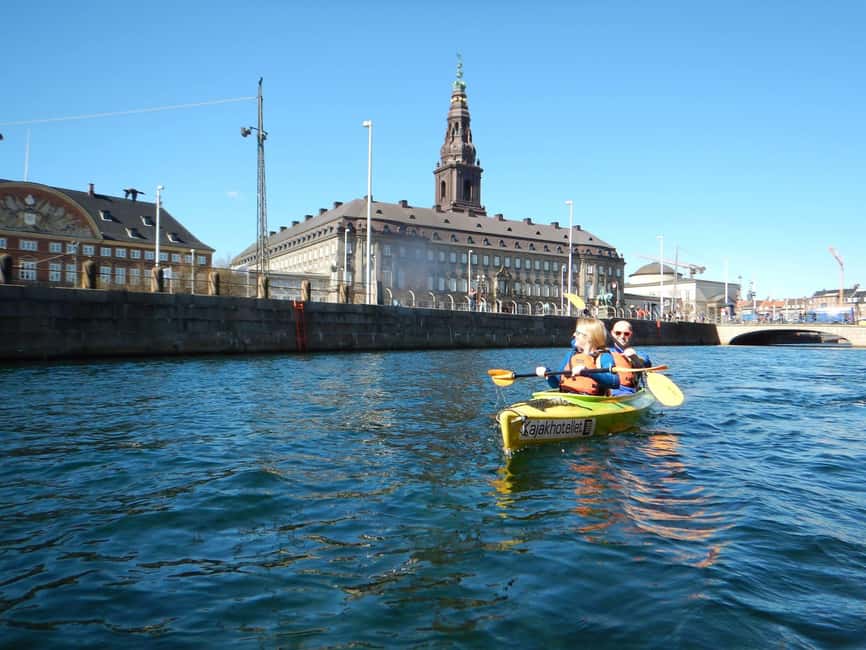
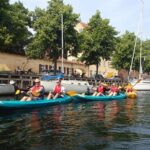
This tour uses stable double sea kayaks for the standard setup, which means you don’t need athletic balance to get going. If you’re a first-timer, that stability is your best friend, because it lets you focus on basic paddling technique and steering without constantly thinking about tipping.
The guide gives instructions until you’re comfortable enough to begin the route. For larger groups, you might also see double sit-on-top and single sea kayaks used, so the experience can vary slightly depending on what you’re assigned. If you’re traveling solo, you may end up in a single kayak, which can feel more demanding at first. The good news: the guide typically keeps a close eye during the early stage so you don’t get left behind while you’re finding your rhythm.
Weather layers matter more on water than you think, especially when the wind shifts under bridges. Even in summer months, you may want the rain pants or wetsuit if conditions are cool or damp. And you’ll want comfortable clothes you don’t mind getting a bit wet, since you’ll be paddling in a harbor environment.
There’s also a clear list of what not to bring: no alcohol and no drugs, plus no slippers. You’re expected to follow the guide’s instructions and stay within the safety rules. It’s not scary—it’s just the kind of structure that makes a group paddle actually work.
Langebro and Slotsholmen: Starting in the City Center From Under Bridges
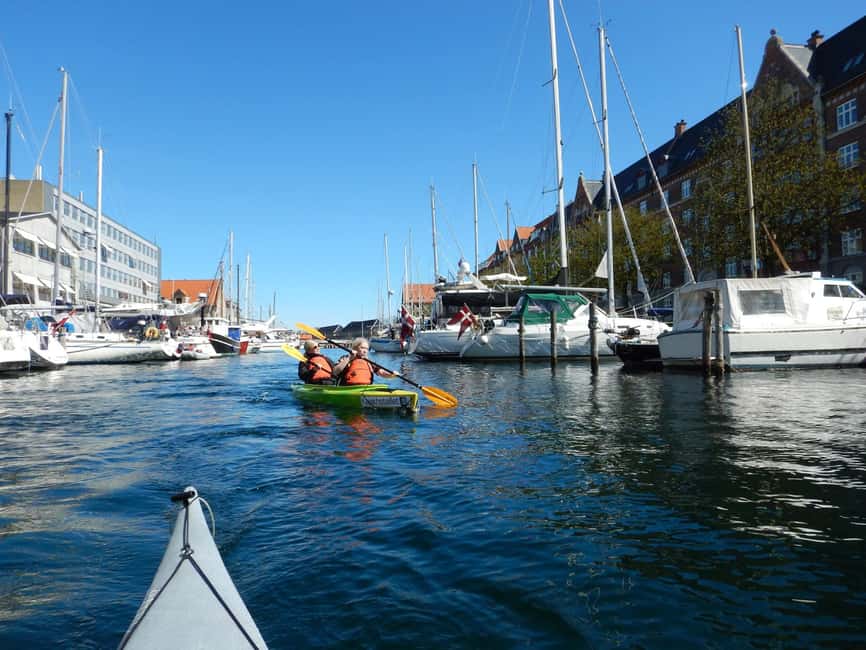
After instruction, the paddling begins from Kalvebod Bølge. From the start, you’re in a part of Copenhagen where the city’s scale and design really show off from water level. The harbor gives you that rare view of the skyline and waterfront at the same time—buildings towering above, with reflections and open channel space in front of you.
Your first sightseeing area includes Langebro, a key waterway crossing. When you paddle toward it, you get a sense of how bridges shape movement in the harbor—how boats, foot traffic, and architecture all share the same geometry. It’s also a good moment to practice your turns since the harbor space can open up right around this stretch.
Next you head toward Slotsholmen. This area is one of those “Copenhagen’s brain” zones—government and important institutions clustered together—so it’s great for seeing classic city architecture from an angle you can’t get from streets. Expect to cruise past landmarks where straight-on photos are common, but your water-level perspective makes the details feel closer: edges, textures, and the way windows line up over the water.
If you enjoy architecture as much as waterfront atmosphere, this part of the route does a lot of heavy lifting. A strong guide will keep the focus on what you’re actually seeing—design cues, building history in plain terms, and how the city’s layout makes sense when you’re floating through it.
At a pace like this, you’re not doing long photo stops. Instead, you get quick, clean glimpses at the waterline—enough to understand the place, and enough to make you want to walk back later.
Gammel Strand, Christiansborg Palace, and Børsen: Quick Looks With Good Angles
From Slotsholmen, the route continues past Gammel Strand for a short stop. Even if it’s only a few minutes, it’s a useful pause because it breaks up the paddle so you can reset. You’ll still get the water-to-building relationship here—where the waterfront feels like part of the architecture rather than just a border.
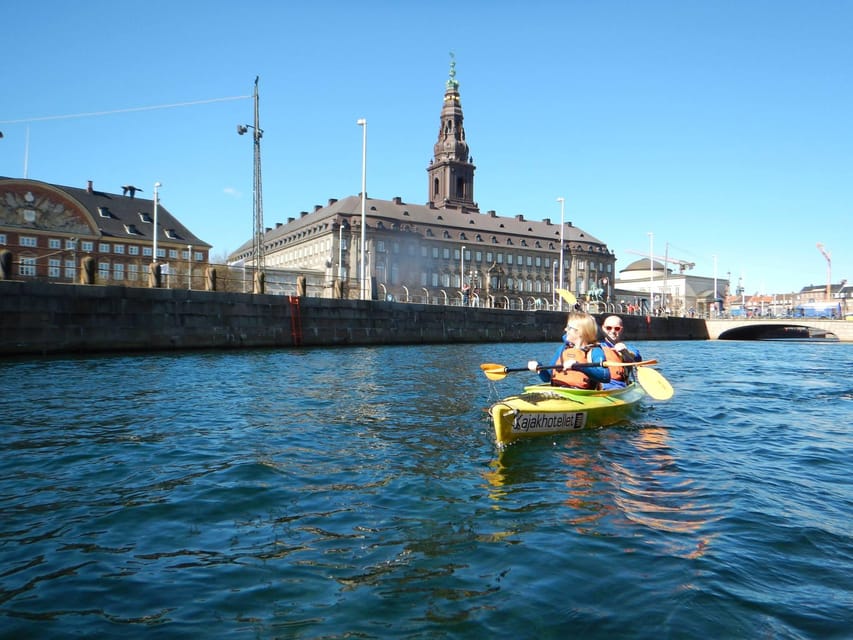
Then you pass Christiansborg Palace. This is one of the stops where kayaking really earns its keep. On land, palace views can feel distant or blocked by streets and crowds. From the water, you get a more level horizon and a feeling of being alongside the building rather than just in front of it.
After that comes Børsen, along with the broader Copenhagen city-center views. Børsen is especially satisfying from the harbor because you can track how the city’s landmarks line up across water channels. The tour’s design keeps these sight moments compact—around five minutes each—so you won’t feel stuck waiting. You’ll feel like the city is moving past you, which is exactly what a harbor paddle should feel like.
If you want deeper commentary on every building, know this: the tour format is built for motion and viewpoints, not a long lecture. I’d treat it like guided storytelling during short glances, then plan to follow up on land when you have more time.
C.F. Tietgens Hus and the Turn Toward Christianshavn’s Feel
As you continue, you’ll see C.F. Tietgens Hus. This is the kind of stop that works well from a kayak because it breaks the route into different architectural moods. You start to notice how the city’s shapes and materials shift as you glide through channels, and that helps you read Copenhagen better even after the paddle ends.
Then the route leans into one of the tour’s biggest reasons to book: Christianshavns cozy canals. This is the section where the harbor turns from wide-open and city-bright into something more intimate. The buildings feel closer, the water feels calmer, and you naturally slow your paddling because the canal geometry makes it feel more precise.
Christianshavn has a vibe you can’t fully recreate from the main streets. From the water, you get a sense of how locals might move through the canals—not just as tourists hopping from one landmark to the next, but as people using a living waterway space. It’s also a perfect spot for photos because the reflections often look more settled than in wider harbor stretches.
This canal portion is where the experience stops being just scenic and becomes memorable. If you care about atmosphere—quiet corners, close architecture, and that feeling of gliding rather than rushing—this is the segment you’ll remember.




Royal Library, Blox, and the Bridge Rhythm Back to Lille Langebro
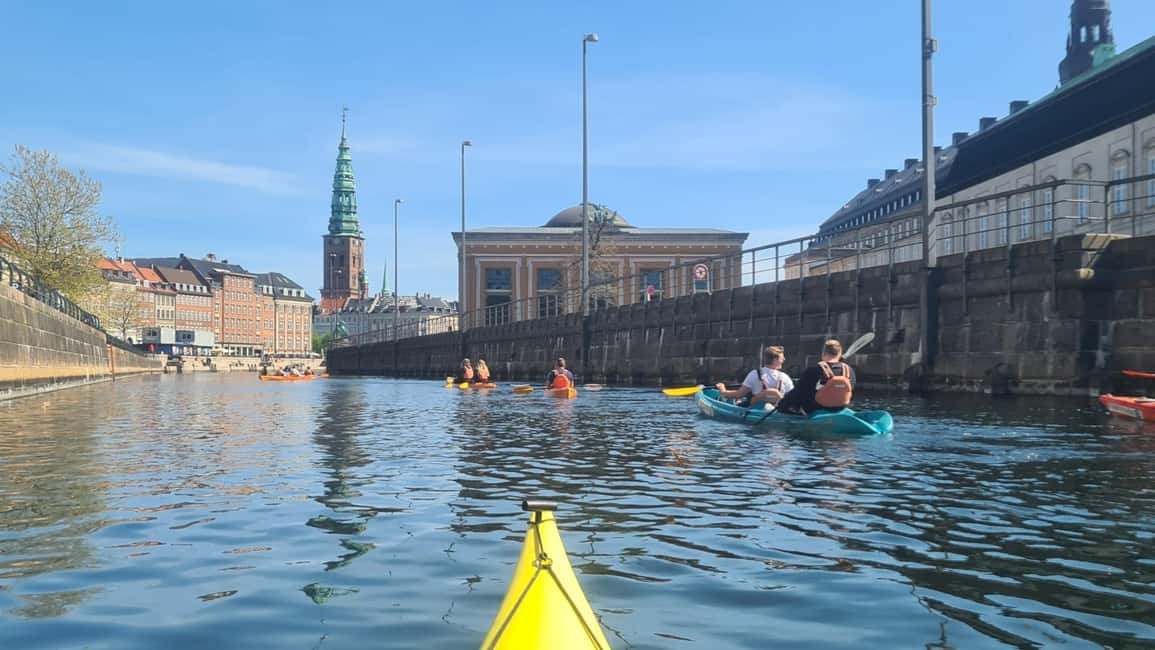
After Christianshavn, you’ll pass the Royal Library of Denmark for a short sightseeing moment. From the water, big modern institutional buildings can look surprisingly human because your viewpoint is lower and closer than most street vantage points. You’ll notice the shape and massing more clearly, and you’ll also spot how the surrounding harbor space frames the building.
Next up is Blox. This is another place where waterline views can make the structure feel different—less like a single landmark and more like part of the city’s ongoing waterfront story. It’s not a long stop, but you’ll have enough time to spot key design details and grab a couple solid angles before the paddle continues.
Then the route reaches Lille Langebro, and the ride starts to feel like a return arc. Bridges are also navigation cues, so you’ll likely feel more oriented by the time you reach this stage of the tour. It’s a good reminder that kayaking isn’t only about views—it’s also about learning how the channel guides your movement.
Finally, you arrive back at Kajakhotellet at Kalvebod Bølge. The total time is about two hours, including instruction and the refreshment. That timing is ideal if you want the experience without eating your whole day in Copenhagen.
Price and Value: Is $70 Fair for 2 Hours?
At $70 per person for a two-hour tour, this isn’t the kind of bargain activity that you can treat casually. It is, however, priced like a real guided experience: a live guide, instruction, and all the gear support that reduces stress. You’re not just renting a kayak; you’re being trained and guided while you paddle through a set route packed with recognizable landmarks.
What you get for the money also matters:
- Equipment is included, including a life jacket and paddle, plus swim vest and rain pants or wetsuits if needed.
- You get changing room access and lockers.
- The tour includes a complimentary bottle of water along the route.
- It runs with both Danish and English live guiding.
In practical terms, you’re paying for confidence. For a first-timer, the value comes from getting the kayak basics handled quickly so you can enjoy the water and the sights rather than working out steering and balance on your own.
Also, the tour format is designed for short, consistent sightseeing views. If you’re the type of visitor who wants an efficient hit of Copenhagen by water and then wants to keep exploring on foot after, two hours is a nice match.
And if you like flexibility, you can typically reserve and pay later, with the option for a full refund if you cancel at least a day ahead.
What to Bring for Copenhagen Harbor in June, July, and August
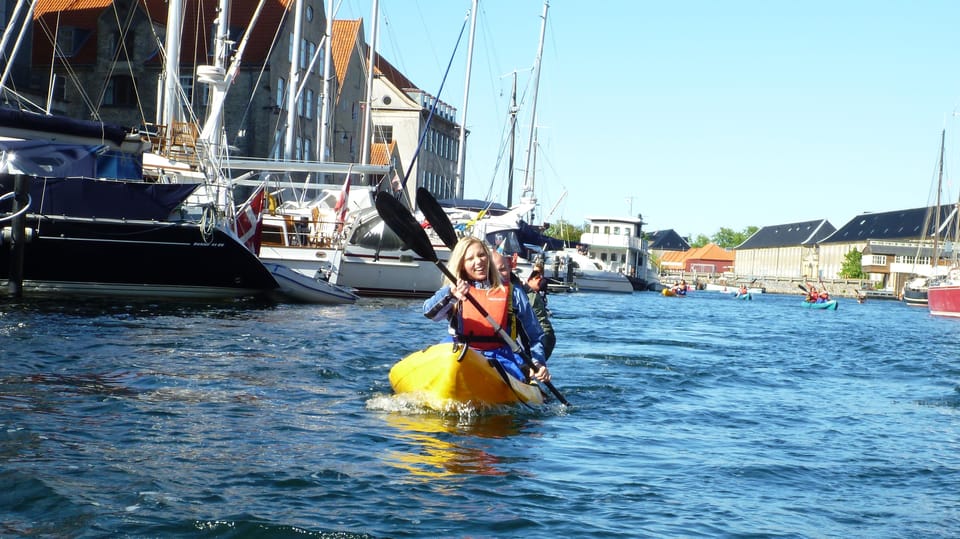
Summer kayaking in Copenhagen sounds simple, but your comfort depends on small choices. Bring comfortable shoes you can walk in around the waterfront and handle wet surfaces. Pack sunglasses and a sun hat, and don’t forget sunscreen—reflections on water can make sun feel stronger than expected.
You’ll want a change of clothes and a towel. Even on warm days, harbor mist and splashes happen, and having dry layers waiting for you makes the end of the tour feel like a reward, not a problem. Also pack comfortable clothes and weather-appropriate outdoor gear so you can adjust for wind.
If you’re sensitive to motion, take the “prone to seasickness” note seriously. This is on harbor water, not open sea, but motion still affects people differently.
One more practical tip: keep your essentials secure and minimal. Since you’ll have a locker and changing room available, you can stash extra items and travel light on the kayak.
Should You Book This Copenhagen Harbor Kayak Tour?
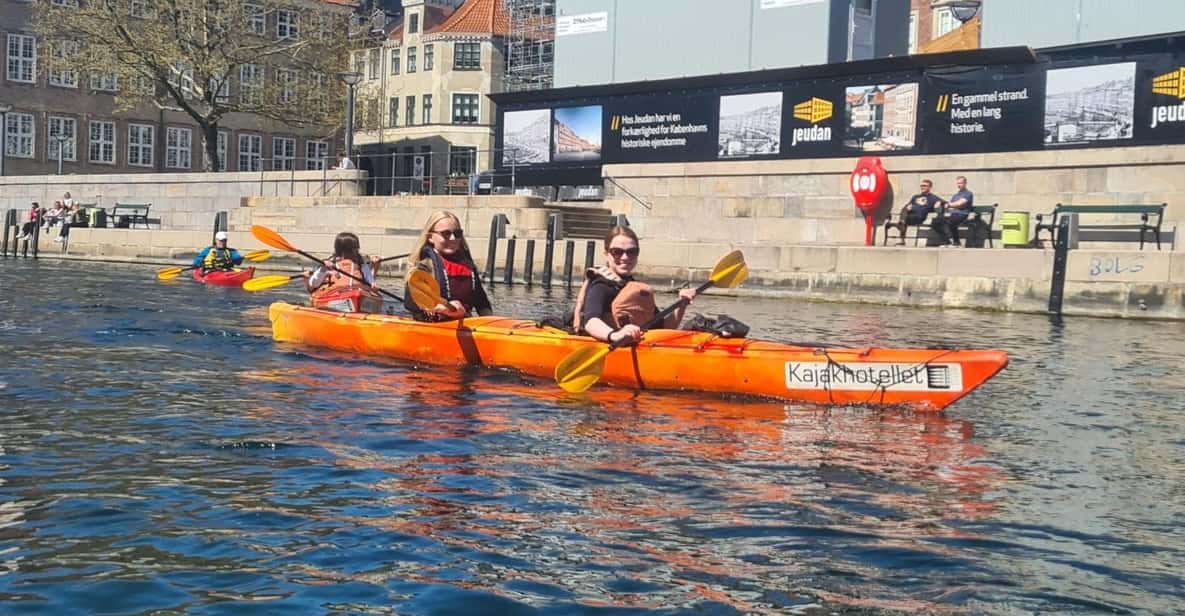
I think this is a strong choice if you want a different angle on Copenhagen’s city center—one that mixes real architecture with real water—and you prefer guided structure over DIY navigation. The kayaking feels beginner-friendly thanks to the stable double sea kayaks and hands-on instruction, and the route’s highlight is the transition into Christianshavn’s canals where the atmosphere shifts.
You should skip it if you don’t meet the tour’s physical or safety requirements (for example, if you’re a non-swimmer or have significant back or mobility issues), or if you’re prone to seasickness. And if your goal is long, in-depth time at each landmark, you might find the short sightseeing stops a bit too fast.
If you match the fit, book it. Two hours on Copenhagen water is one of those experiences that changes how you understand the city’s layout, and then it gives you a clearer head for walking and exploring afterward.
FAQ
How early should I arrive?
Arrive 10 minutes before departure for check-in.
Where is the meeting point?
The meeting point is on the waterfront behind Hotel Marriot. Go down 30 meters at the wooden bridge, then left.
What’s included in the price?
The tour includes a live guide, instructions, kayak use, swim vest and paddle, rain pants or wetsuits, and access to a changing room and lockers.
How long is the tour?
The total duration is about 2 hours, including instruction and the refreshment.
What should I bring?
Bring comfortable shoes, sunglasses, a sun hat, weather-appropriate clothing, a change of clothes, a towel, and sunscreen.
Is the tour offered in English?
Yes. The guide provides instruction in Danish and English.
Do I need to be a strong swimmer?
The tour is not suitable for non-swimmers, and you must wear a life jacket.
What kind of kayak will I use?
Kayaks are mostly stable double sea kayaks. Depending on group size, you may also use double sit-on-top or single sea kayaks.
Is there cancellation available?
Yes. You can cancel up to 24 hours in advance for a full refund.
Who shouldn’t book this tour?
It’s not suitable for children under 12, people with back problems, mobility impairments, wheelchair users, non-swimmers, people with epilepsy, people over 287 lbs (130 kg), or those prone to seasickness.