REVIEW · COPENHAGEN
Kayak Tour in Copenhagen Harbor in May and September
Book on Viator →Operated by Kajakhotellet ApS · Bookable on Viator
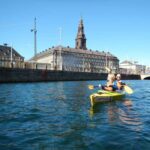
Copenhagen from the water feels like a cheat code. This kayak trip threads through Christianhavn canals and the busy harbor, so you see buildings the usual walking routes hide. You paddle at a leisurely pace, with time to talk and small photo breaks where your guide explains what you’re looking at.
I like two things a lot. First, the equipment and kitting-up is taken seriously—life vest, paddle, and weather gear, plus changing rooms and lockers so you’re not juggling your stuff. Second, the route is built around short stops for history, including Christiansborg Palace, older harbor-era structures, and the Royal Library and Black Diamant from the water.
One thing to consider: this is weather-dependent, and it’s not recommended if you’re prone to seasickness. If the water is choppy, you’ll feel it more than you would on a bench on land.
In This Review
- Key things to know before you paddle
- Why kayaking Copenhagen Harbor beats walking tours
- Arriving at Kalvebod Bølge: gear up, get ready, then go
- The 2-hour tour, with 1h15 of actual paddling
- Stop-by-stop: from Amager bridges to the Black Diamant
- Stop 1: Kalvebod Bølge (start and end)
- Sidelight stop: the bridge connecting Copenhagen and Amager
- Passing through the canal
- Thorvaldsens Museum from the waterside
- Christiansborg Palace: front view from the kayak
- An early 1600s harbor-era building (built in 1620)
- Privatbanken’s Axel Berg building (1901–1904)
- Christianshavn’s defense story (built in 1617)
- The Royal Library and the Black Diamant
- A newer waterfront building (2017)
- Returning under a bridge made for bikes and walking
- Price and value: does $70.03 make sense?
- May vs September: how to plan around the seasonal schedule
- Who should book this and who should skip it
- Should you book this kayak tour?
- FAQ
- What months does the kayak tour operate?
- How long is the tour, and how long are you on the water?
- What’s included in the price?
- Where do you meet the guide?
- Is the tour suitable for non-swimmers?
- Is it safe for kids?
- What’s the group size?
- What if weather is bad?
Key things to know before you paddle
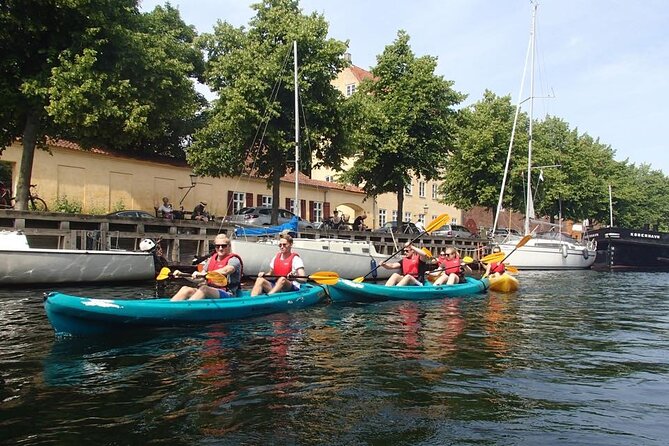
- Small group (max 12): You get space, attention, and time for questions.
- Real paddling time (1h15): The full tour is about 2 hours, but most of it is on the water.
- Guide-led history stops: You’ll get context on Christianshavn and major waterfront landmarks.
- Dry(ish) comfort setup: Swim vest plus rain pants or wetsuits, with changing rooms and lockers.
- Age and kayak type rules: No kids under 12; kids under 15 ride in double kayaks with an adult.
- Season-only dates: Runs May 1–31 and September 1–30.
Why kayaking Copenhagen Harbor beats walking tours
Copenhagen is gorgeous from street level, sure. But from a kayak, the city snaps into a new scale. Bridges, canal walls, and facades stop looking like backdrops and start looking like architecture you’re moving through.
This trip is built for that feeling. You cruise the canals of Copenhagen at a leisurely pace, so you’re not white-knuckling your way to the next photo spot. The tour includes small pauses in the kayaks, which is a clever way to keep momentum while still getting the story behind the scenery.
And because the guide talks while you’re near the buildings, you get what most walking tours miss: how waterfront design relates to old defense, harbor life, and modern redevelopment. It’s not just names. It’s why they matter.
You can also read our reviews of more tours and experiences in Copenhagen
Arriving at Kalvebod Bølge: gear up, get ready, then go
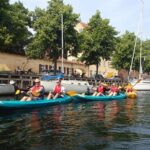
The trip starts and ends at Kalvebod Bølge, at Kajakhotellet, Kalvebod Brygge 7 (Copenhagen V). Plan on arriving a bit early. You’ll meet your guide here, get instructions, change clothes, and get into the kayaks.
What I appreciate is the practical support. You get:
- Swim vest and paddle
- Rain pants or wetsuits (depending on conditions)
- Changing room and locker for clothes and small bags
A detail that matters: this setup helps you show up in street clothes without treating your trip like a logistics puzzle. Copenhagen weather can flip fast, and having the right waterproof layer makes the whole experience smoother.
Also, this location is listed as being near public transportation, which helps if you’re building the rest of the day around museums or strolling the waterfront.
The 2-hour tour, with 1h15 of actual paddling
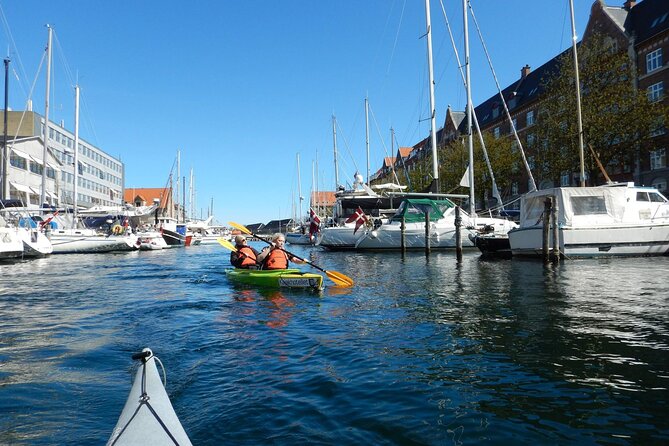
The whole experience is about 2 hours, but the on-water time is around 1 hour and 15 minutes. That split is important. You’ll feel the water time as the main event—enough to get into a rhythm—without it dragging into a long endurance test.
Your route moves through Christianhavn’s canals and Copenhagen Harbor. Expect to sail under bridges, paddle past museum-front angles, and glide alongside waterfront buildings that have very different personalities depending on which side you view them from.
The pace is leisurely and social. The tour notes that you’ll have space to have fun and talk, which is exactly what you want in a kayak—less stress, more chat, better photos.
Stop-by-stop: from Amager bridges to the Black Diamant
Below is what you’ll experience on the water, plus what to watch for and why each stop is worth it.
Stop 1: Kalvebod Bølge (start and end)
Kalvebod Bølge is where you’ll meet your guide, get changed, and go through instructions. The time at the start is roughly 45 minutes, and it’s part of the process, not wasted waiting.
What to do: wear shoes you’re comfortable getting wet in (since water tours always involve some splash risk), and keep a small towel or tissue handy if you’re bringing one.



Sidelight stop: the bridge connecting Copenhagen and Amager
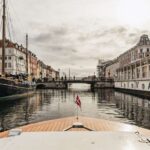
One of the highlights early on is sailing under a major bridge that connects Copenhagen with Amager. This is less about the bridge itself and more about the feeling: you’re moving through city infrastructure at water level.
Tip: look up as you pass beneath. From the kayak, you’ll notice how the bridge frames the skyline differently than it does from sidewalks.
Passing through the canal
You’ll paddle through the canal network at a relaxed speed. This section is the “breathe and take it in” part. The canals are where Copenhagen looks intimate—older edges close in, and you get that close-up view of waterfront lines.
Why it’s valuable: these canals are the reason a kayak tour works at all. Walking tours flatten everything. Here, depth and distance show up immediately.
Thorvaldsens Museum from the waterside
You’ll pass and see Thorvaldsens Museum from the water. The museum’s position along the waterfront means your viewing angle is unusually direct.
What to watch: the frontage and how it sits relative to the canal wall. Even if you’re not a museum person, it’s a great example of how civic buildings “face” the harbor.
Christiansborg Palace: front view from the kayak
Next, you’ll see the front of Christiansborg Palace from the water and hear history about the place. Being on the water gives you a built-in sense of scale—palace walls look taller, and the setting feels more official than on land.
Potential drawback: because the tour includes multiple landmarks, the time at each storytelling point is usually a short pause rather than a long stop for photos and wandering.
An early 1600s harbor-era building (built in 1620)
You’ll spot one of Copenhagen’s oldest structures from the kayak, built by HRH Christian IV in 1620. This part is especially satisfying if you like early-modern Denmark and the way power shows up in architecture.
Why the water matters: old buildings look different when you’re level with the waterfront rather than above it. The harbor relationship feels clearer.
Privatbanken’s Axel Berg building (1901–1904)
You’ll also see a four-storey rectangular building built by Axel Berg (1856–1929) for the Privatbanken in 1901–1904. That name and date give you a concrete time stamp—water views make it easier to imagine the city as it was.
How to enjoy it: notice the symmetry and the “institutional” feel. From the kayak, the structure reads as civic infrastructure, not just a pretty facade.
Christianshavn’s defense story (built in 1617)
You’ll learn how Christianshavn was built by HRH Christian IV in 1617, with the goal of protecting Copenhagen’s city and harbor from attack. Then you’ll paddle through the canal area where you can see older buildings and houseboats.
This is one of those moments where the guide’s narration turns scenery into meaning. The harbor isn’t only scenic—it was strategic. And you can feel that strategy in how the city’s waterfront is organized.
What to watch: the mix of historic-looking edges and living waterfront structures (including houseboats). It’s a reminder that the harbor has always been a place people relate to daily.
The Royal Library and the Black Diamant
From the waterside, you’ll see the Royal Library and the Black Diamant. This is a good counterbalance to the older segments: you get both the classic waterfront story and a more modern architectural identity.
Tip: the Black Diamant name is easy to remember once you see it from the water angle—shapes and reflections can look very different depending on light and water movement.
A newer waterfront building (2017)
The route includes a newer building at the waterfront from 2017. This is a subtle but helpful stop because it shows the harbor isn’t frozen in time.
Why it helps: it gives you a better sense of Copenhagen as an evolving city. You’re not only watching history; you’re watching ongoing change along the same water line.
Returning under a bridge made for bikes and walking
On your way back to Kalvebod Bølge, you’ll sail under a bridge designed for bicycles and walking. That final glide ties the experience together: the trip is still city life, but filtered through water views.
What to do: use this last segment to compare how the skyline looked at the start versus now. Your perspective has shifted with every canal turn.
Price and value: does $70.03 make sense?
At $70.03 per person, this isn’t a bargain like a self-guided paddle app. But it also isn’t priced like a private tour.
For the money, you’re getting:
- Instruction
- Kayak + paddle
- Swim vest
- Rain pants or wetsuits
- Changing room + locker for clothes and small bags
That list matters because kayak tours live or die by comfort and safety. Having the weather layer and a place to change reduces friction. And with a group capped at 12 travelers, you also get a more guided experience than the big-fleet option.
Another value point: you’re paying for a guided route that connects multiple landmarks—Christiansborg Palace, Thorvaldsens Museum, Christianshavn’s older harbor story, and the Royal Library/Black Diamant—plus the context for what you see from the water.
If you already plan to spend the day on and around the harbor, this is a high-impact add-on. It turns a scenic city walk into an actual “moving viewpoint.”
May vs September: how to plan around the seasonal schedule
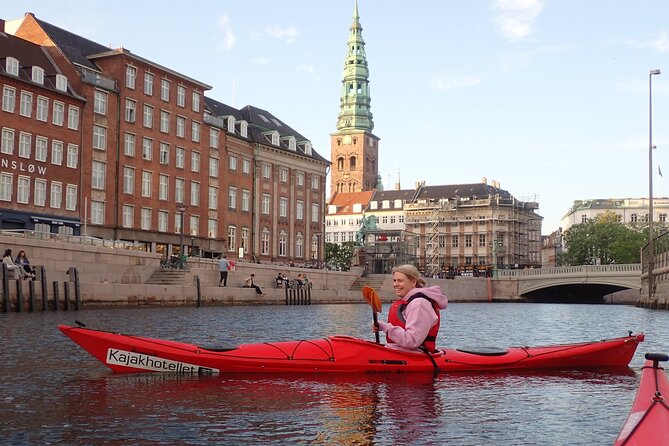
This kayak tour runs only May 1–31 and September 1–30. That seasonal window is the first planning reality: if your trip lands outside those months, you won’t be able to pick it up spontaneously.
For the experience itself, the key factor is weather. The tour requires good conditions, and when conditions aren’t right, the operator offers a different date or a full refund. That’s a good sign: they’re not pushing people out into poor conditions just to protect the calendar.
In practical terms, you should pack for Danish variability. You’ll get rain pants or wetsuits, which helps. But you’ll still want layers that dry easily if you get damp around your ankles or wrists.
If you’re sensitive to cold, September might feel tougher than May. The good news is the tour gear is designed for real outdoor conditions, not “light sprinkle” weather only.
Who should book this and who should skip it
This tour fits best if you want:
- Architectural sightseeing with a water-level viewpoint
- A social-but-not-crazy pace
- A guide who explains buildings as you pass them
It’s also friendly to people who don’t have paddling experience. The tour notes that most travelers can participate and that non-swimmers are allowed, with the provided swim vest and life-supporting safety gear.
But you should rethink it if:
- You’re prone to seasickness (it’s not recommended)
- You’re traveling with someone who’s over 286 lbs / 130 kg per person
- You’re aiming to bring children under 12
- Your group includes youth under 15, since they sail in double kayaks with an adult
For families, the double-kayak rule is important. It affects how you plan who sits where and how the group is arranged.
For solo travelers, it can work well too—small group size and a guided route reduce the stress of figuring out the canals on your own.
Should you book this kayak tour?
If you like cities that reveal themselves from unusual angles, book it. This trip has a simple formula: kayaking + guided stops + real waterfront landmarks you can only see properly from water.
I’d especially recommend it if:
- You’re planning to spend time in central Copenhagen and want one activity that changes your perspective fast
- You want less museum time and more “moving viewpoint” time
- You value comfort support like changing rooms, lockers, and weather gear
Skip it if you know you’ll struggle with choppy conditions or you’re likely to feel sick on the water.
Bottom line: for the $70.03 price, you’re paying for guidance, gear, and a route that strings together major sights with the kind of angles that walking tours can’t match.
FAQ
What months does the kayak tour operate?
It only operates May 1–31 and September 1–30.
How long is the tour, and how long are you on the water?
The total tour is about 2 hours, with about 1 hour and 15 minutes actually paddling on the water.
What’s included in the price?
Included are instructions, use of the kayak, a swim vest and paddle, rain pants or wetsuits, access to a changing room, and a locker for changing clothes and small bags.
Where do you meet the guide?
You meet at Kajakhotellet Kalvebod Bølge, Kalvebod Brygge 7, 1560 København V, Denmark, and the tour ends back at the same point.
Is the tour suitable for non-swimmers?
Yes. The additional info states that non-swimmers can participate, and you’re provided a swim vest.
Is it safe for kids?
There are age rules: no children under age 12, and children under 15 sail in a double kayak with an adult.
What’s the group size?
This tour has a maximum of 12 travelers.
What if weather is bad?
The experience requires good weather. If it’s canceled due to poor weather, you’ll be offered a different date or a full refund.