REVIEW · COPENHAGEN
walking tour – Copenhagen and Christiansborg 3 hours
Book on Viator →Operated by Scandinavian Guides · Bookable on Viator
Copenhagen has a secret shortcut to its royal core. This 3-hour walk threads through central old-town streets and squares, then finishes with inside access to Christiansborg Palace—a great way to turn first-time sights into a mapped-out plan for the rest of your day.
I also like how the route gives you context you can use immediately: you’re not just looking at buildings, you’re learning why they matter, from a cathedral tied to Danish royalty to the canal-side squares near Christiansborg. One possible drawback: the on-the-ground background can feel light if you’re hoping for heavier historical narration, and the guide you get may not be a long-time local.
In This Review
- Quick takeaways
- Why this 3-hour Christiansborg-focused route is smart
- The 175-year-old amusement park entrance: a fun start with a historical hint
- Radhuspladsen, Old Market, and Nytorv: neoclassical squares and the Caritas Well
- Church of Our Lady (Copenhagen Cathedral): Thorvaldsen statues and royal turning points
- Hoejbro Plads (Gammel Strand) by the canal: medieval tournament vibes and bright houses
- Entering Christiansborg Palace: the included hour that caps the story
- Price and value: what $87.77 gets you (and what it doesn’t)
- How to fit this into your Copenhagen day
- Who this walking tour suits best
- Should you book this Christiansborg walking tour?
- FAQ
- How long is the Copenhagen and Christiansborg walking tour?
- How much does the tour cost?
- Is Christiansborg Palace entry included?
- What language is the tour offered in?
- Where does the tour start and end?
- What time does the tour begin?
- Do I need to buy a ticket for the cathedral or city squares?
- Are coffee or tea included?
- Is there a limit on group size?
- How will I receive my ticket?
- Is cancellation free?
Quick takeaways
- Christiansborg Palace entry is included, so you don’t have to hunt for tickets on your own
- A guided walk in central Copenhagen helps you “read” the city fast
- Top stops like the Cathedral and major squares give you landmarks for later exploring
- Expect mostly orientation-level history, not a thick textbook of details
- Small group size (up to 20) keeps it easier to ask questions
- Mostly free admissions en route, with your paid value focused on the palace
Why this 3-hour Christiansborg-focused route is smart
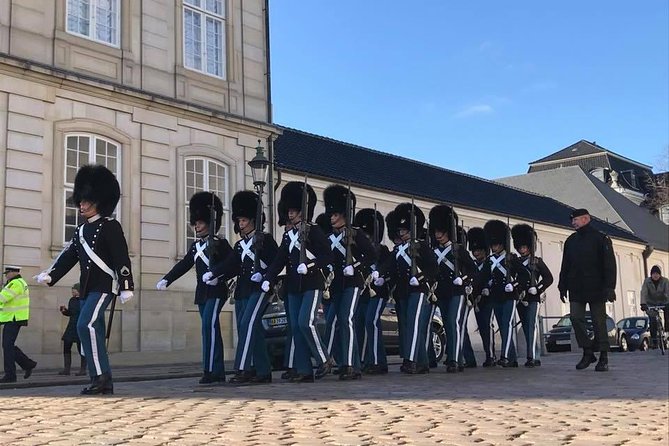
This tour works best if you want Copenhagen to make sense quickly. You start at Copenhagen Central Station, then you head into the older core where street names, squares, and church architecture all connect. After three hours, you’re not just tired from walking—you’re better at finding your way around.
The pace is also realistic for most people. You get multiple short stops (think 10–15 minutes each), plus one longer block inside Christiansborg. That structure matters because Copenhagen’s center can feel wide; short stops prevent you from losing the thread.
And yes, you’re paying real money, but the value is tied to one key thing: Christiansborg Palace entry. If you’ve ever tried to squeeze a major interior visit into a busy sightseeing day, you know that convenience counts.
You can also read our reviews of more walking tours in Copenhagen

The 175-year-old amusement park entrance: a fun start with a historical hint
The walk begins by the main entrance of a 175-year-old amusement park, and you’ll hear a bit of what that site represents in Copenhagen life. It’s a clever opening because it signals the mix you’ll see all day: grand civic power right next to public fun.
Even if you don’t step inside the park, you still get something useful out of this moment. The guide uses it as a springboard to talk about how the city changes over time—what stays in place, what gets rebuilt, and what the city chooses to keep visible.
Practical tip: start your day with comfy shoes. Early morning Copenhagen walking can feel easier, but you’ll still rack up time on pavement.
Radhuspladsen, Old Market, and Nytorv: neoclassical squares and the Caritas Well
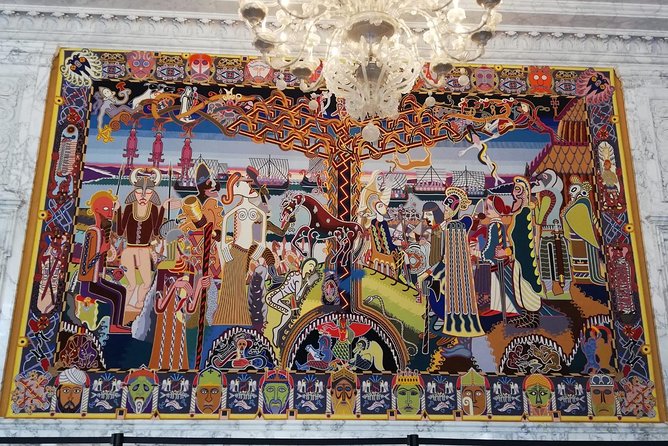
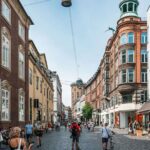
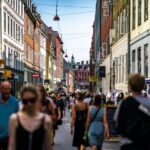
Radhuspladsen (City Hall Square) is your first real city-sense checkpoint. This area sits right where you’d expect a modern civic center to meet old street life: Old Market connects with Nytorv along Strøget, the famous pedestrian street.
What I like here is the way the tour frames the architecture. The square dates back to the city’s early foundation in the 12th century, but many surrounding buildings are post–Great Fire of 1795, with neoclassical styling dominating the look. That helps you stop seeing “pretty buildings” and start seeing “why these buildings look this way.”
You’ll also hear about the Caritas Well, a Renaissance fountain erected by King Christian IV in 1610. It’s one of those details that makes a square feel lived-in, not just scenic.
Then the walk nudges you from Old Market into the Nytorv/Gammeltorv pairing, where the Copenhagen Court House (with its imposing neoclassical façade) played a big role. The clue that sticks is the timeline: from 1815 to 1905, it served as the City Hall. So even when the building changes function, the city’s identity stays anchored.
Possible drawback to keep in mind: because this section is short, you’ll get a sense of key facts rather than a deep architectural breakdown. Use it as orientation, not as a final exam.
Church of Our Lady (Copenhagen Cathedral): Thorvaldsen statues and royal turning points
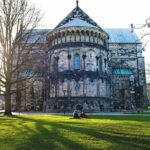
Next comes the Church of Our Lady, better known as the Copenhagen Cathedral. This is the kind of stop where the tour pays off because you’re going beyond exterior photos. You’ll learn the big facts that explain why the building looks the way it does and why people kept returning to it.
The cathedral is designed by architect C.F. Hansen in a Neo-Classicist style. Construction markers matter here: the foundation stone was laid by King Frederik VI in 1817, and the church was consecrated on Whitsunday 1829. And there’s deeper continuity on the site, too. It has served as a church since Bishop Absalon (the founder of Copenhagen) built a small chapel there, with an earlier church existing around 1200 on the high point of town.
The guide also connects it to Danish history in specific, name-based ways. You’ll hear about the marriage arrangement in 1363, when King Valdemar Atterdag gave away his nine-year-old daughter Margrethe (who later became Queen Margrethe I). You’ll also hear about Søren Kierkegaard’s funeral in 1855.
And then the more modern royal moment: the 2004 wedding of Crown Prince Frederik and Australian Mary Donaldson happened here. That’s a useful reminder that this isn’t only a medieval landmark. It’s still part of national ceremony.
Inside, the tour points you toward Thorvaldsen’s sculptures—including the statues of Christ and the twelve apostles. One detail worth looking for: Christ extends his arms in a welcoming gesture, while the apostles are positioned from the sides of the nave. The guide also notes a twist in the apostle group: Judas has been replaced by Paul.
There’s also the story behind the building’s scars. In 1807, during the British bombardment led by Admiral James Gambier and General Lord Cathcart, the cathedral was hit by an incendiary rocket and burned down. You don’t need that history to enjoy the architecture, but it helps you understand why the site’s story is so dramatic.
Admission here is free, so you can take your time even if your walk schedule feels brisk. If you want one stop to linger at, this is usually it.
Hoejbro Plads (Gammel Strand) by the canal: medieval tournament vibes and bright houses
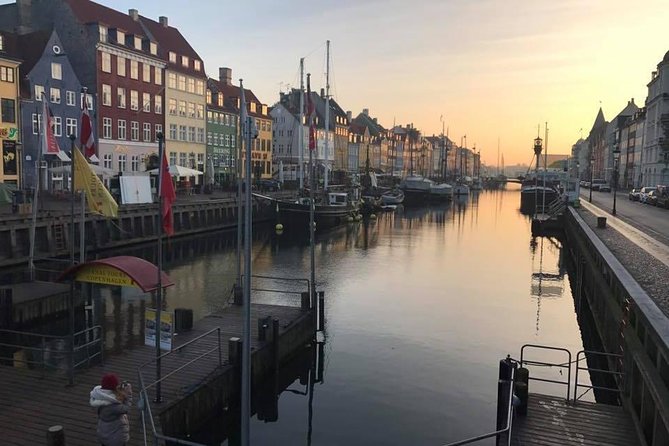
After the cathedral, you’ll move toward Hoejbro Plads, a square that faces Christiansborg Palace and gives you a different kind of city view. This area has long-standing “center-of-action” energy—part of a pedestrian street that’s described as an area of medieval tournaments.
The tour also ties Hoejbro Plads to a specific figure often credited with founding Copenhagen. The site features an inauguration tied to a major anniversary: it was opened in 1901 to commemorate the septcentennial of that person’s death.
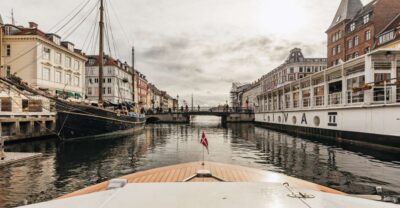
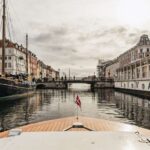
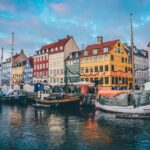
You’ll also hear the alternate name Gammel Strand, meaning old beach. That matters because the setting is framed by water. The south side borders the narrow Slotsholmens Canal, and the north side lines up with brightly colored houses from the 18th and 19th centuries. When you can see the canal edge and the older façades at the same time, the square makes more sense as a living border zone between eras.
This section is also one of those good “pause and look” moments. You get palace-facing views without needing to be right up at the gates yet. If you’re the type who likes to photograph, this stop gives you angles you can’t always get later when crowds build around the palace.
You can also read our reviews of more tours and experiences in Copenhagen




Entering Christiansborg Palace: the included hour that caps the story
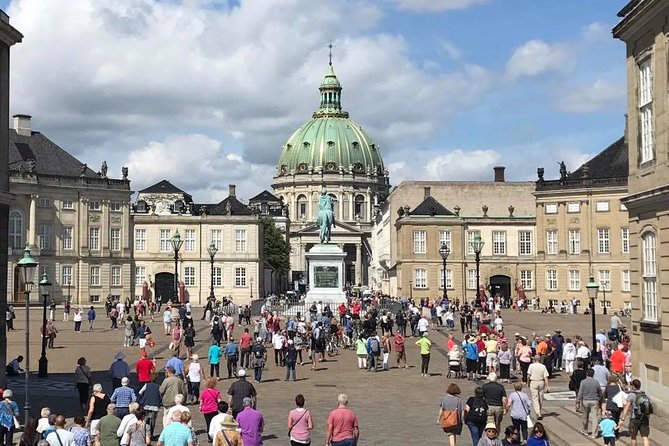
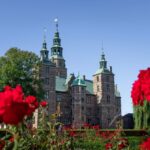
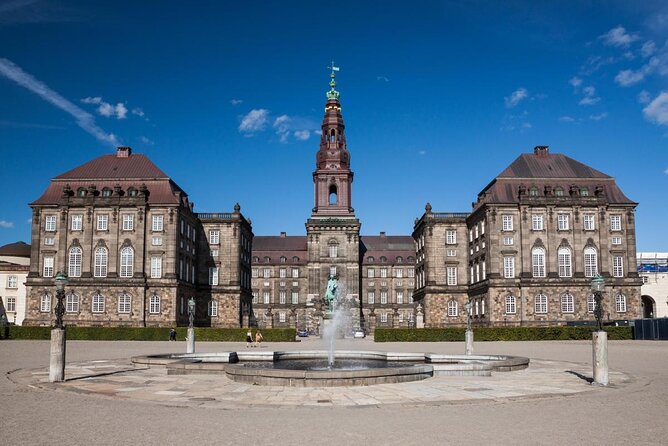
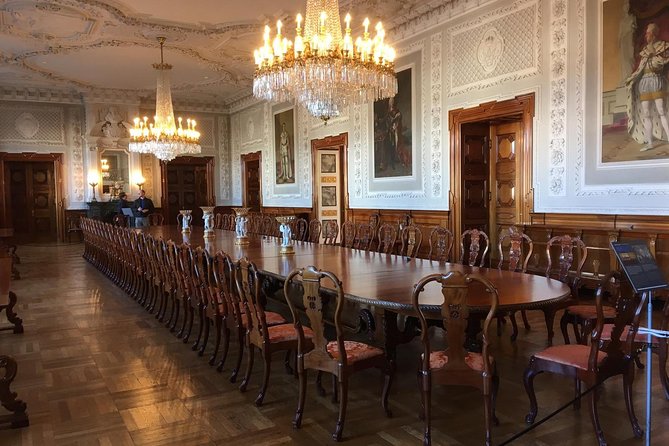
Finally, you reach the reason for the tour: Christiansborg Slot. You’ll enter the palace and spend about one hour inside with the guide. The palace was once the official residence of the Royal family, so even without heavy narration, the building’s role is clear.
What makes this finale work is that you’ve already learned enough to notice connections. Earlier stops in the walk gave you context about Copenhagen’s civic life and major ceremonial sites. Now, you see how power and identity were physically expressed through royal residence and state buildings.
You’ll also end at the Christiansborg area around the shop exit point. That’s a practical way to close the loop: you’re not dumped far from transit or stuck wandering for your next meal. You can head on to independent sights right away.
Value check: because the palace entry is included in the tour price, the cost feels more like “guided access and time saved” than a regular walking tour charge.
Price and value: what $87.77 gets you (and what it doesn’t)
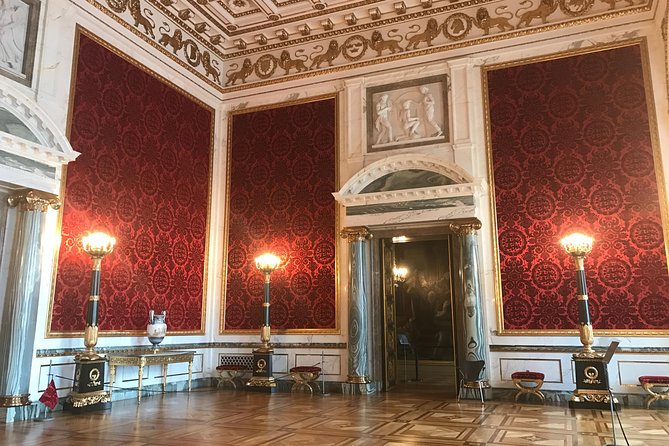
At $87.77 per person for about 3 hours, this tour is priced for two things: a guided walking route plus paid entry to a major interior site. Many Copenhagen walks come with no admissions and rely on you to pay separately for the big stops; here, you’re already covered for Christiansborg.
Most other stops along the way are free to enter on your own time (the guide stops at key exterior points, and church access is noted as free). So the money you spend mainly buys you the structure, the orientation, and the palace access that can otherwise be a scheduling headache.
What’s not included is also clear: coffee and/or tea isn’t part of the package, and gratuities aren’t covered. If you want a caffeine break, plan it. Denmark walks are long even when the tour is short.
One more value angle: the group is capped at 20 people. In a city like Copenhagen, that’s a sweet spot. It’s big enough to feel like a real group experience, but small enough that you’re not just listening to a guide talk at you from the front.
How to fit this into your Copenhagen day
This is a great “first-or-second morning” kind of tour. Starting at 9:00 am from Copenhagen Central Station lets you warm up with a route through central old town while the streets are still manageable.
If you’re planning your own time afterward, use the landmarks you learn as anchors:
- Return to squares later for photos when the light shifts
- Use the cathedral as a reference point for nearby walking routes
- Treat the palace as your end cap, then move outward for neighborhoods
If you want to stretch your day, aim for a longer self-guided exploration after the tour. The guidance helps you understand what you’re seeing, but it doesn’t replace hours of wandering and checking out side streets.
Who this walking tour suits best
This tour fits best if you want a guided way to connect Copenhagen’s major center pieces. It’s especially useful if:
- you’re short on time and want orientation fast
- you care about palace and cathedral landmarks
- you prefer a moderate pace with several short stops
It may be less ideal if you’re the type who wants a nonstop lecture. One caution worth taking seriously: the level of background detail can feel limited, and the guide may not match your expectation of a deeply local voice. You’ll still leave with the essentials, but don’t count on this as a full historical seminar.
Should you book this Christiansborg walking tour?
I’d book it if your priority is getting inside Christiansborg Palace without juggling ticket timing, and if you want a guided route that helps you navigate Copenhagen’s center with confidence. The price makes more sense when you treat the palace entry as the main value, with the squares and cathedral acting as your learning route.
Skip it (or supplement it) if you want heavy narration at every stop. If your ideal tour is all deep storytelling, plan to do extra independent reading or ask the guide direct questions during the walk.
FAQ
How long is the Copenhagen and Christiansborg walking tour?
The tour is about 3 hours.
How much does the tour cost?
It costs $87.77 per person.
Is Christiansborg Palace entry included?
Yes. Entrance to Christiansborg Palace is included, and you’ll enter the palace for about 1 hour.
What language is the tour offered in?
The tour is offered in English.
Where does the tour start and end?
It starts at Copenhagen Central Station and ends at Christiansborg Palace.
What time does the tour begin?
The start time is 9:00 am.
Do I need to buy a ticket for the cathedral or city squares?
Admission for stops like Radhuspladsen and the Church of Our Lady is listed as free.
Are coffee or tea included?
No. Coffee and/or tea are not included.
Is there a limit on group size?
Yes. The tour has a maximum of 20 travelers (people).
How will I receive my ticket?
You’ll get a mobile ticket.
Is cancellation free?
Free cancellation is offered up to 24 hours in advance for a full refund.