REVIEW · COPENHAGEN
Copenhagen Royal Conspiracy Exploration Game and Tour
Book on Viator →Operated by Questo · Bookable on Viator
Copenhagen has a way of keeping you curious. This Royal Conspiracy exploration game stitches together major sights with clue-led walking and quick, useful context. I like that it moves at a human pace for a city walk, and I like the variety packed into the same loop. One watch-out: the game story can feel a bit confusing depending on how you play and how carefully you follow the prompts.
I also like the value. For about 1 hour 20 minutes to 1 hour 40 minutes, you get a structured route covering Amalienborg, Frederik’s Church, the Alexander Nevsky Church, the Designmuseum Danmark, the harbor area, Gefion Fountain, and the fortress at Kastellet—without paying extra entry at each stop. The main drawback is timing: the in-app timer can start as soon as you open a clue, so you’ll want to plan your pace before you read.
In This Review
- Key takeaways
- How the Royal Conspiracy game tour works (and how to avoid timer stress)
- Price and time: why $7.14 can feel like good value
- Meeting point and finish: start at Amalienborg, end by solving the final coordinates
- Stop 1: Amalienborg Palace at Slotsplads 5 (Rococo meets royal power)
- Stop 2: Toldbodgade (a short segment that helps you transition)
- Stop 3: Frederik’s Church (the Marble Church that steals attention)
- Stop 4: St. Alexander Nevsky Church (Orthodox architecture in Copenhagen)
- Stop 5: Designmuseum Danmark (Denmark’s design spotlight in short form)
- Stop 6: Nordre Toldbod at Københavns Havn (waterfront history as a breather)
- Stop 7: Gefion Fountain in Churchillparken (Norse mythology, plain and iconic)
- Stop 8: Kastellet’s King’s Gate (Kongeporten) and the star fortress feel
- What makes this quest walk especially good for Copenhagen first-timers
- When this tour might not match your travel style
- Quick checklist: how to get the most out of it
- Should you book Copenhagen’s Royal Conspiracy exploration game?
Key takeaways
- Clue-first city route: Follow directions and solve challenges to reach each landmark in order.
- Free entry at each stop: The listed sites are marked free for this activity, so you’re not juggling separate ticket costs.
- Museum + churches + waterfront: In one loop you hit Rococo, Orthodox architecture, a design museum, and harbor sights.
- Good for first-time orientation: It’s one of the easiest ways to get bearings fast in central Copenhagen.
- Timer starts when you open the clue: Walk to the location first, then open and read to avoid stress.
- Private-by-group format: Only your group participates, which can make the game feel calmer.
How the Royal Conspiracy game tour works (and how to avoid timer stress)
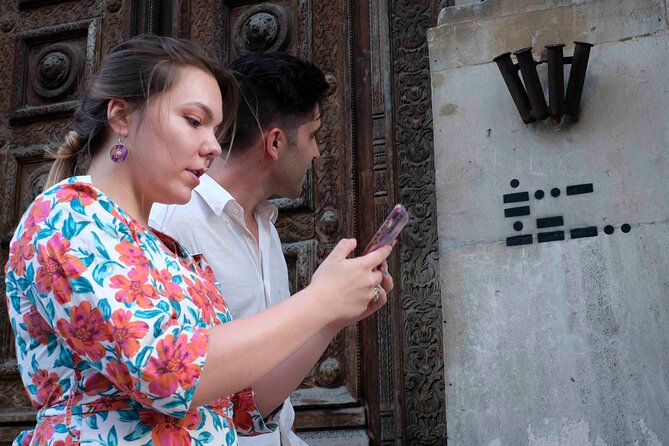
This is a mobile ticket, self-guided quest walk through Copenhagen. Instead of waiting for a guide at every corner, you follow on-screen directions, solve challenges, and then move to the next stop when the app tells you to. You can linger at the first two locations for as long as you want before starting the next segment.
The big practical tip is timing. The clock can begin when you open a clue, not when you arrive at the next landmark. That means you can save yourself frustration by doing a quick lap to the exact spot first, then opening the clue once you’re standing there. You’ll spend more time looking at buildings and less time sprinting while trying to decode wording.
One more thing: the experience is offered in English. If you end up using another language mode (some people do because they prefer it), you might find the story and phrasing less smooth in places. The good news is the main payoff still comes from walking the route and learning what you’re seeing.
You can also read our reviews of more tours and experiences in Copenhagen


Price and time: why $7.14 can feel like good value
At $7.14 per person, this tour is priced more like a low-cost activity than a typical paid guided tour. The time commitment is also friendly: plan on about 1 hour 20 minutes to 1 hour 40 minutes in total.
What makes the value feel real is the mix of stops. You’ll pass several high-recognition landmarks—Amalienborg and Gefion Fountain, plus prominent churches—then you’ll include Designmuseum Danmark, Denmark’s largest museum dedicated to Danish and international design and crafts. Even if you only have minutes at each site, the route is still hitting big-name architecture rather than small, obscure stops.
Also, each stop is listed with admission ticket free for the activity. That matters. You’re not stacking entrance fees on top of the ticket price, which is often where “cheap” tours can quietly turn expensive.
Meeting point and finish: start at Amalienborg, end by solving the final coordinates
You start at Amalienborg Slotsplads 5, 1257 København K. The activity runs daily within broad hours (8:00 AM–8:00 PM), so you can usually fit it into your day without over-planning.
The finish is handled by the app: after you complete the final set of challenges, you’ll be directed to the exact end location. It’s listed as MHVX+5JG, Copenhagen, and you should be able to reach it by following the directions from your phone. This kind of setup works well if you enjoy a “walk, pause, look, solve” rhythm rather than a rigid start-and-finish path.
Because it’s a private tour/activity format, only your group participates. That can help if you’re traveling with friends or family and don’t want other people drifting in and out of your photo spots.
Stop 1: Amalienborg Palace at Slotsplads 5 (Rococo meets royal power)
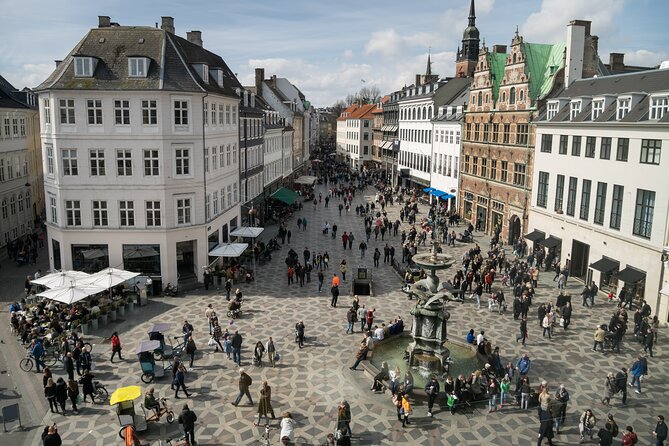
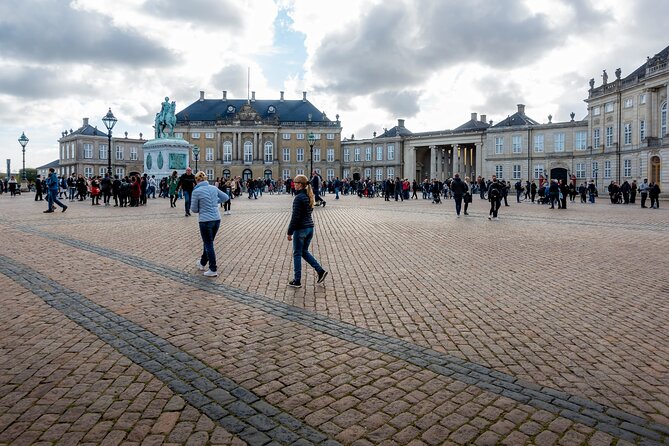
Your first stop is Amalienborg Palace, the official residence of the Danish monarch. This is one of the cleanest “start here, get the vibe” anchors in central Copenhagen. The palace is known for its Danish Rococo architecture, and the square around it is a great place to orient yourself before heading out.
The activity includes free admission at this stop, and you can spend as much time as you want before you move on to the next directions. That flexibility is smart. If you like architecture, you can take a few minutes to look closely at details rather than rushing through because a timer is ticking.
A small caution: since the app-led story and clue steps control the pace, you’ll want to keep an eye on the next prompt. It’s easy to get absorbed in palace views and then realize you need to switch locations quickly once the app nudges you forward.
Stop 2: Toldbodgade (a short segment that helps you transition)
From Amalienborg, you move to Toldbodgade. The listing doesn’t frame it like a single famous building stop, which is actually a plus. This segment is more about walking the connective tissue of the city and following the logic of the route.
You again have a chance to linger after you arrive, and the app asks you to keep solving and following the next directions. In practice, this stretch can help you build a mental map of how Copenhagen connects from royal squares toward the harbor side.
If you’re the kind of person who likes to photograph street corners and little architectural rhythms, this stop is a good place to slow down for a minute. If you’re in a hurry, don’t overthink it—Toldbodgade is mainly a waypoint on the way to bigger landmarks.






Stop 3: Frederik’s Church (the Marble Church that steals attention)
Next up is Frederik’s Church, also known as the Marble Church. The nickname comes from the use of marble in its construction. Architecturally, it’s known for Rococo styling, which can feel like a surprise after you’ve been walking in more straightforward city blocks.
Even with limited time, this stop has an advantage: it’s an instant visual payoff. You don’t need background knowledge to see why it’s famous. If you like the idea of learning while you look—rather than reading from a plaque—this is the kind of stop where the app context can make the architecture feel more meaningful.
Downside? Ten minutes is ten minutes. If you’re the type who wants to go in and really study interiors, you may want to pair this game with a separate, slower museum or church plan later in your trip.
Stop 4: St. Alexander Nevsky Church (Orthodox architecture in Copenhagen)
Then the route turns to St. Alexander Nevsky Church, the Russian Orthodox Church in Copenhagen. This is a major contrast stop. Where Frederik’s Church leans into Rococo elegance and marble identity, this church gives you a different cultural and visual language.
The listing flags it as historically significant and makes clear it’s a prominent religious building. That’s helpful because it sets expectations: this isn’t just another pretty exterior. You’re meant to notice it as a landmark with its own story in Copenhagen’s mix of communities.
If you’re walking with a group, this is a good moment to split up for a minute and regroup outside. The structure and visuals are dramatic enough that you’ll each pick up something different, even if you’re only there briefly.
Stop 5: Designmuseum Danmark (Denmark’s design spotlight in short form)
The next stop is Designmuseum Danmark, described as Denmark’s largest museum for Danish and international design and crafts. It includes a wide collection—things like furniture, textiles, ceramics, and industrial designs.
This is the most “mind-expanding” stop on the route, even if the time window is short. You’re not just seeing statues and church facades. You’re getting a taste of Danish design thinking, from everyday objects to more industrial forms. For many people, that’s what turns a sight-walking game into a real trip memory: you connect Copenhagen’s architecture to how Denmark designs and makes.
The practical downside is time. With only about ten minutes listed here, you’ll likely scan highlights rather than get deep into any single gallery. If you love design, you might want to leave yourself extra museum time afterward on another day, using this stop as a teaser.
Stop 6: Nordre Toldbod at Københavns Havn (waterfront history as a breather)
From the museum, the game leads you to Nordre Toldbod along Københavns Havn, the harbor area in the inner city. This is a different type of scenery shift. After churches and palace architecture, the waterfront setting helps reset your eyes and lets you stretch a bit.
The listing calls it a historic area in Indre By. Even if you don’t know the harbor’s past, you can still understand why it matters. Waterfront districts tend to show you the city’s relationship with trade, movement, and maritime life.
A tip for this section: use the “arrive, look, then open clues” approach again. You’ll get more out of the harbor walk if you pause first, then read what the app wants you to notice.
Stop 7: Gefion Fountain in Churchillparken (Norse mythology, plain and iconic)
Then comes Gefion Fountain, located in Churchillparken. This fountain is one of Copenhagen’s iconic landmarks, and the theme is straightforward and memorable: it depicts Gefion, a Norse goddess.
What I like about this stop as part of a game route is that it’s both famous and easy to understand visually. You don’t need a detailed myth lesson to appreciate the symbolism. The app context can give you the names and meaning you might otherwise miss.
Because it’s a popular tourist spot, you’ll likely see other people milling around. The game format helps here because you have a reason to focus on specific details, rather than just walking through on autopilot.
Stop 8: Kastellet’s King’s Gate (Kongeporten) and the star fortress feel
Your final major landmark is Kastellet 14A, focusing on Kongeporten, the King’s Gate. Kastellet is a historic fortress in Copenhagen, described as a well-preserved star-shaped fortification and one of Northern Europe’s best-preserved fortresses of this type.
This ending works well because it’s a strong “wrap-up” scene. You start with royal residence grandeur, then you travel through architecture and design, and you finish with a defensive, geometrical structure that’s completely different in mood. Even if you only spend minutes here, the shape and fort feel give you a satisfying sense of completion.
Keep in mind: this is still part of a timed-segment experience. If you’re a fortress person, you’ll probably want extra time outside the game. But as a concluding stop for a one-and-a-half-hour route, it’s a solid choice.
What makes this quest walk especially good for Copenhagen first-timers
If you’re new to Copenhagen, this tour helps you build a first-pass map with real anchor points. You’re walking across the city’s center, passing royal identity at Amalienborg, architectural variety at the marble and Orthodox churches, a design museum that adds cultural depth, then harbor sights and a Norse-themed icon, and finally a fortress gateway.
It also rewards curiosity. The app gives extra facts as you go, and that’s where the experience can feel like more than just transportation between landmarks. One small review tip that’s worth repeating: don’t open the clue and then rush. Stand where you need to stand, take in the details, and then read. That way the context lands while you’re still looking at the building.
When this tour might not match your travel style
This experience is built for people who like structured self-guided walking and puzzle-like directions. If what you want is a long, uninterrupted history lecture, you may feel the story bits are thin. The game storyline can also feel confusing in parts depending on how it comes through on your device.
Also, the stop timing is fairly tight after the first two locations. If you’re hoping for a slow, sit-down museum experience at Designmuseum Danmark or a deep interior church visit, this is more of a sampler than a full tour.
Finally, translation can matter. Since the experience is offered in English, you can reduce potential story friction by sticking to English mode.
Quick checklist: how to get the most out of it
- Bring a charged phone and headphones if you like clear guidance.
- Use the walk-first-then-open-clue strategy to avoid timer pressure.
- At Amalienborg and Toldbodgade, take advantage of the extra time to actually look around.
- For Frederik’s Church and the Alexander Nevsky Church, focus on the architecture that matches the app’s framing.
- If design interests you, consider scheduling extra museum time later after the quick stop.
Should you book Copenhagen’s Royal Conspiracy exploration game?
I’d book it if you want a low-cost way to hit Copenhagen’s major highlights in one focused loop, especially if you enjoy clue-led walking and want a bit of built-in context without committing to a full guided tour day. At $7.14 for a route that includes major royal, religious, design, harbor, and fortress stops, the value is hard to ignore.
Skip it if you need a polished, seamless narrative and you prefer a traditional guided experience with lots of spoken explanation. Also skip if you plan to spend long interior times at each church or want a full museum day—this works better as an efficient taste of several big sights.
If you like city walking with structure and you’re happy to read while you look, this is a smart pick for a first Copenhagen day—or a second day when you want to see what you missed the first time.