REVIEW · COPENHAGEN
2-Hour Walking Introduction to Copenhagen and its Main Sights
Book on Viator →Operated by Hamlet Tours · Bookable on Viator
Copenhagen snaps into focus fast when you walk it with a good local. This 2-hour intro is a smart way to learn the city’s past and present, with headsets so you catch every detail, plus a guide who keeps things lively in English. I also love how you don’t just point at buildings, you get the story behind them, from City Hall Square to Nyhavn, so you’ll know where to go next. One possible drawback: you’ll be walking a lot for a short time, so comfortable shoes matter.
What makes the tour work so well is the pacing. You move through major sights, stop long enough to understand what you’re seeing, then finish near places you’ll likely want to explore on your own. The small group size also helps. You get time to ask questions, and that’s where the real value comes from.
If you’re hoping for indoor museum time, adjust your expectations. This walk is for orientation and landmark context; you generally don’t go inside big castles and major museums during the tour. You may also hit a stop with an optional entry depending on church or site activity, so plan for a little flexibility.
In This Review
- Key highlights I’d plan around
- A Two-Hour Orientation That Makes Copenhagen Make Sense
- Starting at Rådhuspladsen: Andersen and the City Hall Square Scene
- The Walk Past Tivoli and Strøget: Copenhagen’s Main Shopping Spine
- Christiansborg Slot: Denmark’s Power Triangle in One Big Complex
- Christian IV’s Brewhouse and the Harbor Story You’ll Remember
- The Old Stock Exchange and Its Dragon-Spire Detail
- Holmens Kirke: Where Royals and Prime Ministers Connect
- King’s New Square to Nyhavn: From Renaissance Planning to Colorful Waterfront Life
- Amalienborg Palace: Royal Residence, WWII Context, and Guard Watching
- What the Guide Does Well (and Why It Matters)
- Price and Value for $40.41 in Two Hours
- Timing, Walking Pace, and Comfort Tips
- Should You Book This Copenhagen Walk?
- FAQ
- How long is the walking tour?
- Where does the tour start and end?
- Is the tour offered in English?
- What’s included in the ticket price?
- Do we enter castles or museums during the tour?
- What if the weather is bad?
Key highlights I’d plan around
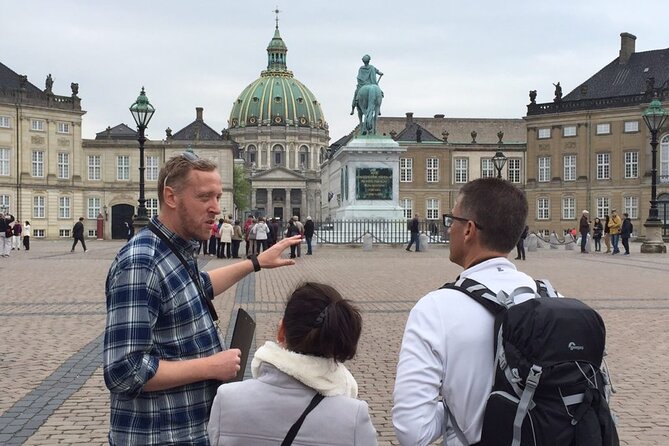
- Small group (max 10) for easier questions and a calmer pace
- Headset option to hear the guide clearly without craning your neck
- A tight route that threads City Hall Square, Christiansborg, the harbor area, and Amalienborg
- Practical “what next” advice so you can shape the rest of your trip right away
- Stories behind the landmarks like the dragon-spire stock exchange and Nyhavn’s harbor history
- Free exterior views at several stops, with a couple of optional paid entries you can handle later
A Two-Hour Orientation That Makes Copenhagen Make Sense
The best first-day tours don’t try to cover everything. They help you understand how the city is laid out, and what matters culturally, historically, and visually. That’s exactly what this one does. In two hours you get a guided sweep through the center of Copenhagen, plus a guided explanation of why certain places matter to Danes.
You start with a landmark that’s about civic pride and public life, then you move into Denmark’s modern seat of power, and finally you head toward the waterfront and royal residence area. The route is efficient, but it never feels like a checklist. The guide’s job is to connect the dots: who founded Copenhagen, how the navy used the harbor in Renaissance times, why certain sites are linked to marriages and burials, and how the city’s geography shapes daily life.
And yes, you’ll still feel like you’re on vacation, not on a field trip. Groups are small, the guide is fluent in English, and you can keep listening the whole time with a headset if your hearing-to-street-noise ratio gets tricky.
You can also read our reviews of more walking tours in Copenhagen


Starting at Rådhuspladsen: Andersen and the City Hall Square Scene
Your meeting point is at the statue of Andersen in Rådhuspladsen. It’s an easy starting zone to find because you’re in the heart of the city, near public transportation. From there, the first big stop is City Hall Square.
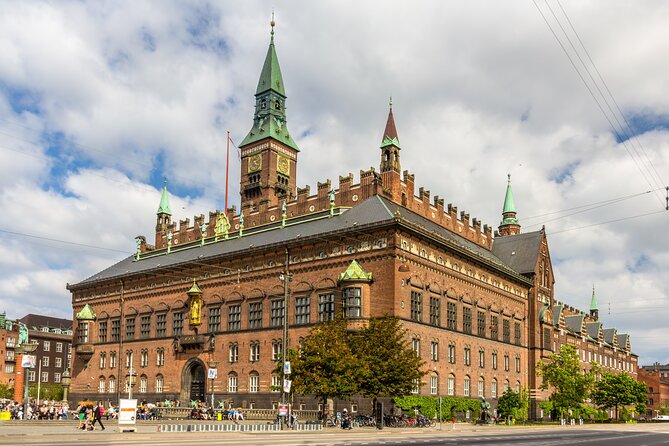
City Hall Square is the kind of place you recognize even if you’ve never been to Copenhagen. It’s the center of the city and the spot where Danes gather in huge numbers to celebrate major wins, especially sporting events or wartime moments. That context changes how you’ll read the space afterward. It stops being just a plaza and starts being a social stage.
You also get a quick but clear look at the Copenhagen City Hall, built in 1905. Even if you don’t go inside (this tour does not focus on entry tickets at City Hall Square), you’ll understand what the building represents: civic administration, public identity, and a city that likes to project confidence.
From there, the walk naturally sets up a key practical idea: Copenhagen is meant to be seen on foot, and its best sightseeing threads together. The guide helps you understand where to go next without you feeling lost.
The Walk Past Tivoli and Strøget: Copenhagen’s Main Shopping Spine
After City Hall Square, you’re guided through the central area where modern city life blends with older landmarks. Two parts of this stretch are particularly useful for you if it’s your first visit.
First is Tivoli Gardens, famous as one of the most beautiful amusement parks in the world and one of the rare ones located right in the middle of a major city. Even if you don’t buy a ticket, it helps to see it from the outside with context. It’s not just a park; it’s a reminder that leisure is built into the city’s DNA.
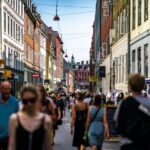
Then comes the world’s longest pedestrian shopping street. This is where Copenhagen becomes instantly walkable in a real way. You’re on an artery of everyday life—shops, people, and that easy rhythm you want when you’re trying to decide where to wander on your own after the tour.
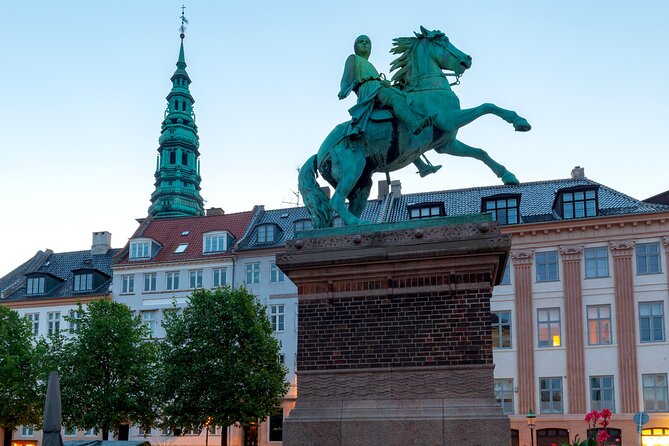
Along the way you also spot the equestrian statue of the bishop who founded Copenhagen in 1189. Seeing a medieval founder memorialized this visibly makes the medieval-to-modern connection click. It gives you a mental timeline, not just random facts.
Christiansborg Slot: Denmark’s Power Triangle in One Big Complex
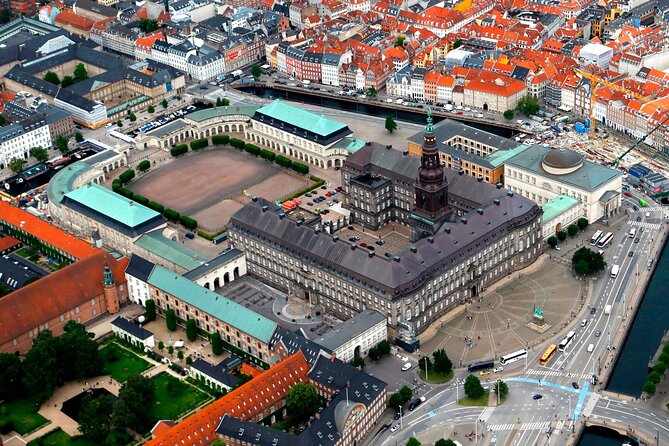
Next you reach Christiansborg Slot, and the tour shifts from civic life to national governance. This huge complex houses Denmark’s parliament, the supreme court, and the prime minister. The guide also points out how the surrounding area ties into ministries and even the central bank.
This stop is valuable because it helps you interpret the city’s political geography. You’ll learn that this isn’t just a random palace-like building. It’s one of the places where Copenhagen’s story began, and it remains a physical anchor for the country’s decision-making.
Even if you don’t go into rooms, understanding what functions live here changes how you see the architecture and scale. It’s also a strong moment for photos, because the building reads as a statement: this is where Denmark’s big roles have long been staged.
Time-wise, you spend a short window at this stop. That’s fine. The tour’s strength is orientation: you’re not stuck waiting in long lines, and you’re moving toward the harbor and historic center next.
Christian IV’s Brewhouse and the Harbor Story You’ll Remember
When you get to the harbor area, the tour gives you something most quick landmark walks skip: the working background. You stop at Christian IV’s Brewhouse, a massive brick building from 1618 located near the water.
Here’s what makes it click: the guide explains how the harbor served as a navy base during Renaissance times. It’s not just a pretty waterfront detail. You start seeing the harbor as infrastructure—an engine for trade, power, and defense.
A practical note: admission here is not included, so if a specific entry is open and you want to go further, you’d handle that separately. But even without entering, the story helps you look at the area differently. After this tour, you’ll likely understand why certain buildings line the waterfront and why water mattered so much for Copenhagen’s growth.
You can also read our reviews of more tours and experiences in Copenhagen






The Old Stock Exchange and Its Dragon-Spire Detail
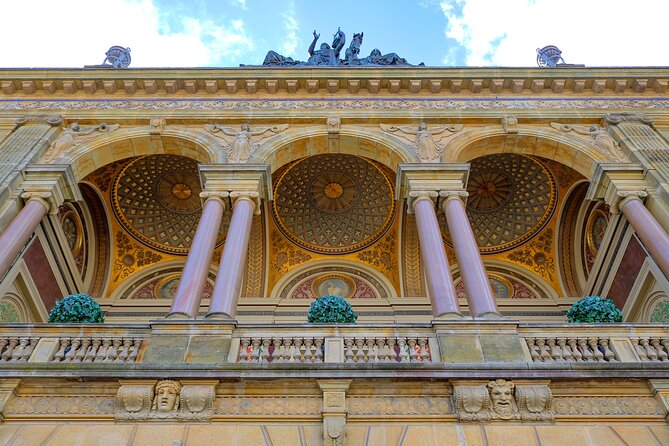
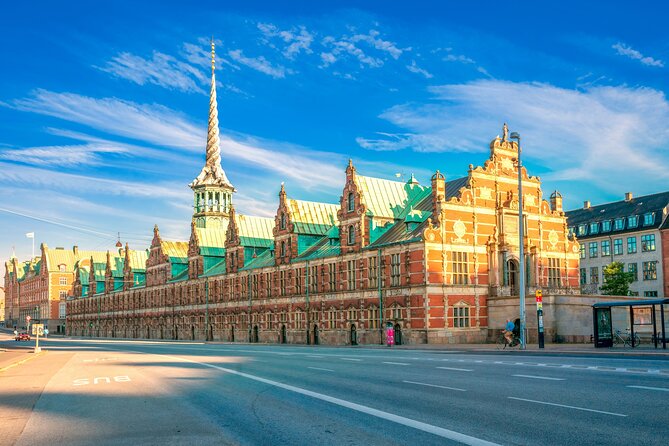
From there, you head to the old stock exchange from the early 1600s. This building is known for a distinctive tower feature made up of tails from three dragons.
This is one of those details that you can easily miss if you’re just walking past. The guide’s job is to point it out and explain the significance, so you leave with a concrete image in your head. For me, that’s the kind of payoff you want in a two-hour tour: a memorable visual marker plus the story behind it.
If you’re the type who likes to understand the meaning behind design choices, this stop is a great use of limited time. It’s also a reminder that Copenhagen isn’t only about modern design—it has a strong older layer you can read once someone shows you where to look.
Holmens Kirke: Where Royals and Prime Ministers Connect
Next is Holmens Kirke, a church dating from the 1500s. The tour frames it in a way that feels personal: it’s where prime ministers are buried and where royals have been married.
This stop works well for two reasons. First, it shows you how religious spaces function as national history sites. Second, it gives you a reason to care about whether the doors are open.
You may enter the church if it’s open, and admission is listed as free when you do. Since church schedules can shift, you should expect that entry might depend on the day’s activities. Either way, the exterior and the context are still useful for orienting you.
King’s New Square to Nyhavn: From Renaissance Planning to Colorful Waterfront Life
Now you move toward a classic Copenhagen visual payoff: Copenhagen King’s New Square. The square is built in the Renaissance and surrounded by impressive buildings from the 1700s. Like other stops, it’s explained as a place with purpose, not just a scenic backdrop.
This section is also where the tour starts helping you plan your next steps. The walk ends here, and the guide explains how to get back or continue exploring on foot toward Nyhavn, Amalienborg Palace, and even the area associated with the Little Mermaid.
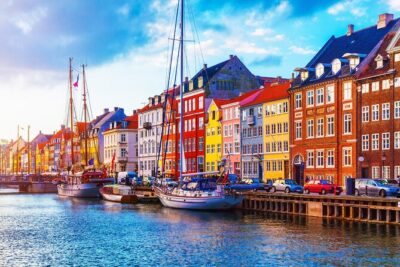
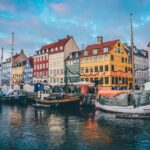
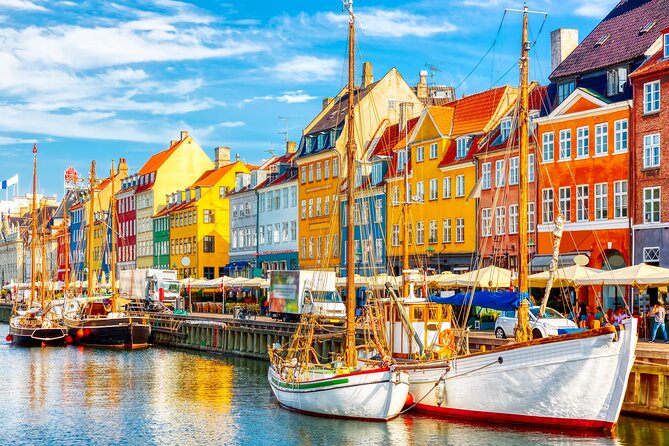
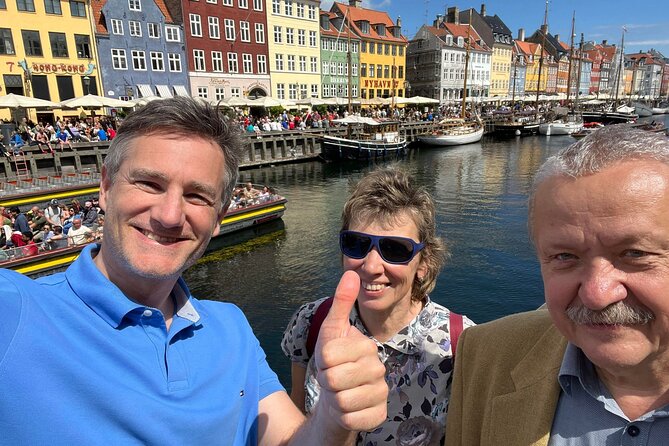
After the square, you reach Nyhavn, the iconic New Harbour with the colorful houses. The guide explains that the channel was dug out in the 1600s by Swedish prisoners of war. That detail adds weight to the postcard scene.
Nyhavn is the kind of stop where you’ll want to slow down after hearing the story. It’s easy to take photos here, and it’s also easy to get drawn into the streets afterward. If you’re building your itinerary for later in the day, this is a strong “start point” stop.
Amalienborg Palace: Royal Residence, WWII Context, and Guard Watching
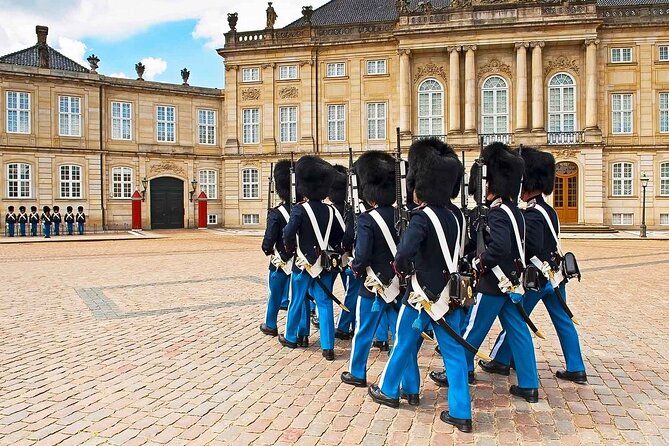
The tour concludes at Amalienborg Palace, the royal residence where the King and his family live in four large mansions from the mid-1700s.
Two things make this ending especially useful for you. First, the guide gives the broader context, including dramatic fights during World War II connected to the area. Second, Amalienborg is a place many first-time visitors want to see right away, so ending here sets you up for an easy follow-on.
Admission is not included for this stop, so don’t expect inside access during the tour. Still, the palace area is a major part of Copenhagen’s identity, and it’s worth arriving knowing the basics so you can read what you see.
What the Guide Does Well (and Why It Matters)
The guide is the main ingredient, and the strongest recurring theme is that they’re fluent in English and willing to answer questions. People mention names like Jens and Rasmus in past groups, and you’ll also see references to other English-speaking guides such as Jan, Nick, Thomas, and George. Whoever you get, the style described is consistent: lively storytelling, clear explanations, and humor mixed into the facts.
The headset is also more important than it sounds. Streets can get loud, and if you’re trying to keep up with a dense two-hour loop, you don’t want to keep asking for repeats. The guide’s audio setup helps you stay present while still moving.
The guide also gives tips on what else to see and how to get there after the walk. For me, that’s where “orientation” turns into real vacation value. You finish the tour with a practical sense of routes and priorities, not just memories of buildings.
Price and Value for $40.41 in Two Hours
At about $40.41 per person for roughly two hours, you’re paying for three things: a tight, curated route; local context; and a group format designed to keep you moving without missing the meaning.
The small group size (max 10) matters here because it supports question time. You’re not stuck listening to a guide talk at a wall of people. You can ask how to structure your day, what to see next, or what to skip based on your interests.
Also note what isn’t included. Admission tickets are not included at every stop, and the walk does not focus on entering castles or major museums. That’s not a flaw; it’s a trade. You get the city map in your head, then you spend your money later on the specific indoor experiences you actually want.
Timing, Walking Pace, and Comfort Tips
Total duration includes travel time, so the two hours on the clock isn’t just standing at monuments. You’ll cover multiple central neighborhoods and landmark clusters in a way that’s designed for first-timers. You’re also near public transportation for the meeting point, which helps if you need to adjust.
The main practical consideration is comfort. Wear shoes you trust. Plan for weather because the experience requires good weather; if it’s canceled due to poor weather, you’ll be offered a different date or a full refund.
If you prefer low-effort strolling, this tour may feel like a lot. But if you like getting your bearings fast, it’s a strong match.
Should You Book This Copenhagen Walk?
Book this tour if you want a fast, friendly orientation that helps you understand Copenhagen’s layout and history in the same breath. It’s a great first-day option because it ends in a prime sightseeing zone (Amalienborg) and routes you toward the waterfront (Nyhavn) and the main pedestrian shopping street (Strøget).
Skip it if your top priority is indoor museum time or long stays in buildings, because you’re mostly outside and you won’t do major castle or museum entry as part of the walk. Also think twice if you dislike walking for a short, concentrated stretch.
If you’re arriving in Copenhagen and want your next stops to be smarter right away, this two-hour introduction is a solid use of time.
FAQ
How long is the walking tour?
It runs for about 2 hours, and the total duration includes travel time.
Where does the tour start and end?
It starts at the statue of Andersen in Rådhuspladsen and ends at Amalienborg Palace, at Amalienborg Slotsplads.
Is the tour offered in English?
Yes, it’s offered in English, and you’ll also have an optional headset so you can hear the guide clearly.
What’s included in the ticket price?
Included are the guided walk in a small group, a local English-speaking guide, a headset (optional to use), a small city map, and tips on what else to see and how to get there after the walk. Admission and entries are not included for all stops.
Do we enter castles or museums during the tour?
No. The tour does not focus on entering castles and museums, though you can do them after the walk.
What if the weather is bad?
The experience requires good weather. If it’s canceled due to poor weather, you’ll be offered a different date or a full refund.