REVIEW · COPENHAGEN
Biking tour -Copenhagen Small Group, max 10 people
Book on Viator →Operated by Amitylux · Bookable on Viator
Old streets, fast pace, big payoff.
This Copenhagen small-group bike tour is a smart way to see a lot in just about three hours, hopping between major landmarks with a local guide and bikes ready to go. You’ll start with a quick intro to Copenhagen cycling rules, then roll out for a tight loop around the city’s most famous waterfront and palace areas.
Two things I really like: bike rental is included, so you’re not spending time hunting gear or figuring out rental logistics mid-trip. And the tour’s stop-by-stop rhythm means you can catch your breath often, then get right back on the saddle to reach the next highlight without wasting time.
One consideration: this is for experienced cyclists. The tour expects you to be comfortable biking safely in an urban environment, and it’s not set up for kids or people with poor health.
In This Review
- Key highlights to know before you ride
- Why Copenhagen by bike beats a bus in 3 hours
- Meeting at Nørre Voldgade and getting your bike briefing done
- The skill level reality check (this ride is for active cyclists)
- Rosenborggade: starting where the city feels easiest to bike
- Kastellet: a fortress stop that makes the city feel older
- The Round Tower: astronomy architecture in the middle of town
- Little Mermaid: quick, iconic, and often worth a fresh perspective
- Amalienborg and Rosenborg Castle: royal power in two different moods
- Amalienborg Palace Museum
- Rosenborg Castle
- Gefion Fountain: a wishing well with myth baked in
- Nyhavn: the harbor postcard you can actually enjoy
- Christiansborg Palace, Tivoli, City Hall, and the Opera House
- Christiansborg Palace
- Tivoli Gardens
- City Council / City Government building
- Copenhagen Opera House
- How small-group biking changes the experience (including route tweaks)
- Value check: what $89.87 buys you in real time
- Who this tour is best for (and who should skip it)
- Should you book this Copenhagen Small-Group bike tour?
- FAQ
- How long is the Copenhagen small-group bike tour?
- What’s the group size limit?
- Is bike rental included?
- Where does the tour start and end?
- Is the tour in English?
- Do I need a helmet?
- What kind of fitness or biking experience is required?
Key highlights to know before you ride
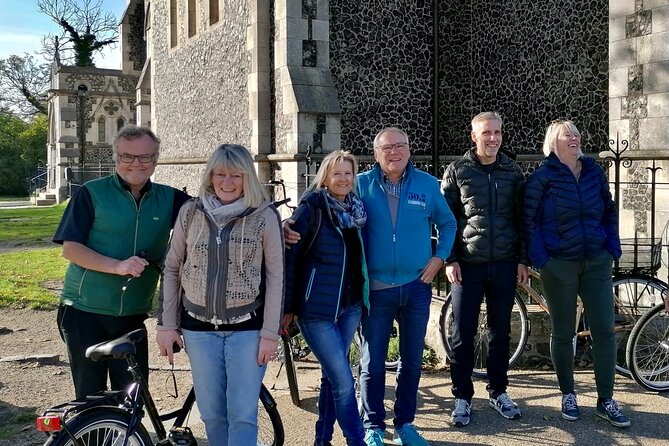
- Small-group limit (max 10) keeps the route more flexible and personal
- Bike rental included means less hassle and more time looking at the city
- Frequent short stops help you see a lot without feeling rushed
- Copenhagen landmarks with real storytelling along the way, from Christian IV sites to the harbor views
- Guides like Jose, Diana, and Andres get praised for friendly hosting and clear explanations
- Some routes can vary based on traffic and weather, and may include spots like Christiania
Why Copenhagen by bike beats a bus in 3 hours
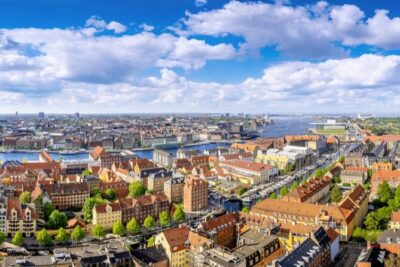
Copenhagen has a rare combo that makes this style of tour work well: it’s built for getting around by bike, and the best sights are close enough that you can actually reach them in one morning or afternoon. A walking tour can get you “close,” but it often turns into a slow shuffle. A longer bus loop can get you “coverage,” but you still feel far from the details.
On this ride, the point is speed plus access. The bikes get you near places larger vehicles can’t reach easily, so you spend less time just traveling and more time seeing what you came for. One review puts it simply: bikes take you close to places a coach cannot go. That matches what you’re aiming for when you only have a small window in town.
And because it’s capped at 10 people, the tour doesn’t feel like you’re part of a crowd. When the group is tiny, guides can adjust the pace and route to what you care about most—something you’ll see reflected in the comments from people who ended up on what felt like a private tour.
You can also read our reviews of more cycling tours in Copenhagen
Meeting at Nørre Voldgade and getting your bike briefing done
Your tour starts back at the meeting point near Nørre Voldgade 11, 1171 København. It’s also noted as near public transportation, which helps if you’re arriving from a train, bus, or hotel far from the center.
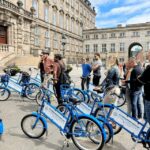
Early on, the guide handles two practical items: you get introduced to the bikes and you get a rundown of cycling rules for Copenhagen. That matters more than people think. Even if you’re an experienced rider, street-bike etiquette is local, and Copenhagen has its own rhythm. After the briefing, you roll out and start connecting the city’s big-name sights quickly.
Also worth planning for: you’ll return to the meeting point at the end, so there’s no awkward “now you’re on your own” moment.
The skill level reality check (this ride is for active cyclists)
This tour is absolutely not for casual cruising in sneakers. The key line to take seriously is that all participants must be experienced cyclists who can bike safely in a foreign urban environment. So if you’re a confident rider back home, you’re likely fine. If you’re unsure about navigating traffic, roundabouts, bike lanes, or quick stops, you should choose something else.
The physical requirement is listed as moderate fitness, but the real filter is bike confidence. One comment praised how the cycling route was safe and easy to navigate, which is a good sign—but the tour still expects you to handle the bike and traffic.
Helmets: wearing them is not compulsory in Denmark, and you can hire one on the day for a small fee. I’d still consider bringing your own helmet if you have one. It’s one less variable on a day when you want to focus on riding smoothly.
Finally, this tour runs in all weather conditions. Dress for rain or wind. Copenhagen can change fast, and you don’t want to be stuck with a soaked jacket and cold hands for 3 hours.
Rosenborggade: starting where the city feels easiest to bike
The ride kicks off in the city center, and one of the early stops is Rosenborggade (Rosenborggade 3). This initial stretch is where the guide sets the tone: you get comfortable with the bikes, you get your bearings, and you begin building a mental map of where you are in Copenhagen.
Rosenborggade itself is a useful “warm-up” location. It’s central enough that you’ll recognize your surroundings quickly afterward, and it tees you up for the next major cluster: fortifications, astronomy-era architecture, and royal-era stops.
Time at this first point is short, about 10 minutes, and it’s free to enter. That makes it a good start if you want to get moving right away.
Kastellet: a fortress stop that makes the city feel older
Next comes Kastellet, described as one of the best preserved fortresses in Northern Europe. Even if you don’t go inside paid areas, it’s the kind of place that helps you understand Copenhagen isn’t just modern design and waterfront photos. It has layers.
The stop is around 15 minutes, and admission is noted as not included. So if you want to go beyond the outside views, you’ll likely need tickets. If not, you can still appreciate the structure and the strong “military geometry” feel that comes with preserved fortresses.
One practical tip: these kinds of stops are great for quick photo moments and a short “stretch break.” You’ll be back on the bike soon, so don’t plan a long dig if you’re the type who reads every sign.


The Round Tower: astronomy architecture in the middle of town
Then you hit The Round Tower. It’s a 17th-century tower that started as Stellaburgis Hafniens and was built as an astronomical observatory under Christian IV of Denmark. That’s a big reason this stop works: you get a landmark that’s both historic and still central to the city today.
The stop is about 15 minutes, and admission is not included. Even if you only take in the exterior and surrounding area, the tower’s story helps it feel more than a photo stop.
This is also the kind of location where a guide’s delivery makes a difference. In the feedback I saw, guides like Diana and Jose get praised for explaining what you’re looking at in a way that sticks, without turning the tour into lectures.
Little Mermaid: quick, iconic, and often worth a fresh perspective
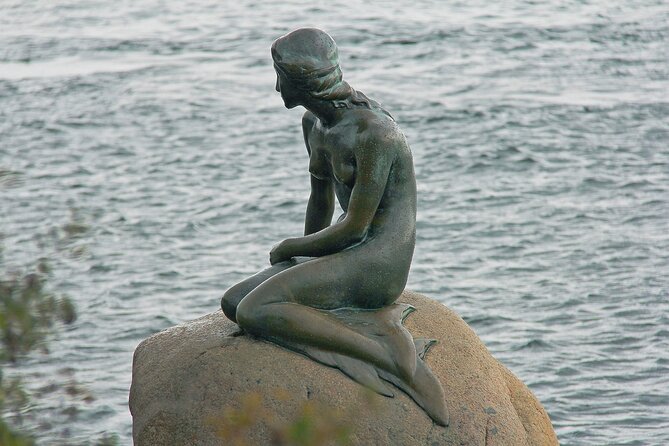
Yes, the Little Mermaid is the one you’ve seen in postcards. But it’s still one of those places that earns a stop because it’s positioned on the waterside at Langelinie promenade, and the sculpture is a specific bronze work by Edvard Eriksen, showing the mermaid becoming human.
This stop is about 15 minutes, and admission is free. That’s a nice balance: the waiting-and-photo part is manageable inside a short timeframe, and you don’t have to decide on tickets before you even get there.
One interesting detail from the route flexibility: some days or groups may add a variation of the Little Mermaid, described as a deconstructed version, plus other areas like Christiania. Since the tour notes that stops can vary depending on traffic and weather, it’s smart to keep an open mind when you book.
Amalienborg and Rosenborg Castle: royal power in two different moods
Now the tour shifts into royal-era territory.
Amalienborg Palace Museum
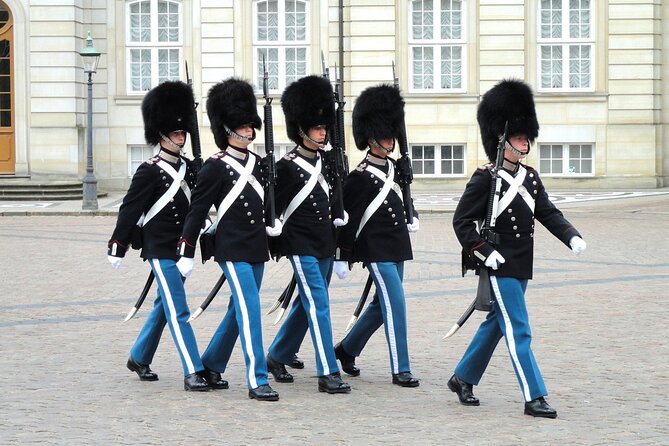
Amalienborg Palace Museum is the Royal Family’s residence in Copenhagen, made up of four palaces around an octagonal courtyard. Admission is not included, and the stop is about 15 minutes.
Even if you’re mostly there for views from the outside, Amalienborg gives you a clear sense of how royal space is arranged. It’s structured, formal, and built for symmetry—which is exactly what you want when you’re biking: big visual cues, easy orientation, minimal guesswork.
Rosenborg Castle
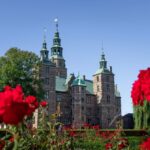
Then you roll to Rosenborg Castle, a 400-year-old Renaissance castle built by Christian IV. The guide angle here matters because Christian IV is described as having a colorful personality that left a strong mark on Danish history. Admission is not included, and the stop is about 15 minutes.
This is a useful comparison point: Amalienborg is court residence. Rosenborg Castle is a historic Renaissance presence. If you’re trying to understand Copenhagen’s identity beyond the waterfront, these two stops do a lot of work for relatively little time.
Gefion Fountain: a wishing well with myth baked in
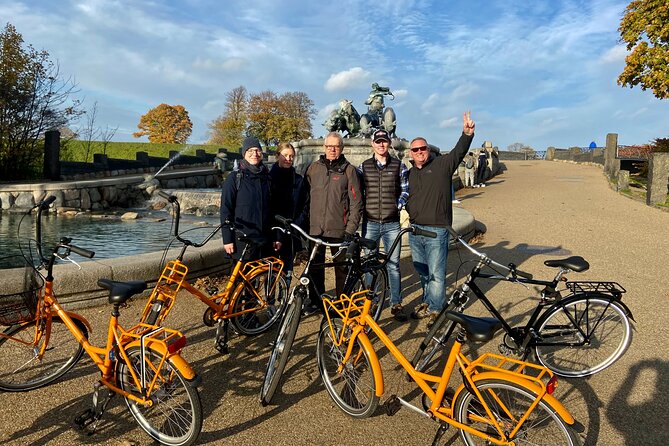
Next up is Gefionspringvandet (Gefion Fountain) in Langelinie Park. It features animals driven by Norse goddess Gefion, and it’s described as the largest monument in Copenhagen. It’s also used as a wishing well.
Time here is around 15 minutes, and admission is free. This stop is a great “reset” moment. It’s different from palaces and towers—more storytelling, more myth, and a fun way to break up the more formal architecture you’ve already seen.
If you like landmarks with a specific, memorable detail, this one hits. It’s hard to forget animals + goddess + giant monument, especially when you see it right after the more formal royal sections.
Nyhavn: the harbor postcard you can actually enjoy
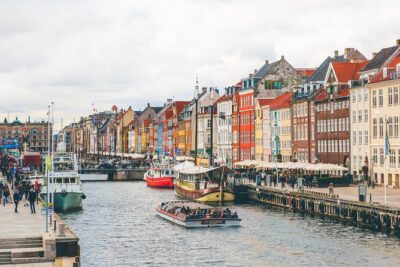
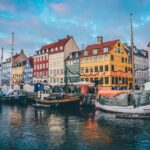
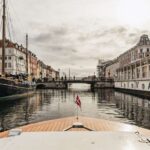
One of the most iconic stops on the ride is Nyhavn, described as colorful and one of Copenhagen’s locals’ favorite places to sit down with a cold beer on a hot day. The key detail is the local feel—this is not just about being famous, it’s about being a place people use.
The stop is about 15 minutes and admission is free. In other words, it’s low-pressure. You can walk around, grab a drink if you want, and still have plenty of time to stay on schedule for what’s next.
Also, Nyhavn is an easy place to make your own plan for later. If you fall in love with a particular corner, you’ll know where to return once the tour ends.
Christiansborg Palace, Tivoli, City Hall, and the Opera House
The later part of the tour covers more major city anchors, and this section is where you start connecting the dots: government, entertainment, city administration art, and modern cultural architecture.
Christiansborg Palace
Christiansborg Palace is described as formerly home to kings and queens. Today it houses the Danish Parliament, the Supreme Court, and the Ministry of State. Admission isn’t specified here as included or not, but the stop is part of the tour’s guided highlights.
This is one of those stops that makes Copenhagen feel like a functioning capital, not just a museum. It’s also a good “mental wrap” after the earlier royal palaces—because now you see government power in the same geographic world.
Tivoli Gardens
Then comes Tivoli Gardens, an amusement park in central Copenhagen with rides, games, musicals, ballet, and major concerts. No admission details are given in the stop list, but it’s clearly positioned as a major attraction you’ll see from the bike route and stop.
Even if you don’t go in, seeing it from the outside helps you understand why Copenhagen attracts both culture and casual fun in the same place.
City Council / City Government building
Another stop includes a building decorated with large numbers of sculptures and paintings, housing the local City Council and City Government of Copenhagen. This is a great change of pace after the outdoor waterfront moments. It’s art-adjacent and civic.
Copenhagen Opera House
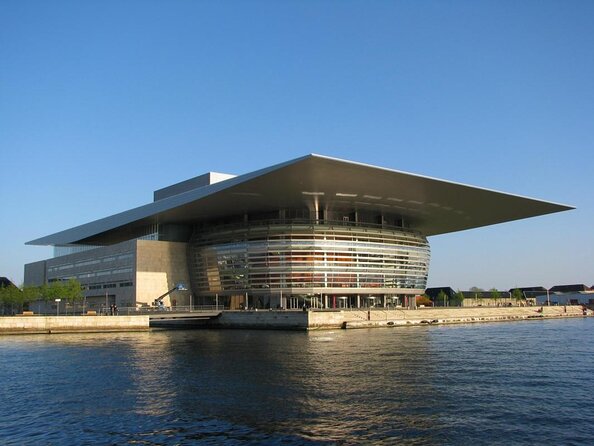
Finally, you’re in the orbit of the Copenhagen Opera House, described as Denmark’s national opera house and one of the most modern opera houses in the world, including a note that it’s among the most expensive opera houses ever built.
This stop is a perfect “modern Copenhagen” counterweight to the medieval and Renaissance story you’ve already heard.
How small-group biking changes the experience (including route tweaks)
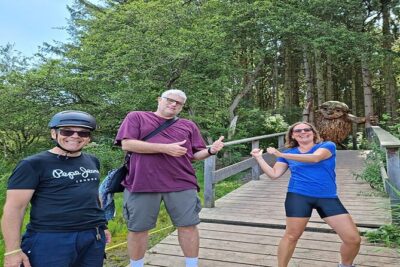
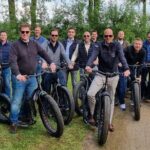
The max group size is 10, and several comments note that sometimes it’s even smaller—one person described being the only two riders at the time. When that happens, the tour stops feeling like a fixed checklist and starts feeling like a tailored city orientation.
This is where the guide personality shows up most clearly. Guides named in the feedback—Andres, Diana, Jose, Anna Marie, Jonah, Lisa, and Sillas—come up with consistent themes:
- people like how safe and manageable the cycling feels
- the guides keep things relaxed, not stiff
- routes can be adapted, such as when someone had a specific interest and the guide adjusted to show relevant landmarks
If you like asking questions mid-ride, this format rewards you. A bike tour with frequent pauses gives you a chance to stop talking long enough to actually see what the guide just explained.
Value check: what $89.87 buys you in real time
At $89.87 per person for about 3 hours, the biggest value driver isn’t just the guide. It’s that bike rental is included, and that you’re paying for a guided route through multiple landmark clusters in a short window.
Here’s the practical way to think about value:
- If you’d otherwise rent a bike anyway, this tour stacks the guide and routing on top of something you’d pay for separately.
- If you only have a limited stay, the tour is an efficient way to decide what’s worth returning to later. The ride ends back at the meeting point, which makes it easy to keep exploring on your own afterward.
- Many stops are free to view (Little Mermaid, Gefion Fountain, Nyhavn, plus the early Rosenborggade area), which helps keep costs predictable if you’re not buying every museum ticket.
You will still see some stops where admission is listed as not included. That’s normal for a highlights-focused bike tour. The key is: you don’t need to pay extra at every stop to enjoy the experience.
Who this tour is best for (and who should skip it)
This bike tour is a strong fit for you if:
- you’re an experienced cyclist and can handle city traffic safely
- you want a first-pass orientation through central Copenhagen
- you like short guided stops with time to look around, not long lectures or all-day wandering
- you want to see big-name sights quickly, then decide later what to revisit
It’s not a good match if:
- you want a casual, low-skill ride
- you’re traveling with children (not suitable)
- you have health limits that make biking uncomfortable
- you’re not comfortable biking in an urban environment where you’re not in control of the road rules
If weather looks rough, don’t panic—this tour operates in all weather conditions. Just plan what you’ll wear so you stay warm and dry enough to enjoy the ride.
Should you book this Copenhagen Small-Group bike tour?
I’d book it if you want a timed, guided loop that covers major Copenhagen markers without dragging your day out. The best reason is simple: bike rental included plus a local guide plus frequent stops. That combo helps you get your bearings fast and also highlights what’s worth circling back to later.
Skip it if you’re not ready to bike confidently in the city. This isn’t a relaxed pedal-and-posing tour. It’s a real cycling outing with expectations for safe urban riding.
If you can handle that, this is one of the smartest ways to see Copenhagen efficiently, especially when you only have a short amount of time.
FAQ
How long is the Copenhagen small-group bike tour?
It’s approximately 3 hours.
What’s the group size limit?
The tour is a small-group experience with a maximum of 10 people.
Is bike rental included?
Yes. Bike rental is included in the tour.
Where does the tour start and end?
It starts at Nørre Voldgade 11, 1171 København, Denmark, and ends back at the same meeting point.
Is the tour in English?
Yes, it’s offered in English.
Do I need a helmet?
Helmets are not compulsory in Denmark, but you can hire one on the day for a small fee.
What kind of fitness or biking experience is required?
You should have a moderate fitness level and be an experienced cyclist capable of biking safely in a foreign urban environment. It is not suitable for children or people with poor health.