REVIEW · COPENHAGEN
E-Scooter “Stand Up Kick Bike” 2 Hour Guided Copenhagen Tour
Book on Viator →Operated by Segway & Bike Tours Copenhagen · Bookable on Viator
First time in Copenhagen can feel like a test. This 2-hour guided kick-bike tour turns a big city into a simple route, with an easy way to cover ground fast. I like that it uses step-up electric kick bikes (no awkward balancing like some other options) and that the guides are calm, patient, and fun, which matters when the streets get busy. One thing to consider: Copenhagen weather can shift fast, and wind can make any open-air ride feel more intense.
You start near the water and sweep through classic sights, from power-and-royalty stops to the harbor icons and theater district. Each stop is short and focused, so you spend less time waiting and more time looking closely at what you came for. If you like getting your bearings quickly, this is built for that.
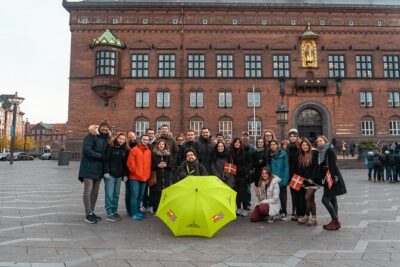
The tour keeps things small, with a maximum of 8 people, and you get an English-speaking guide. The meeting point is Nikolaj Plads 34, and you circle back to where you began, which helps a lot on a tight first day.
In This Review
- Key things I’d plan for (and why they matter)
- Copenhagen on two wheels: why this kick-bike format works
- Meeting at Nikolaj Plads: what to expect before you roll
- Christiansborg Slot and the Parliament/royal castle sweep
- The quiet Royal Library garden stop: small, pretty, and useful
- Copenhagen Stock Exchange: the Renaissance trading house vibe
- Amalienborg Palace: baroque royal architecture in plain sight
- Kastellet and the fortress-with-swans feeling
- The Little Mermaid, open harbor views, and the modern add-ons
- Nyhavn: the harbor from 1671 with old houses and a story anchor
- King’s New Square and the theater corridor you’ll actually remember
- Copenhagen Opera House: modern Denmark shown at more than one angle
- Nordre Toldbod23 and the royal-pavilion, yacht, and bastion view
- Absalon statue and Gammel Strand: founder energy and old fish markets
- Frederiks Kirke (Marmorkirken): the marble church finish
- Guides make the difference: Peter, Albert, Jonas energy
- Price and value: is $68.84 worth it?
- Who should book this kick-bike tour?
- Should you book this tour or skip it?
- FAQ
- How long is the guided Copenhagen kick-bike tour?
- How much does the tour cost?
- Where do you meet the guide?
- What language is the tour in?
- Is it a small group tour?
- Do the stops require paid admission?
- Can I cancel for a full refund?
Key things I’d plan for (and why they matter)
- Small group size (up to 8) keeps the ride from feeling chaotic when you’re learning the bike
- Step-up e kick bikes make it easier to start and stop without the steep learning curve
- Free entry at every stop means you’re not juggling tickets while you’re moving
- A tight, sight-heavy route helps you cover major landmarks without burning your day
- English guided narration keeps the “what am I looking at?” question answered as you go
Copenhagen on two wheels: why this kick-bike format works
Copenhagen is made for moving at a steady pace. With this tour, you do not have to “commute” the city to make progress. You get a guided loop where each photo stop is timed, and the route is built around the places you’ll want to see early.
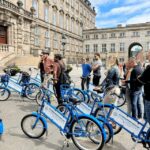
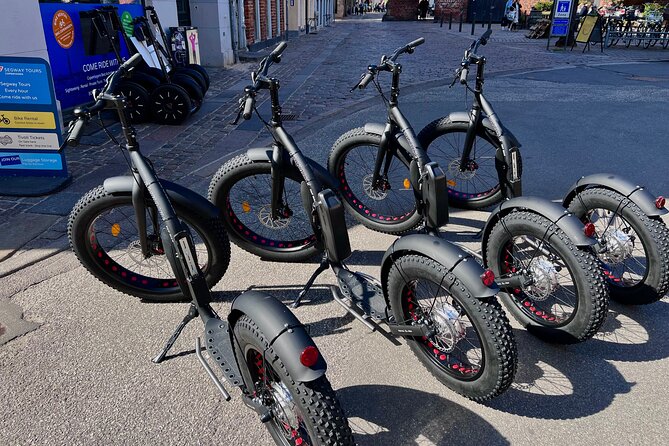
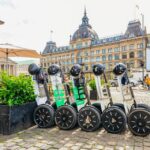
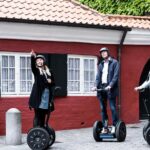
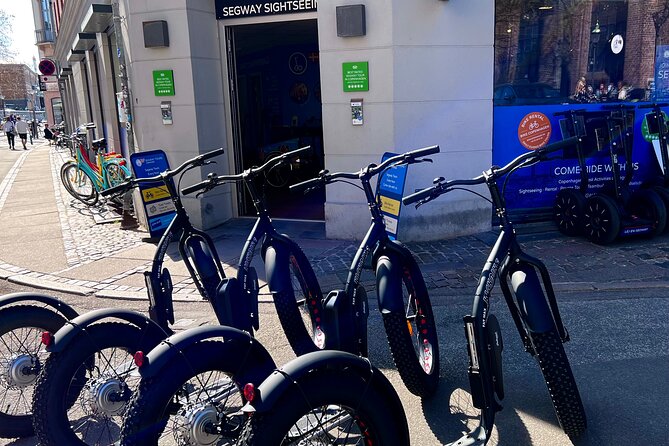
The kick bike itself is the big draw. These are stand up, step-up style electric scooters/kick bikes—the kind that are generally easier to learn than balancing-heavy alternatives. That matters because your attention should stay on the sights, not on your feet. And once you get going, the boost from the motor makes traffic and bridges feel less stressful than it would on a regular bike.
This is also a practical way to handle a first day. You come away with a mental map: where the royal buildings sit, how the harbor pulls you toward the theater district, and how the canal area connects the downtown squares. It is the kind of orientation that makes the rest of your trip easier.
You can also read our reviews of more cycling tours in Copenhagen

Meeting at Nikolaj Plads: what to expect before you roll
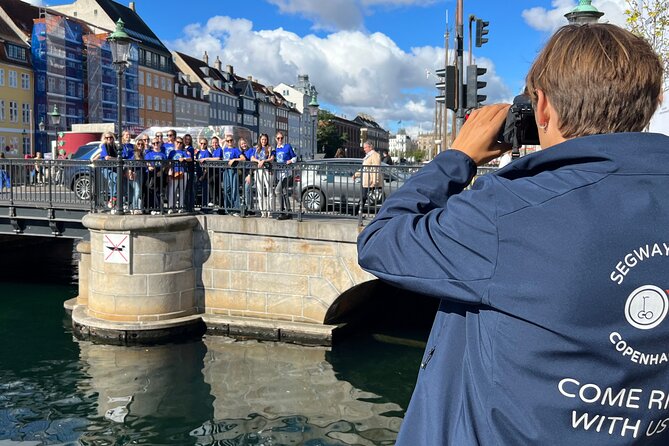
You meet at Nikolaj Plads 34, 1067 København. The location is central, and the tour is described as being near public transportation, which is helpful if you’re mixing this with other plans.
The tour uses a mobile ticket, and it’s offered in English. That sounds basic, but on a short, 2-hour-ish experience, it’s one less thing to manage. You’ll also be with a group that’s capped at 8, so you’ll have time to get situated and ask questions without shouting across the street.
In the reviews that shaped my expectations, the guides came across as calm and steady. People praised guides by name—Peter, Albert, and Jonas—for being friendly and patient. That’s a big deal on a ride where you’re learning a motion while also navigating city streets.
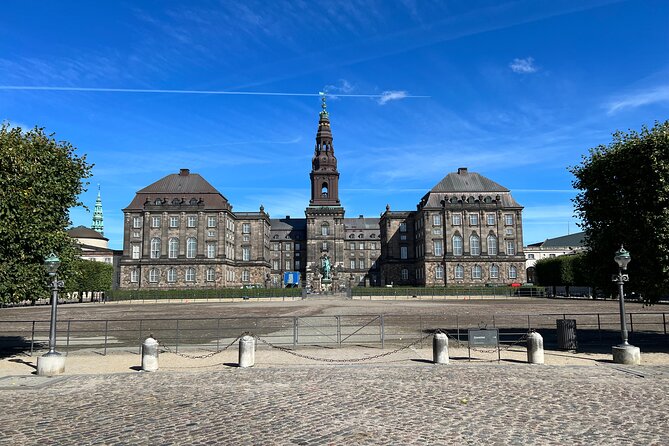
Christiansborg Slot and the Parliament/royal castle sweep
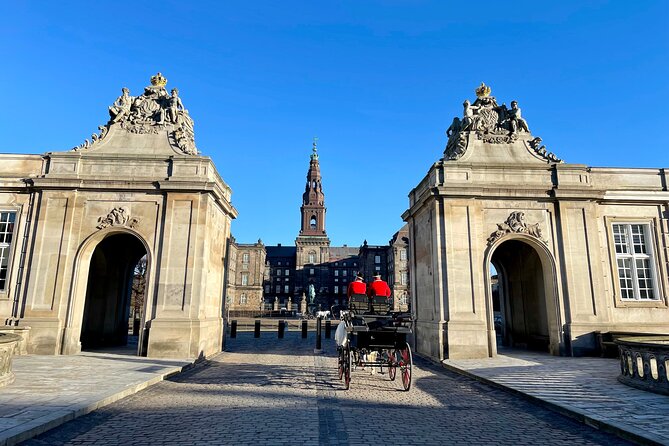
Your first major stop is Christiansborg Slot. This is listed as the Parliament and also a former Royal castle dating back to 1167. Even if you only see it from the street, it gives you the right first impression: Copenhagen’s political center and royal past sit close to each other here.
You get about 10 minutes at this stop. That timing is smart. Long enough to look up at the architecture and orient yourself, but short enough to keep the tour’s momentum.
If you’re the kind of traveler who likes context, this is a strong opening. It sets the theme for what comes next: royal spaces, grand civic buildings, and then a glide toward the harbor.
The quiet Royal Library garden stop: small, pretty, and useful
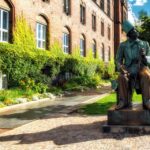
Next is Det Kongelige Biblioteks Have, described as a beautiful spot that used to be a war harbor from the 16th century. Now it’s a small garden with statues and flowers, and it’s tied to a favorite spot of a member of the Parliament.
You’ll only have about 6 minutes here, so this isn’t a sit-and-stay moment. It’s a short pause that gives variety. After more formal civic and palace buildings, this is a calmer pocket—an easy place to refocus your eyes before the next big structure.
Even if you only take a few photos, it helps you understand Copenhagen’s layering: the city repurposes spaces rather than starting over.
Copenhagen Stock Exchange: the Renaissance trading house vibe
Then you roll to the Copenhagen Stock Exchange. This renaissance-style building has been the city’s trading house since 1619. The stop also references nearby buildings: the Royal Library and a Tax department from 1736.
You’ll get about 10 minutes here. That’s just enough time to notice the building’s style and to connect it with the idea that Copenhagen’s wealth and administration were centered in this area long before modern tourism maps showed up.
If you want the city to make sense as you move, this kind of stop is gold. It turns “pretty building” into “here’s why this place matters.”
You can also read our reviews of more guided tours in Copenhagen

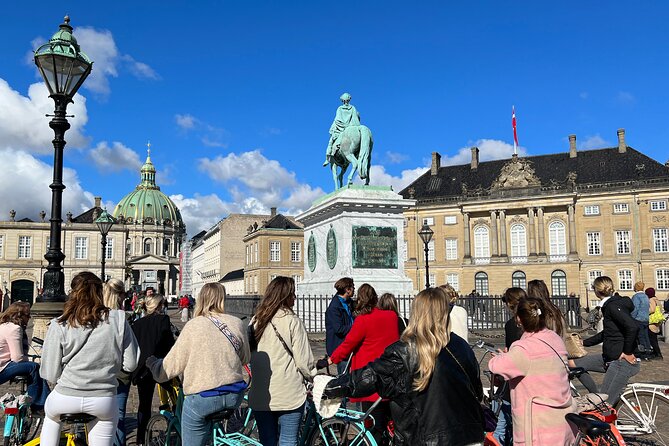
Amalienborg Palace: baroque royal architecture in plain sight
At Amalienborg Palace, you’re looking at the Royal castle since 1794 and the home of the queen and crown prince couple. The style is listed as baroque, and the buildings are described as stunning.
You’ll have around 12 minutes. That’s a decent window because palace exteriors take a little time to read: symmetry, details, and the way the complex sits in the street grid.
This stop is also a great point for slowing down a touch. On a kick bike, it’s easy to keep moving. Here, you’ll want to take your time so the palace doesn’t turn into a blur of photos.
Kastellet and the fortress-with-swans feeling
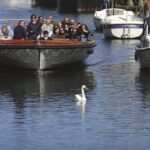
Next comes Kastellet, a citadel fortress from 1663, with a moat and swans. The stop also points you toward nearby landmarks: Gefion Fountain and the English St. Alban Church.
Time is short—around 5 minutes—so treat this as a quick “spot it, frame it, and move on” stop. The advantage is that you still get the shift in atmosphere: fortress walls, water edges, and those swans create a different Copenhagen mood than the harbor photos you’ll hit later.
The Little Mermaid, open harbor views, and the modern add-ons
No Copenhagen first-day plan is complete without The Little Mermaid. Here, you’re told to discover the Denmark icon and enjoy open waters of Copenhagen Harbour. The stop also includes mention of Copenhill and watching Reffen Streetfood.
You’ll get about 12 minutes. That’s enough to see the icon, take photos, and also look beyond it. The Copenhill mention is a useful reminder that Copenhagen mixes the old and the modern in one view line.
Reffen is listed as a place you can watch from the area, and that’s exactly how you should treat it: use it as a marker for where you might continue eating or exploring on your own after the tour ends.
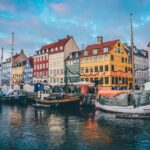
Nyhavn: the harbor from 1671 with old houses and a story anchor
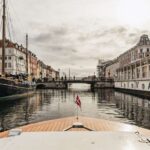
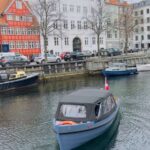
Then you head to Nyhavn, described as a harbor from 1671 with beautiful old houses and as the home of Hans Christian Andersen.
You’ll have around 10 minutes. Nyhavn is one of those places where the city “sounds” different, even if you’re just standing at the edge. You get the feeling that Copenhagen’s story keeps returning to the water.
This stop also works as a break from the royal-civic rhythm. Andersen gives you a human thread, so it’s not just architecture.
King’s New Square and the theater corridor you’ll actually remember
Next is Copenhagen King’s New Square, listed as a famous square that connects the harbor with the main city. You’ll also see references to major neighbors: Royal ballet, DÁngleterre, the French Embassy, and the Charlottenborg Art Museum.
This one is brief—about 3 minutes—so it’s less about lingering and more about orienting. If you’re later wandering the city, this stop helps you understand how the water route feeds into the cultural center.
You’ll then pass Royal Danish Theater (Kongelige Teater), listed as stunning and dating from 1748. That stop is around 4 minutes.
Copenhagen Opera House: modern Denmark shown at more than one angle
After the theater, you’ll reach the Copenhagen Opera House for about 5 minutes. It’s described as state-of-the-art with an amazing history.
Then later, the itinerary includes another Opera House stop (listed as 7 minutes). In practice, that means you’re likely to catch the building from a different approach as the route continues. Either way, the point is the same: Copenhagen’s modern landmark becomes a repeated reference point, which makes your mental map stick.
One more detail listed here is big for context: the Opera House is “made in Denmark” and opened in 2004. It’s described as financed by the Maersk Shipping company as a gift to Denmark. That turns the building from just a pretty photo into something tied to national identity.
Nordre Toldbod23 and the royal-pavilion, yacht, and bastion view
You continue to NordreToldbod23, with references to royal pavilions, the queen’s yacht, and the Sixtus bastion.
You get about 6 minutes. This is a useful stop because it shifts you toward the harbor edge again, and it adds those specific elements—yacht and bastion—that make the view feel more “real” instead of generic waterfront sightseeing.
If you’re the type who likes having named landmarks, you’ll leave with these labels in your head, and that makes it easier to plan the rest of your day around what you saw.
Absalon statue and Gammel Strand: founder energy and old fish markets
Next is the Rytterstatue af Absalon. The description calls Absalon a bishop and warrior, and it notes that he founded Copenhagen in 1167. The statue faces the old Royal Castle.
You’ll have about 5 minutes. This kind of stop works well on a kick bike tour: you pause, you read the symbolism, you move on. You don’t need a long time to feel the city’s origin story.
Then you head to Gammel Strand, described as downtown by the canal, with the nickname Old beach. It’s where fish were sold for the last 400 years or more, and it connects to the canal system that surrounds the Parliament and old castle area.
Time is around 5 minutes. Even in a short stop, knowing that fish-selling history is attached to the place changes how you look at the canal.
Frederiks Kirke (Marmorkirken): the marble church finish
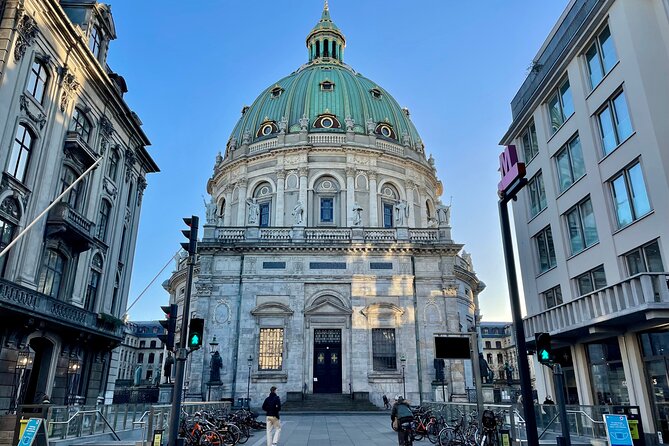
The tour ends with a stop at Frederiks Kirke (Marmorkirken). It’s described as an amazing cathedral from 1749, finished in 1894, and nicknamed the Marble Church. You get about 10 minutes.
This is a strong closer because it’s visually distinct. A cathedral exterior gives you a clear last image before you head back.
Guides make the difference: Peter, Albert, Jonas energy
This tour lives or dies by pacing and comfort. The ride is active, and step-up bikes still take a minute to trust your balance and braking rhythm. In the guide feedback that shapes my view, people singled out specific leaders for being friendly and patient.
- Peter was praised for being knowledgeable and friendly, and for creating a smooth, enjoyable experience.
- Albert got credit for making the ride fun and easy, plus helping people cover a lot of ground.
- Jonas earned strong marks for being personable and patient, especially when weather turned with rain and strong winds.
That “patient in bad weather” angle is worth noting. Copenhagen can throw wind and rain at you, and a good guide helps you keep moving without rushing.
Price and value: is $68.84 worth it?
At $68.84 per person for about 2 hours 15 minutes, you’re paying for three things: guidance, an electric ride setup, and a timed route through multiple major sights.
If you tried to replicate this on your own, you’d spend time figuring out where to start, how to connect the sights efficiently, and how to keep a short window from turning into long walks. The group cap of 8 travelers also suggests you’re not being swallowed by a huge crowd.
Also, many stops are listed as admission-free, which adds up. You’re not paying to get into buildings during the tour. You’re paying for the movement and the explanation as you go.
The value sweet spot is when:
- you want orientation fast,
- you want to see the “big named” sites in one outing,
- and you prefer guided routing instead of map math.
Who should book this kick-bike tour?
This is a great fit if you:
- are on your first day in Copenhagen and want a clear mental map,
- like active city touring but don’t want a long bike day,
- want a small group and an English-speaking guide,
- and you’d rather spend your time looking than planning your route between far-flung landmarks.
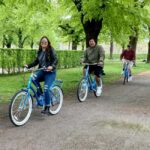
It’s also a good choice if you’re traveling with family and want the ride to feel structured. One family-shaped review described a group ride on bikes alongside the scooter experience, and the guide handled rain and wind while keeping everyone comfortable.
If you hate being outdoors for long stretches, or you want deep museum time at one location, this may feel too “stop and go.” The tour is designed for coverage, not slow wandering.
Should you book this tour or skip it?
I’d book this if your goal is smart orientation plus major sights in one practical afternoon. The route connects Parliament/royalty, the harbor, the theater corridor, canal-side old market history, and a classic church finish—all in a way that keeps your day from getting messy.
I would think twice if:
- you’re very sensitive to wind or rain,
- you’re unsure about riding a step-up electric kick bike in traffic,
- or you’re hoping for long, ticketed interior time.
If you’re flexible and you want a first-day backbone for the rest of your trip, this is a strong deal.
FAQ
How long is the guided Copenhagen kick-bike tour?
It lasts about 2 hours 15 minutes.
How much does the tour cost?
The price is listed as $68.84 per person.
Where do you meet the guide?
The tour starts at Nikolaj Plads 34, 1067 København, Denmark.
What language is the tour in?
The tour is offered in English.
Is it a small group tour?
Yes. The maximum group size is 8 travelers.
Do the stops require paid admission?
The tour data lists admission ticket free for the stops.
Can I cancel for a full refund?
Yes. You can cancel up to 24 hours in advance for a full refund.