REVIEW · COPENHAGEN
Copenhagen: 2-hour Old Town Private Walking Tour
Book on GetYourGuide →Operated by OURWAY Tours · Bookable on GetYourGuide
Copenhagen tells stories fast if you know where to look. This private Old Town walk strings together the landmarks you’ve seen on postcards with the little symbolic details that make them click, and it does it in just two hours. I especially love the stop at Copenhagen City Hall for its Copenhagen-specific symbols, and I love the sweet pause with a tasting of handmade candy. The only real catch is the walking surface: you’ll hit cobblestones for a lot of the route, so comfy shoes matter.
What makes this tour feel worthwhile is the mix of big sights and human-scale street corners. You get major anchors like Vor Frue Kirke and Rundetaarn, plus the stroll down Strøget where the city’s everyday rhythm shows up. And your guide’s style can be a highlight—friendly and fun—though if you’re hoping for lots of broad Denmark background beyond the immediate sights, you’ll want to ask questions early.
In This Review
- Key highlights you’ll actually notice on the walk
- Why a 2-hour Old Town route hits the sweet spot
- Getting started outside Copenhagen Visitor Service at Vesterbrogade 4B
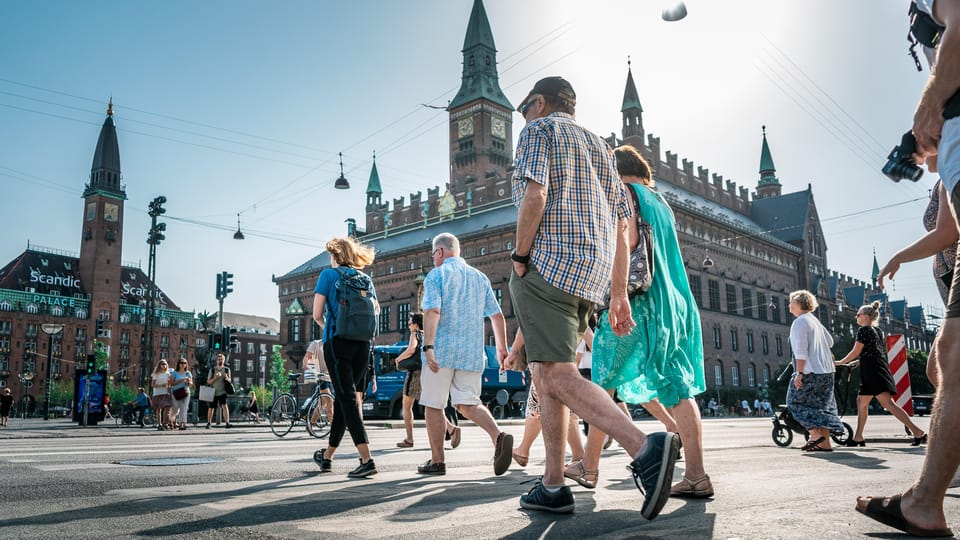
- Rådhuspladsen and Copenhagen City Hall: symbols you’ll spot once you know what to look for
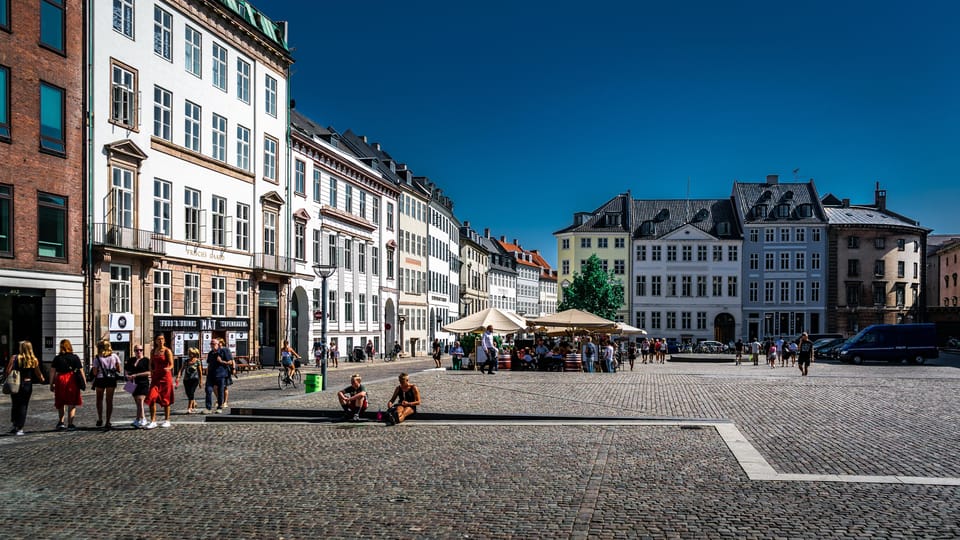
- Nytorv and Gammeltorv squares: where the city shows its older bones
- Vor Frue Kirke (Church of Our Lady): the Crown wedding connection
- A University of Copenhagen Botanical Garden pause that breaks up the pace
- Round Tower (Rundetaarn): “The Round Tower” and the observatory viewpoint
- Gråbrødretorv and the alley maze: where color shows up for a reason
- Strøget and Amagertorv: the pedestrian spine and how to enjoy it
- Christiansborg Palace view over Slotsholmen: royal and political Copenhagen at a glance
- Ending at the Stork Fountain: a clean finish point for your next move
- Price and value: is $683 per private group worth it
- What I’d ask your guide if you want the most out of it
- Tips so the cobblestones don’t steal your enjoyment
- Should you book this Copenhagen Old Town private walking tour?
- FAQ
- Where does the tour start?
- How long is the Old Town private walking tour?
- What can I expect the walking surface to be like?
- What languages are available for the live guide?
- Is the tour private?
- What are the cancellation and payment options?
Key highlights you’ll actually notice on the walk
- City Hall symbolism at Rådhuspladsen: more than just a pretty facade, it’s designed to mean something about Copenhagen.
- Vor Frue Kirke’s Crown wedding tie-in: the church where the Crown Prince and Princess married is a powerful context stop.
- Handmade candy tasting: a short, memorable break that keeps the tour from feeling like only photos and statues.
- Rundetaarn and its observatory viewpoint: you look up with the same purpose astronomers had—then you look out over the city.
- Strøget and side-alleys: the main shopping street, plus the backways that make Old Town feel lived-in.
- Finish near the Stork Fountain: a satisfying ending point that helps you re-orient for the rest of your day.
Why a 2-hour Old Town route hits the sweet spot
Copenhagen’s Old Town can feel like a maze if you show up with no plan. This walk gives you a clear line of sight through the city center so you’re not zig-zagging randomly or doubling back. At two hours, it’s short enough to stay energetic, but long enough to connect meanings between stops.
You’ll also get a good pacing trick: big landmark, quick context, then a smaller square or alley. That rhythm keeps the tour from turning into a checklist.
And because it’s a private group, you can set the tempo. If you want more time lingering at the churches or taking photos at the observatory, you can usually slow the group down.
You can also read our reviews of more walking tours in Copenhagen


Getting started outside Copenhagen Visitor Service at Vesterbrogade 4B
The tour starts outside the entrance to the Copenhagen Visitor Service at Vesterbrogade 4B in the city center. The guide typically arrives about 10 minutes early, and you’ll spot them by looking for a sign with the local partner’s name.
This matters more than it sounds. Copenhagen is easy to get around, but easy to get turned around too. Starting at a visitor-friendly location helps you begin with confidence instead of roaming first.
If you’re running late, it’s worth knowing that a tour like this moves as a unit. Plan to arrive early, not exactly on time.
Rådhuspladsen and Copenhagen City Hall: symbols you’ll spot once you know what to look for
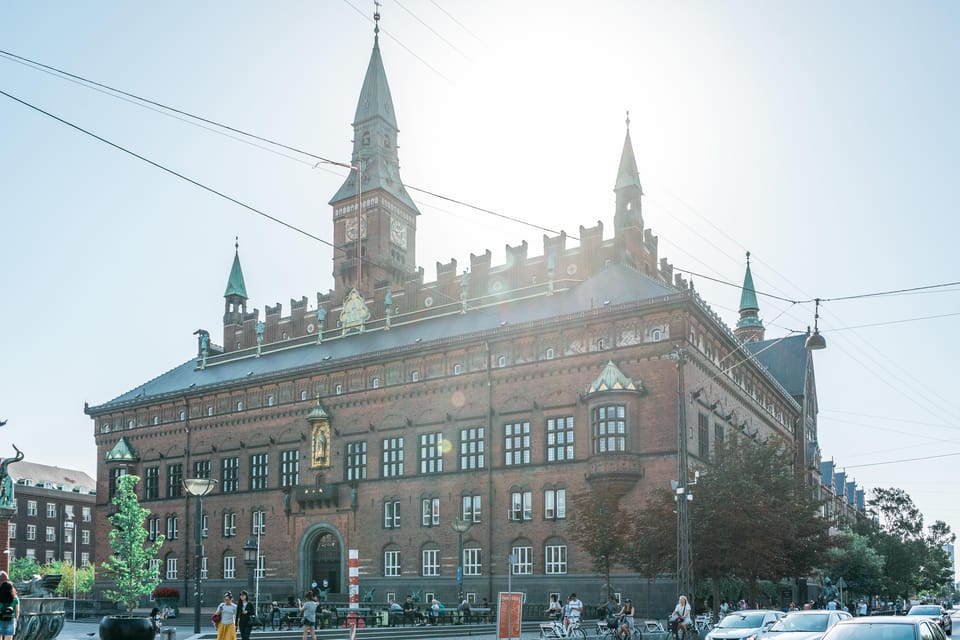
Your walk begins near Rådhuspladsen, home to Copenhagen City Hall. From street level it’s impressive already, but the guide’s job is to point out the Copenhagen-specific meaning embedded in the building’s details.
What I like about this stop is that it changes the way you read the building. You stop seeing it as a landmark photo and start seeing it as a statement about the city itself—almost like architecture doing the explaining for you.
Practical tip: give yourself a moment to look up. City Hall rewards that habit, especially when you’re standing in the right spot on the square.
Nytorv and Gammeltorv squares: where the city shows its older bones
From City Hall, you move through central squares including Nytorv and Gammeltorv. These are the kinds of places where Copenhagen doesn’t try too hard—just everyday urban life layered on older layout and older paths.
For me, the value here is perspective. Old Town starts to feel less like isolated buildings and more like a network of civic spaces. Your guide’s route helps connect them so the squares make sense as part of the same story.
One small consideration: squares can be busy, and the route can funnel you with foot traffic. You’ll still get the chance to look, but don’t assume you’ll have perfect quiet every minute.
Vor Frue Kirke (Church of Our Lady): the Crown wedding connection
Next up is Church of Our Lady—also known as Vor Frue Kirke. This stop is memorable because it’s not just about the church’s look; it’s tied to a real milestone: it’s the church where the Crown Prince and Princess married.
That kind of detail gives you a richer way to read the space. Even if you’re not chasing royal history, the marriage fact grounds the building in a specific moment, and that makes it more than a stop along the route.
If you like religious architecture, you’ll also appreciate how the church fits into the surrounding city lines—where people pass by on the street, but the building still feels anchored and important.
You can also read our reviews of more private tours in Copenhagen




A University of Copenhagen Botanical Garden pause that breaks up the pace
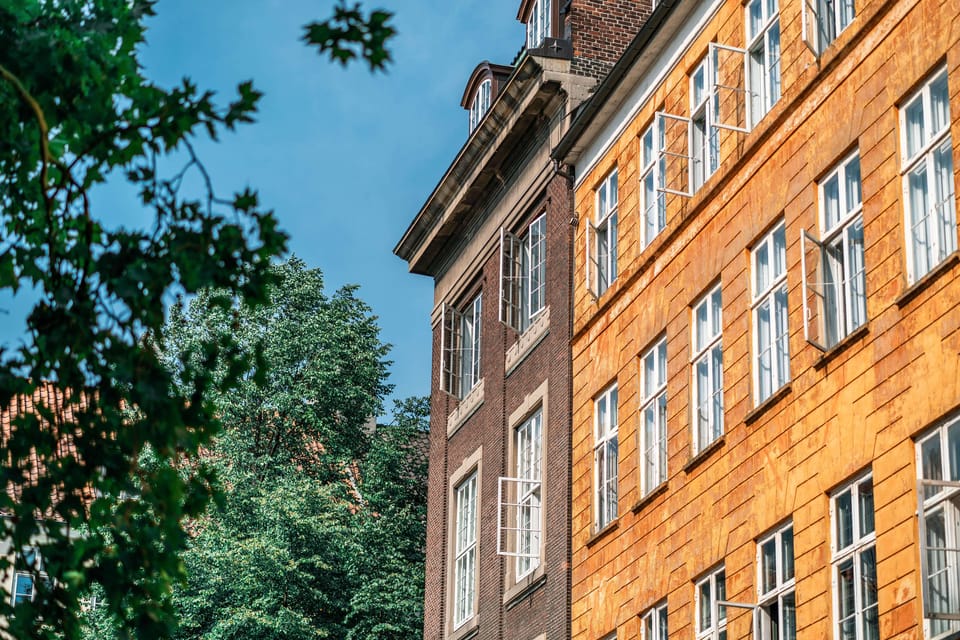
Your route includes the University of Copenhagen Botanical Garden area. This is a useful change of tempo in the middle of Old Town scanning—less pure stone-and-statue focus, more of a breather that keeps your feet and attention from burning out.
You might not spend ages here, but even a quick look can shift your view from “tour mode” back into “walking Copenhagen” mode. It’s the kind of stop that makes the whole route feel thoughtful instead of rushed.
Round Tower (Rundetaarn): “The Round Tower” and the observatory viewpoint
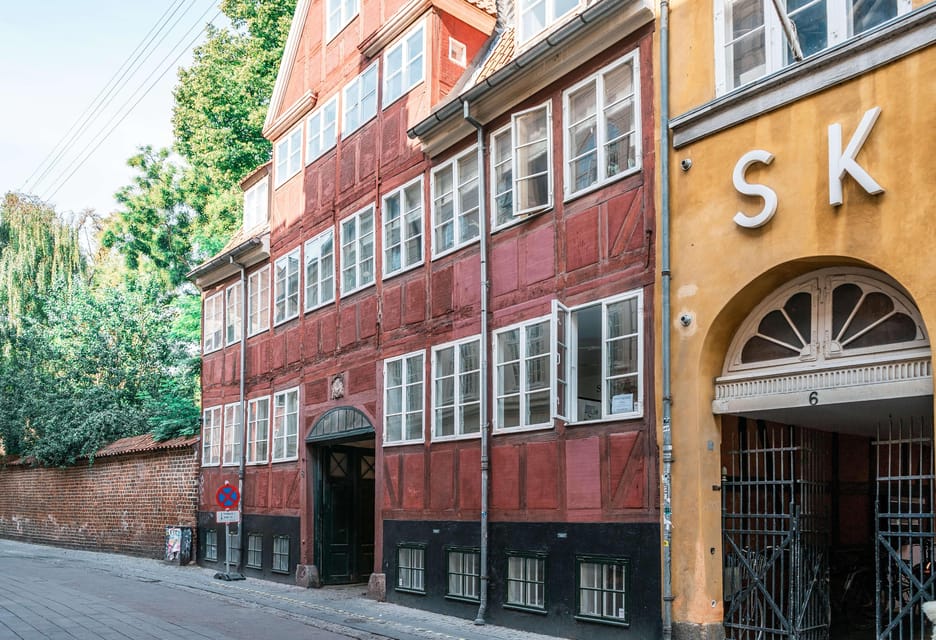
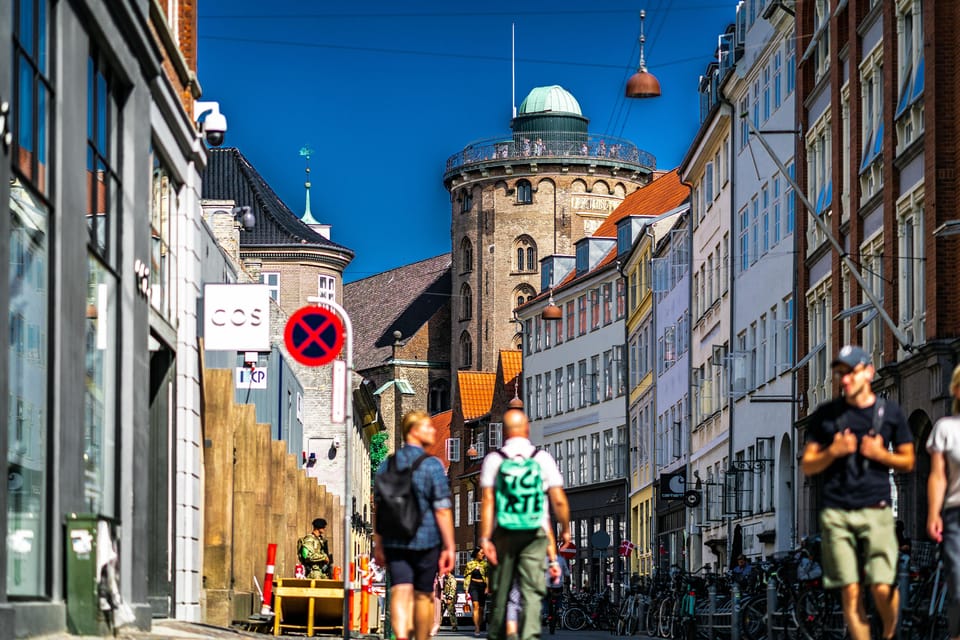
Then you’re headed to Rundetaarn, the Round Tower, with its observatory on top. This is one of those Copenhagen highlights that feels designed for both curiosity and photos.
What makes it worthwhile on a guided walk is the interpretation. You’re not just climbing for a view—you’re looking at the idea of observation and how people once used the tower for thinking like astronomers.
Practical tip: if you’re sensitive to stairs or incline, plan for it. The tour is only two hours, but the tower portion is still active. Comfortable footwear is a must, and I’d pack patience for the upward part.
Once you reach the viewpoint, you’ll understand why Copenhagen planners love positioning: you can see the city’s shape and the way streets lead your eye.
Gråbrødretorv and the alley maze: where color shows up for a reason
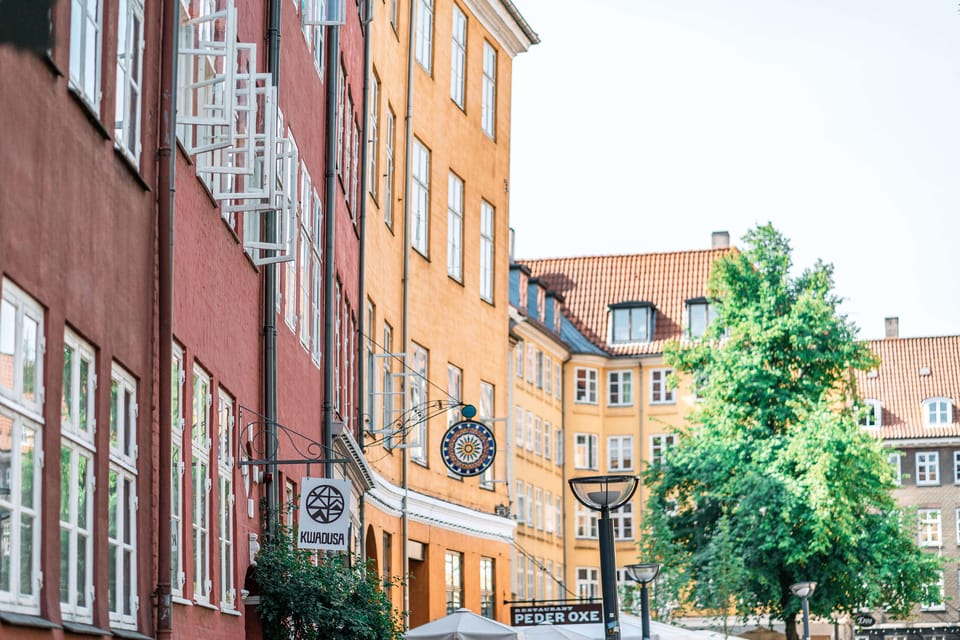
After the tower, the route moves to Gråbrødretorv. Here the walk leans into atmosphere: colorful facades, a historical hangout vibe, and the feeling that the city center has layers you can’t spot from one street corner.
The guide also weaves you along side streets—short walks that feel like shortcuts but are really part of how the old city works. That’s where you’ll start noticing the texture of Copenhagen: narrow passages, quick turns, and storefronts that reflect modern life inside older bones.
If you’re the type who likes wandering but hates wasting time, this is a great compromise. You get the fun of “secret alleys,” without the trial-and-error.
Strøget and Amagertorv: the pedestrian spine and how to enjoy it
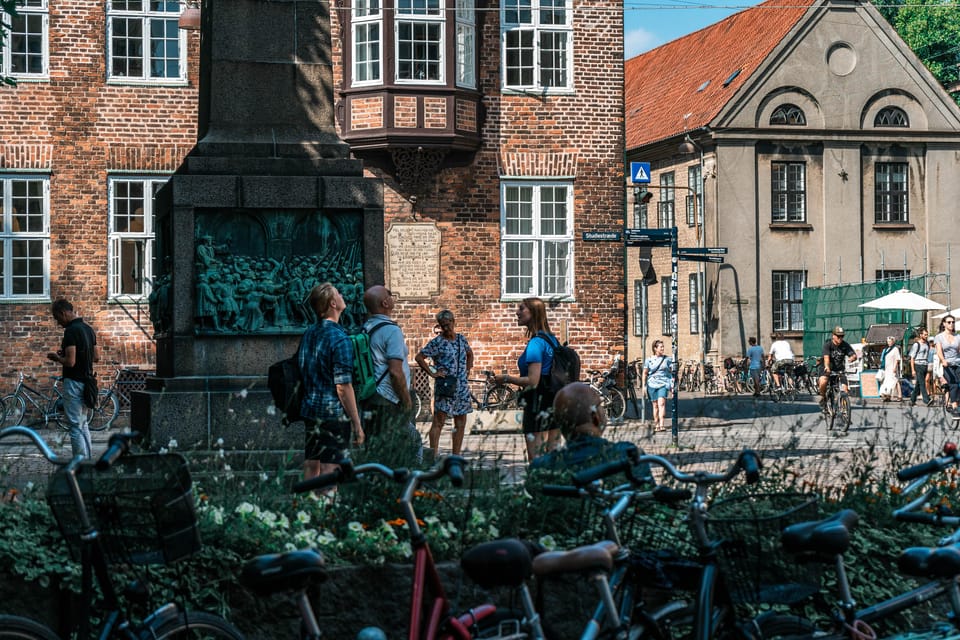
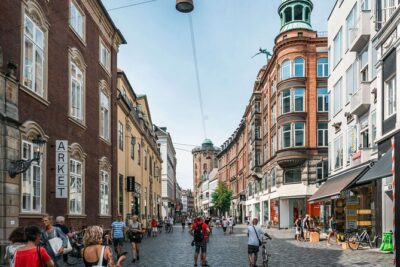
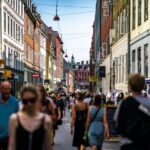
A key part of the experience is a stroll along Strøget, Copenhagen’s main pedestrian shopping street. This is where the city’s modern energy meets the old town core, and it’s one of the best places to observe daily Copenhagen life.
You’ll also move through Amagertorv as part of the route. Think of it as another pulse point—still central, still walkable, but with a slightly different feel than Strøget depending on the time of day.
One drawback to keep in mind: since Strøget is pedestrian and popular, you may have crowds around you. Your guide can help you keep momentum and avoid losing the thread of what you’re seeing.
Christiansborg Palace view over Slotsholmen: royal and political Copenhagen at a glance
As you near the end of the walk, you’ll get a view over Slotsholmen, including the impressive Christiansborg Palace. The tour frames this as a hotspot for both royalty and politicians, and that context helps you understand why this area feels formal even while you’re just walking past.
This stop is more about seeing where power sits in the city’s layout than it is about a long visit. Still, a good viewpoint plus a clear explanation can make it feel like you’ve mapped an important part of Copenhagen’s identity.
If you care about politics or governance, this is the short payoff moment. It helps you connect the city’s civic spaces to the institutions they point to.
Ending at the Stork Fountain: a clean finish point for your next move
The tour concludes at Stork Fountain. I like ending here because it’s a recognizable landmark that helps you re-orient. When a guided walk ends at a specific point, it reduces that awkward moment of standing around wondering where to go next.
At this stage, you’ll likely have a clearer sense of directions through the center—so you can keep exploring on your own, grab food, or connect to other sights without backtracking.
Price and value: is $683 per private group worth it
The price listed is $683 per group for a 2-hour private tour. For many people, that’s the big question: is it worth paying for a guide instead of doing Old Town on your own?
Here’s how I think about it. You’re paying for three things that self-guided routes often don’t deliver as well:
- Focused interpretation at major landmarks, like City Hall symbolism and Rundetaarn’s observatory viewpoint.
- A paced route that connects squares and streets so Old Town feels navigable.
- A private format where you can ask questions in real time, in multiple languages.
This also becomes especially reasonable if your group wants the convenience and flexibility of a private tour rather than a fixed-group schedule.
The only caution: a short private tour means the guide has to pick what matters most. If you want lots of broad, Denmark-wide historical context beyond what you see on the street, you may need to prompt the guide and steer the conversation.
What I’d ask your guide if you want the most out of it
Based on the vibe of the tour and the kinds of comments you might hear from people who care about context, these are smart questions to bring:
- What’s the key symbol theme on City Hall, and how should I notice it from street level?
- At Vor Frue Kirke, what detail should I pay attention to that most people miss?
- For Rundetaarn, what does the observatory purpose change about how I should view the tower?
Guides who keep things lively can still be very helpful—especially when you ask for the level of detail you want.
Tips so the cobblestones don’t steal your enjoyment
Most of the walk happens on cobblestones, so plan like you’re walking all day. Bring comfortable shoes with grip. If your feet tire easily, treat this as a “stroll with a plan” rather than a relaxed promenade.
Weather matters too. Wear weather-appropriate clothing because Copenhagen conditions can shift quickly, and you’ll be outside the whole time.
Also, bring a phone camera if you use one, because Rundetaarn’s viewpoint and the City Hall square are made for it.
Should you book this Copenhagen Old Town private walking tour?
I’d book it if you want a tight, high-impact introduction to Old Town that doesn’t rely on you having perfect instincts. It’s a strong choice for first-timers who want City Hall, Vor Frue Kirke, and Rundetaarn covered with meaning, plus a walk down Strøget without getting lost.
I’d hesitate if you prefer long museum time or you’re craving a huge amount of broad history for its own sake. This is a street-level walk focused on specific places and what they represent, not a slow deep lecture.
If you’re traveling with limited time, or you just want someone to make Old Town make sense, this is an efficient way to do it.
FAQ
Where does the tour start?
The tour starts outside the entrance to Copenhagen Visitor Service at Vesterbrogade 4B in the City Centre.
How long is the Old Town private walking tour?
It’s a 2-hour tour.
What can I expect the walking surface to be like?
The majority of the tour takes place on areas where you will have to walk on cobblestones.
What languages are available for the live guide?
The guide is available in English, Italian, French, Spanish, Danish, German.
Is the tour private?
Yes, it’s a private group tour.
What are the cancellation and payment options?
Free cancellation is available up to 24 hours in advance for a full refund. You can also reserve now and pay later.