REVIEW · COPENHAGEN
The Six Forgotten Giants Trolls Hunt with Minibus
Book on Viator →Operated by South Zealand Tours · Bookable on Viator
Six wooden trolls. One half-day adventure. The Six Forgotten Giants Trolls Hunt with Minibus sends you out of central Copenhagen and into suburban parks and quiet spots where you can actually crawl into the sculptures and look out over the area. Each stop takes a small chunk of time, and the minibus handles the in-between travel so the day feels like a relaxed hunt, not a navigation project.
I also like how the experience mixes art and nature in a practical way: you’re on foot for short periods, then you’re back on comfortable transportation, with time to take photos and soak in the views. The one drawback to plan around is the price—at $129.59 per person it’s not the bargain option if you already have a car, and you’ll want comfortable shoes because there’s some walking (including at least one hill that can feel tougher in bad weather).
In This Review
- Quick hits before you go
- Why Copenhagen’s forgotten giants make a great half-day
- The minibus setup: meeting point, pacing, and group size
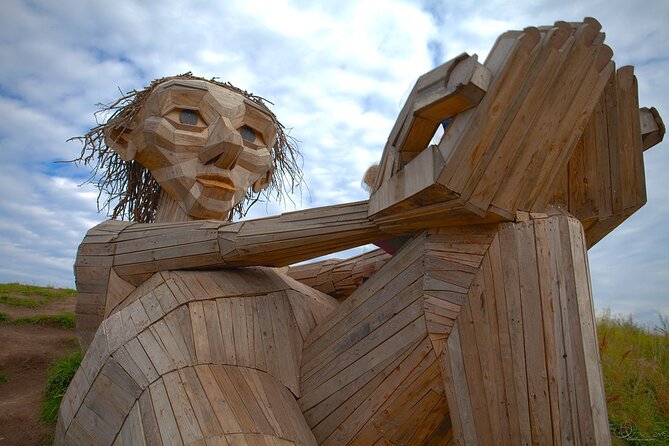
- Stop 1 (Hvidovre): Hill Top Trine and the viewpoint from her palms
- Stop 2 (Rødovre): Sleeping Louis, trees around him, and a mouth you can enter
- Stop 3 (Ishøj): Scar under the bridge and scrapwood made into art
- Stop 4 (Vallensbæk Municipality): little Tilde watching from the other side of the lake
- Stop 5 (Taastrup): Teddy friendly, the water stream, and the helpful hand
- Stop 6 (Albertslund): Thomas On The Mountain and the big hilltop sit
- Price and value: is $129.59 worth it?
- What I’d bring (and what to skip)
- Who this tour suits best in Copenhagen
- Should you book the Six Forgotten Giants Trolls Hunt with Minibus?
- FAQ
- How long is the Six Forgotten Giants Trolls Hunt with Minibus?
- What time does the tour start, and where do I meet?
- How many people are on this tour?
- Is the tour offered in English?
- Are admission tickets included for the troll stops?
- Is lunch included?
- What should I bring for the walk?
- What happens if the weather is poor?
Quick hits before you go
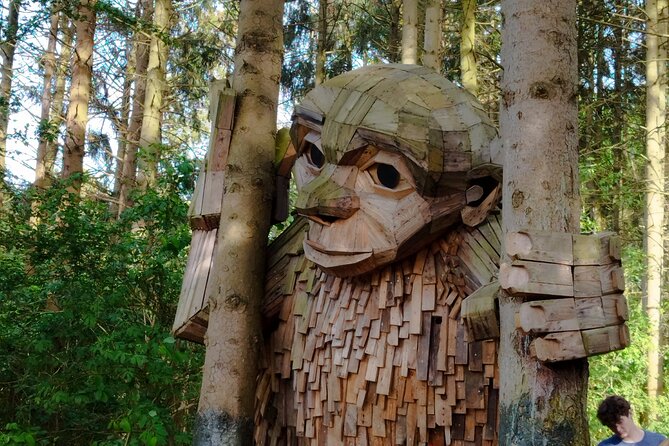
- Max 8 people keeps the hunt from feeling crowded, with a minibus setup that stays easy to manage.
- Crawl-friendly trolls: you can get into hands, mouths, and around the figures, not just stand and look.
- Short nature walks between parking areas and each giant, usually manageable for most people.
- Real workshop stories for the sculptures, including scrapwood materials and artist connections.
- Minibus comfort and WiFi can make the ride between stops feel like part of the day, not just transit.
- A scenic half-day that works well as an early afternoon reset from Copenhagen.
Why Copenhagen’s forgotten giants make a great half-day
This tour is basically a guided “find the giants” game, but with a real point: the trolls are big public art placed in nature, and they invite interaction. Instead of staring at art in a museum, you’re moving through parks and by water, then meeting each wooden character at human scale. That change of setting is the whole magic.
What makes it work especially well is the structure. You’re not spending hours driving, and you’re not getting dumped in an empty field with a vague map. The minibus moves you around the suburbs, and each stop gives you enough time to actually take it in—plus enough time to do the playful photo moments without feeling rushed.
If you like Thomas Dambo–style imagination—giants made from reused materials, placed with story and care—this hits the sweet spot. It’s family-friendly fun, but it still feels artful and thoughtful, not goofy for the sake of goofy.
You can also read our reviews of more tours and experiences in Copenhagen.



The minibus setup: meeting point, pacing, and group size
Your day starts at 10:00 am at CPH – Tours & Tickets, Colbjørnsensgade 15, 1652 København, Denmark, and you end back at the same meeting point. It’s designed to be easy to reach via public transportation, which matters in Copenhagen where taxis and parking can quietly eat your time.
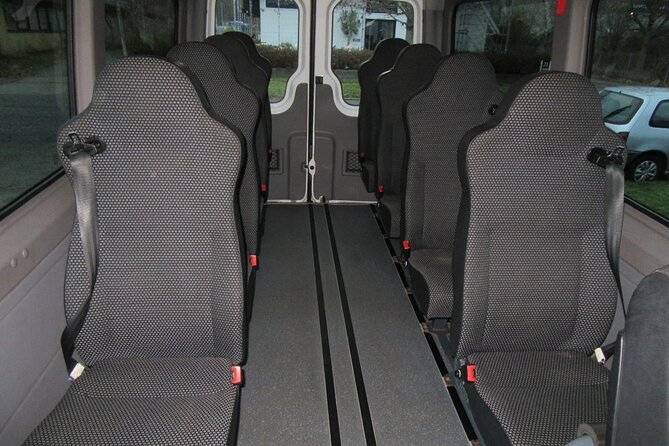
The group limit is 8 travelers, which keeps the vibe calm. Reviews note there’s typically a small group feel, and that the actual vehicle can seat under 10, so you’re not fighting for space. The in-between drives are short—think minutes, not hours—so the day stays cohesive. Once you’re walking, it’s short and simple rather than a long hike.
You’ll typically be looking at about four hours total, with roughly 30 minutes per giant. That’s a useful pacing choice: it gives you time for photos, reading any info the guide shares, and doing the crawl-through moments, without turning the day into a nonstop sprint.
Stop 1 (Hvidovre): Hill Top Trine and the viewpoint from her palms
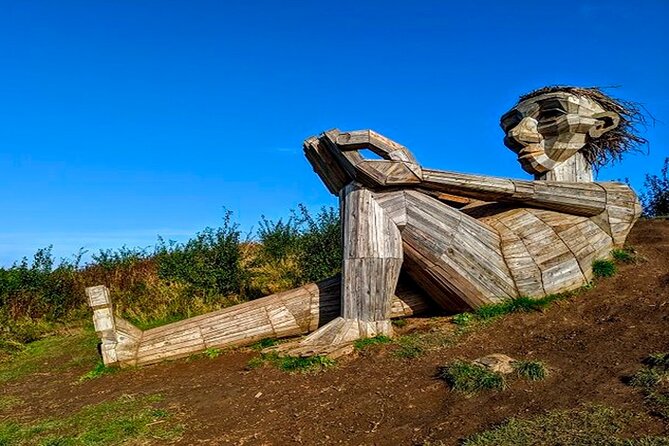
In Hvidovre, you meet Hill Top Trine, perched on a small hill. The best part here isn’t just seeing a giant wood figure—it’s climbing up so you can crawl into the hands and look out from a higher angle. That viewpoint over Avedøresletten is why this stop works: you get the troll first, then you get the scenery reward.
The time on site is short—about 30 minutes—so you’ll want to plan for quick photos and the hands-crawl moment rather than lingering to the point where you fall behind. On a sunny day, the hilltop angle is great for pictures. On a gray or rainy day, hills can feel slick, so it helps to bring shoes with decent grip.
One cool detail: Trine is named after a volunteer connected to other hidden giants. That kind of naming choice turns the sculptures into a community effort, not just a roadside attraction.
Stop 2 (Rødovre): Sleeping Louis, trees around him, and a mouth you can enter
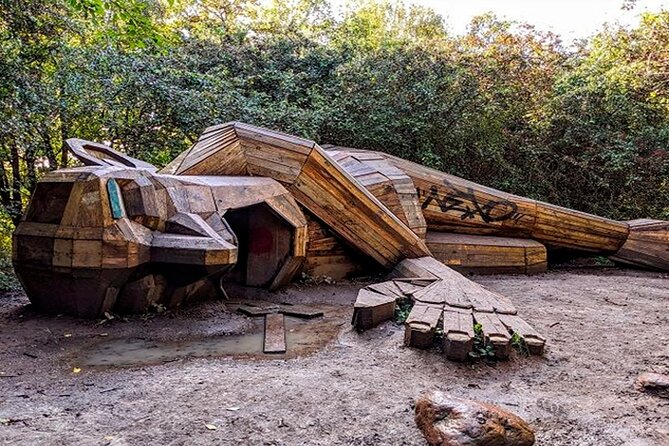
Next up is Sleeping Louis in Rødovre. He’s taking a nap on a hill in a tucked-away nature setting, covered by trees. This is the stop that leans hardest into playful interaction: you can crawl into his gaping mouth, then play or even settle in to rest inside.
The setting matters here. Unlike a “look at the statue” moment, Louis sits in a calmer, greener spot, so the whole visit feels like you’re stumbling into a storybook hideout. You’ll likely spend the full 30 minutes here doing the crawl-through fun, taking photos from different angles, and letting the guide’s explanation add context.
The main consideration is weather and surfaces. Since it’s a hill and a wooded area, you’ll want to be steady on your feet. If you’re traveling with kids, this is usually the stop that gets the biggest reaction—because it doesn’t just show you the giant, it invites you into him.
Stop 3 (Ishøj): Scar under the bridge and scrapwood made into art
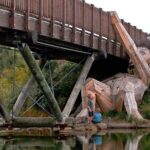
At Ishøj, you’ll meet scar under the bridge. This one has a different vibe: it’s made from scrapwood taken from a torn-down watermill and broken pallets from local industries. That “found materials” backstory is a big deal, because it explains why the troll feels grounded in the area rather than imported.
There’s also a human story behind the name. Scar under the bridge is named after an artist from Chile who visited Thomas Dambo and helped during the time the sculpture was being built. That connection helps you see the giants as collaborative work, shaped by people, not just wood and imagination.
This stop can be more interesting if you enjoy the construction side of art. You’re not just learning where the troll sits; you’re learning how the material history shaped the result. If the weather is damp, you might notice the wood character even more, because the materials feel less polished and more “real,” like they’ve lived a second life.



Stop 4 (Vallensbæk Municipality): little Tilde watching from the other side of the lake
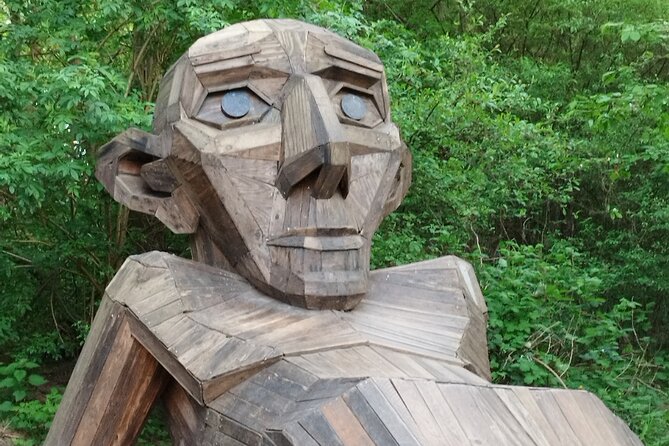
In Vallensbæk Municipality, you’ll find little Tilde in the Vallensbæk Mose area, a place known for wild nature and animal life. She’s positioned so you can often catch a glimpse of her at a distance, watching through trees across a small lake.
This is a more subtle stop than the mouth-and-hands interactions. It’s about the mood: sightlines, reflections, and the feeling that the giant is part of the environment rather than placed on top of it. The trees create natural framing, so even simple photos can look more composed here.
You’ll still get about 30 minutes, but I’d treat this one as your “slow down and look” stop. Try different angles. If you’re with kids, it can help to ask them to spot where Tilde is before you get close—this turns the walk into a little scouting mission.
The drawback? If you’re expecting big interactive moments, this stop may feel quieter. But if you like art that plays well with nature, it’s one of the strongest emotional visits.
Stop 5 (Taastrup): Teddy friendly, the water stream, and the helpful hand
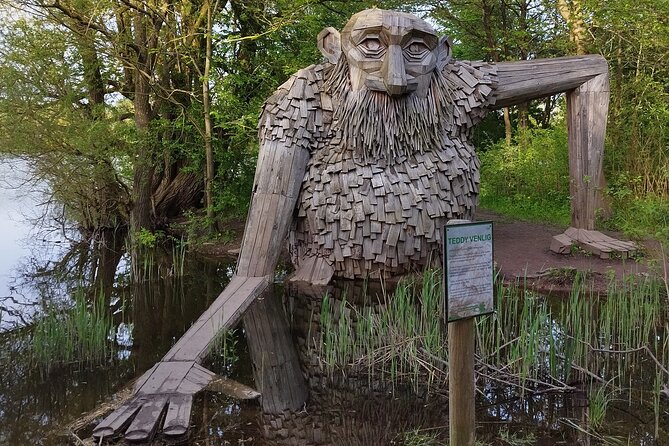
At Taastrup, Teddy friendly is built from local scrapwood, including cut-offs from cut-down trees used for his fur. That detail matters because it gives the sculpture texture and personality—you’re looking at reused material turned into something soft-looking and friendly.
He’s standing at a water stream by a lake, holding out his hand to help people cross. Even if you don’t do anything beyond walking the path and taking photos, the “helping” positioning makes the troll feel active. It’s a charming idea that also turns the setting into a story.
This stop is worth extra attention if you like the way the guide connects materials to meaning. Scrapwood doesn’t have to look rough; in the trolls, it becomes the defining feature, and Teddy friendly’s design shows that clearly.
The main practical note is simply to watch footing near water. You don’t need hiking boots, but you do want shoes that feel secure, especially if conditions are wet.
Stop 6 (Albertslund): Thomas On The Mountain and the big hilltop sit
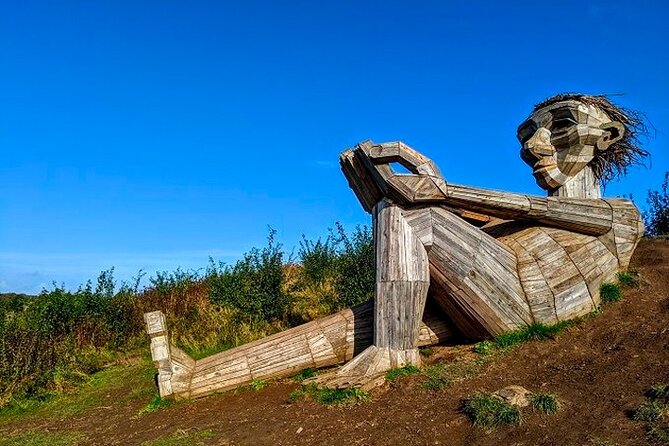
The final stop is Thomas On The Mountain in Albertslund. He’s up on top of a hill, chilling with long legs—plus a view that works for both him and you. The idea is that you’re not only meeting the troll; you’re also getting a finishing perspective over the municipality of Albertslund.
This is a great capstone because it gives you a sense of closure. After five stops of finding and interacting, you end with the “look out, breathe, and enjoy the wide sky” moment. The 30 minutes here helps you regroup too—photos, rest, and a calmer end to the hunt before heading back.
If you’re sensitive to hills or long outdoor standing, this stop is the one to pace yourself with. But it’s also the most “sit with your group” friendly, since the sculpture’s long legs create that natural place to pause and chat.
Price and value: is $129.59 worth it?
At $129.59 per person, this isn’t the cheapest way to see the giants. If you already have a car and you’re comfortable navigating rural-suburban roads and parking, you could probably DIY it.
So what are you paying for? Mostly three things:
- Convenience: the minibus does the moving between spots.
- Context: the guide connects each troll to material history and naming stories, including scrapwood sources and the artist connection in Ishøj.
- Time and comfort: the stops are paced, with short drives between them, plus a comfortable ride (and in practice, WiFi has been noted on the vehicle).
If you hate logistics on vacation, you’re the target audience. If you want a smooth morning with minimal hassle, a small group, and a guide who helps you notice details you’d miss alone, the price starts looking more fair.
If you’re on a tight budget and you’re already organized with transport, you’ll feel the cost more sharply. That’s the trade.
What I’d bring (and what to skip)
This is an outdoors-and-art tour, so small prep makes a big difference.
Bring:
- Comfortable shoes for short walks and one hill that can be more challenging in inclement weather
- Water, especially if you’re visiting in warmer months (there’s no stated provision of water on board)
- Sunscreen for daytime outdoor time
- A phone camera with enough battery for crawling moments and scenic views
Consider skipping:
- If you have limited or restricted mobility, because some locations involve walking from a nearby parking area and the terrain includes hills and outdoor paths.
Good news: this isn’t an all-day hike. Most visits are timed to keep the day manageable, with enough transit time that you’re not constantly exerting yourself.
Who this tour suits best in Copenhagen
This is one of those tours that works for multiple travel styles.
Families usually love it because the trolls are interactive. You don’t just look—you crawl, peer, and play. Solo travelers like it because the group size is small and the guide can keep momentum and conversation going without the day feeling awkward or rushed.
If you’re coming to Copenhagen mainly for museums and food, this is a helpful contrast. It gives you fresh air, nature settings, and a creative day out that still feels connected to art and place.
And if you’re the kind of traveler who enjoys materials—scrapwood sources, reused wood “fur,” and how makers name their work—this will feel satisfying, not just cute.
Should you book the Six Forgotten Giants Trolls Hunt with Minibus?
I’d book it if you want a guided, low-stress way to see the trolls around Copenhagen with a small group, comfortable rides between stops, and enough time at each location to do the fun parts. The art-material stories and the chance to crawl into the giants make it feel more than a quick sightseeing checklist.
I wouldn’t rush to book if you’re cost-driven and you already have a car plus a plan. In that case, you might feel the price more than you feel the value.
My practical call: book it if you want a smooth half-day reset with clever art interactions and countryside calm, not if you want the cheapest possible way to tick off six wooden statues.
FAQ
How long is the Six Forgotten Giants Trolls Hunt with Minibus?
It runs about 4 hours.
What time does the tour start, and where do I meet?
It starts at 10:00 am at CPH – Tours & Tickets, Colbjørnsensgade 15, 1652 København, Denmark.
How many people are on this tour?
The tour has a maximum of 8 travelers.
Is the tour offered in English?
Yes, it is offered in English.
Are admission tickets included for the troll stops?
Yes. The tour indicates admission ticket entry is free at the stops.
Is lunch included?
No, lunch is not included.
What should I bring for the walk?
Comfortable shoes and water are a good idea, since there is some walking between stops and you will be outdoors for several hours.
What happens if the weather is poor?
This experience requires good weather. If it’s canceled due to poor weather, you’ll be offered a different date or a full refund.