REVIEW · COPENHAGEN
Copenhagen Architecture and Sustainability Tour with local Guide
Book on Viator →Operated by Tropical Bikes · Bookable on Viator
Copenhagen looks different when you’re pedaling past it. This 3-hour, eco-focused architecture tour ties sustainability to real places, not slides. I especially like the bike-first approach (you cover serious ground without rushing) and the small-group feel capped at 15. The one catch: in summer, some waterfront areas can get crowded, especially near the first main stop.
You’ll ride with a local guide and learn what to notice—how buildings share space, how bridges stitch neighborhoods together, and how parks manage stormwater. If you’re short on time but still want something beyond the classic sights, this fits well. Just plan on about 11 km of cycling overall and come with a moderate fitness level.
In This Review
- Key things to know before you go
- Riding Copenhagen: why architecture makes sense at bike speed
- Where the tour starts and how the day flows
- Stop 1 and 2: Blox and Lille Langebro, sustainability you can point at
- Stop 3 and 5: Havnebadet Islands Brygge and DR Koncerthuset
- Stop 4 and 6: Tietgen Residence Hall and Amager Fælled’s complicated past
- Stop 7: Cykelslangen and the logic of bike-first bridges
- Stop 8 and 9: Enghave Park and Folkehuset Absalon, planning for people and rain
- Stop 10 and 11: Kødbyen’s industrial planning and Israels Plads food culture
- Stop 12: Oerstedsparken’s reuse of old defenses
- The cycling time that links it all together
- Price and value: what you get for $72.57
- Who this tour fits best (and who should pass)
- Planning tips for a smoother ride
- Should you book this Copenhagen Architecture and Sustainability Tour?
- FAQ
- How long is the Copenhagen Architecture and Sustainability Tour?
- About how far do you cycle during the tour?
- Is the tour offered in English?
- What group size should I expect?
- What’s included in the price?
- Are there admission fees at the stops?
- What bike upgrades are available for an extra cost?
- What happens if the weather is bad?
- Can I cancel and get a full refund?
Key things to know before you go
- Small group (15 max) means the guide can slow down when questions come up.
- Mostly free stops keeps your budget under control while you still get excellent architecture context.
- 11 km by bike is a real distance, but it’s spread across a guided route.
- English-speaking local guidance helps you connect the dots between design and daily life.
- Eco-minded themes show up in housing, bridges, parks, and reuse projects—not just “green branding.”
- Cycle-only harbor crossings give you a practical view of how Copenhagen prioritizes bikes.
Riding Copenhagen: why architecture makes sense at bike speed
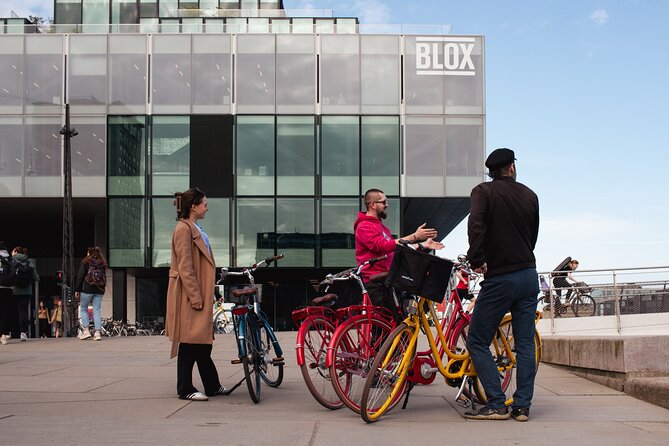
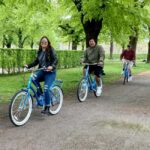
This tour is built around how Copenhagen actually moves—by bike. You’re not just sightseeing; you’re moving like a local and getting a feel for the city’s design choices. With roughly 11 km on the route, it’s a good option when you want to see more than a walking tour can manage in the same time.
The pace also matters. You’ll cover multiple areas that normally require separate trips, and you’ll still have quick stops to understand what you’re looking at. That timing setup is a big part of the value of a guided loop: you don’t waste time figuring out what matters.
And yes, you’ll get direction. The tour includes bicycle use, and helmets are available for free upon request, which is a nice practical touch for visitors who didn’t pack one. The goal is that you can cycle confidently with a guide at hand.
You can also read our reviews of more guided tours in Copenhagen
Where the tour starts and how the day flows
You meet at Vester Voldgade 2, 1552 København and the tour ends back at the same spot. A mobile ticket is included, and the tour is offered in English.
From there, the route gradually expands from landmark architecture and harbor transformation into housing, community spaces, parks, and the city’s industrial-meets-food districts. It’s designed so you spend most of the time cycling between meaningful stops, then briefly pause to connect the architecture to the city’s sustainability story.
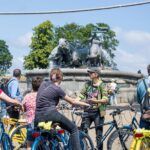
You’ll also notice the group size in action. With a cap of 15, it’s easier for the guide to keep everyone together on bike-friendly roads rather than turning into a long, spread-out line.
Stop 1 and 2: Blox and Lille Langebro, sustainability you can point at
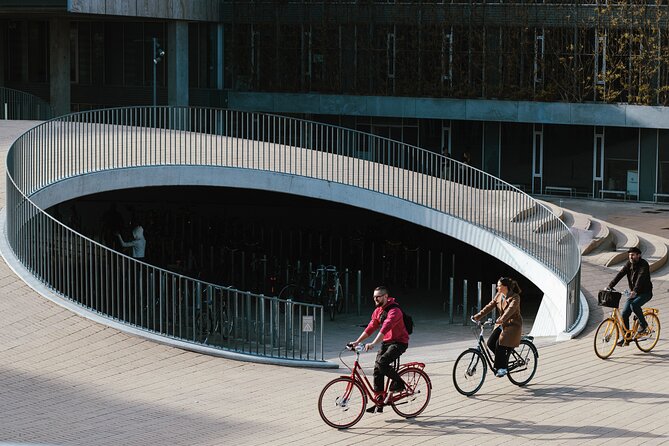
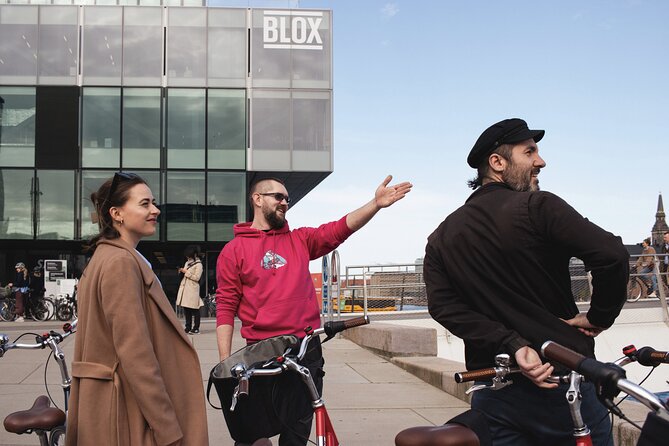
Blox (the tour’s first major stop) is a mixed-use building developed with sustainability in both technical and social terms. That matters because it shifts the conversation from energy ratings to how people share space and how a building supports a community. Blox is also tied to architecture education via an active renter, DAC, which puts on exhibitions about Copenhagen architecture.
At the next stop, you’ll switch from building-focused sustainability to city planning with Lille Langebro. This bridge connects pedestrians and cyclists across the harbor, and it’s part of a broader push to turn Copenhagen’s historic merchant and navy harbor into a place people actually use in their free time. In practice, you get to see how infrastructure can reshape daily life, not just move traffic.
If you like architecture that’s readable from street level—materials, purpose, and the way people flow—these two stops do a lot of work early in the tour.
Stop 3 and 5: Havnebadet Islands Brygge and DR Koncerthuset
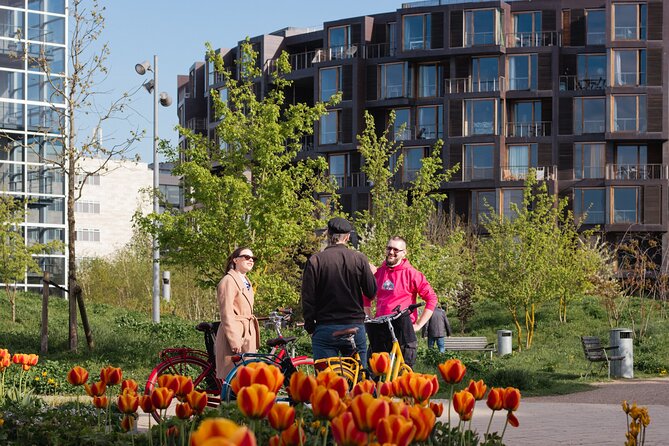
At Havnebadet Islands Brygge, you’re looking at how Copenhagen reinvented its relationship with the harbor. When the Harbour Bath opened in 2003, it marked a major change in how the city uses water—turning waterfront space into something active and public rather than purely industrial or naval.
Then the route moves into a different kind of public building: DR Koncerthuset. This concert hall has 1800 seats and is home to the Royal Symphony Orchestra, plus it includes several smaller stages and recording studios. The sustainability angle here isn’t only about environmental tech; it’s also about cultural infrastructure—how a city invests in spaces that create shared experiences.
If you’re the kind of person who likes architecture that carries a social function, these stops help you see the wider meaning of sustainability: safe public access, community use, and long-term investment in public life.
Stop 4 and 6: Tietgen Residence Hall and Amager Fælled’s complicated past
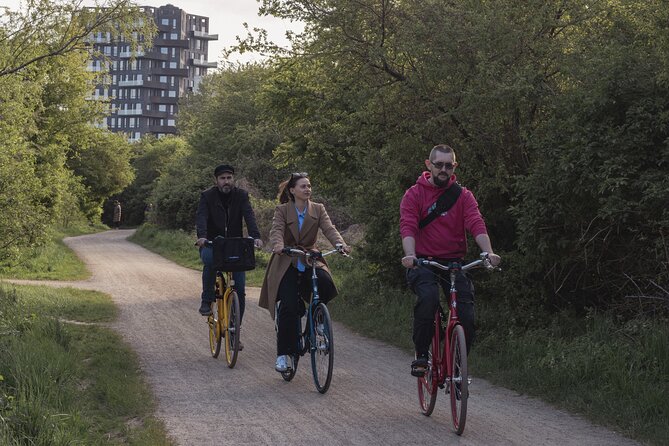
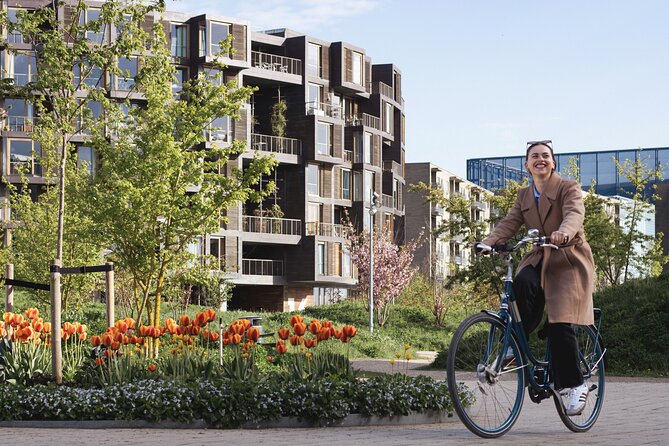
The Tietgen Residence Hall is a strong example of social sustainability. The building is designed to support personal development for its 400 inhabitants, while also balancing the individual and the community. The rooms are relatively small and include a washroom, but the living rooms, kitchens, and many common amenities are shared by some or all residents.
That shared-space concept is the key. It’s architecture as behavior design: it nudges people toward cooperation and shared daily routines instead of isolating everyone behind a door.
Then the tour heads to Amager Fælled, where Copenhagen shows a rare pocket of nature inside a city that’s constantly developing. Here’s where context gets interesting. Long ago, it served as military training grounds and a shooting range, then it became a garbage dump afterward—an old tradition that Copenhageners joke about as lorteøen, meaning shit island. Today, it presents as relatively untouched nature, even though much of the area sits on artificially reclaimed land.
That contrast is exactly what makes this stop valuable. You’re not getting a “pretty park only” experience. You’re getting a lesson in land use over time and how cities deal with messy histories.



Stop 7: Cykelslangen and the logic of bike-first bridges
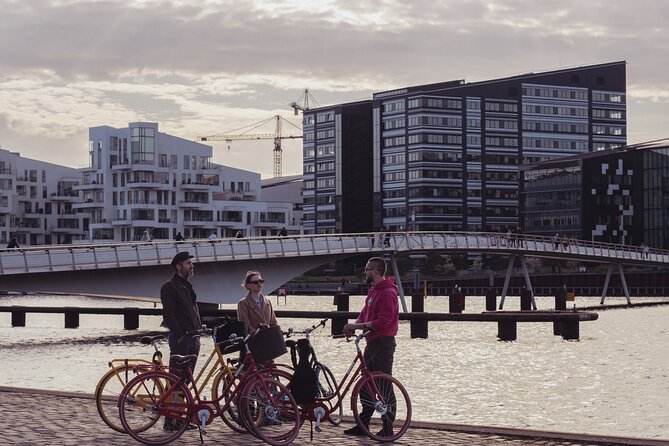
In Copenhagen, bridges aren’t just crossings; they can be a statement about priorities. Cykelslangen, together with the nearby Bryggebroen, were among the first new harbor crossings built exclusively for cyclists. That exclusivity changes the feel of the ride: fewer mixed signals, smoother flow, and a route designed around bike speed and safety.
When you cycle onto a dedicated bike crossing like this, the sustainability story becomes practical. It’s not only about the environment; it’s also about reducing friction—fewer cars, less conflict, and safer movement for people doing the everyday work of getting around.
This stop is quick, but it’s one of those moments where you can suddenly understand why Copenhagen invests so heavily in bike infrastructure.
Stop 8 and 9: Enghave Park and Folkehuset Absalon, planning for people and rain
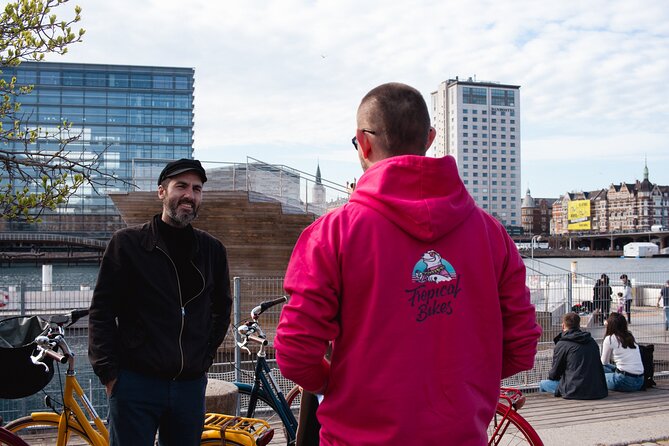
Next up is Enghave Park, built in the late 1920s on the site of former allotment gardens. It has a neoclassical layout, and it includes a bandstand, playground, and sports fields. Between 2017 and 2019, it underwent a complete redesign aimed at playing a major role in controlling torrential rains in Copenhagen.
So you’re seeing climate adaptation in action. This is what sustainability looks like when it’s integrated into everyday public spaces: parks that handle stormwater and help protect the city during heavy weather.
Then the tour turns to community life at Folkehuset Absalon. This is a former church converted into a privately run community center. The idea here is reuse with intention—keeping a substantial structure in service of people rather than letting it sit unused or turn into something less community-focused.
If you like architecture that supports real routines—sports, public gatherings, and community services—these two stops connect the dots nicely.
Stop 10 and 11: Kødbyen’s industrial planning and Israels Plads food culture
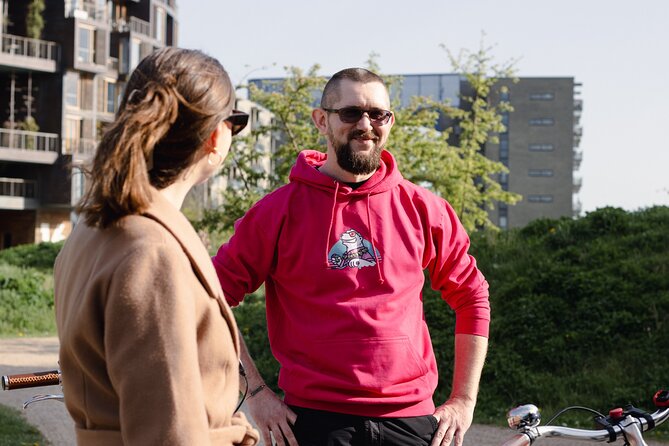
At the Meatpacking District, known as Kødbyen, you’ll learn how the city planned for healthier conditions as Copenhagen grew. The meat business expanded through additions over time, and the area now showcases industrial architecture from the 19th and 20th centuries. Even if you don’t care about meat processing history, you’ll start noticing how industrial design can be tied to public health thinking and urban growth.
Then the route shifts into modern food meeting points at Israel’s Square (Israels Plads) and the adjacent Torvehallerne. This area is known today as a hub for CPH food culture, but the land has had multiple roles. There was a farmers market here after a strict no-building policy ended in the walled city era in the 1890s, and later it became a large parking lot from the 1950s until redevelopment patterns changed.
This pairing is smart. You get industrial architecture on one side, food culture and public gathering on the other. It’s a reminder that cities reuse space constantly, just with different expectations over time.
Stop 12: Oerstedsparken’s reuse of old defenses
Ørstedsparken is an early example of reuse. It used to be part of the city’s defenses outside the walls, and after the city wall was demolished, the area became a park. Parts of the former moat were kept as a lake inside the park, and the terrain features dramatic hills and crooked paths.
What I like about stops like this is that you can still feel the older geometry of a city even when it’s been repurposed. You’re not just seeing a green space; you’re seeing a historic layer turned into public walking and meeting space.
The stop is brief, but it helps you understand how Copenhagen keeps cultural structure while still evolving the city for today.
The cycling time that links it all together
After the last major stop, you’ll spend the remaining time cycling between locations before finishing back at the meeting point. This is where the tour feels efficient. Instead of forcing long conversations while stopped, you get short, purposeful pauses, then move on while everything is still fresh.
The guide’s job here is big: keeping the pace moving, choosing bike-friendly routes, and steering you toward the details that explain the city. If you’re hoping for a tour that doesn’t waste your attention span, this structure usually works.
Price and value: what you get for $72.57
At $72.57 per person, the price is easier to justify when you look at what’s included. You’re getting a local guide, a bicycle, free helmets upon request, and toilets at the store. You also get a mobile ticket, which helps you avoid friction on the day.
The biggest value booster is that so many of the stops are free from an admission-fee standpoint. That means you’re paying for interpretation and bike time, not an entry-ticket stack.
Is it worth it for everyone? If you hate cycling, skip it. But if you’re comfortable riding about 11 km and want architecture you can experience firsthand, this is a pretty strong deal—especially because you’re looking at sustainable design through housing, bridges, public spaces, and infrastructure rather than only through monuments.
Who this tour fits best (and who should pass)
This is ideal for you if you:
- Want more than one neighborhood covered in a single afternoon.
- Like architecture tied to daily life—housing, public access, and reused spaces.
- Prefer learning with a guide over reading alone.
It may not fit if you:
- Struggle with moderate cycling distance and city bike traffic patterns.
- Are expecting lots of long indoor museum time (this is primarily an outdoor, ride-and-look experience).
The guide quality is a big part of why people recommend it. Names mentioned in past tours include Jörn and Julia, both noted for being friendly, competent, and good at explaining how Copenhagen’s development connects to what you can see right now.
Planning tips for a smoother ride
A few practical things make a difference:
- Bring a bit of water and wear something you can ride in comfortably.
- If you’re sensitive to sun or wind, pack basic weather gear since the route is outdoors.
- If you need extra bike features, those extras like phone holders and baskets are available for an additional fee. E-bike and e-cargo upgrades exist too, but they cost extra and require advance reservation.
Also, the tour requires good weather. Copenhagen can be changeable, so it’s smart to check the day-of conditions.
Should you book this Copenhagen Architecture and Sustainability Tour?
Book it if you want an architecture tour that actually matches how Copenhagen works: by bike, with quick stops and real explanations of sustainability in housing, harbor design, reused buildings, and parks. The small group size and guide-led pacing are a big deal here, and the free admission stops help you stretch your budget.
Skip it if you’re looking for heavy indoor museum content, or if cycling 11 km sounds like too much. In Copenhagen, the people who get the most out of this type of tour are the ones who enjoy moving through neighborhoods and noticing how design shapes everyday life.
FAQ
How long is the Copenhagen Architecture and Sustainability Tour?
The tour is approximately 3 hours, and the published hours include the time spent cycling between stops.
About how far do you cycle during the tour?
There is roughly 11 km of biking between stops during the experience.
Is the tour offered in English?
Yes, the tour is offered in English.
What group size should I expect?
The tour has a maximum of 15 travelers.
What’s included in the price?
It includes bicycle use, toilets at the store, a local guide, and free bike helmets upon request. Children bikes in different sizes are also available if you contact in advance.
Are there admission fees at the stops?
The tour’s listed stops are admission free.
What bike upgrades are available for an extra cost?
Bike extras like phone holders and baskets cost extra. Special upgrades listed include cargo/tandem (449 DKK), e-bike (249 DKK), e-cargo (649 DKK), and a child-seat (119 DKK).
What happens if the weather is bad?
The tour requires good weather. If it’s canceled due to poor weather, you’ll be offered a different date or a full refund.
Can I cancel and get a full refund?
Yes. You can cancel up to 24 hours in advance for a full refund. If you cancel less than 24 hours before the start time, the amount paid is not refunded.