REVIEW · COPENHAGEN
Vesterbro Tour With Beer & Pub Visits – Max 10 People
Book on Viator →Operated by Copenhagen By Mie · Bookable on Viator
Copenhagen’s Vesterbro has a beer secret. This 3-hour, max-10-person walk strings together classic Danish brown bars and modern craft stops, with neighborhood history you can actually use while you explore on your own. You’ll start near Copenhagen Central Station, then wind through streets locals associate with rebellion, reinvention, and the city’s very practical sense of progress.
I love how the route builds contrast: the down-to-earth feel of Freddy’s Bar paired with the design-minimal, beer-obsessed energy of Mikkeller Bar. I also love that you get three beer tastings included plus personal guidance for what to do next, so the tour ends before the question of where to go eats up your evening.
One thing to consider is comfort: one of the bar stops may allow indoor smoking, so if that matters for you, plan accordingly and ask your guide what to expect.
In This Review
- Key highlights
- Where the tour starts at 3pm (and how to find your guide fast)
- Copenhagen Central Station: getting your bearings before you drink
- Istedgade: a complicated past that you can still walk through safely
- Freddy’s Bar: the classic brown bar break
- The Meatpacking District walk: old buildings turned into local favorites
- Viktoriagade: the neighborhood’s rebellious marker (and a tiny allowed sketch)
- Mikkeller Bar: craft beer origin energy, right after the brown bar
- A quick theatre-and-building detour on the way toward Westend
- Westend and sanctioned graffiti: street art with municipal permission
- Skydebanehaven: the gate that feels castle-like, plus the Parrot phrase
- Sønder Boulevard: the late-1990s planning shift you can walk through
- Fermentoren Beer Bar: the final pour and a flexible linger
- Price and value: what $72.59 actually buys you
- Smoking and comfort: a real consideration for one bar stop
- Guides make the difference: what you can expect from a strong host
- Where to go after: finishing near the Meatpacking District
- Who should book this Vesterbro beer-and-pubs walk
- Should you book this Vesterbro Tour With Beer & Pub Visits?
- FAQ
- How long is the tour?
- How big is the group?
- What language is the tour offered in?
- What’s included in the beer tastings?
- Where do you meet and where does the tour end?
- Is the tour suitable for children or teens?
- Is smoking a concern on the tour?
- What should I wear or bring?
- Can I cancel for a full refund?
Key highlights
- Max 10 people: small group pace, easier conversation with your guide
- Three included beers: one traditional Danish beer plus two craft pours
- Brown bar to craft beer contrast: Freddy’s Bar vs Mikkeller Bar, back-to-back
- Vesterbro history you can feel: from Istedgade’s shadowy past to 1990s planning changes
- Guided photo-worthy detours: Viktoriagade, Westend graffiti art (sanctioned), and Skydebanehaven
- A good ending location: you finish near the Meatpacking District and can keep going
Where the tour starts at 3pm (and how to find your guide fast)
The tour starts at Reventlowsgade 7, 1651 København, Denmark, with a 3:00 pm departure. Your guide arrives about 10 minutes early, so if you get there early, you can settle in and avoid that last-minute scramble. It’s also near public transportation, which helps if you’re coming from another part of town.
You’ll end at Halmtorvet 27E, 1700 København, in the orbit of the Meatpacking District. That matters because it means the “finish” isn’t some faraway corner—you’re dropped close to restaurants, bars, and an easy evening plan.
You can also read our reviews of more food & drink experiences in Copenhagen

Copenhagen Central Station: getting your bearings before you drink
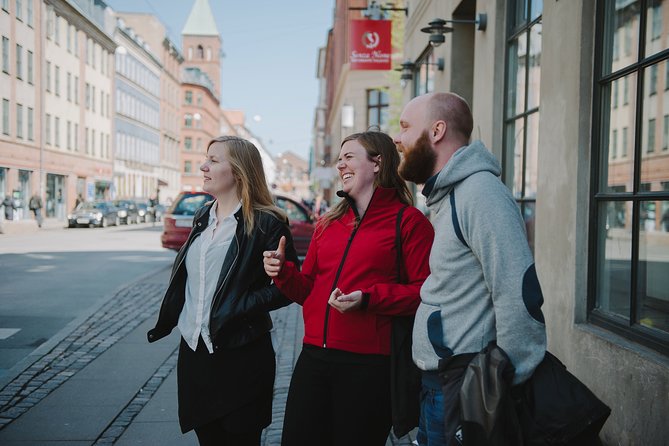
You meet by Copenhagen Central Station, right in front of gates tied to the station’s earlier role as a key entrance point. From there, your native English-speaking guide sets the stage for how the area’s identity formed. This is a smart warm-up because Vesterbro can feel like a patchwork—history, reinvention, and locals who don’t treat their streets like museum props.
This first stop is short—about 15 minutes—but it sets up the rest of your walk. You start noticing how the neighborhood’s character is tied to planning choices, work life, and the city’s tendency to sort things into different layers rather than erase them.
Istedgade: a complicated past that you can still walk through safely
Next you head to Istedgade, a street strongly associated with Denmark’s former red light district. The story here is two-sided: it has a notorious reputation connected to drugs and prostitution, yet it’s also described as safe and frequently used today. Your guide explains how Copenhagen managed to keep the city’s “shady elements” as part of the neighborhood identity, using government programs rather than pretending the past didn’t happen.
Practical payoff: this stop helps you decode what you’re seeing. You’re not just staring at a street; you’re learning why the neighborhood evolved the way it did and why some parts of the city still carry that edge without turning into chaos.
Freddy’s Bar: the classic brown bar break
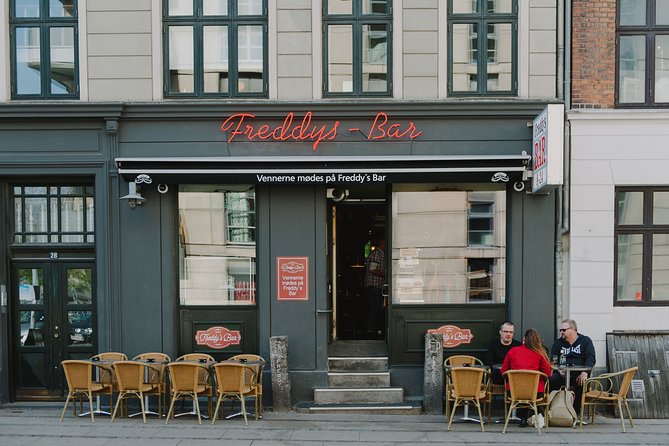
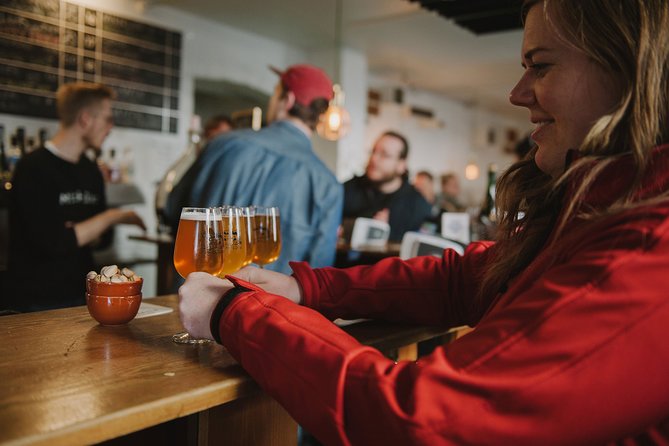
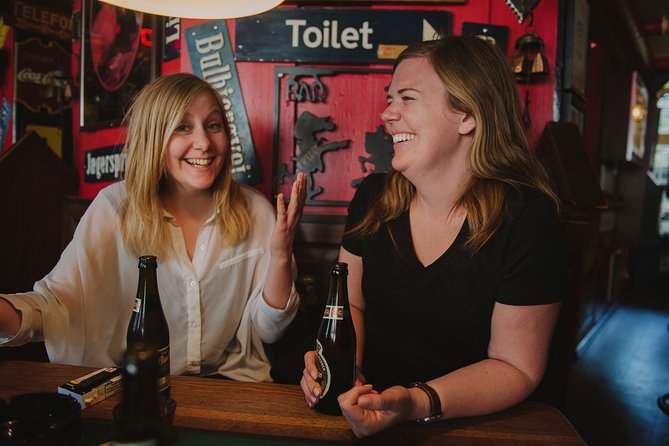
Your first real beer stop is Freddy’s Bar, a traditional Danish brown bar that locals love. You’ll get a classic pilsner and a chance to sit in the common-room atmosphere that reflects older Copenhagen bar culture. The guide connects it to the working-class crowd after work—stories tied to Carlsberg workers and the social role these bars played.
A small heads-up from past experiences on this tour: one stop may involve second-hand smoke, and in at least one bar the smoking can be indoors. If you’re sensitive, consider positioning yourself near the door or ask your guide which venues are best to choose an outdoor seat.
The Meatpacking District walk: old buildings turned into local favorites

After Freddy’s, you walk through the Meatpacking District. This is where the tour shifts from “older Copenhagen mood” to “new Copenhagen reuse,” walking through three areas and explaining how older structures gained new life. The buildings have earned design awards for their contemporary use, but the key point is the transformation didn’t delete the original texture of the place.
This stretch is great if you like architecture with a pulse—places that look intentional now, but still tell you they used to be something else. It’s also a good mental break before the next beer stop, since your brain gets a breather between tastings.
You can also read our reviews of more drinking tours in Copenhagen





Viktoriagade: the neighborhood’s rebellious marker (and a tiny allowed sketch)
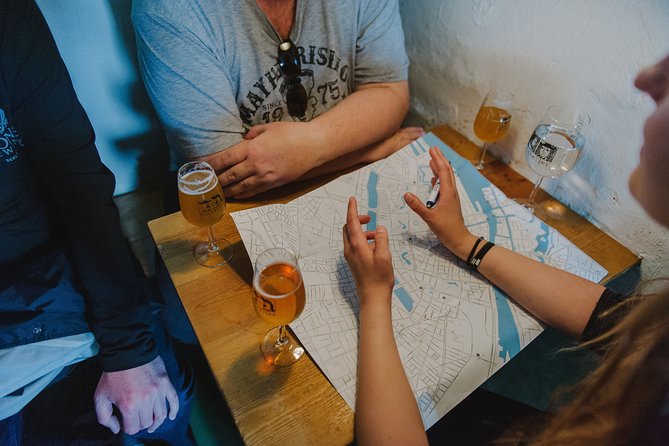
You then reach Viktoriagade, described as Vesterbro’s heart in a way that might not look dramatic at first glance, but matters a lot to locals. It connects to the neighborhood’s rebellious and chaotic past. If you’re lucky, your guide may even have a pen, and you can make your own little drawing—explicitly noted as allowed.
Even if you skip drawing, this stop changes how you look at street art and street marks. It’s not just decoration. It’s a sign that locals have opinions, and those opinions are visible.
Mikkeller Bar: craft beer origin energy, right after the brown bar
Next comes Mikkeller Bar, where the mood shifts again. The guide tells the story of two siblings with a strong beer drive who turned that interest into a hugely popular brand. You get to taste one of the four initial beers tied to that breakthrough era, and you’ll also feel the contrast between the dive-like comfort of the earlier stop and Mikkeller’s more minimal setup.
This is one of the most valuable parts of the tour because it teaches you the difference between “beer as routine” and “beer as craft identity.” If you’re new to Copenhagen’s beer scene, you’ll walk away knowing why people talk about these places with such confidence.
A quick theatre-and-building detour on the way toward Westend
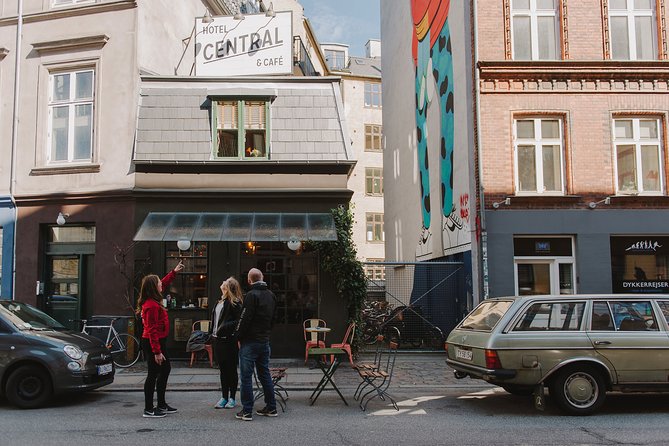
Between major bar stops, the route includes a short walk past a new theatre, where the guide points out a minor detail that carries symbolism when moving from the Vesterbro side toward Frederiksberg. You also pass a charming smaller building described as having an upper floor and one window, with a specific story tied to the neighborhood’s past.
These details take only a few minutes, but they work like glue. Without them, the walk would be mostly about drinking and broad neighborhood labels. With them, you learn to look for small design choices and historical references that most people miss while they’re just following the sidewalk.
Westend and sanctioned graffiti: street art with municipal permission
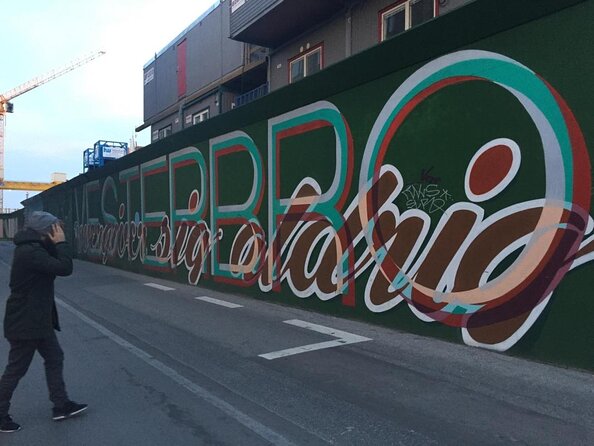
You reach Westend and take a right turn into what’s framed as a French quarter feel. Here you see graffiti pieces made by graffiti artists sanctioned by the municipality. Your guide explains why allowing designated graffiti matters in a historical city like Copenhagen, where older parts of town still carry identity and rules.
This stop is useful even if you don’t care about street art. It gives you a clearer sense of how Copenhagen handles “messy” expression without letting it turn into random destruction everywhere.
Skydebanehaven: the gate that feels castle-like, plus the Parrot phrase
Then comes Skydebanehaven. You’ll open a gate where you might expect something castle-like, but you don’t find a castle—your guide explains why. You also learn about a seemingly pointless wall built next to a green haven and playground, tied to the royals and how they used the space.
One of the best trivia-style moments on the route is the origin of the Danish phrase To Shoot The Parrot, linked to this place. It’s the kind of story that makes you notice how Copenhagen’s language and folklore are attached to real locations.
Sønder Boulevard: the late-1990s planning shift you can walk through
As you continue, you’re guided toward an area where Vesterbro changed significantly for the better after planning processes shifted in the late 1990s. Sønder Boulevard is described as once polluted and heavily trafficked, then transformed into one of locals’ favorite places to relax with green leisure spaces.
This is a good reminder that Copenhagen doesn’t only preserve. It also repairs and retools. You’ll feel it here because you’re literally walking through the outcome—space designed for people, not just cars.
Fermentoren Beer Bar: the final pour and a flexible linger
Your last beer stop is Fermentoren Beer Bar. If weather allows, you may decide to have the concluding beer outside first; if not, you move inside. The vibe is described as a mix of the homely feeling from the earlier bar and the newer craft beer direction from the modern side of the tour. There are many taps that can change every week, which means your best plan is to follow your guide’s recommendation or let the selection choose for you.
You can stay as long as you like. If you want, your guide can also share dinner recommendations nearby, so the tour doesn’t just end—it hands you momentum for the rest of your evening.
Price and value: what $72.59 actually buys you
At $72.59 per person for about 3 hours, the value comes from the mix of:
- a small group (max 10),
- native English guidance,
- three included beers (one traditional Danish beer plus two craft beers), and
- local, personal recommendations so you don’t waste time later.
If you priced it out the hard way—three beers plus a private-style neighborhood walk with a guide—it would likely cost more than the ticket in most cities. Here, you’re paying for an efficient route plus context that makes the places more than just photo stops.
The trade-off is that you’re paying for the structure. If you already love wandering alone and don’t care about background, you might feel like you spent money just to move from bar to bar. But if you like knowing what you’re looking at while you sip, this route’s pacing is built to keep you from getting bored.
Smoking and comfort: a real consideration for one bar stop
One practical caution from tour experiences: indoor smoking may be allowed at one of the stops, and you could get second-hand smoke exposure. Another person specifically called for more advance warning, and the tour response indicates the “brown bar” scene can be part of the snapshot—even if it’s not comfortable for everyone.
What you should do: if smoke is a deal-breaker, mention it when you meet your guide and ask which venue will be the toughest for that. If you have asthma or similar issues, prioritize outdoor seating when possible and keep your plan flexible.
Guides make the difference: what you can expect from a strong host
Names that show up in past runs include Liva, Kenneth, Oskar, Lucas, Kim, Jaqueline, and Kenny. The common thread isn’t just beer knowledge; it’s how they turn street scenes into stories that connect to daily life. People also mention that the guides keep the vibe friendly and not rushed, and that you leave with practical recommendations for what to do next.
If you want maximum value, pick a guide who enjoys conversation, because this tour is built on dialogue—what you notice, what the guide points out, and how the neighborhood’s past links to what’s happening now.
Where to go after: finishing near the Meatpacking District
Because the tour ends at Halmtorvet 27E, you’re positioned near a cluster of food and evening energy in the Meatpacking District. Your guide may also offer dinner recommendations, so you’re not staring at a menu with zero context.
This part is easy: you can either stay at the same bar area for another drink, or move into the restaurant streets and pick something based on what your guide suggested. Either way, you’re ending at a place designed for the next step, not the last step.
Who should book this Vesterbro beer-and-pubs walk
This works best for you if you want:
- a history + beer mix that doesn’t feel like a classroom,
- a chance to experience different bar styles in one afternoon,
- a small-group Copenhagen neighborhood view,
- and guidance for what to try after the tour ends.
It may not be ideal if you strongly dislike beer tasting formats, need a fully smoke-free environment, or prefer to stay away from neighborhoods with a complicated reputation—even if the walk described here is framed as safe and frequent today.
Should you book this Vesterbro Tour With Beer & Pub Visits?
I’d book it if you want a fast, fun way to learn Vesterbro’s layers while tasting real Copenhagen beer. The best part is the built-in contrast—brown bar culture to craft beer origin stories—paired with specific neighborhood details that help you walk around afterward with better context.
I’d skip it if you’re only chasing the cheapest beer or you’re extremely sensitive to smoke. In that case, look for a beer tour that doesn’t involve bar interiors or ask for a smoke-comfort plan before you commit.
FAQ
How long is the tour?
The tour lasts about 3 hours.
How big is the group?
It’s limited to a maximum of 10 travelers.
What language is the tour offered in?
The tour is offered in English, with a native English-speaking guide.
What’s included in the beer tastings?
You get 1 traditional Danish beer and 2 craft beers.
Where do you meet and where does the tour end?
You meet at Reventlowsgade 7, 1651 København, Denmark, and the tour ends at Halmtorvet 27E, 1700 København, Denmark.
Is the tour suitable for children or teens?
Passengers under 18 are not permitted on this tour.
Is smoking a concern on the tour?
One of the bar stops may involve second-hand smoke because indoor smoking can be allowed at a venue used to show the brown bar style.
What should I wear or bring?
Wear comfortable footwear for walking, and bring an umbrella or rain jacket in case of rain.
Can I cancel for a full refund?
Yes. Free cancellation is available up to 24 hours in advance for a full refund.