REVIEW · COPENHAGEN
Malmö & Lund Tour, Crossing the Øresund Bridge to Sweden
Book on Viator →Operated by Enjoy The Tours ApS · Bookable on Viator
Sweden in one day, without the hassle. This Malmö and Lund trip turns Copenhagen into a quick jumping-off point, with a comfortable ride and Øresund Bridge crossing that frames the whole day. The day’s narration and stops are designed so you get both guided context and room to look around on your own, and guides such as Mario are known for keeping the group engaged.
I especially like the way the itinerary splits time between big highlights and wander time. You get to roam Malmö around Stortorget and Lilla Torg at street level, then shift gears to Lund’s cathedral and university quarter. A second win is the mix of architecture and stories, from Calatrava’s Turning Torso to Lund Cathedral’s features like its astronomical clock.
One possible drawback: this is a taste-first day. If you want deep museum time or long guided walking tours, the schedule can feel a bit brisk, and some entrances are not included.
In This Review
- Key highlights you can’t miss
- Crossing the Øresund Bridge from Copenhagen: the scenic setup
- Malmö’s Stortorget and Lilletorget: square life with a café rhythm
- Södergatan, Åhléns, and Hansa shopping: an easy way to shop like a local
- Turning Torso in Malmö: what you’ll see and what you won’t
- Malmohus in Malmö: fortress origins and optional museum time
- Lund Cathedral: a 12th-century focus with standout details
- Lund University and Lundagård Park: where the medieval core meets campus life
- Kulturen open-air museum and the lunch-friendly Lund layout
- Jakriborg: a maze-like break inspired by Hansa-style towns
- Malmö’s Lilla Torg and the Form/Design Center
- Price and logistics: what the $114.04 value really means
- Who should book this Malmö & Lund day trip
- Should you book the Malmö & Lund Tour?
- FAQ
- How long is the Malmö & Lund tour?
- Do I get an audio guide?
- Is the Øresund Bridge crossing included?
- Is there WiFi on the vehicle?
- Are there options for hotel pickup?
- Is lunch included in the price?
- Are museum entrances included?
- What should I bring for the day?
Key highlights you can’t miss
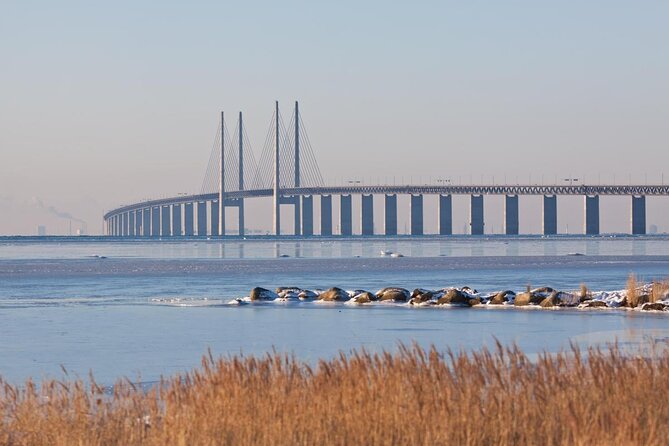
- The Øresund Bridge crossing sets the tone, with big views and a smooth ride in an air-conditioned, WiFi-equipped vehicle
- Stortorget + Lilletorget gives you classic city-square energy, plus an easy walk into shopping streets
- Lund Cathedral is a real anchor stop, including sights like the astronomical clock and towers
- Turning Torso is seen from the outside for photos and skyline impact, with Calatrava’s design details explained
- Lundagård Park and nearby landmarks help you connect the university feel to the medieval core
- Jakriborg adds an unusual street-plan break, inspired by historical Baltic and North Sea town architecture
Crossing the Øresund Bridge from Copenhagen: the scenic setup
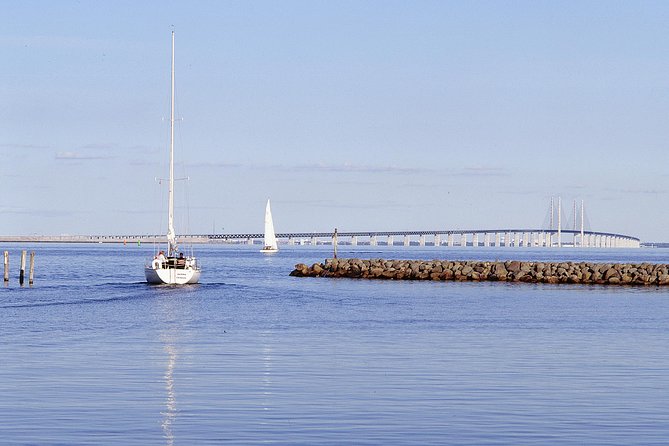
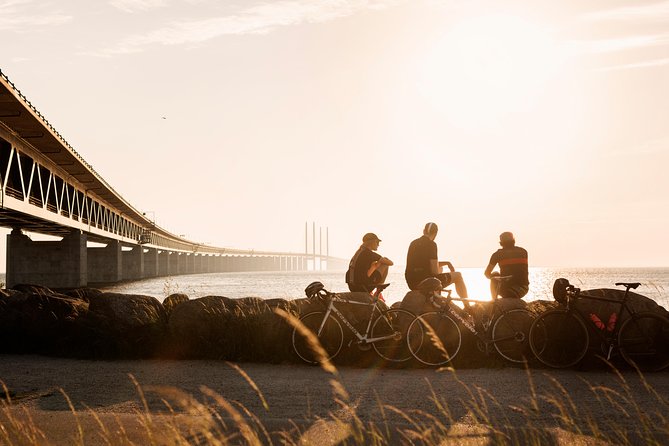
This tour is built around a simple idea: let someone else handle the logistics while you enjoy the journey. You start at Banegårdspladsen 2 in Copenhagen, then head across the Øresund Bridge to Sweden in an air-conditioned vehicle with onboard WiFi. It’s a nice buffer day, especially if you’re tired from Copenhagen sightseeing and don’t want to figure out train times or routes.
The pacing matters here. You’re not just “on a coach to get there.” The crossing is part of the experience, and the audio guide adds context as you move. On clear days, you can also get the famous “from Denmark you can see it” view of Malmö’s skyline, including the Turning Torso profile.
Group size is capped at 35, which keeps things from feeling like a crush. Still, it’s a full-day format, so dress for walking and bring layers. If you travel in colder months, you’ll be grateful you can step on and off comfortably and warm up between stops.
You can also read our reviews of more tours and experiences in Copenhagen.

Malmö’s Stortorget and Lilletorget: square life with a café rhythm
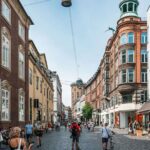
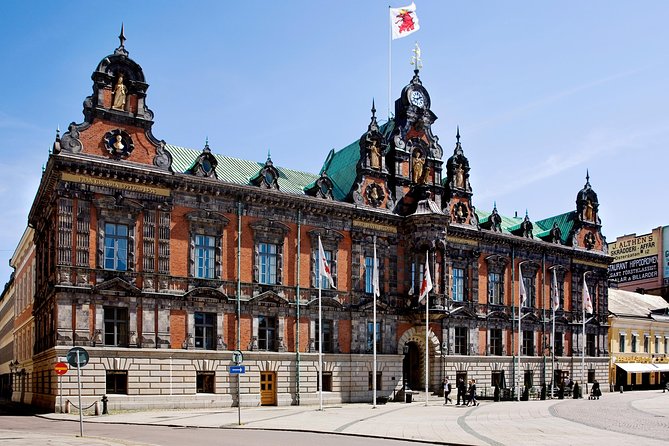
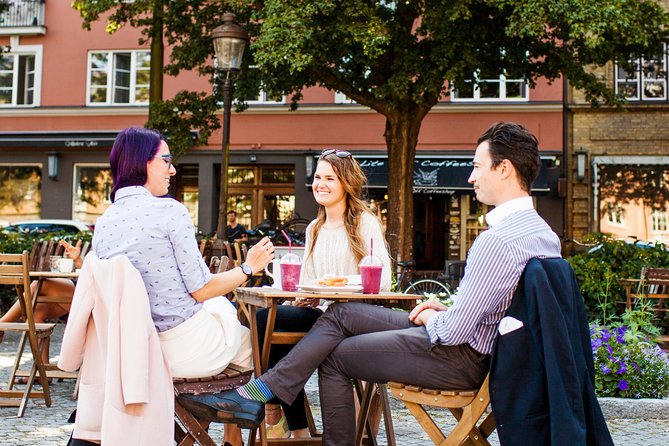
Malmö kicks off around Stortorget, the city’s biggest square, literally the Big Square. The best part of this stop is how quickly you can understand Malmö’s street style. From the square you can look back toward Lilletorget, the Little Square, where restaurants line up for outdoor seating. It has that open, sidewalk café rhythm that makes it easy to slow down without planning a thing.
If you like history but don’t want to “museum hop,” this area is a good start. You’ll also notice historic touches in the square area, like the vintage telephone box and older building facades that help the city feel lived-in.
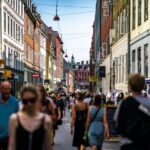
From there, the tour connects you to Sodergatan, Malmö’s main shopping street and pedestrian walkway. It’s a practical way to orient yourself: you get the big, central spine of the city, then you can decide whether you want to browse department-store brands like Åhléns or drift toward nearby shopping centers.
Södergatan, Åhléns, and Hansa shopping: an easy way to shop like a local
This isn’t a “shopping tour,” but it’s set up so you can shop if you want. When you turn into Stora Nygatan and reach the Hansa shopping area, it feels like Malmö’s version of a connected retail loop. The advantage for you is freedom. With pedestrian routes and clear landmark streets, you can pick your pace.
If you’re the type who likes to do one quick shopping circuit to learn the city, you’ll appreciate these streets. If shopping isn’t your goal, you can still treat this segment as an orientation walk, then focus your energy on the architecture stops later.
Turning Torso in Malmö: what you’ll see and what you won’t
Malmö’s skyline moment comes with the Turning Torso, designed by Spanish architect Santiago Calatrava. The tower is famous for a twist shape and for its height of about 190 meters (623 feet). It has 54 floors and includes 147 apartments, and the design is based on Calatrava’s earlier sculpture concept.
Here’s the key expectation: you get views, not entry. The tour description is clear that you cannot go inside the Turning Torso, so don’t plan on a paid lookout or interior visit. That said, the payoff is still big. Even from street level, the tower’s silhouette is the kind of thing you remember later when you look back at your photos.
Also useful: the tour ties the architecture to the surrounding geography. You’ll hear how it fits visually with the water and the bridge connection to Denmark, so you don’t just see a tall building. You see why it matters to this region’s modern identity.
Malmohus in Malmö: fortress origins and optional museum time
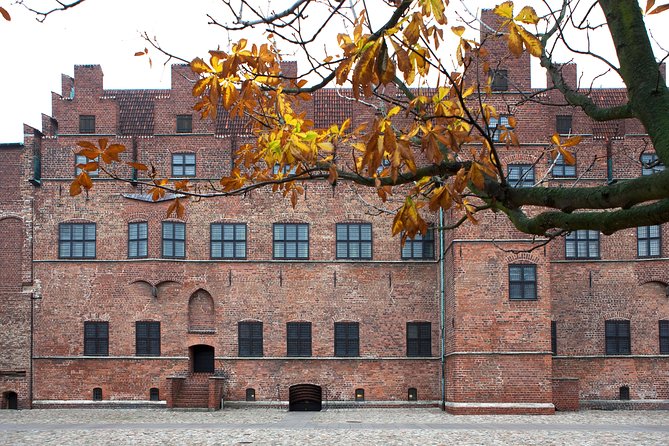
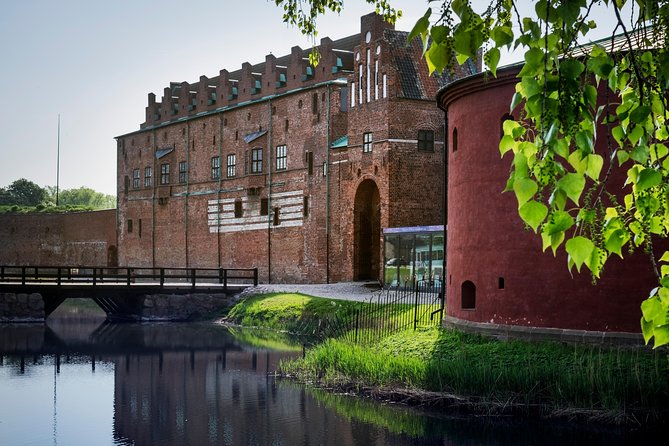
Next up is Malmohuset, Malmö’s older fortress complex. The current building dates from the 1530s, and it has a strong connection to 16th-century events. Between 1568 and 1573, it housed James Hepburn, the third husband of Mary Queen of Scots, during his imprisonment.
Malmohuset also holds museums, including the Malmo Art Museum and the Malmo Natural History Museum. Here’s the practical part: entrance to Malmohuset is not included in the tour ticket. So this stop is best if you like walking up to historic walls, photographing the exterior, and deciding on the fly whether you want to pay for interior exhibits.
If you’re budget-conscious or short on time, you can skip the museums and still come away with something. A fortress building from the 1500s next to a modern city square gives you a real sense of Malmö’s timeline.



Lund Cathedral: a 12th-century focus with standout details
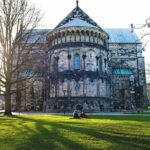
Crossing into Lund feels like switching from city energy to study-town calm. The main anchor stop is Lund Cathedral, consecrated in 1145 on a site where a church existed earlier (since the 1080s). The cathedral’s towers rise about 55 meters (177 feet), and historically they would have been visible across much of the countryside.
If you like specific details, Lund Cathedral rewards that instinct. The astronomical clock was installed around 1424, and Lund’s bells include one dating back to 1513. The cathedral also has five organs, including a major one built in the early 1930s by Marcussen & Søn.
One more modern connection you’ll hear: Pope Francis visited the cathedral in 2016 to mark the 499th anniversary of the Reformation. That gives you a nice bridge between medieval architecture and a living institution.
This stop is included in the excursion ticket, so you won’t be deciding at the last second whether you’re paying extra to get to the main sight. The tour time is geared for you to look around, take photos, and then move toward the university area.
Lund University and Lundagård Park: where the medieval core meets campus life
After the cathedral, the tour area pushes you toward Lund University roots and the park space behind it. The university traces back to Franciscan monks establishing a Studium Generale in 1425 near the cathedral, and the university itself was founded on this site in 1666. That’s why people call it the oldest higher-education site in Scandinavia.
Lundagård Park is where it becomes pleasant to slow down. It’s close enough to cathedral and campus that you can connect the dots without a long transfer. In the park area you’ll also find the Lund University Historical Museum, but entrance isn’t included, so think of this as “see the setting and decide if you want to pay.”
Kulturen open-air museum and the lunch-friendly Lund layout
Behind Lundagård Park is Kulturen, Sweden’s second oldest open-air museum, opened in 1892. It’s built around old buildings moved from other sites as well as buildings on the original location, spanning from the Middle Ages through later centuries. The tour notes that entrance fees are not included, so if you want it, you’ll be paying at the point of visit.
Kulturen also has a shop at Sankt Annegatan 9 stocked like it would have been a century ago. That’s the kind of detail that turns an outdoor museum into more than just buildings and labels.
Then comes the practical part: Lund is a great place for lunch. The tour steers you toward Martens Torget, where Saluhallen is an indoor market built in 1909. It’s the easiest way to eat without hunting. You’ll find multiple cuisines there, and it’s usually faster than committing to a single restaurant far from the center.
If you want quick and familiar, Expresso House started in Lund in 1996 and is handy for coffee and pastries. There’s also the Swedish chain Max for a fast meal. And because payment habits can vary, it’s smart to carry a small amount of Swedish krona in cash. The tour suggests around 200 SEK just in case.
Jakriborg: a maze-like break inspired by Hansa-style towns
Between Lund and Malmö, there’s time for Jakriborg, a neighborhood known for intricate, maze-like street patterns and passageways. It’s not designed to look like typical northern Scandinavian functionalism. Instead, it draws inspiration from pre-industrial coastal town architecture in the southern Baltic and North Sea region, with Lübeck’s old Hansa city treated as a key reference point.
This is a short stop, but it’s a fun one if you like street-level design. The place is built to feel like you could wander into different “chapters” of old-world town planning without leaving modern Sweden.
One thing to keep in mind: time can be tight in a day trip, and weather can influence how much you see. So treat Jakriborg as a photo-and-walk moment, not a full exploration.
Malmö’s Lilla Torg and the Form/Design Center
Back in Malmö, you finish with Lilla Torg, a small square just southwest of Stortorget. It’s surrounded by half-timbered buildings from the 17th and 18th centuries, which makes it feel intimate compared to the big square stop earlier in the day.
This area works well if you like design. In an older magazine-style building you’ll find the Form/Design Center, plus a shop where you can browse Scandinavian design books and items like textiles and home furnishings. Even if you don’t buy, it’s a good place to slow down, take a breath, and look at everyday design culture.
The timing here is short, but it’s a sweet wrap-up. It lets you end on a charming square atmosphere rather than just returning to the bus.
Price and logistics: what the $114.04 value really means
At $114.04 per person for a roughly 6.5-hour day, this trip is priced like an organized transfer plus guided orientation. You’re not only paying for the sights. You’re paying for:
- Air-conditioned, WiFi-equipped round-trip transport
- The Øresund Bridge crossing included in the route
- An audio guide system and a host/driver
- Cathedral time included at Lund Cathedral
The costs that add up are the extras. Lunch and dinner are not included, so you’ll need to plan food on your own in Lund or wherever you’re advised to stop. Also, museum entrances such as Malmohuset (and Lund’s optional nearby museums) are not included. In other words, you can keep this within budget if you stick to free or included sights and choose one optional paid stop only if you truly want it.
Group size also affects value. With a maximum of 35, you’re less likely to feel lost in a huge crowd, but you still shouldn’t expect private guide time at every stop. This tour is best when you treat it as a guided introduction, then build your own deeper visits later if you return.
Who should book this Malmö & Lund day trip
This is a great fit if:
- You want a first taste of southern Sweden without planning train schedules
- You like a mix of architecture and street-level city wandering
- You enjoy guided context plus your own time to wander and grab lunch
- You’re staying in Copenhagen and want one efficient, cross-border day
You might want a different plan if:
- You’re hunting for lots of museum hours or long guided walking
- You specifically want to enter Turning Torso (the tour notes you can’t)
- You prefer a more flexible, slower pace where each stop can expand on your schedule
Should you book the Malmö & Lund Tour?
I think this tour is worth booking if your goal is a smart overview: Malmö squares and modern skyline, then Lund Cathedral and the university atmosphere. The bridge crossing and the structured stops make it an easy way to feel like you actually crossed into Sweden, not just drove there.
If you’re the type who loves one place deeply, plan extra time in either Malmö or Lund after the day trip, because this itinerary is built for highlights and orientation, not full immersion.
If you’re traveling during cold or wet seasons, bring good shoes and layers. The day depends on good weather for best operation, and a flexible mindset helps with short stops like Jakriborg.
FAQ
How long is the Malmö & Lund tour?
It runs about 6 hours 30 minutes, with time split between Malmö and Lund plus travel and bridge crossing.
Do I get an audio guide?
Yes. An audio guide is included during the tour.
Is the Øresund Bridge crossing included?
Yes. The journey across the Øresund Bridge between Denmark and Sweden is included.
Is there WiFi on the vehicle?
Yes. The vehicle has WiFi onboard.
Are there options for hotel pickup?
Pickup is offered, but you need to email the provider with your booking reference number to arrange it.
Is lunch included in the price?
No. Lunch and dinner are not included, so you’ll eat on your own during the free time in Lund.
Are museum entrances included?
Not all of them. Lund Cathedral is included, but entrances like Malmohuset and Lund’s optional museums (such as the Historical Museum area and Kulturen) are not included.
What should I bring for the day?
Wear comfortable shoes for walking around squares and streets, and have a small amount of Swedish krona in cash as a backup (the tour suggests about 200 SEK) in case some spots are cash-friendlier.