REVIEW · COPENHAGEN
Copenhagen: Danish-Jewish History Tour
Book on GetYourGuide →Operated by Delicious Denmark · Bookable on GetYourGuide
Jewish Copenhagen has layers you can actually see. In about 2.5 hours, I learned how Danish Jews helped shape the country, from early arrivals to the October 1943 rescue story. Two things I especially loved: the private guide (with room for your questions) and the way the tour connects famous Denmark names—like Niels Bohr, Victor Borge, and Georg Brandes—to real streets and religious sites. One thing to consider: Great Synagogue entry isn’t included, so you’ll want to be ready to buy that ticket if you want to go inside.
You’ll walk through central Copenhagen and pick up a timeline that feels clear, not academic. The subject matter gets serious, but the pace stays human and well organized, and my guide Gitta kept the conversation open without rushing past the tough parts. Still, if you’re expecting a light, “just photos” walk, this isn’t that kind of tour. You’ll be thinking and reflecting as you go.
The tour also works well for people who plan to return later. I liked that the guide pointed out practical food ideas nearby too—like a sausage-stop option for vegetarians, including a veggie sausage sandwich with everything on it.
In This Review
- Key highlights you’ll notice right away
- A 2.5-hour Copenhagen walk that links faith, business, and WWII
- From 1622 arrivals to today’s Danish-Jewish life in Copenhagen
- Synagogues and prayer rooms: reading Copenhagen’s religious geography
- Great Synagogue of Copenhagen: Egyptian Revival style and entry reality
- Former Jewish ghettos: how the city held hard times
- H.C. Andersen and the Melchior family connection
- Heinrich and Pauline Hirschsprung, and Danish Impressionism in the street scene
- October 1943: understanding the 97% rescue story
- Price and practical value: is $129 worth it?
- Who this tour suits best (and what to expect emotionally)
- Should you book the Copenhagen Danish-Jewish History Tour?
- FAQ
- How long is the Copenhagen Danish-Jewish History Tour?
- How much does the tour cost?
- Is this a private tour?
- Is hotel pickup available?
- Which languages are available for the guide?
- Is the entrance to the Great Synagogue included?
- Is the tour wheelchair accessible?
- What should I bring for the walking portion?
- Is there a cancellation policy?
- Is the tour suitable for young children?
Key highlights you’ll notice right away

- A private historical walk that stays question-friendly the whole way
- The 97% WWII survival story explained as something tied to Denmark’s neighborhoods and choices
- Synagogue and prayer-room locations traced across central Copenhagen
- Great Synagogue at Egyptian Revival style, with guidance on entry since it’s not included
- Cultural Denmark connections you can literally connect to what you see: Tuborg, Bang & Olufsen, and major Jewish names
A 2.5-hour Copenhagen walk that links faith, business, and WWII

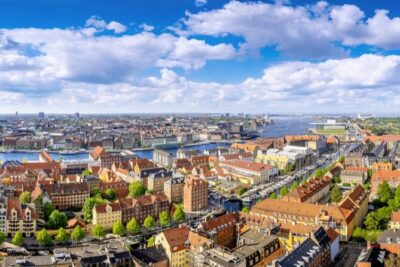
This is the kind of tour that makes Copenhagen feel less like a postcard and more like a lived-in city. You start with the Danish-Jewish story as a timeline, then you keep grounding it by walking. You’re not just hearing dates—you’re seeing how religious life, community life, and national history overlap in one city grid.
At $129 per person for 2.5 hours, you’re paying for a human guide and a private setup, not a crowded “headphones and hurry” experience. You’re also getting help with logistics like hotel pickup offered, plus a skip-the-ticket-line benefit for parts where entry tickets matter.
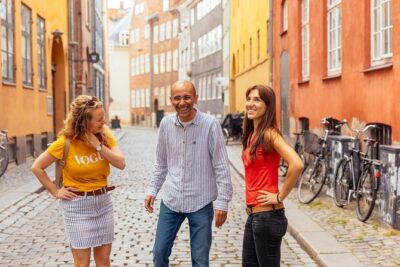
The private format matters more than it sounds. In my case, Gitta kept the pace logical and responsive. When I wanted to slow down on a specific question, she could adjust rather than pushing a schedule for a group of strangers.
You can also read our reviews of more historical tours in Copenhagen


From 1622 arrivals to today’s Danish-Jewish life in Copenhagen
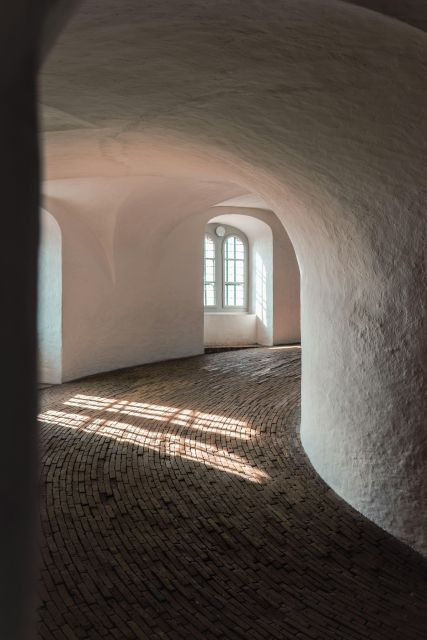
The tour’s big strength is how it avoids the usual pattern of “old history” and “WWII only.” You start with the arrival story—1622—and then you see how a community took root in Denmark over time.
One of the more memorable parts for me was learning how Denmark isn’t just connected to Jews through wartime survival. The tour connects Jewish presence to everyday Danish identity. You’ll hear about widely known Denmark brands like Tuborg beer and Bang & Olufsen porcelain, and you’ll also connect the dots to people who shaped arts and ideas: Niels Bohr, Victor Borge, and Georg Brandes.
I like this approach because it changes your mental picture. Instead of thinking of a community as something that only exists in history books, you start seeing it as part of Denmark’s modern cultural fabric—so when the tour turns serious, it lands with context.
You’ll also learn about how the community found its home in the North. The tour frame is that Copenhagen wasn’t only a backdrop; it was part of the story of how Jewish life adapted, grew, and endured.
Synagogues and prayer rooms: reading Copenhagen’s religious geography

A major focus is walking central Copenhagen while tracing the history of synagogues and prayer rooms. This is one of those experiences where the buildings matter—even if you only spot them from the street.
What I found useful is how the tour doesn’t treat religious sites as isolated landmarks. Instead, it gives them meaning in sequence: what “a place of prayer” represents for a community, how that role changed, and how the city became a map of faith and community needs.
You’ll also get a sense of how Jewish life was shaped by both openness and constraint in different periods. The guide ties religious spaces to the broader story of Danish society, which helps you understand why certain buildings were important beyond their architecture.
If you enjoy walking tours that include “what to look for” tips, you’ll appreciate that this one builds your attention. You’re not just passing by.
Great Synagogue of Copenhagen: Egyptian Revival style and entry reality
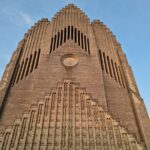
The tour includes a visit to the Great Synagogue of Copenhagen, known for its Egyptian Revival style. Even from the outside, it has presence, and your guide helps you connect the look to the story around it—so you’re not just identifying a style label.
Here’s the practical part: entrance isn’t included. That doesn’t mean it’s not worth it. It means you’ll need to decide if you want to go inside and buy the entry ticket separately. The good news is that you still get skip-the-ticket-line support, so you’re less likely to waste time waiting when you’re ready to go in.
If you love architecture, this stop is the one where you’ll probably slow down the most. And if you’re more history-focused, you’ll still get value from hearing how the synagogue fits into the bigger timeline the tour has been building since 1622.
Former Jewish ghettos: how the city held hard times
You’ll also wander through former Jewish ghettos. The tour handles this with care, because the story isn’t comfortable. But it’s also not vague. You get enough context to understand what the Nazi era meant for where people lived, and how the city’s streets became part of a system designed to control and harm.
What I appreciated most is that the tour makes it easier to grasp the “how” behind the timeline. It’s not only about what happened in a distant place. It’s about what happens to neighborhoods, daily life, and the feeling of being trapped in a place that keeps demanding obedience.
This is one reason the tour works best with a guide rather than a self-walk. You need someone to interpret the city’s layout and explain what you’re seeing without turning it into a cold lecture.






H.C. Andersen and the Melchior family connection
One of the tour’s most interesting pivots is literary and personal. You’ll learn about H.C. Andersen’s friendship with the Melchior family, and about the role that family played in his final days—Andersen passed away in their care.
That’s a surprising detail for many visitors, because it interrupts the usual expectation that Denmark’s Jewish story is only about synagogues and wartime. Here, it shows how Jewish families were part of Denmark’s broader human networks, including art and literature.
I found it helpful because it shifts the tone for a moment. Not every part of your route has to be heavy. A human story like this can reset your brain without losing momentum in the overall narrative.
Heinrich and Pauline Hirschsprung, and Danish Impressionism in the street scene
Another culture connection that adds texture: the art patrons Heinrich and Pauline Hirschsprung. The tour links them to the development of Danish Impressionism, which is a great example of how Jewish influence shows up beyond politics and religion.
This stop works especially well if you like museum days but also want something you can touch in real life. Instead of saving everything for later indoors, the tour gives you a sense of how patrons, artists, and movements were supported through real people living in Denmark.
It also helps the whole “how Jews contributed to Denmark” theme feel specific. You’re not just hearing general claims. You’re hearing names that connect to recognizable cultural developments.
October 1943: understanding the 97% rescue story
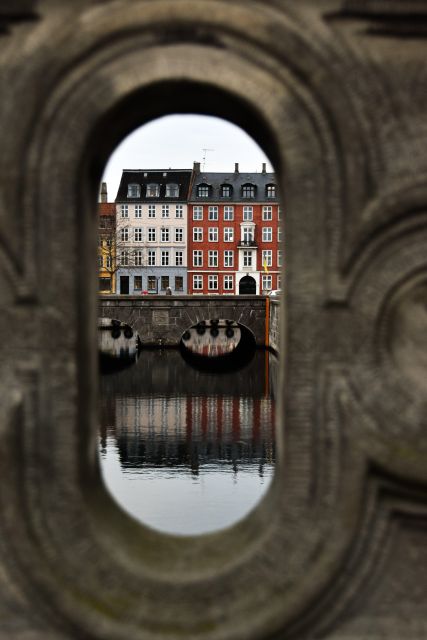
Then you reach the part that most people come for: WWII. The tour highlights the extraordinary fact that 97% of Danish Jews survived the Nazi Occupation. You don’t just hear the statistic. You learn why it matters and what it implies about Denmark’s actions and the risk people took.
The guide also explains how, over a few short weeks in October 1943, the vast majority were smuggled out from under the German occupiers to safety. That time window matters. It turns a long war story into a more specific sequence you can follow.
This segment is also where the tour’s “balanced” approach shows. The subject is sensitive, and you want a guide who can handle it in a way that respects the reality without turning it into shock tourism. In my case, Gitta did this with a clear, logical presentation and a willingness to answer questions.
If you’re the kind of traveler who likes to process history as you go, you’ll likely feel satisfied after this portion—because the tour frames the story in a way that makes the 97% feel understandable, not just unbelievable.
Price and practical value: is $129 worth it?
For $129 per person for a private 2.5-hour walk, the value comes from several items that stack up:
- Private historical guide (not a group with strangers who all want different things)
- Hotel pickup offered, which saves you time getting to the start
- Walking tour of Copenhagen plus Jewish history (so you get local orientation)
- Skip-the-ticket-line benefit, which helps if you add synagogue entry
- Wheelchair accessible setup
You’re also getting a guide who offers multiple languages, with English, German, Danish, Swedish, and French available. That matters if you’re traveling with someone who prefers not to listen in English.
Is it the cheapest way to learn Jewish history in Copenhagen? Probably not. But it’s a strong choice if you care about context and you want answers on the spot—especially for the WWII part and the specific Copenhagen connections.
A quick cost note: since Great Synagogue entrance isn’t included, you may have an extra ticket purchase if you decide to go inside. If you know you want that, plan for it up front.
Who this tour suits best (and what to expect emotionally)
This is a great match if you want history that’s tied to place. You’ll like it if you enjoy walking tours and you want the city explained in a way that’s more than street names.
You’ll probably get a lot out of this if you’re interested in:
- Jewish history in Denmark across centuries, not just WWII
- the “where” behind major events
- cultural ties like Andersen and the Hirschsprungs
It may not be your best fit if you’re only chasing quick sightseeing and short captions. This is a story with serious themes, and you’ll be walking through those ideas.
One more practical note: if you’re hoping to find relatives or specific historical records, tell the guide. The tour info specifically flags that as something to mention in advance, so your time doesn’t get stuck on generic background when you need specifics.
And because it’s not suitable for children under 6, families with younger kids may want to choose a different option.
Should you book the Copenhagen Danish-Jewish History Tour?
Book it if you want a focused, guided way to understand Copenhagen as a place where Jewish life has shaped Denmark for centuries—and where the WWII story explains why the 97% survival figure is more than a statistic.
You should especially book if you like your history with names and locations tied together: 1622, synagogues and prayer rooms, the Great Synagogue, H.C. Andersen and the Melchior family, and art patron connections like the Hirschsprungs. The tour’s private pace also helps when you want to ask questions and get clear answers.
I’d skip it only if you’re looking for a light, casual walking loop with minimal emotional weight, or if you strongly prefer a self-guided approach where you can control every stop without a guide’s structure. For most visitors who want real understanding, this one is worth it.
FAQ
How long is the Copenhagen Danish-Jewish History Tour?
It runs for 2.5 hours.
How much does the tour cost?
The price is $129 per person.
Is this a private tour?
Yes. It’s a private group tour with a live guide.
Is hotel pickup available?
Hotel pickup is offered.
Which languages are available for the guide?
The tour is available in English, German, Danish, Swedish, and French.
Is the entrance to the Great Synagogue included?
No. Entrance to the Great Synagogue of Copenhagen is not included, though you get a skip-the-ticket-line benefit.
Is the tour wheelchair accessible?
Yes, it is listed as wheelchair accessible.
What should I bring for the walking portion?
Bring comfortable shoes, water, and weather-appropriate clothing.
Is there a cancellation policy?
Yes. Free cancellation is available up to 24 hours in advance for a full refund.
Is the tour suitable for young children?
It is not suitable for children under 6 years.