REVIEW · COPENHAGEN
The Art of Baking Danish Pastry
Book on Viator →Operated by Terrible - Konditorskole · Bookable on Viator
Danish pastry rewards patience. In a 3.5-hour morning class in Frederiksberg, you learn the Danish approach to dough and shaping, guided by Chef Frederic Terrible at Terrible – Konditorskole. The vibe is hands-on but organized, so even if you are new to baking, you leave feeling like you actually understand what you did.
I love two things most: you practice core techniques like kneading, rolling, and folding, and you come home with a serious stash of pastries plus recipes emailed afterward. The one real consideration is that you’ll likely make more than you can eat right away, so plan to share, store, or schedule this earlier in your trip.
In This Review
- Key highlights at a glance
- Frederiksberg at 9:00: finding Grundtvigsvej 10A
- 3.5 hours with a max of 12: how the class actually runs
- Kneading, rolling, and folding: the Danish dough basics that matter
- What you’ll bake: kanelsnegle, spandauer, and Frøsnapper twists
- Terrible – Konditorskole: demo first, then your turn
- Tea, coffee, and the moment you taste what you made
- The value case for $117.23 in Copenhagen
- Recipes emailed after: your plan for baking again at home
- Who this Danish pastry class is best for
- Should you book the Danish pastry class?
- FAQ
- How long is The Art of Baking Danish Pastry?
- What time does the class start?
- How big is the group?
- Is the class offered in English?
- Where do I meet for the class?
- Can I get the recipes after the class?
- FAQ
- Can I get a refund if I cancel?
- What if the tour is canceled due to not meeting the minimum number of travelers?
Key highlights at a glance
- Small-group class capped at 12 people, so you get real attention
- Hands-on training in kneading, rolling, and folding the dough
- You make multiple Danish pastries using a step-by-step chef demonstration
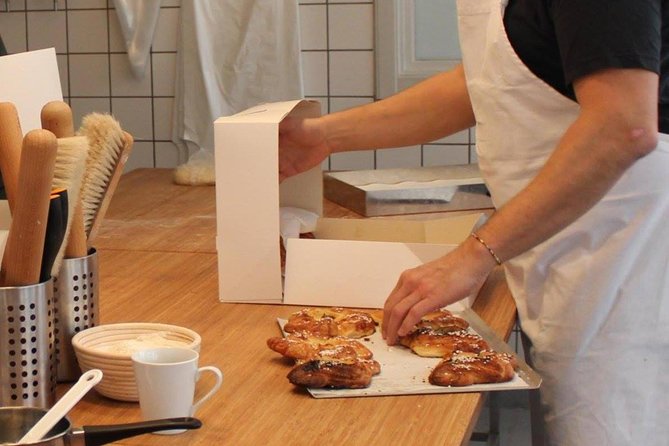
- Take-home pastries in boxes, plus a tea and coffee tasting at the end
- Recipes emailed after the class, so you can recreate the bakes at home
- Morning start at 9:00am, leaving the rest of your day open
Frederiksberg at 9:00: finding Grundtvigsvej 10A
This is a morning-focused experience, starting at 9:00am in Frederiksberg, west of central Copenhagen. You’ll meet at Grundtvigsvej 10A (1864 Frederiksberg). It is near public transportation, but the key thing to know is that the entrance may not match what you first expect from a map view. I’d plan a few minutes buffer so you can get inside without rushing.
Once you arrive, you are not dealing with a wandering route or multiple locations. Everything happens at the pastry school (Terrible – Konditorskole), which keeps the morning simple. You also get a mobile ticket, and you should receive confirmation within 48 hours of booking (as long as space is available).
The practical upside of a morning class is schedule freedom. You are done by roughly late morning or early afternoon, which means you can still fit in Tivoli-style strolls, a canal walk, or a museum visit without feeling like you are constantly watching the clock.
You can also read our reviews of more tours and experiences in Copenhagen.


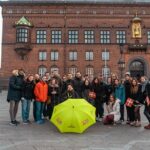
3.5 hours with a max of 12: how the class actually runs
The class runs about 3 hours 30 minutes and is capped at a maximum of 12 travelers. That small size matters. You are not just watching a show. You join the worktable process—chef-led demonstration first, then you do the shaping and assembling steps yourself.
The flow usually goes like this: the chef shows the technique, then you follow along at your pace while the group keeps moving. Many people describe the chef (Chef Frederic Terrible) as patient and precise, with clear directions that help novices succeed. There’s also a sense that the kitchen is well run—no long idle moments.
One tip that’s worth taking seriously: some directions are delivered quickly. So if your Danish baking brain needs extra seconds, do not be shy about asking. The class style is hands-on and supportive, and you want to get the technique right before the dough and fillings become a time crunch.
Language is English, so you should feel comfortable during explanations. That said, baking is still baking—if you concentrate on what your hands are doing and watch what the chef does on the bench, you’ll keep up even when vocabulary is moving fast.
Kneading, rolling, and folding: the Danish dough basics that matter
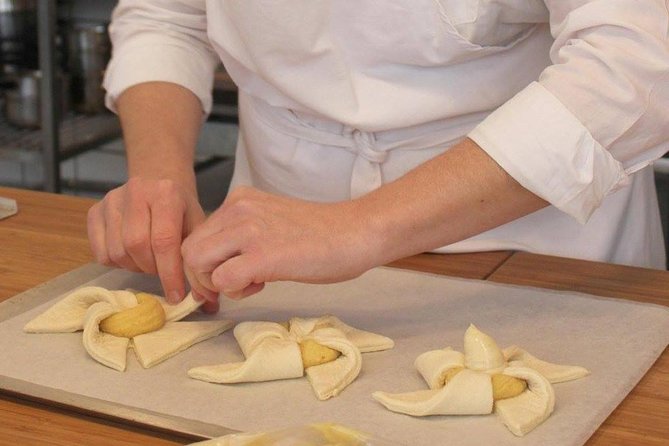
This class teaches the foundational dough skills that make Danish pastries feel so distinct: kneading, rolling, and folding. Even if you never baked before, these aren’t abstract lessons. You learn by doing, which helps you understand why the dough behaves the way it does.
Here is the real value for you: Danish pastry success depends on structure. Techniques like rolling and folding affect how layers form and how the dough holds shape during baking. When you practice these steps under a professional’s supervision, you stop guessing. You start noticing what good dough looks and feels like—elastic, pliable, and workable—before you move on to filling and shaping.
I also like that you are not left with one generic pastry recipe. Instead, you learn techniques that carry across different bakes. That means when you switch from one pastry style to another, the dough handling still makes sense. It is less like memorizing steps and more like building a toolkit.
If you love cooking, this is the kind of class where you’ll pay attention to the small details: how the dough is handled, how it is portioned, and how it is folded and shaped. You’ll walk away with confidence that you can repeat the process later, not just recreate one lucky batch.
What you’ll bake: kanelsnegle, spandauer, and Frøsnapper twists
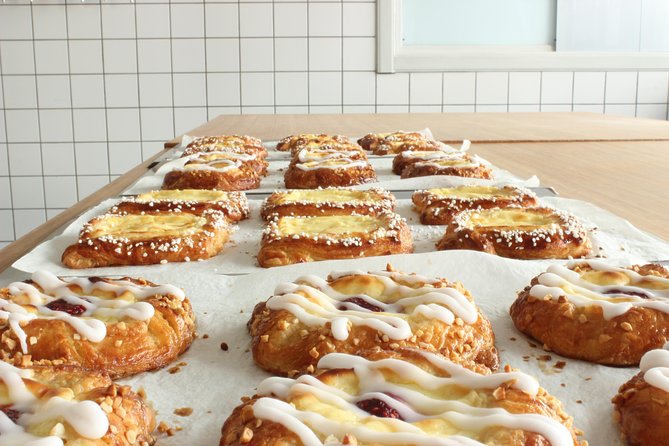
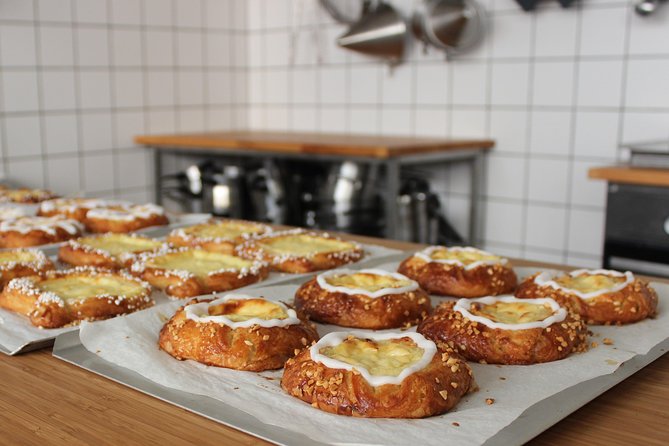
You’ll make several Danish pastries during the session, using the chef’s guidance as you work. The sample menu includes three named favorites, and they are exactly the kind of varieties that teach different skills through different shapes:
- Cinnamon rolls (kanelsnegle)
These focus on rolling, shaping, and even distribution of filling so each slice bakes with a consistent swirl.
- Danish pastry (Spandauer)
This teaches how to shape a classic Danish form and how to handle dough when you are creating a finished pastry that looks neat and intentional.
- Poppy seed and sesame seed twists (Frøsnapper)
Twists are great for practicing stretching, portion control, and shaping. They also make you think about how toppings stay put while baking.
Across all of them, you get more than just a recipe. You get hands-on experience building the pastry from dough to final shape. That is why this class is a strong choice for food lovers: you learn a technique set you can reuse, and you finish with pastries that look like the real thing, not just homemade experiments.
One more practical note: plan on enjoying the process, not just the outcome. If you rush through the steps, you’ll feel it in the shaping. If you stay calm and follow the chef’s sequence, you’ll likely end up with pastries you’re proud to box up.
Terrible – Konditorskole: demo first, then your turn

The main “stop” in this experience is the pastry school setting itself: Terrible – Konditorskole (the workshop space where you’ll follow the demonstration). The teaching method is structured. You watch the chef go through the technique, then you rotate into hands-on work.
What makes this work well is the balance between instruction and doing. You’re not stuck passively for the whole 3.5 hours. At the same time, the chef’s demonstration gives you a clear mental map before you touch the dough.
You’ll also notice the kitchen rhythm: the class stays moving, but it does not feel chaotic. The chef checks in, gives hands-on fixes when needed, and keeps people from getting lost. That combination is a big reason the reviews are so consistently positive—people leave feeling successful, not overwhelmed.
If you are traveling solo or as a couple, you’ll still get the same focus. The small-group format keeps you from disappearing into the background. And if you’re traveling with kids or a companion who is eager to learn, it tends to be a friendly environment because everyone is doing the same basic steps in sequence.



Tea, coffee, and the moment you taste what you made
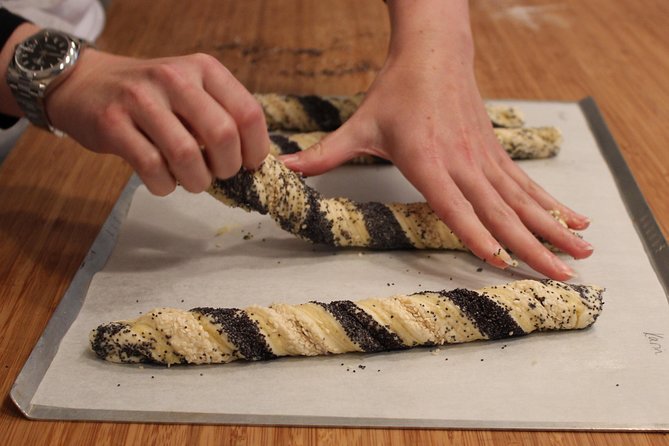
At the end of the class, you’ll get tea and coffee, and you can taste your finished pastries. This tasting moment matters. It ties the technique you practiced to the result you were working for.
It also helps you adjust your expectations before you pack up. Danish pastries are rich and layered. If you have never tried fresh-baked Danish-style goods, you’ll likely notice texture changes right away: flakiness from layering and sweetness from fillings.
Then comes the part many people get excited about—taking your pastries home. Expect that you’ll leave with enough to share. Multiple people point out that they filled boxes with their own baked creations. In practical terms, bring a plan: who you can share with, how you’ll store them during sightseeing, and whether you’ll need a way to keep things from squashing if you’re walking around after the class.
The value case for $117.23 in Copenhagen
At $117.23 per person, this is not the cheapest thing you can do in Copenhagen. But for the specific audience it targets—people who genuinely want to learn food, not just eat it—the price starts to look fair.
Here’s where the value comes from:
- Professional instruction from Chef Frederic Terrible, with hands-on coaching in a small group (max 12).
- A full baking session that includes demonstration, guided practice, and time in the kitchen.
- Ingredients and baking that are handled as part of the class, rather than something you’d have to source and manage yourself.
- Tea and coffee at the end.
- Take-home pastries made by you, so you’re not leaving empty-handed.
- Recipes emailed after the class, which extends the value beyond the morning.
If you’ve ever paid for a food tour and then realized the experience ended the moment you finished the last bite, this class is different. It gives you skills you can repeat later. That’s also why it works well even for beginners—you’re paying to avoid the guesswork.
Recipes emailed after: your plan for baking again at home
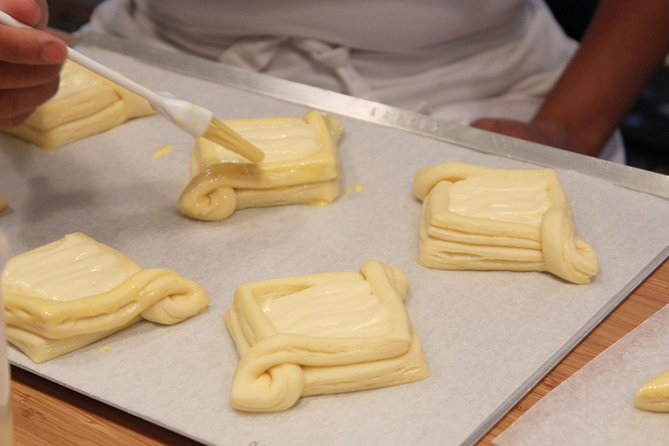
One of the most appreciated parts is what happens after you leave the workshop. The recipes used in class are emailed to you, which means you do not have to depend on a blurry photo or memory to recreate the bakes later.
This helps in two ways. First, it gives you a real reference for measurements and steps. Second, it turns the class into a lasting souvenir. Copenhagen becomes more than a place you visited—it becomes a technique you can practice at home.
A few people mention that having recipes (and sometimes alternative ideas) makes it easier to experiment once you’re back in your own kitchen. So if you enjoy cooking or baking as a hobby, you’ll likely feel this class continues paying off after the trip.
Who this Danish pastry class is best for
This tour fits best if you land in one of these buckets:
- You’re a food lover who wants something more interactive than a tasting.
- You are a beginner baker who wants step-by-step guidance and reassurance.
- You like doing a morning activity so the rest of your day stays free.
- You’re traveling as a couple or small group and want a shared experience that ends with a box of treats.
It may be less ideal if you hate baking-related mess and smell, or if you need to avoid bringing food back. And if you have a tight schedule right before a flight, remember the class tends to produce more pastries than you can reasonably eat in one sitting—so your success plan should include sharing or storage.
Should you book the Danish pastry class?
If you want a Copenhagen experience that mixes real technique with real payoff, this is a strong pick. You learn core dough skills like kneading, rolling, and folding, you bake recognizable Danish favorites (kanelsnegle, Spandauer, and Frøsnapper twists), and you leave with pastries plus email recipes for follow-up at home.
My recommendation: book this earlier in your stay if you can. That way you can enjoy what you bake right away and still have time for sharing. If you do it late, just be ready to manage a lot of pastries on your last day.
FAQ
How long is The Art of Baking Danish Pastry?
It runs for about 3 hours 30 minutes.
What time does the class start?
The start time is 9:00am.
How big is the group?
The class has a maximum of 12 travelers.
Is the class offered in English?
Yes, it’s offered in English.
Where do I meet for the class?
You meet at Grundtvigsvej 10A, 1864 Frederiksberg, Denmark. The activity ends back at the same meeting point.
Can I get the recipes after the class?
Yes. The recipes used in the class are emailed to you after the session.
FAQ
Can I get a refund if I cancel?
No. This experience is non-refundable and cannot be changed for any reason.
What if the tour is canceled due to not meeting the minimum number of travelers?
If that happens, you’ll be offered a different date or a full refund.