REVIEW · COPENHAGEN
Grand Tour of Copenhagen – The Little Mermaid to Royal Castle
Book on Viator →Operated by Enjoy The Tours ApS · Bookable on Viator
Copenhagen fits neatly into 2.5 hours. I like the unhurried tempo, and I really enjoy how the guide connects sights like the Little Mermaid to the city’s larger story, from Rosenborg to the Danish Resistance Museum. One heads-up: the tour is packed, so you’ll get great snapshots, but not long stand-around time in every museum.
I also love the way the host/driver keeps things practical. In the feedback I saw, guides such as Christian and Peter were praised for being clear, colorful, and genuinely helpful when time is short.
If you want a fast orientation to Copenhagen’s big landmarks (and a few meaningful side stops), this tour fits well. Just remember there’s no lunch included, and you’ll be doing quite a bit of walking and standing at photo stops.
In This Review
- Key highlights worth planning around
- A grand “route” that links Mermaid myths to royal power
- Price and timing: what you’re really paying for
- Getting started at Banegårdspladsen and staying comfortable
- Tivoli Gardens and the art stops that set your bearings
- Natural History Museum plants and the observatory mood
- Rosenborg Castle: Dutch Renaissance style, still unchanged
- The Little Mermaid: Bronze on granite, and the story behind the damage
- Danish Resistance Museum: underground history you can feel
- Amalienborg changing of the guard at midday
- Frederiks Church and Christiansborg: two kinds of power
- The opera photo break and Thorvaldsen’s canal-area quiet
- Børsen dragons, Christianshavn canals, and church-vs-city life
- Holmens Church by the sea and the Black Diamond library addition
- Langebro and Nyhavn: the harbor scenes you’ll remember
- Who should book this Copenhagen highlights route
- My booking call
- FAQ
- How long is the tour?
- Where does the tour start and end?
- What’s included in the price?
- Is lunch included?
- Are there any stops with free admission?
- What’s the group size limit?
- Can I cancel for free?
Key highlights worth planning around
- A calm pace over Copenhagen’s top sights, built for short stays
- Little Mermaid details at street level, including the low-tide granite rock setting
- Underground history at the Danish Resistance Museum, in a newer building
- Real royal rhythm at Amalienborg, with daily guard changing at midday
- Harbor views through multiple viewpoints, including Nyhavn and Langebro
- A smallish group size (up to 33), which helps the guide keep control
A grand “route” that links Mermaid myths to royal power
This tour works because it moves like a story, not like a checklist. You start at the city’s most famous symbol, then follow the trail of monuments, palaces, churches, and museums that explain how Copenhagen grew into a royal and cultural capital.
I like that you don’t just get pretty buildings. You get specific context: the Little Mermaid’s Bronze-and-granite setting (including why it can be easier to access at low tide), the way Denmark’s resistance history is told underground, and how royal sites like Amalienborg and Christiansborg function in everyday life.
And because it’s a guided loop, you spend less time guessing where to go next. For a first trip, that’s huge.
You can also read our reviews of more tours and experiences in Copenhagen.

Price and timing: what you’re really paying for
At $61.40 per person for about 2.5 hours (often up to 3), you’re paying for three things: a guided narrative, transportation between neighborhoods, and built-in interpretation.
Here’s the value angle: Copenhagen is spread out. When you pay for a guided route, you’re buying back time and reducing hassle—especially if you’re fitting sightseeing around a cruise or a tight schedule. The tour also includes an audio guide plus WiFi on board, so you’re never stuck with silence while the vehicle moves.
One more practical note: some stops are listed as free ticketed entry, so your money stretches further than it would on an all-paid museum program. Still, you should budget mentally for optional extras if something catches your eye and you want to return.
Getting started at Banegårdspladsen and staying comfortable
You meet at Banegårdspladsen 2 in Copenhagen, starting at 9:30 am and returning to the same meeting point. The location is near public transportation, which makes it easier if you’re hopping from a hotel or station.
The tour includes an air-conditioned vehicle, WiFi onboard, and a host/driver. That matters in Copenhagen because weather can swing, and because the walking stops require patience—especially around popular photo points like the Little Mermaid and Nyhavn.
Group size is capped at 33, which is large enough to feel energetic, but small enough that the guide can still keep everyone together without turning it into a cattle-car experience.
Tivoli Gardens and the art stops that set your bearings
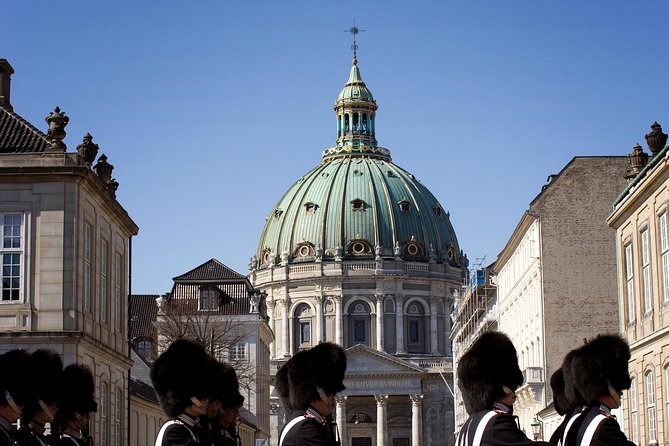
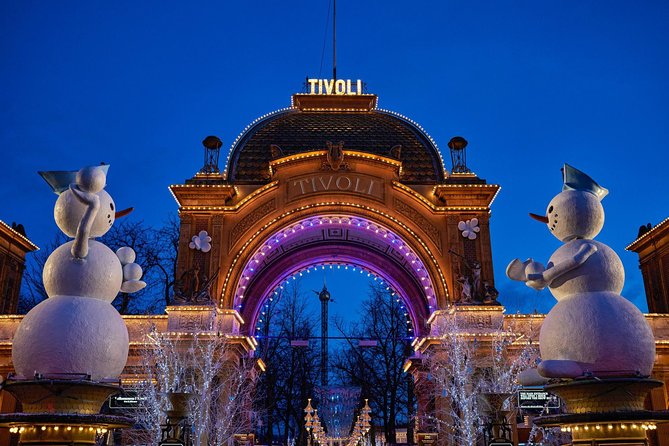
One of the clever parts of this route is how it eases you into Copenhagen. You begin with Tivoli Gardens, opened in 1843 by Georg Carstensen. Even if you don’t go inside, knowing that the city’s leisure history goes back that far changes how you see the area.
Then you shift toward culture with a stop at an art museum holding antique Mediterranean sculptures plus French and Danish works from the 19th century. For me, this kind of stop works best early in the day because it helps you understand what you’re looking at later—especially when the tour moves from art and gardens into royal-era architecture.
If you’re the type who hates museum rules, don’t panic: this tour is about guided context and movement, not a long sit-down in galleries.
Natural History Museum plants and the observatory mood
The route spends time in the State Natural History Museum’s plant collection, described as Denmark’s largest and spread over 10 hectares. That scale matters. Even a quick look gives you a different view of Copenhagen—more “scientific city” than “only castles and canals.”
You also get to hear about the Palm House, plus works like Athena and Marsyas by Myron. And then it pivots to astronomy with the Astronomical Observatory / Østervold Observatory, tied to Tycho Brahe (1546–1601).
This is a great segment if you like your sightseeing with ideas behind it. It also breaks up the heavy royal concentration so the day doesn’t feel like it’s only about power and stone.



Rosenborg Castle: Dutch Renaissance style, still unchanged

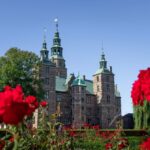
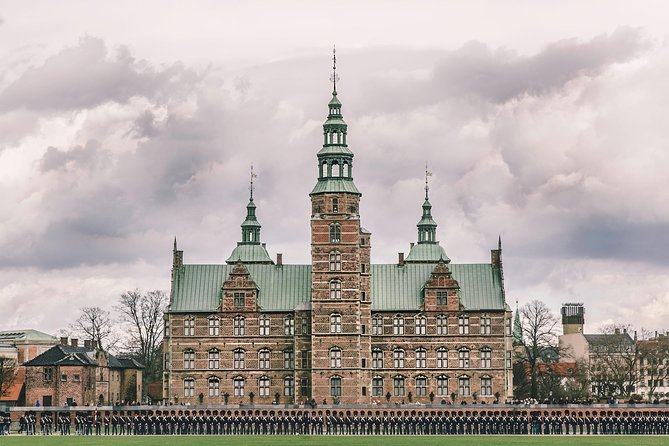
Next comes Rosenborg Castle, built in Dutch Renaissance style by King Christian IV. The standout detail here is the claim that the exterior is the same as the day it was built. Whether you’re a serious architecture nerd or just someone who loves good proportions, that kind of continuity makes the building feel more real.
Rosenborg also helps connect the royal story to what you’ll see later at other palaces. By the time you reach Amalienborg and Christiansborg, you’re not starting from scratch—you already have the visual vocabulary.
Practical tip: take a moment for exterior photos even if your main interest is the gardens or the interiors. The tour timing moves on, and the best angles can vanish quickly.
The Little Mermaid: Bronze on granite, and the story behind the damage
No Copenhagen tour would be complete without the Little Mermaid. Here, the details are specific: she’s a Bronze sculpture by Edvard Eriksen, set on a granite rock that’s accessible at low tide.
The story thread is also clear. The sculpture was inspired by Hans Christian Andersen’s tale of a mermaid who falls for a human prince who doesn’t love her back. And the tour notes the sculpture’s history of attack and repair—she’s been beheaded twice, had an arm cut off, and has been splattered with red paint.
Then there’s the modern layer: the words Free Hong Kong have appeared on her. That adds an extra “present-day meaning” layer to a statue that many people treat as pure postcard.
The big drawback? Photo spots here can be crowded, and the tour timing is short. If you want long, uninterrupted viewing, you’ll probably wish you had more time. Still, as a first-stop icon, it’s the right anchor point.
Danish Resistance Museum: underground history you can feel
After the Mermaid, the tour takes a turn that’s emotionally serious: the Danish Resistance Museum, housed underground in a new building opened in 2020.
This museum tells the story of life under German occupation from 1940 to 1945, with emphasis on Danish resistance groups. The tour also notes that the previous museum building burned in 2013, but most items were saved. That “survival” detail makes the collection feel sturdier and more urgent.
Even if you don’t consider yourself a history buff, I think this stop is where the tour earns its depth. It’s not just pretty scenery—it’s the reason people fought, organized, hid, and documented.
Amalienborg changing of the guard at midday
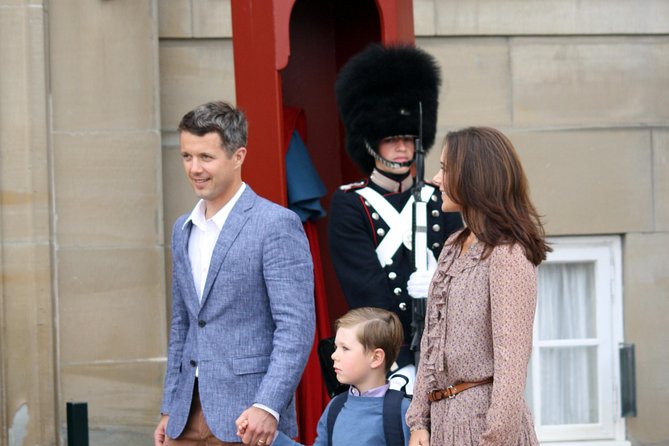
At Amalienborg, you get a front-row view of royal ceremony that’s practical and repeatable. The Amalienborg palaces date to the 1760s, and the royal family moved in in 1794 after Christiansborg Palace burned.
There are four palaces in the complex: Christian VIIs Palace, Christian VIII’s Palace, Frederik VIII’s Palace, and Christian IX’s Palace. Frederik VIII’s Palace is specifically where King Frederik X and Queen Mary stay when they’re in Copenhagen.
The tour’s best moment here is the changing of the guard, which happens daily at midday with the Life Guards. It’s short and focused, which fits the overall pacing of the day. And it’s one of those sights where the motion makes the photos easier than they look from the outside.
Frederiks Church and Christiansborg: two kinds of power
Next you’ll hit two major symbols: Frederiks Church (the Marble Church) and Christiansborg.
Frederiks Church was commissioned by King Frederik V and designed by Nicolai Eigtved in 1740. After Eigtved died in 1754, construction slowed down and stopped in 1770. Later, in the late 1800s, Ferdinand Meldahl took over and, due to budget limits, used limestone instead of marble for the rest. The dome is noted as the third largest in Europe.
Then comes Christiansborg, where the Danish parliament (Folketing) meets. The present building dates to 1928, and below it you can find ruins of Copenhagen’s first castle built in 1167 by Bishop Absalon. The site also includes the first Christiansborg Palace built in 1740 by King Christian VI, plus a major fire story from 1992 and repairs completed in 1997.
A useful, very specific detail: Christiansborg is also linked to King Frederik X’s throne and to his balcony appearance during installation by Prime Minister Mette Frederiksen. Denmark doesn’t have coronations, so the focus stays on government and state roles, not royal pageantry.
The opera photo break and Thorvaldsen’s canal-area quiet
The day also includes a stop near Det Kongelige Teater (Operaen), where you can take photos with views over the harbor and Amalienborg Palace. It’s a quick breather, but a scenic one.
You also pass a museum connected to the grave of Bertel Thorvaldsen (a neoclassical sculptor) by the canal. That’s the kind of stop that’s easy to overlook if you’re self-guiding, but it adds a human anchor to the stone-and-royal theme.
Add the equestrian statue of Bishop Absalon from 1902, and you start to see Copenhagen as a city layered with eras, each one leaving a landmark behind.
Børsen dragons, Christianshavn canals, and church-vs-city life
The tour then shifts into “working Copenhagen” flavor.
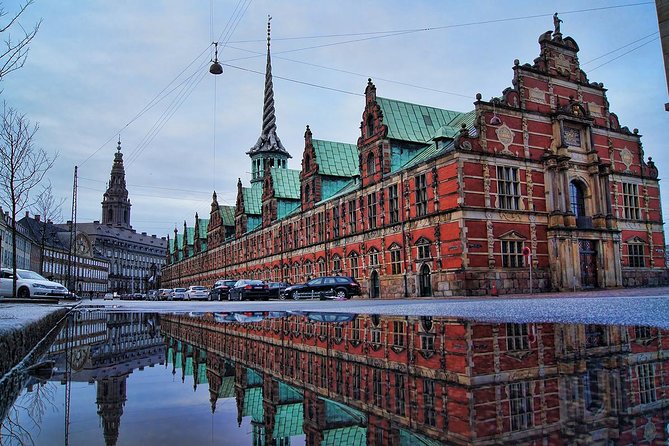
You’ll see Børsen, the old stock exchange building dating to the 1620s, built by King Christian IV. It functioned as a stock exchange into the 1800s, and the spire is made from intertwined dragons’ tails. It’s a fun reminder that commerce and myth-making were never separate in older European cities.
Then you head toward Christianshavn, with views over the canal and Our Saviour’s Church. It’s a calmer-feeling area for photos than the most central squares, and the water views give you a different Copenhagen rhythm.
You also get a cultural stop at a Danish history mansion with exhibitions about Denmark’s history and people. And there’s a mention of the Danish National Gallery with international collections plus children’s activities, which is useful if you’re deciding later what to revisit on your own.
Holmens Church by the sea and the Black Diamond library addition
Two more stops show the city’s everyday religious and modern life.
Holmens Church was built in 1619 in a former anchor forge by King Christian IV. It serves as both a parish church and a church dedicated to the Danish Royal Navy, and it’s described as the only church in Denmark next to sea water. Inside, models of ships hang from the ceiling, which is a very “place-specific” detail you can’t fake.
Then you reach Kongens Nytorv, commissioned in 1670 by King Christian V. It was inspired by the Place d’Vendôme in Paris and designed as a center between Strøget and Nyhavn. The statue in the middle is of Christian V, placed there in 1688, described as the oldest royal statue in Copenhagen.
Finally, the Black Diamond appears—built in 1999 as an extension of the Royal Danish Library. It’s designed by Schmidt, Hammer and Larsen and clad in black granite from Zimbabwe. It’s attached by a bridge to the main library (built in 1906 by Hans J. Holm), and includes a reading room, a music room, plus a cafe and bookshop. If you like modern architecture that still feels functional, this is an easy yes.
Langebro and Nyhavn: the harbor scenes you’ll remember
Harbor time is where the tour starts to feel like Copenhagen on easy mode.
You stop at Langebro, a bridge that opens to let large ships through the harbor. It was built in 1954 and designed by Kaj Gottlob, and it’s noted for its specific dimensions (7 meters high and 35 meters long). There’s also a very practical maintenance story: in 2019, concrete damage from rainwater was found, and repairs were expected to cost 307 million Kroner (about €40 million).
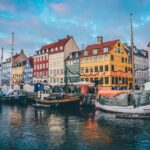
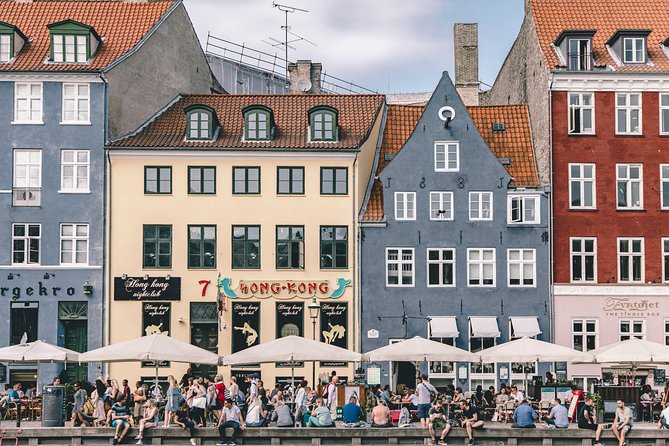
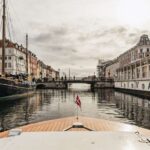
Then it’s on to Nyhavn, built between 1671 and 1673 by Swedish prisoner of war. Nyhavn’s oldest house is Nyhavn 9, dating to 1681. The area was rougher in the 1970s, then renovated in the 1980s and now lines up with restaurants and pavement cafes.
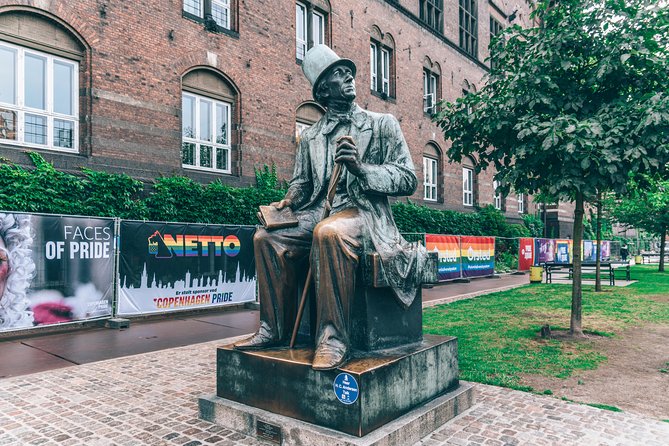
The tour also ties in literature: Hans Christian Andersen lived in Nyhavn at different times (numbers 18, 20, and 67). And there’s a memorial anchor placed at the end in 1951, honoring Danish merchant seamen lost during World War II.
If you have any energy left after the earlier royal stops, Nyhavn is the payoff. Even with short viewing time, you’ll feel why this harbor area became the city’s “walk-and-snack” magnet.
Who should book this Copenhagen highlights route
This tour is a strong fit if you:
- Have limited time and want a fast path from the Mermaid to the royal core
- Prefer a guided story over self-planning
- Want both “pretty” landmarks and at least one serious history stop (the Resistance Museum)
- Are traveling with kids or want a route that includes varied interests, from plants and astronomy to churches and harbor life
It may not be your best choice if you:
- Want to linger in museums for long periods
- Are the type who needs multiple visits to each site (this tour is about coverage, not depth)
- Are counting on lunch being handled for you (it isn’t)
My booking call
I’d book it if you’re new to Copenhagen and you want a solid framework for where to go next. I’d skip it if you already know you want hours inside only one or two museums—then you’ll get more value by building a slower plan.
FAQ
How long is the tour?
It’s about 2 hours 30 minutes (and it can take up to 3 hours).
Where does the tour start and end?
It starts and ends at Banegårdspladsen 2, 1570 København, Denmark.
What’s included in the price?
You get an air-conditioned vehicle, WiFi on board, an audio-guide, and a host/driver. Pickup is offered, and the tour uses a mobile ticket.
Is lunch included?
No. Lunch is not included.
Are there any stops with free admission?
The Little Mermaid and the Changing of the guard at Amalienborg are listed with free admission in the tour details. Other photo stops may also be free, but the tour doesn’t list every site’s admission status.
What’s the group size limit?
The tour has a maximum of 33 travelers.
Can I cancel for free?
Yes. You can cancel up to 24 hours in advance for a full refund. If you cancel less than 24 hours before the start time, the amount paid is not refunded.