REVIEW · COPENHAGEN
Explore Copenhagen’s Art and Culture with a Local
Book on Viator →Operated by LocalBini - The go-to platform for Experiences by Locals in Europe · Bookable on Viator
Art lovers get their bearings fast here.
This 90-minute walk lines up public art and big-name ideas in a way that feels practical, not museum-theory heavy. I love the way you begin at Stork Fountain for quick old-town orientation, and I love the focus on street art by Stine Hvid plus the city’s visible sculptures and architectural details. One possible drawback: it’s a walking tour with short stops, so if you want nonstop talking or extra detours to major indoor attractions, you may want more time at each place than the schedule allows.
You’ll be moving with a local in a small group (max 8), guided in English, with a mobile ticket that’s easy to use. The tour is built for first-time visitors and returning travelers who want a fresh angle on Copenhagen’s art scene, but it’s mainly outdoors, so plan for comfort on your feet.
In This Review
- Key things I’d focus on before you go
- A 90-minute Copenhagen art walk that actually helps you plan the rest
- Starting at Stork Fountain (Amagertorv) and using it as your north star
- The Stine Hvid street art stop: how to see modern Copenhagen without guessing
- Castle gardens and Andersen’s sculpture: serenity with a human story
- Kastellet’s star fortress (built 1664) and the Gefion legend fountain
- A Rococo dome and Kierkegaard grounds: thinking made visible
- Seeing the Danish Royal Opera House from the square across the water
- Ending in Nyhavn: the iconic 17th-century harbor payoff
- Price and value: is $128.94 worth 90 minutes?
- Who should book this Copenhagen Art and Culture with a Local?
- Tips to get the most out of the walk
- Should you book this tour?
- FAQ
- How long is the tour?
- What language is the tour in?
- Where does the tour start and end?
- How big is the group?
- Is food or drinks included?
- Is there free cancellation?
Key things I’d focus on before you go
- Stork Fountain start for fast orientation: You kick off in a historical square with a mosaic floor, then build outward from there.
- Stine Hvid street art stop: You get pointed commentary on modern street art and where to look in Copenhagen’s neighborhoods.
- Andersen and statue spotting: The walk includes a castle-and-gardens moment with a Hans Christian Andersen sculpture.
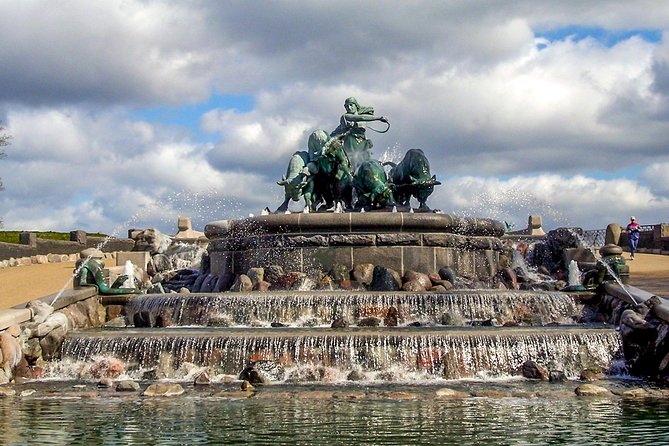
- Kastellet in star-fortress form: You’ll see the 1664 star-shaped fortress and hear the Gefion fountain legend connected to it.
- Rococo dome and Kierkegaard grounds: You’ll take in a Rococo structure with the largest dome in Scandinavia and a Kierkegaard statue nearby.
- Nyhavn as the finale: The tour ends with a stroll through a picturesque 17th-century harbor with colorful waterfront facades.
A 90-minute Copenhagen art walk that actually helps you plan the rest
If you’re only in Copenhagen for a short stretch, a walking tour can be more valuable than it sounds. You’re not trying to “see everything.” You’re getting a working map in your head: where the art is, where the historic ideas show up in public spaces, and how to connect the dots for your next day.
This one is priced at $128.94 per person, runs about 1 hour 30 minutes, and keeps the group small (up to 8). That matters because the guide can tailor the pace and keep the walk conversational, rather than turning into a crowded slideshow.
The best part of this format is how it blends categories that tourists often treat separately. Street art, sculptures, castles, fortresses, and a major opera house all show up in the same walk. In other words: you get Copenhagen’s art-and-culture story without needing a ticket to a single venue.
You can also read our reviews of more tours and experiences in Copenhagen.



Starting at Stork Fountain (Amagertorv) and using it as your north star
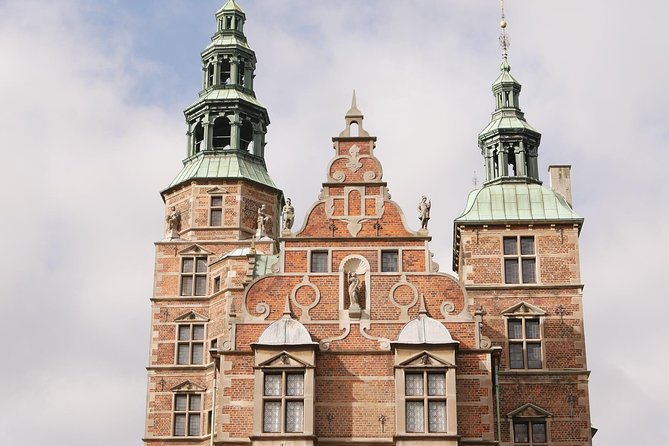
You meet at Stork Fountain, Amagertorv 6 (København). The setting is more than just a convenient address. It’s an old-town square with a mosaic floor and elegant buildings around it, so you immediately get a feel for Copenhagen’s older core before modern art enters the picture.
From here, I like the way the tour sets you up for visual learning. You’re guided to look for symbols, design choices, and the way public spaces “stage” culture. Even if you later visit galleries or museums on your own, this kind of orientation helps you recognize what you’re seeing.
Practical tip: wear shoes you’re happy to walk in. The route is paced like a city stroll, and the goal is to cover multiple art-and-architecture moments rather than stopping for long breaks.
The Stine Hvid street art stop: how to see modern Copenhagen without guessing
Copenhagen isn’t only about palaces and churches. The tour pulls you toward its contemporary street-art side with a stop focused on work by Stine Hvid. This is the moment where the walk stops being purely scenic and starts becoming analytical: you learn what to look for and why certain pieces show up where they do.
Street art can be tricky when you’re on your own. You might spot murals but miss the context. A local guide helps you connect the work to the neighborhood feel and the city’s broader artistic voice. Even if you’re not a street-art specialist, you’ll probably come away with a new habit: noticing placement, scale, and style as part of the artwork, not just the artwork itself.
If you’re the type who likes visuals plus explanation, this stop is where you’ll likely get your biggest payoff.
Castle gardens and Andersen’s sculpture: serenity with a human story

Next you shift into a calmer mood: a castle-and-gardens experience with a sculpture of Hans Christian Andersen. This is Copenhagen doing what it does well—turning culture into something you can experience outdoors.
The gardens matter because they’re not just scenery. They give you time to slow down and actually see details in the space: how the sculptures sit in relation to paths and views, and how the city places famous names in public settings where everyday people can encounter them.
Drawback to consider: the walk is time-limited. This stop is likely to feel like a “take it in, learn the story, move on” moment. If you want long lingering time in gardens, you may need to plan a return visit after the tour.
Kastellet’s star fortress (built 1664) and the Gefion legend fountain
Then the tour goes full-castle mode at Kastellet, the star-shaped fortress built in 1664. A star fortress isn’t just a neat shape on a map. It reflects the thinking behind defense and city planning, so you start seeing architecture as a functional artifact, not just an aesthetic one.
There’s also a legend woven into the visit: the Norse goddess Gefion, connected to a fountain you’ll hear about during this part of the walk. This is one of those “culture lives in public details” moments. Instead of treating the fortress as only military history, the guide adds the myth layer that makes the site feel alive.
When you’re moving quickly between stops, legends can either feel tacked on or really click. Here, it’s more likely to click because the legend is tied to a specific feature—the fountain—so it’s not just random storytelling.



A Rococo dome and Kierkegaard grounds: thinking made visible
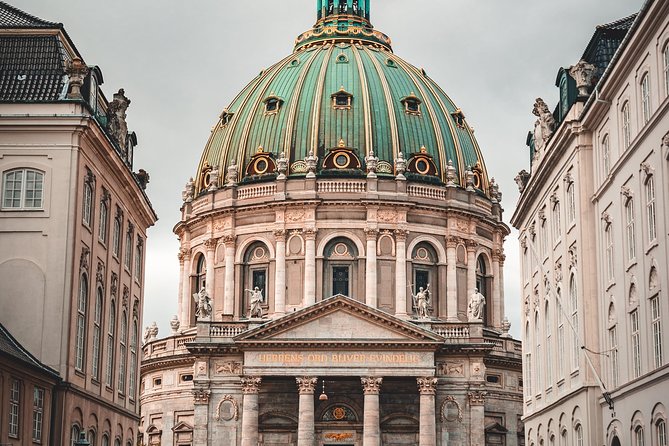
After Kastellet, you reach a striking Rococo structure described as having the largest dome in Scandinavia, with a Kierkegaard statue in the grounds. This is where Copenhagen’s cultural identity becomes very literal: philosophy and architecture share the same outdoor stage.
Why this stop is worth your time: even if you know little about Søren Kierkegaard, seeing his presence physically in the grounds helps you understand how the city treats ideas as part of daily space. It’s not only for classrooms and books. It’s something you can look at while walking.
Rococo design is also a different visual language than the fortress shapes and street-art murals. Expect more curves, ornament, and an overall sense of theatrical formality. Pair that with a philosopher’s statue nearby, and you get a nice contrast: different “modes of thinking,” all within walking distance.
Seeing the Danish Royal Opera House from the square across the water

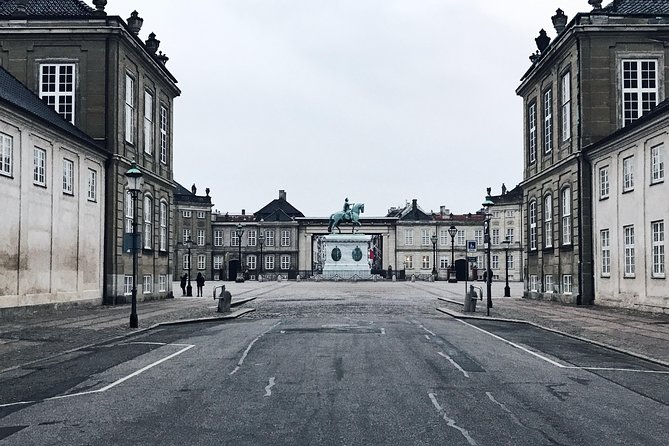
As you explore the imposing square, palace, and garden area, you’ll also get a view of the Danish Royal Opera house across the water. Even if you’re not going to catch a performance, seeing it from outside is useful.
This kind of view helps you understand why Copenhagen feels so composed. The city’s landmarks aren’t only scattered points of interest. They’re connected by water, sightlines, and how spaces frame one another. If you later want to plan a self-guided photo walk, you’ll know where the big building sits in relation to the rest.
Timing note: this is a “glimpse” moment rather than a full opera-house deep visit. If you’re hoping for an inside look, this tour won’t be that kind of experience.
Ending in Nyhavn: the iconic 17th-century harbor payoff
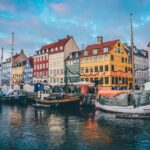
The walk closes at Nyhavn in Indre By. Nyhavn is described as a picturesque 17th-century harbor with colorful waterfront facades, and that’s exactly the kind of ending that makes a short tour feel worth it.
Here’s what I like about ending this way: it’s instantly rewarding. After castles, fortresses, domes, and street art, Nyhavn gives you a recognizable visual reward—color, character, and that “Copenhagen postcard” feeling—without you needing to line up anywhere.
Also, because it’s the ending point, you can continue on your own right after the tour. From Nyhavn, it’s easy to wander for a meal or keep exploring nearby streets using what the guide helped you learn about the layout of the area.
Price and value: is $128.94 worth 90 minutes?
Let’s talk money plainly. At $128.94 per person for about 1 hour 30 minutes, this isn’t a bargain-basement group tour. It’s in the mid-range-to-premium zone, and you’re paying for three things the city can’t provide by itself:
- A local guide who wants to show you his city
- A curated walk that connects multiple art-and-culture styles in one route
- A small group size (max 8), which usually makes the experience feel more like a guided stroll than a rushed conveyor belt
The listing also notes group discounts, which can help if you’re going with friends. And you get a mobile ticket, which is one less thing to manage.
My take on value: you’re paying less for “admissions” (none are listed) and more for interpretation—someone pointing out what matters, and why. If that’s your style, this can feel like a smart use of your first day or your “I want a refresher” day.
One balance point: a few pieces of feedback suggest the tour is packed with highlights but can include stretches of silence where extra commentary could have been useful. If you’re the type who needs constant talking to stay engaged, you may want to treat this as a guided walk with moments of quiet, not an always-on lecture.
Who should book this Copenhagen Art and Culture with a Local?
This tour fits best if you want an easy way to understand Copenhagen through the lens of public art and ideas.
You’ll probably like it if:
- You’re a new arrival and want a fast sense of where major cultural sites sit in relation to one another
- You’re a returning traveler who already knows the big sights but wants different angles, like street art and sculptures tied to Danish culture
- You enjoy guided looking—learning where to look and what details to notice
You might skip it or choose a different format if:
- You want long indoor time in museums or guided entry experiences
- You prefer a route that detours more aggressively to big indoor highlights
- You dislike quiet pacing gaps and want continuous narration
The overall rating is 4.5 from 4 reviews, and the strongest themes in that feedback are the highlight-style coverage and the guide’s helpful nuggets, including food-culture tidbits about Danish customs. The main caution is that some people wanted more information and fewer gaps in the speaking time.
Tips to get the most out of the walk
A few simple choices can make the 90 minutes feel smoother:
- Use the tour to build a mental map. After Nyhavn, you’ll know what area you’re in and what’s nearby.
- If you care about street art or philosophy references, come in ready to notice details. This tour rewards attention.
- Bring patience for pace. The experience is designed as a sequence of stops, not one long dwell in any single spot.
Should you book this tour?
If you’re looking for a small-group, English-speaking walking tour that links street art, sculpture, fortress geometry, and major architecture into one coherent route, this is a solid pick. It’s especially good for getting oriented quickly and learning the kind of context that helps you enjoy Copenhagen beyond the obvious postcards.
I’d say book it if you like guided looking and public art stories, and if you’re fine with a compact 90-minute format. If you want lots of indoor time, or you need constant narration without pauses, you may feel it’s a bit too light-touch for your style.
FAQ
How long is the tour?
It lasts about 1 hour 30 minutes.
What language is the tour in?
The tour is offered in English.
Where does the tour start and end?
It starts at Stork Fountain, Amagertorv 6, 1160 København and ends in Nyhavn, Indre By.
How big is the group?
The tour has a maximum of 8 travelers.
Is food or drinks included?
No. Food, drinks, or snacks are not included.
Is there free cancellation?
Yes. Free cancellation is available up to 24 hours in advance for a full refund. If you cancel less than 24 hours before the start time, the payment isn’t refunded.