REVIEW · COPENHAGEN
Copenhagen Bicycle Adventure
Book on Viator →Operated by Scandinavian Guides · Bookable on Viator
Copenhagen on two wheels feels like the right speed. This Copenhagen Bicycle Adventure pairs pedal-powered sightseeing with a local, multilingual guide, then layers in royal squares, harbor icons, and a few peaceful green stops. I especially like the easy central meeting point near Tivoli, plus the way the route strings together major highlights without wasting time backtracking.
My second favorite part is the guide-led storytelling. Guides like Arthur and Marc are specifically called out for sharing lots of context and keeping things flexible, which is exactly what makes the city click when you are moving. One consideration: some big-name sights have admission not included, so if you want interiors (like Rosenborg Castle), you’ll likely pay extra.
In This Review
- Key Points You’ll Care About
- Meeting at Tivoli Square: Axeltorv 1 Made Easy
- Why Copenhagen by Bike Beats Walking for These Stops
- City Hall Square to Kongens Have: Royal Copenhagen Without the Museum Lines
- Nyboder and the Little Mermaid: Danish Details You Can’t Get from a Postcard
- The Citadel Moat and Seaside Toldboden: Old Defense Meets Modern Eating
- Gefion Fountain and Langelinie Views: Myth, Monument, and Waterfront Air
- Frederik’s Church and Amalienborg at Noon: The Royal Ritual Part
- Nyhavn After the Ride: Colorful Canal Lines You Can Revisit
- Price and Value for a 1–3 Hour Bike Tour
- Who Should Book This Copenhagen Bicycle Adventure
- Should You Book This Tour?
- FAQ
- How long is the Copenhagen Bicycle Adventure?
- What is the price per person?
- What time does the tour start?
- Where do I meet, and where does it end?
- What is included in the price?
- Are helmets included?
- Is food included?
- Is Rosenborg Castle admission included?
- Can I cancel for free?
Key Points You’ll Care About

- Small group (max 15): You get a guided pace without feeling swallowed by a crowd.
- Bike rental included, plus backup help: If you get a flat, a replacement bike is brought without extra charge.
- 10+ stops in a short window: City Hall Square, Rosenborg, the Little Mermaid, Amalienborg, and Nyhavn all show up in one ride.
- Royal sights paired with actual city life: You see castles and palaces, then quickly shift to gardens, market food, and waterfront scenes.
- Cycling as Copenhagen culture: The tour’s green theme matches the fact that bikes are how locals move.
- Daily guard change at Amalienborg: The noon ritual is built into the experience.
Meeting at Tivoli Square: Axeltorv 1 Made Easy
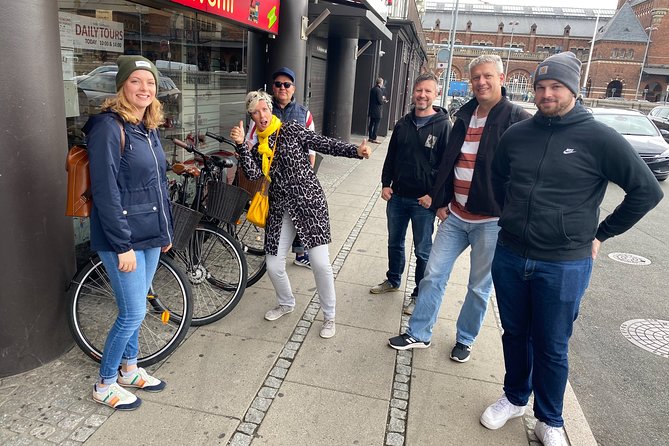
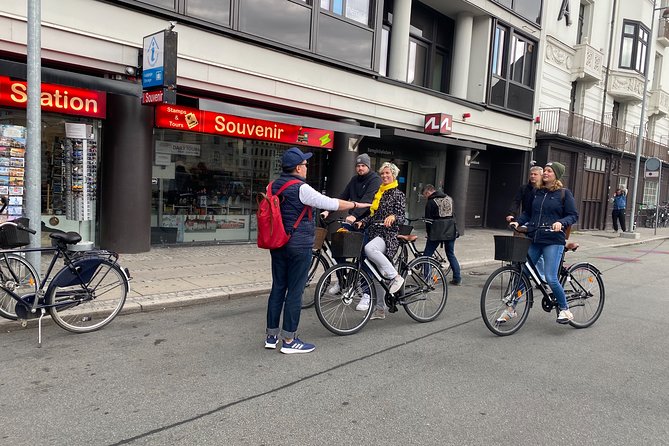
Your start is at Axeltorv 1, right in the heart of Copenhagen. The bike parking area is in the square in front of the main entrance of Tivoli park, and it is also where the tour ends. That matters more than it sounds. When you start and finish in the same place, you do not have to worry about navigating transit or walking back after you are tired.
The meeting point is also described as a hub for tourist information and support, which is handy if you arrive a little early or need a quick answer on what to do next. You’ll get a mobile ticket, and the tour is offered in English (with the possibility of a multi-lingual guide).
Timing note: the scheduled start time is 10:00 am, and the total ride runs about 1 to 3 hours depending on the flow and your group. If you want the full value of the day’s most photogenic moments, arriving a few minutes early helps you settle your bike and get comfortable before the first stop.
You can also read our reviews of more tours and experiences in Copenhagen.

Why Copenhagen by Bike Beats Walking for These Stops
Copenhagen is famous for its cycling lanes, and this tour makes you use that advantage instead of fighting it. You cover ground efficiently, but you still stop often enough to actually look at things up close. That balance is why the 10+ stops work in a limited time window.
A bicycle also changes how the city feels. Squares like City Hall Square and the calmer green corridors around Kongens Have come at you naturally as you glide along. Then the big-ticket icons—the Little Mermaid and the royal waterfront area—show up without turning the day into a marathon of transit and foot slogging.
You’ll also benefit from the small group limit (up to 15). In practice, that usually means you can ask questions, get a quick point about what to look for, and keep the ride moving at a comfortable pace. And because bike issues are handled (replacement bike provided if needed), you are not stuck improvising a solution mid-tour.
Practical tip: even if helmets are not mandatory, I strongly suggest you use one if you have it. If you rent one elsewhere, it can be worth it for peace of mind.
City Hall Square to Kongens Have: Royal Copenhagen Without the Museum Lines
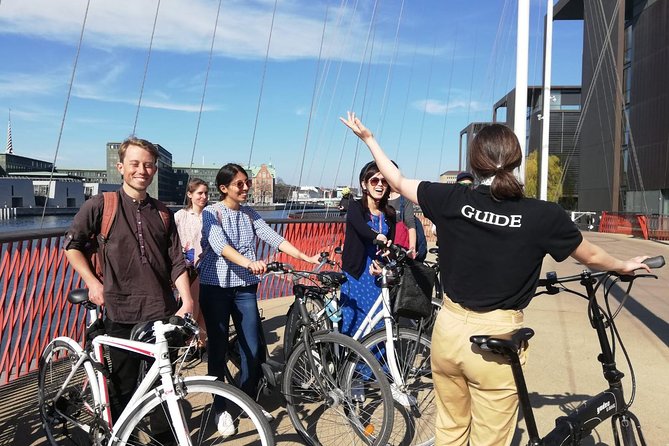
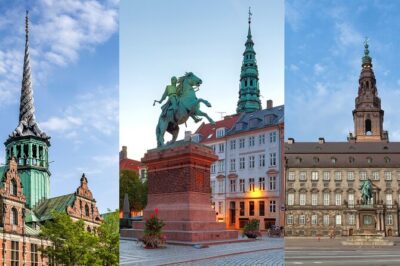
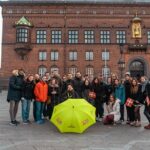
This route builds momentum fast. After your meeting point at Axel Torv 1, the tour heads to City Hall Square (Rådhuspladsen), right in front of the City Hall. It’s a key location for events and demonstrations, and it marks the start of the shopping street Strøget. Even if you do not plan to shop, it is a great way to orient yourself. You see the city’s public center and learn where the main pedestrian spine begins.
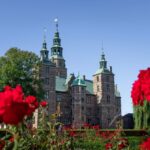
Next comes Rosenborg Castle, the king Christian IV summer residence. This is where the tour’s guide storytelling really pays off. The castle was built from 1606 to 1634, and the basement is known for the Danish crown jewels and royal crowns. You’ll also hear about the Knights’ Hall and the silver lions that guard the thrones. The details matter here: the royal throne is described as being made with narwhal and gilt figures, and the queen throne is silver. For me, that level of specificity makes the outside-to-inside contrast more meaningful.
Here is the key drawback: Rosenborg Castle admission is not included. So plan for either extra spending if you want to go in, or accept that you’ll mainly take in the area and move on.
From there, you shift into a calmer, greener pocket: Kongens Have (the king’s garden). It’s described as the country’s oldest royal garden, laid out in Renaissance style by Christian IV in the early 17th century. It has been open to the public since the 1770s and still feels like a pause button in the middle of Copenhagen. Main alleys are preserved, including the Cavalier Hallway toward the Hercules Pavilion and the Ladies Hallway toward the H.C. Andersen statue. If you like gardens that feel planned—not just pretty—this stop lands well.
Nyboder and the Little Mermaid: Danish Details You Can’t Get from a Postcard
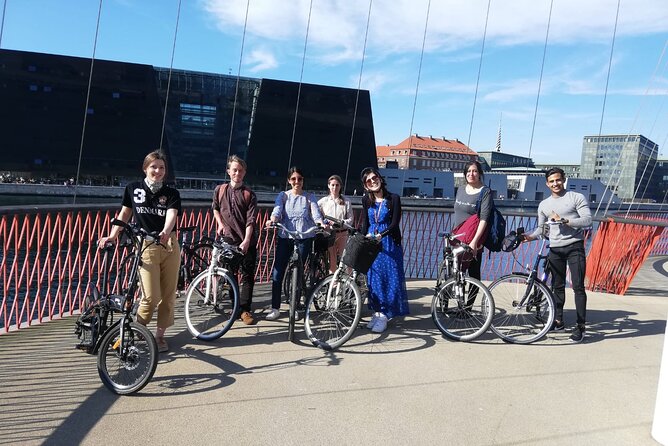
Then the tour threads into Nyboder, a historic row-house district built for the Royal Danish Navy personnel and their families during Christian IV’s reign. This part of the experience is subtle but important. Copenhagen’s royal highlights are easy to spot on day one, but Nyboder helps you understand how the city supported real people and real work centuries ago.
You will also see a statue of King Christian IV. Even if you skim history most days, a figure like this can help you connect the dots between royal decisions and the built environment you are biking through.
After that, the route delivers the icon you came for: the Little Mermaid. Copenhagen’s famous statue is tied to the Danish cultural world around Hans Christian Andersen. The information shared on the tour links it to a ballet adaptation the Carlsberg founder Carl Jacobsen attended, and then to Danish sculptor Edvard Eriksen, who created the sculpture. It was unveiled in 1913, and August 23 is commemorated as the mermaid’s birthday.
Plan your expectations: the Mermaid is famous for a reason, and the area is naturally photo-focused. Still, what I like here is the context. When you understand the timeline—ballet interest, sculptor choice, and the 1913 unveiling—you stop seeing it as just a picture background and start seeing it as a cultural artifact.
The Citadel Moat and Seaside Toldboden: Old Defense Meets Modern Eating
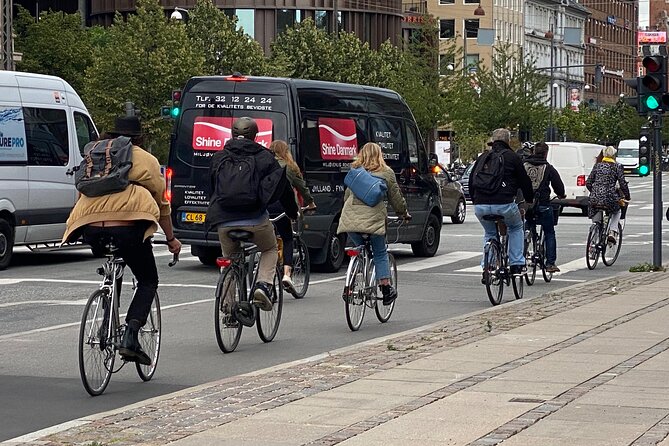
One of the smarter moves on this kind of bike tour is switching from monuments to places with texture. The route includes the area around the Citadel, described as a space of adventure, history, nature, and recreation. You approach from the city center, cross the moat, and enter through an old royal gate. That gives you a physical sense of how defense and access shaped the city.
The Citadel area also works as a breather. After castles and royal squares, it’s a chance to feel the city’s pace at a different angle—more open space, more movement, and a stronger sense of what Copenhagen does with long-held ground.
Then you warm up with a stop at Seaside Toldboden, a well-known Danish gastronomic market in the port area. You are not paying for a meal on this stop, but the structure matters. It gives you a place to take in what Denmark looks like at the water’s edge—especially after cycling by major sights. The tour notes that consumption is not included and depends on what you choose, which keeps the experience flexible if you want coffee, a snack, or nothing at all.
If you are the kind of person who hates rigid schedules, this is a good spot. You can keep it light, regroup with the group, and continue with energy.



Gefion Fountain and Langelinie Views: Myth, Monument, and Waterfront Air
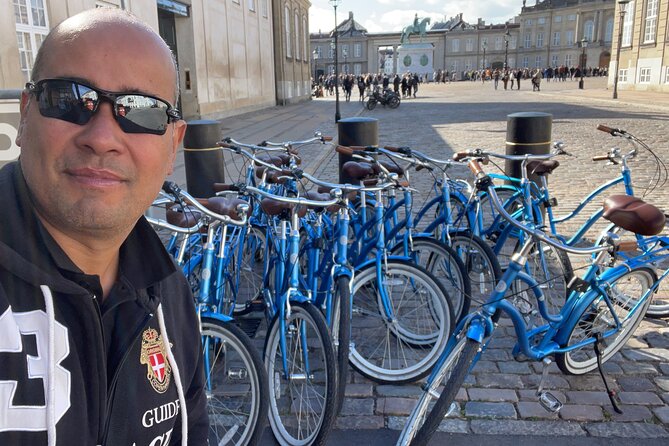
Copenhagen has plenty of waterfront visuals, but Gefion Fountain is a memorable change of pace. The tour places it in Churchill Park near the Langelinie waterfront area you pass by. The fountain is described as one of the largest monuments in the city.
What makes it interesting is the myth turned into sculpture. It features a group of strong oxen pulling the plough of the Norse goddess Gefion. The information you get includes a real-world timeline: the Carlsberg Foundation donated it in 1897 for Carlsberg’s 50-year anniversary, and the figures were created between 1897 and 1904 by sculptor Anders Bundgaard, made in rented facilities at the Danish Cryolite Company.
I love stops like this because they reward you twice—once for the visible scene, and again for the story behind how it came to exist. When you then ride onward, you remember not just what you saw, but why it is there.
This is also one of those moments where biking can make the experience better than walking. The scenery stays in motion around you, and the park and waterfront feel like they flow together instead of being separate boxes on a list.
Frederik’s Church and Amalienborg at Noon: The Royal Ritual Part
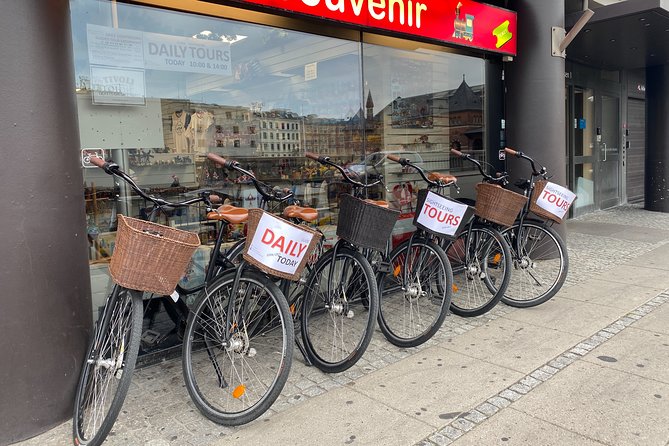
The tour reaches Frederik’s Church (Frederiks Kirke), linked to King Frederik V’s plans and the tercentenary celebration of Oldenborg’s rule. Construction started as a major project connected to the king’s vision for a new town called Frederiksstad. The church and town both take the king’s name, and the master planner and builder connected to Frederiksstad is listed as architect Nicolai Eigtved.
Even if you do not go inside (the tour keeps many of its elements on the outside and moving), this stop gives you a sense of scale and ambition. It also places the royal timeline in your mind: you move from royal gardens and castle rooms into the grand religious architecture of a newer era.
Then comes the day’s spectacle: changing of her Majesty’s guard at Amalienborg Castle. This happens daily, with the changing taking place at 12:00 noon. The guards march from their barracks in 100 Gothersgade near Rosenborg Castle, through Copenhagen’s streets, and end at Amalienborg. If you are on the 10:00 am start, you should be in position to catch the noon moment as planned.
After the guard change, the tour includes Amalienborg Palace Museum. Amalienborg is described as Denmark’s royal family residence, made of four identical buildings around the palace square. The tour notes the specific palaces: Christian VII’s Palace (Moltke’s Palace), Frederik VIII’s Palace (Brockdorff’s Palace), Christian IX’s Palace (Schack’s Palace), and Christian VIII’s Palace (Levetzau’ Palace). The museum is in one of the buildings.
Even if you do not plan to pay for museum entry elsewhere on the trip, this stop gives you something visual and immediate: the palace square layout and the daily guard ritual.
Nyhavn After the Ride: Colorful Canal Lines You Can Revisit
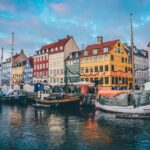
End your cycling loop with Nyhavn, a 17th-century waterfront canal and entertainment district. The tour describes it as lined by brightly colored 17th- and early 18th-century townhouses, with bars, cafes, and restaurants along the harbor. It runs from Kongens Nytorv to the harbor front just south of the Royal Playhouse.
This works as a finale. After you’ve spent time with royal architecture and formal public moments, Nyhavn feels human and lively in a different way—more canal edges, more walking-friendly atmosphere, and a natural place to linger if you still have energy.
Because the tour ends back at the starting meeting point, you might not stay in Nyhavn as long as you want. My advice: use Nyhavn as your anchor for later. Take a few photos during the stop, then plan a return after your tour ends so you can go slower and choose a snack or drink when you actually feel ready.
Price and Value for a 1–3 Hour Bike Tour
At $74.02 per person, the value is best understood in terms of what’s included. You get bicycle rental and a local guide, plus practical support if your bike has issues. Those two items are what keep the experience from becoming a self-guided checklist. Copenhagen is very bike-friendly, but it still helps to have someone explain what you’re seeing and why it matters.
Also, the tour is offered with a mobile ticket, and the group size caps at 15, which tends to make it easier to ask questions and keep moving. For a route with 10+ notable stops, it is often more efficient than cobbling together separate transport and multiple guide options.
What’s not included is also clear enough to plan ahead:
- Food and drinks are not included.
- Rosenborg Castle admission is not included.
- Helmets are not included, even though they are recommended.
So your final spend will depend on whether you go inside specific attractions and whether you eat at market stops like Seaside Toldboden.
Who Should Book This Copenhagen Bicycle Adventure
This tour is a good fit if you want a fast, guided overview of central Copenhagen with real stops that feel worth the time. It is especially ideal if you:
- Like biking but do not want to plan a route yourself.
- Want royal Copenhagen sights plus calmer green and waterfront areas.
- Enjoy learning the quick, concrete facts that help you recognize buildings and statues later.
It may be less ideal if you:
- Are not comfortable cycling for sustained stretches.
- Need lots of museum time, since some attractions have admission not included and the ride format is built for moving through multiple highlights.
- Are traveling with children under the minimum age of 14.
And since it operates in all weather conditions, pack the kind of rain layer you’d actually wear. Copenhagen weather can change quickly, and the tour expects you to be ready.
Should You Book This Tour?
If you want a guided Copenhagen day that feels efficient, calm enough to enjoy, and structured around the city’s best-known sights, I think this is a strong option. The big wins are the small group, the included bike rental with replacement support, and the way the route connects major royal moments with green spaces and waterfront stops.
My decision rule is simple: book it if you want the basics with smart context and you’re okay with paying extra for interiors where admission is not included. Skip it if you want a slow museum-heavy day or you’re not comfortable with a cycling format.
FAQ
How long is the Copenhagen Bicycle Adventure?
The duration is listed as about 1 to 3 hours.
What is the price per person?
The price is $74.02 per person.
What time does the tour start?
The start time is 10:00 am.
Where do I meet, and where does it end?
You meet at Axeltorv 1, 1608 København, Denmark, and the activity ends back at the same meeting point.
What is included in the price?
Included: bicycle rental, a local guide, and help if your bike has an issue (a replacement bike is brought without extra charge).
Are helmets included?
No. Helmets are not included, but they are recommended and not mandatory.
Is food included?
No. Food and drinks are not included.
Is Rosenborg Castle admission included?
No. Rosenborg Castle admission is listed as not included.
Can I cancel for free?
Yes. Free cancellation is available. You can cancel up to 24 hours in advance for a full refund.